Brainy Eco Solar Hybrid PCU: India’s Home Power Revolution
What the Brainy Eco Solar Hybrid PCU changed at home
“Create Your Own Powerhouse” — When a Home UPS Learned to Think in Solar First
Circa 2010 — the hybrid PCU that turned rooftop panels into a family’s daily ally, not a weekend experiment

Remember when a power cut meant complete darkness and a noisy inverter gasping on borrowed grid charge? For millions of Indian households, that feeling began to change around 2010, not because the grid improved overnight, but because we shipped something dealers had never seen: a Pure Sine Wave Solar Home UPS that behaved like it had a mind — the Su-Kam Brainy Eco Hybrid PCU, marketed as the “Smartest Hybrid UPS in Town.” It was not a brochure upgrade. It was the consumer chapter of a story that began in 2005 with the Solar PCU.
The Problem We Saw in Every Living Room
Before Brainy Eco, the math in middle-class homes was cruel. Families without solar were often paying over Rs. 500 per month just to keep inverter batteries alive from the grid — at tariffs around Rs. 7 per unit in many cities. Solar panels were appearing on rooftops, subsidised and aspirational, yet the backup box in the hallway still treated the sun like an afterthought. Charge from mains. Run on battery. Repeat. Nobody was optimising the intersection — solar yield, battery health, grid volatility, summer heat — with the seriousness Indian summers demanded.
I had spent years insisting that software and intelligence were not accessories. The 2005 PCU proved monitoring mattered. Brainy Eco had to prove something harder: that a mass-market home product could prioritise solar automatically, share charging intelligently between sun and grid, and still survive the voltage chaos of a Tier-2 town at 45°C. Dealers wanted a number they could shout. I wanted a product that would still be copied a decade later — and it was.
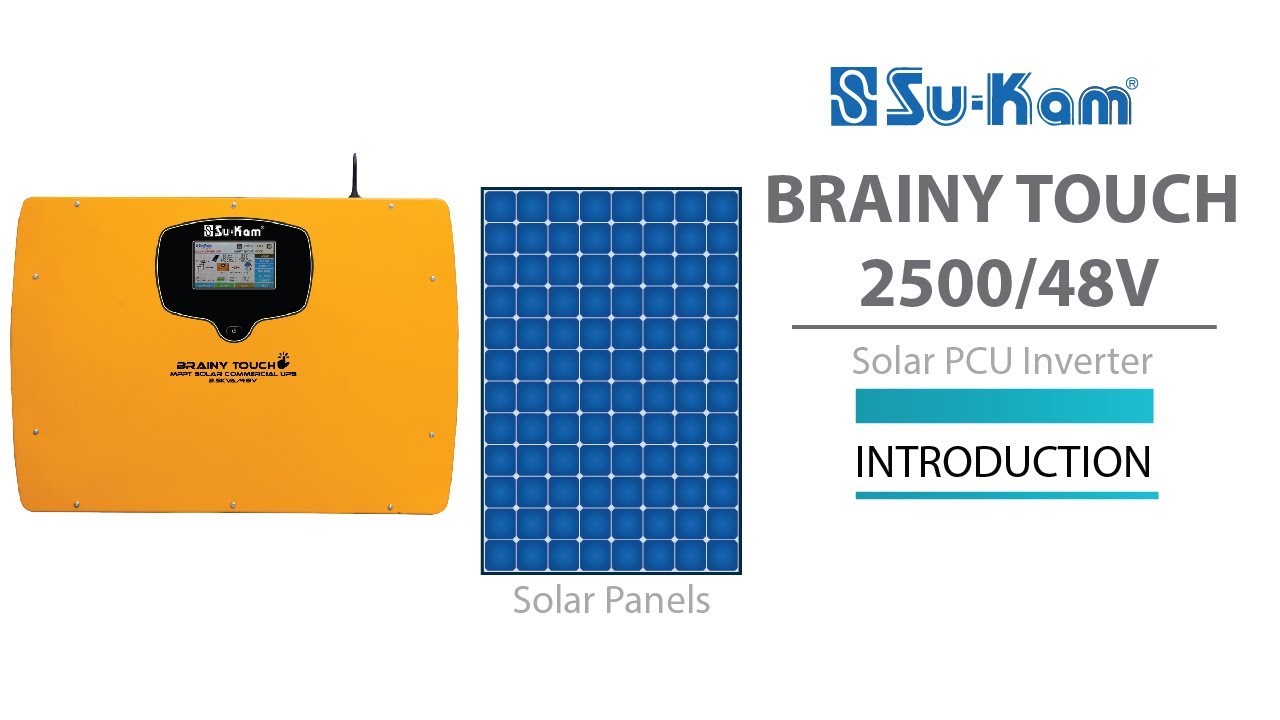
A UPS With a Brain — Not a Slogan
The genius was not one feature. It was orchestration. Brainy Eco, available in models like 900/1100-12V and 1600/24V, was a fourth-generation evolution — a 44-pin microprocessor at its heart, noiseless operation, faster decisions than the square-wave boxes still flooding the market. But customers do not fall in love with pin counts. They fall in love when the lights stay on and the bill drops.
So we built a suite of behaviours that felt like a brain:
- Solar Priority — solar power always led; the grid waited its turn.
- Intelligent Charging Sharing — sun and mains cooperated instead of fighting, with charging possible even when input voltage sagged to 90V.
- Variable Mains Charging — users chose 5A, 10A, or 15A grid charge current, reclaiming control from blind factory defaults.
- ATC (Automatic Temperature Compensation) — charging adapted to ambient heat, extending battery life by at least six months in Indian conditions.
- DT-6S (“Super Six”) staged charging — six disciplined stages instead of one brutal dump into the plates.
- Static Bypass — if the inverter failed in peak summer, load could continue on grid supply — a safety net ordinary inverters simply did not offer then.
30A solar charge controller · 98% solar charging efficiency · load and charge simultaneously
“Amazingly Powerful” was marketing language — but the engineering underneath was dead serious
What It Felt Like to Launch
Launch weeks are a blur of hope and argument. I remember standing with R&D in Gurgaon while field teams called from Punjab and Kerala with the same surprise in their voices: Sir, it is actually running the house and charging from solar at the same time. That sounds obvious in 2026. In 2010 it was counter-intuitive magic to a dealer who had sold dumb UPS boxes for fifteen years.
We integrated a 30A solar charge controller inside the same enclosure that families already trusted for backup. Battery charging efficiency through solar hit 98% in our messaging — numbers we could defend because the DT-6S stages and ATC were not slides; they were firmware burned after nights of oscilloscope work. The copy said Create Your Own Powerhouse and Utilize the Solar Power Smartly. The emotional truth underneath was simpler: stop paying the grid to babysit a battery when the roof already offered a better employer.
“An inverter without intelligence is just a transformer with attitude. Brainy Eco was my answer to every home that had panels on the roof but still lived like the sun was a hobby.”
From the 2005 PCU to the 2010 Living Room
Brainy Eco did not appear from nowhere. It descended from the hybrid architecture we pioneered in 2005 — charge controller, inverter, grid charger, and a philosophy that visibility and logic belong together. By 2010 the market had moved slightly: more rooftops, more subsidy conversation, more customers asking dealers about solar. But the industry was still shipping boxes that treated solar as a bolt-on. We treated it as default intent.
The same period was busy in other directions — tubular gel trials in Baddi, export ambition that would later surface at Intersolar Munich, and the YouTube channel where I tried to explain energy to Indians who had never been given a straight answer. Brainy Eco was the product that connected those threads for the homeowner: intelligent electronics + battery respect + solar first. National policy momentum around renewables, tracked by bodies like MNRE, was building; Brainy Eco was our way of making policy tangible in a hallway cupboard.
The Copycat Era — and Why I Do Not Mind
Success in Indian power electronics has a strange taste. Within a few seasons, competitor catalogues began listing solar priority, staged charging, hybrid labels — words we had printed on cartons first. Some copied well. Many copied the sticker and skipped the ATC. Dealers would tell me: Everyone has a hybrid now, sir. I would answer: Everyone has the word. Not everyone lived through the failures that earned it.
That is legacy in this industry. The features Brainy Eco made famous — solar preference, intelligent charge sharing, temperature-aware charging, static bypass for summer survival — are table stakes today. I take quiet satisfaction in that. It means the household I was thinking about in 2010, the one tired of darkness and inflated grid charging, finally has choices. It also means the founder story is not about one SKU. It is about forcing an entire market to upgrade its definition of normal.
What I Learned
Brainy Eco taught me that the distance between laboratory conviction and dealer adoption is measured in demonstrations, not press releases. It taught me that battery life is a feeling — six extra months without a replacement is six extra months of trust. And it taught me that the best consumer innovations often arrive as the second chapter of an older obsession: we wanted data on screen in 2005; in 2010 we wanted the home to act on that data without asking permission.
Today, when I mentor teams at Su-vastika and build at kunwwer.ai, I still ask the Brainy Eco question: Does this product assume the sun is primary, or does it merely tolerate the sun? The scale story — six factories, institutional capital, the long arc of building — lives in Building the Empire. The intimate story is this box, in millions of Indian homes, whispering the same instruction every noon: use the roof first.
Related on this site
🔗 Founder stories — read the series
- 📖 CE Mark & Intersolar Munich 2011
- 📖 Exporting Inverters to China
- 📖 BSF Border Solar Posts
- 📖 Why I Started the Su-Kam YouTube Channel
- 📖 Solar PCU Invented in 2005
- 📖 Baddi Factory & Tubular Gel Battery
- 📖 Kashmir Shikaras — Floating Billboards of Hope
- 📖 Colossal Solar PCU — Inverter to Power Plant
- 📖 India’s First 3-Phase Solar System (2006)
- 📖 0% Chinese Share in Inverters — India’s Pride & Post-NCLT Reality
- 📖 Marriott Chandigarh 2011 — Innovation & R&D Talk
- 📖 Technovations at Su-Kam 2012 — SlideShare Deck
- 📖 My Story — Twelve Chapters on SolarManOfIndia.com
Founder of Su-Kam and Kunwwer.ai, and mentor at Su-vastika and several other companies — the “Inverter Man of India” and the “Solar Man of India.” Read his story →
24 products and instruments. This page is one of them. The others are here.
- Colossal overview
- Colossal 1P 10 kVA
- Colossal 3P 30 kVA
- Colossal 3P 40 kVA
- Colossal 3P 100 kVA
- Brainy Eco 1100
- Here — Brainy Eco hybrid PCU
- Brainy Hybrid GTI
- Brainy S modular
- Brainy Touch PCU
- Intelli S 40 kVA
- Falcon HBU
- Falcon Plus 1100
- Chic plastic inverter
- DT-6S charging
- Solar online UPS
- Electroscopy
- Battery life-cycle tester
- Lithium BMS
- Sun Way street light
- IoT solar monitoring
- Tubular gel battery
- Commercial solar / MPPT
- UPS charging
You must be logged in to post a comment.