Building India’s First Commercial Solar Inverters
Ten years ago, I walked into a room full of engineers and told them we were going to build India’s first Solar MPPT Charge Controller — a solar charge controller that nobody in India had built before — using a DSP chip, handling high voltage and high current, with Maximum Power Point Tracking that would squeeze every last watt out of a solar panel. Half the room thought it was unnecessary. The other half thought it was impossible.
Explore solar category firsts at https://solarmanofindia.com and energy storage technology at https://lithiuminverter.in.
For founders seeking AI legal diagnostics and business co-pilots, explore Legal Shield on https://kunwwer.ai/.
Both groups were wrong.
Why We Built It When Nobody Was Talking About Solar
Introducing India’s First Solar MPPT Charge Controller
This was at a time when solar was still a fringe conversation in India. Most people were focused on grid power and diesel backup. The idea that rooftop solar could seriously power Indian homes and businesses — and do it efficiently — was not mainstream thinking. Su-Kam was already deep in inverter and UPS technology, and I could see exactly where the energy crisis was heading. India had a power deficit problem. Solar was the answer. But the technology available at the time was primitive.
The charge controllers in the market were basic PWM (Pulse Width Modulation) devices. They did the job, but they left enormous amounts of energy on the table — sometimes 25 to 30 percent of the potential output from the solar panels simply wasted. For a country starved of power, that was unacceptable to me.
The Patent: 292773 — MPPT Based Solar Charge Controller
This was not only a product first. It was a filed invention. Su-Kam’s MPPT Based Solar Charge Controller was recorded as Indian Patent 292773 (Application 940/DEL/2008, filed 10 April 2008, granted 09 February 2018) — the technological foundation that later powered Solarcon and Su-Kam’s solar hybrid line.
Full filing record and what happened to this patent during insolvency: National Wastage — Patent 292773 and the 77 Su-Kam patents. How the portfolio was built: How Su-Kam Came to File 77 Patents in 14 Years. Public search: IP India Public Search.
What Made the DSP-Based MPPT Controller So Hard to Build
MPPT — Maximum Power Point Tracking — sounds simple on paper. The idea is that a solar panel’s output voltage and current change constantly depending on sunlight, temperature, and load conditions. The maximum power point is the exact combination of voltage and current where the panel produces its peak power. A smart controller finds that point in real time and keeps the system locked onto it.
But real time means milliseconds. The sun shifts. Clouds pass. Temperature changes. To track the maximum power point accurately, you need a processor fast enough to run complex algorithms continuously — sampling voltage, sampling current, calculating, adjusting, sampling again. A standard microcontroller of that era simply could not do this fast enough at high voltage and high current levels without introducing errors or heat problems.
That is why we went with a DSP — a Digital Signal Processor. DSPs are designed for exactly this kind of intensive, real-time mathematical computation. They could execute our MPPT algorithm fast enough to be genuinely useful. But programming a DSP for power electronics, at voltages and currents that could seriously injure you if anything went wrong, with the kind of reliability a product needs to survive Indian conditions — heat, dust, voltage fluctuations — that was the real engineering challenge.
My R&D team spent months on the firmware alone. The hardware design had to handle high voltage input from multiple panels in series while protecting the batteries and the controller itself. We built in six-stage charging intelligence — bulk, absorption, float, equalization, and more — because I knew that what kills batteries in India is not deep discharge alone, it is improper charging. We designed the system to extend battery life by at least six months compared to ordinary controllers. That was not a marketing claim. That was an engineering target we held ourselves to.
What High Voltage and High Current Actually Means
Most people do not appreciate why the high-voltage capability mattered so much. When you string solar panels in series, the voltage adds up — 24V, 48V, 96V, and beyond. Higher input voltage means you can run longer cable runs from rooftop to controller without losing power in the wire resistance. It also means you can design more efficient, larger systems.
Handling high current — the amps flowing from panels in parallel — required careful thermal design, heavy copper tracks, and MOSFETs rated well beyond the operating range. We over-engineered on purpose. In Indian conditions, a component running at its rated limit will fail. We designed for 150 percent of rated capacity as our normal operating range.
What It Proved
When the product finally shipped and we saw it generating 30 percent more power from the same panels compared to a PWM controller, I felt something I rarely feel — pure satisfaction. Not because we had made something to sell. Because we had made something that actually worked the way physics said it should.
Today, MPPT is standard. Every serious solar installer specifies it. DSP-based power electronics are everywhere. But ten years ago, building this in India, with Indian engineers, for Indian conditions, when the entire industry was still skeptical about solar — that was the real achievement.
It taught me a lesson I carry into everything I build now at Su-vastika and Kunwwer.ai: the best time to build a technology is when the market has not caught up yet. If you wait for consensus, you will always be second.
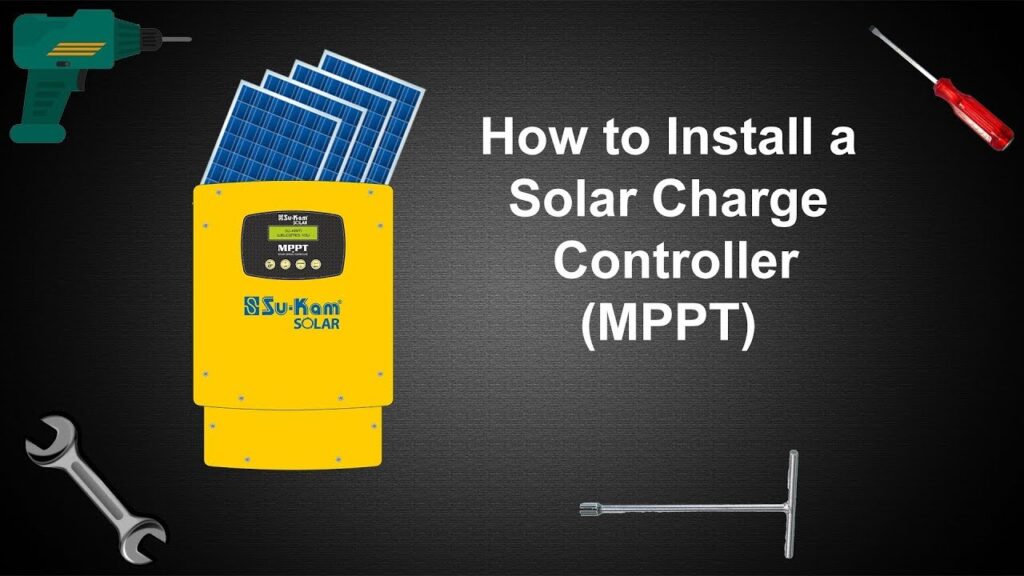
You can watch the original installation guide for this controller here: Su-Kam MPPT Solar Charge Controller — YouTube
#SolarEnergy #Innovation
Related Reading
- Solar Energy for Indian Homes: A Complete 2026 Buyer’s Guide
- India’s First 3-Phase Solar System in 2006
- Before WiFi: How Su-Kam Built India’s First Solar IoT Platform
- Understanding On-Grid, Off-Grid and Hybrid Solar Systems
🔗 Read the Full “My Story” Series
Frequently Asked Questions
When did commercial solar inverters start in India?
Commercial solar inverters emerged in the mid-2000s when Kunwer Sachdev launched early Solar PCUs and hybrid inverters through Su-Kam's R&D center.

Founder of Su-Kam and Kunwwer.ai, and mentor at Su-vastika and several other companies — the “Inverter Man of India” and the “Solar Man of India.” Read his story →
24 products and instruments. This page is one of them. The others are here.
- Colossal overview
- Colossal 1P 10 kVA
- Colossal 3P 30 kVA
- Colossal 3P 40 kVA
- Colossal 3P 100 kVA
- Brainy Eco 1100
- Brainy Eco hybrid PCU
- Brainy Hybrid GTI
- Brainy S modular
- Brainy Touch PCU
- Intelli S 40 kVA
- Falcon HBU
- Falcon Plus 1100
- Chic plastic inverter
- DT-6S charging
- Solar online UPS
- Electroscopy
- Battery life-cycle tester
- Lithium BMS
- Sun Way street light
- IoT solar monitoring
- Tubular gel battery
- Here — Commercial solar / MPPT
- UPS charging
You must be logged in to post a comment.