Category & brand creation
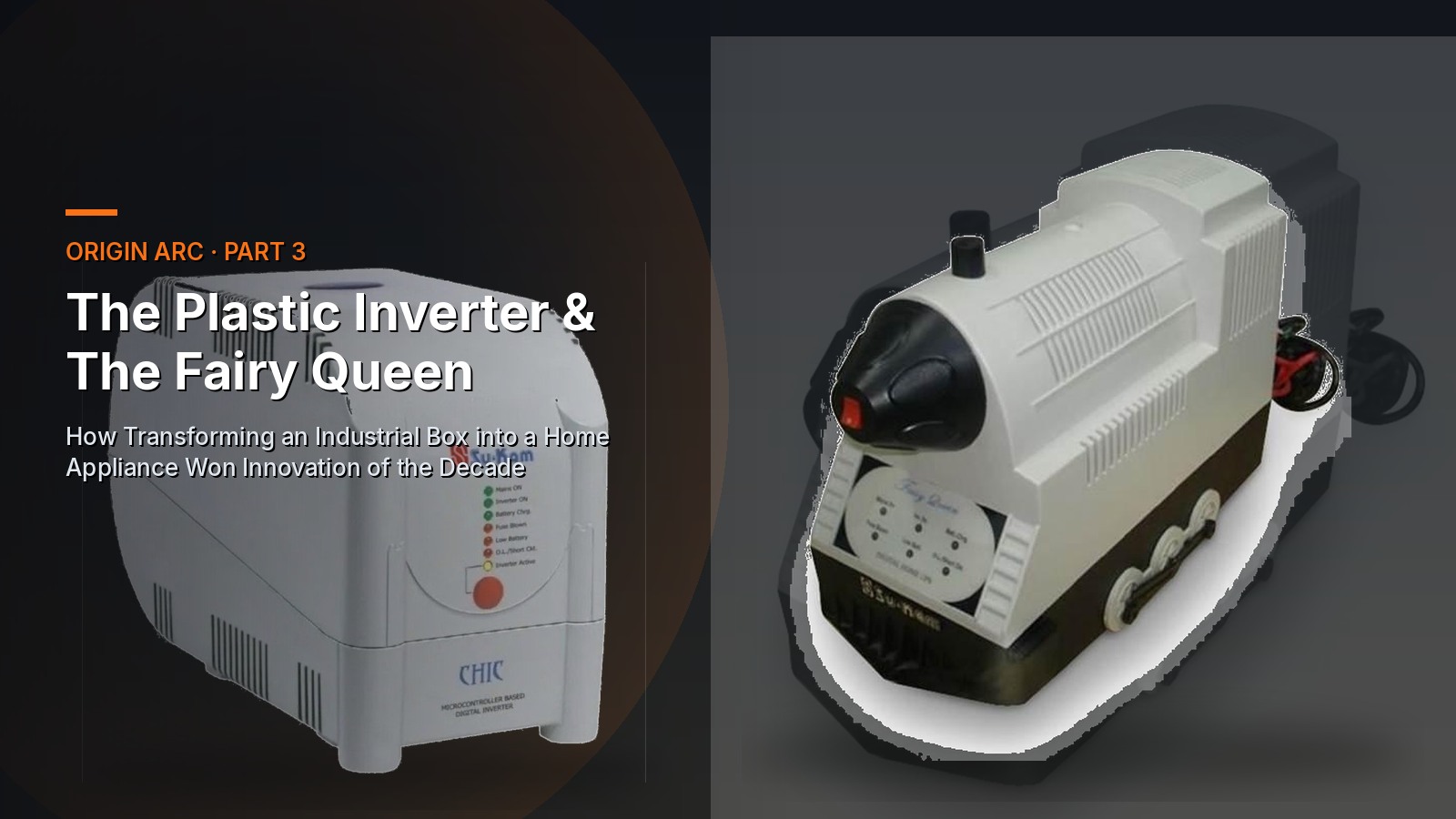
How a Plastic Body Turned Backup Power into a Living-Room Appliance
A customer told me his young daughter had been shocked while wiping the metal body of an inverter on a rainy day. I could not rewire every Indian home. So I decided to rewire the product.
The Chic plastic inverter took backup power out from under dark staircases and made it flame-retardant, elegant, and safe enough for the living room.
India’s historic 1855 Fairy Queen steam locomotive inspired the shape — but the ambition was clearer than heritage alone: “We wanted a drawing-room showpiece that delighted children, not an industrial box shoved into a dark corner.” That joy met a hard logistics lesson when fragile packaging failed in transit.
National recognition that Indian design and consumer hardware could lead the market — and that a plastic inverter could become bigger than the brand itself.
“I didn’t want to build an appliance people merely tolerated. I wanted to build one a family would be proud to keep in their home.”
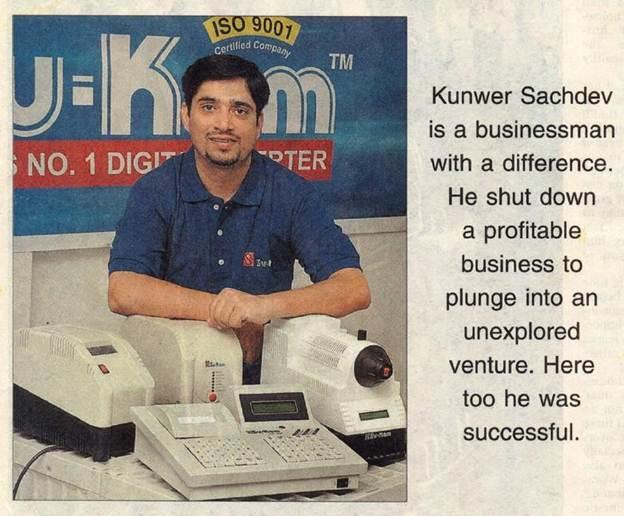
01The complaint that became a product
By 2002, Su-Kam’s black-chassis MOSFET inverters were selling. Distributors were growing. Competitors were copying our single-battery design. But a quieter problem was already forming in Indian homes.
Metal inverters were getting people hurt — not always through circuit failure, but through the chassis itself. In monsoon damp and humid rooms, a metal box carrying charge was a genuine hazard. Customers were getting mild shocks. Some were getting worse.
My engineers said: change the warning label. Move the inverter to a higher shelf. Earthing issue.
I said: change the body.
I wanted a plastic chassis that would not conduct current to a child’s hand, would not rust, and could sit anywhere in a home without an electrician first declaring the room “safe enough.” It sounded simple. It was not.
02“Plastic can’t take the heat”
My own R&D fought me. Inverters generate serious heat. Metal dissipates it. Plastic traps it. Put a normal circuit in a plastic box and you will warp the shell, crack the vents, and cook the electronics.
The second objection was structural. Metal boxes were rigid and heavy. A plastic body had to be thick enough to protect the components, strong enough for battery connections, and ventilated so heat could escape without a fan drama.
I told the team to solve it — not list why it was impossible.
The answer came through a partnership with GE Plastics. They had a material relatively new to India then: PC-ABS — a polycarbonate and ABS blend that could withstand roughly 120°C before deforming. We redesigned the circuit, added a temperature sensor that shut the inverter down if internal heat crossed the safe line, and spent about a year iterating ventilation, weight distribution, and mounting geometry.
When it was ready, I named it Chic.
I never liked model numbers for home products. “Chic” meant style — something you could be proud to display, not hide behind a sofa. I did not want an appliance people merely tolerated. I wanted one a family would keep in the heart of the home.
03Meet the CHIC — and the IP lesson
In 2003, the Chic hit the market like a bombshell. For the first time, an Indian inverter looked designed. Homes that had kept backup power under staircases began bringing it into living rooms. Some families used that unit for more than twenty years.

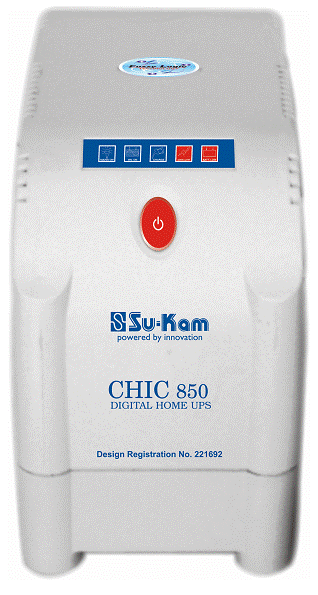
India Today called it the Innovation of the Decade. That award mattered — not as a trophy, but as proof that Indian hardware could win on design, not only on price.
Then the copying started. A competitor made what looked like the same plastic product. Some of those inferior copies burned in the field and stained the whole idea of plastic inverters. We went to court. We lost — because we had filed the design patent after launching, not before. Public disclosure had already weakened the claim.
That procedural defeat was expensive and very clear: file first, launch second. It later drove me to build a patent machine — averaging filings month after month — so we would never again gift our design language to the market unprotected.
04The Trendy — features on a screen
I always gave models names, and a few became brands of their own. The Trendy was another first: the first inverter in the Indian market with a digital display — battery status, load percentage, every key feature on screen. Nobody had done it before. Chic, Trendy, Fairy Queen — each name told a story. Each product had a personality.

05The Fairy Queen — from 1855 steam legend to drawing-room joy
After Chic, I dreamed bigger. An inverter sitting in a bedroom or drawing room is not only utility — it is furniture. It has to earn its place.
India’s historic 1855 Fairy Queen steam locomotive — one of the world’s oldest operating steam engines, a symbol of mechanical elegance — became the design inspiration. I drew the brief myself: a plastic inverter shaped like a locomotive.
But heritage was only the starting point. The real ambition was emotional: “We wanted a drawing-room showpiece that delighted children, not an industrial box shoved into a dark corner.” Backup power should live where the family lives — something kids would love and parents would display proudly.
R&D delivered. The electronics were solid. The industrial design was striking. We validated and tested for months. Internally, we were convinced we had something the market had never seen.
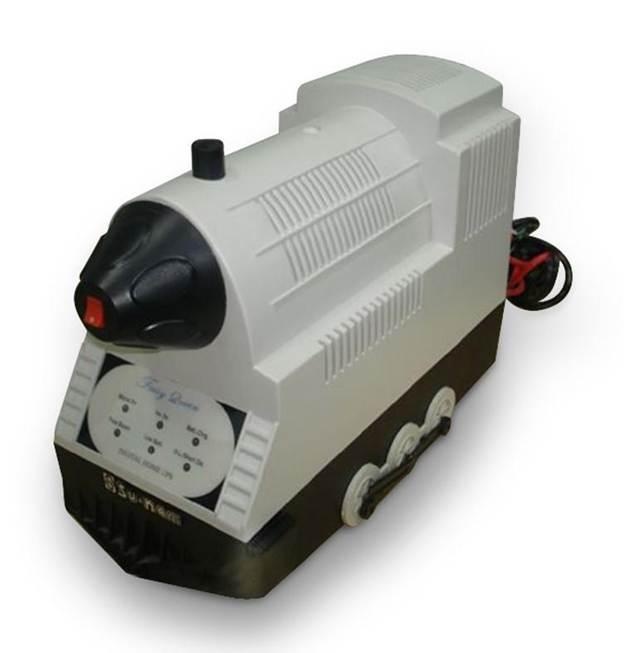
Then the launch collapsed at the gate. What nobody caught — through all the product testing — was the packaging. The locomotive shape that made Fairy Queen so distinctive also made it geometrically hard to pack safely for India’s rough transport. Shipments reached dealers damaged. Not a few — enough to trigger returns, angry calls, and a rapid loss of trust in a product that had never even had a fair chance to perform.
The cruelty was this: the inverter itself worked. It looked extraordinary. None of that mattered once broken units started arriving at showrooms. In this business, a dealer’s reputation rides on what they recommend. A bad launch sticks.
I told my team the blunt truth: we had done everything right with the product, and almost nothing right with the box. From that year on, packaging stopped being an afterthought. Drop tests, compression tests, corner impact — what went inside the carton and what the carton could survive became part of the product specification itself.
“A brilliant product inside fragile packaging is still a failed shipment. Trust your team, but never take your eyes off the transit details.”
Fairy Queen never became the brand Chic became. But it shaped every product decision after it. The instinct never left me: if a product sits in someone’s home, it must earn the right to be there — and the journey from factory to drawing room is part of the product.
- Chic plastic inverter — India Today award legacy essay (Inverter Man of India)
- FairyQueen locomotive packaging disaster — legacy essay (Inverter Man of India)
- Chapter 3: The Inventions — Solar Man of India
- The Fairy Queen locomotive — Wikipedia
- Su-Kam Power Systems — Wikipedia
- YourStory: How Su-Kam redefined the Indian inverter
Chic was product as brand — the later CIRP ending of that hardware stack is in Manufacturing Mirage Part 1, mapped from the Manufacturing Mirage hub.

Founder of Su-Kam and Kunwwer.ai, and mentor at Su-vastika — the “Inverter Man of India” and the “Solar Man of India.” Read his story →
24 products and instruments. This page is one of them. The others are here.
- Colossal overview
- Colossal 1P 10 kVA
- Colossal 3P 30 kVA
- Colossal 3P 40 kVA
- Colossal 3P 100 kVA
- Brainy Eco 1100
- Brainy Eco hybrid PCU
- Brainy Hybrid GTI
- Brainy S modular
- Brainy Touch PCU
- Intelli S 40 kVA
- Falcon HBU
- Falcon Plus 1100
- Here — Chic plastic inverter
- DT-6S charging
- Solar online UPS
- Electroscopy
- Battery life-cycle tester
- Lithium BMS
- Sun Way street light
- IoT solar monitoring
- Tubular gel battery
- Commercial solar / MPPT
- UPS charging