We Built India’s First BEE 4-Star Inverter — Before the Standard Even Existed
The BEE 4-star inverter before the standard
The BEE 4-star inverter was a high-frequency inverter and a UPS in one box. The first home backup in India to win a 4-star energy rating, 90% efficient, with the technology patented — and built in a patented, heat-resistant plastic body that actually looks good, in more than one colour.
The Falcon HBU — Falcon High Backup UPS — is the product that proved an Indian company could out-engineer the high-frequency inverter, make it pay for itself on your electricity bill, and still make it beautiful.
1 China Led High-Frequency. We Built One for India — and Patented It
FIRST IN INDIAAt the time, China led the world in high-frequency inverter technology. Su-Kam set out to build one for India — with better technology, made at home. The Falcon HBU is the result: India’s first high-frequency inverter, powered by a special compact transformer that minimises energy losses, giving up to 90% efficiency and low harmonics. We filed a technology patent for the bidirectional inverter technology at its heart. You can read the human story behind it in our profiles of CTO Sivarajan Ramachandran and Vikas Garg.
2 The “U” in HBU: This Is UPS-Grade, Not Just an Inverter
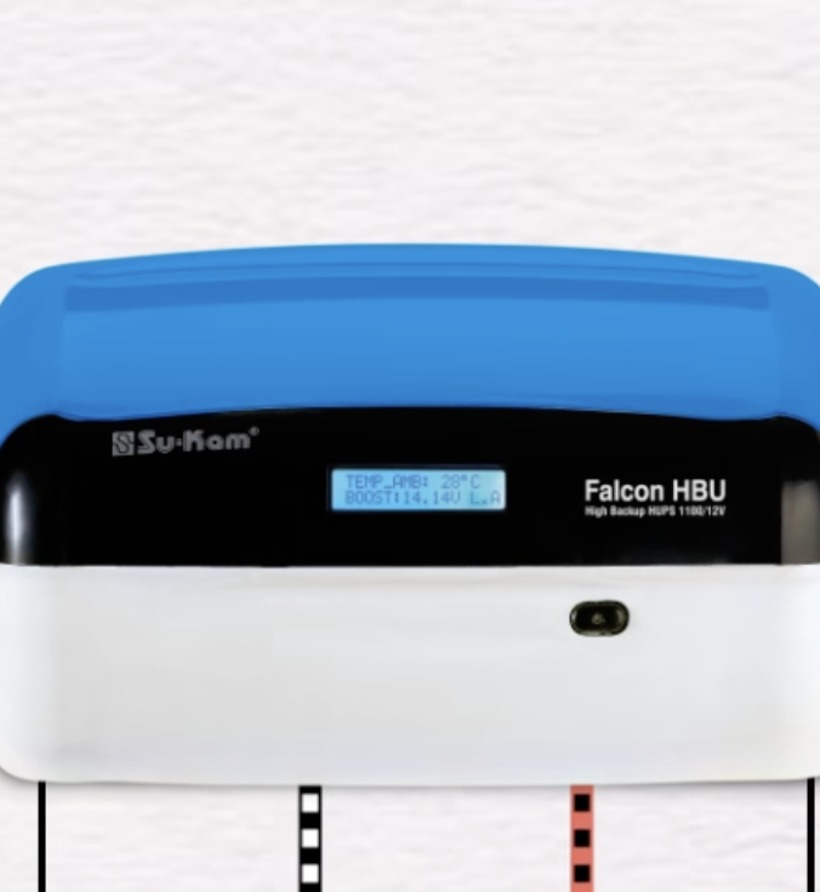
The “U” in HBU is the point: this is a UPS-grade home backup. When the power cuts, the Falcon HBU switches on instantly — the changeover is so fast, and the unit so noiseless, that you genuinely do not realise the grid has gone. It is also the first of its kind to show you the exact backup time left on its display, so you can manage your load through a long outage instead of guessing.
3 The 4 Stars Are Not a Sticker — They’re Money Back on Your Bill
For the first time in the history of the Indian power-backup industry, a home UPS was efficient enough to earn a 4-star energy rating from the Bureau of Energy Efficiency (BEE) — and it remains the only home UPS in the market to deliver 90% efficiency. Here is what that efficiency looks like in real numbers, straight from the comparison in the video above (tested on a 150Ah / 12V battery):
| What’s measured | Ordinary inverter | Su-Kam Falcon HBU |
|---|---|---|
| Power drawn from grid to charge (180W needed) | ~300 W | ~220 W |
| Daily charging energy (10 hrs) | 3.0 units/day | 2.2 units/day — saves 0.8 |
| Battery draw for a 100 W load | 129 W | 110 W |
| Battery draw for a 200 W load | 255 W | 210 W |
| Battery draw for a 500 W load | 560 W | 520 W |
| Backup time at 100 W load | 13 h 15 m | 16 h 30 m (+3 h 15 m) |
| Backup time at 200 W load | 7 h 32 m | 8 h 47 m (+1 h 15 m) |
| Backup time at 500 W load | 3 h 15 m | 3 h 53 m (+38 m) |
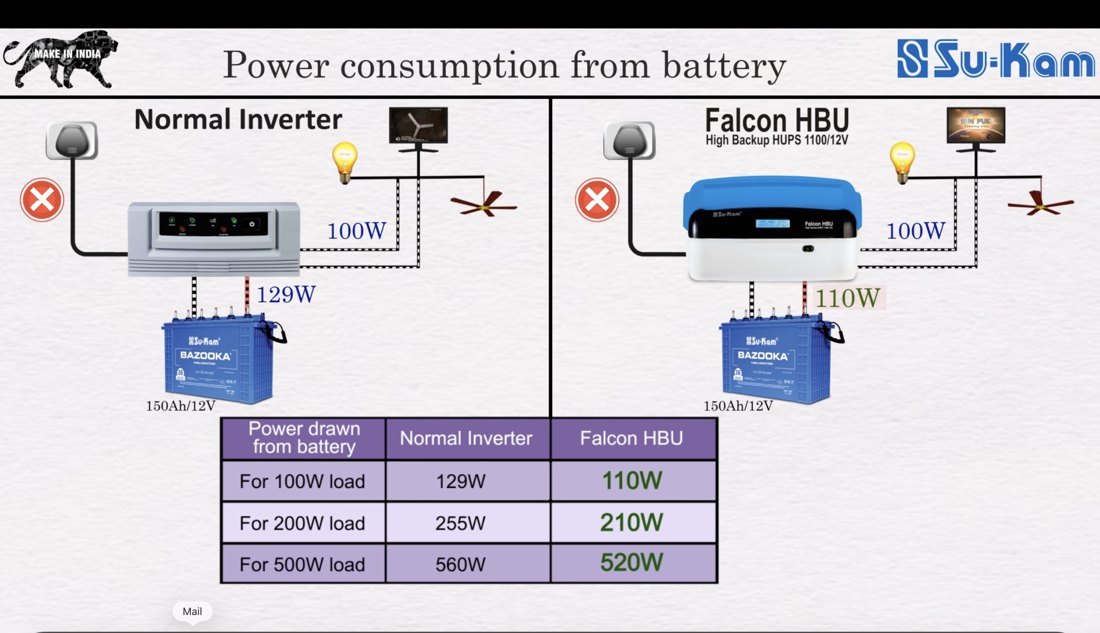
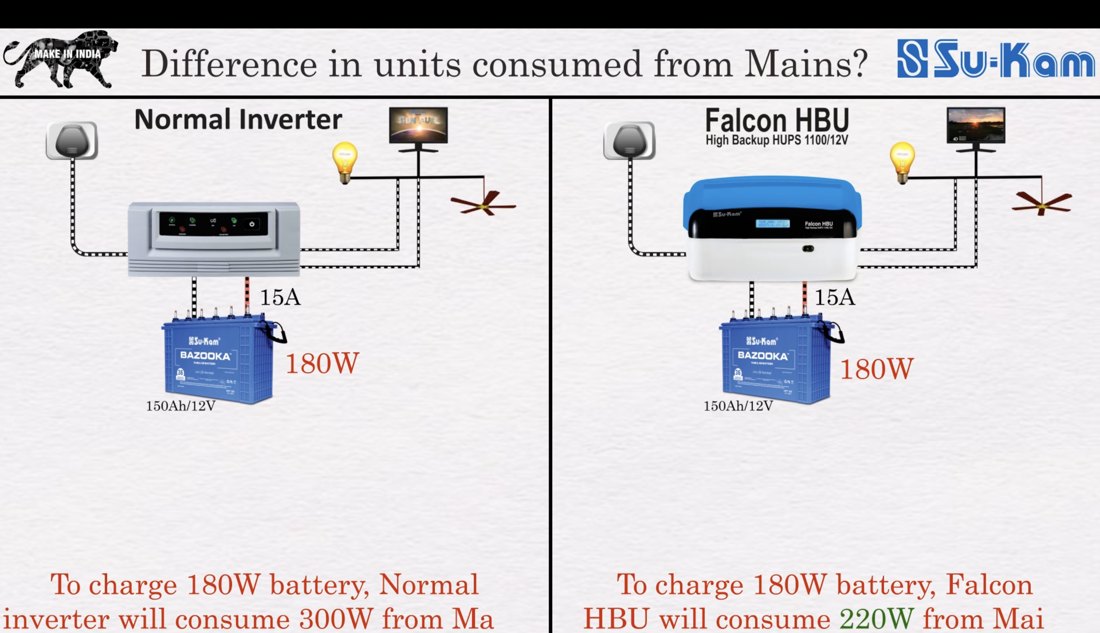
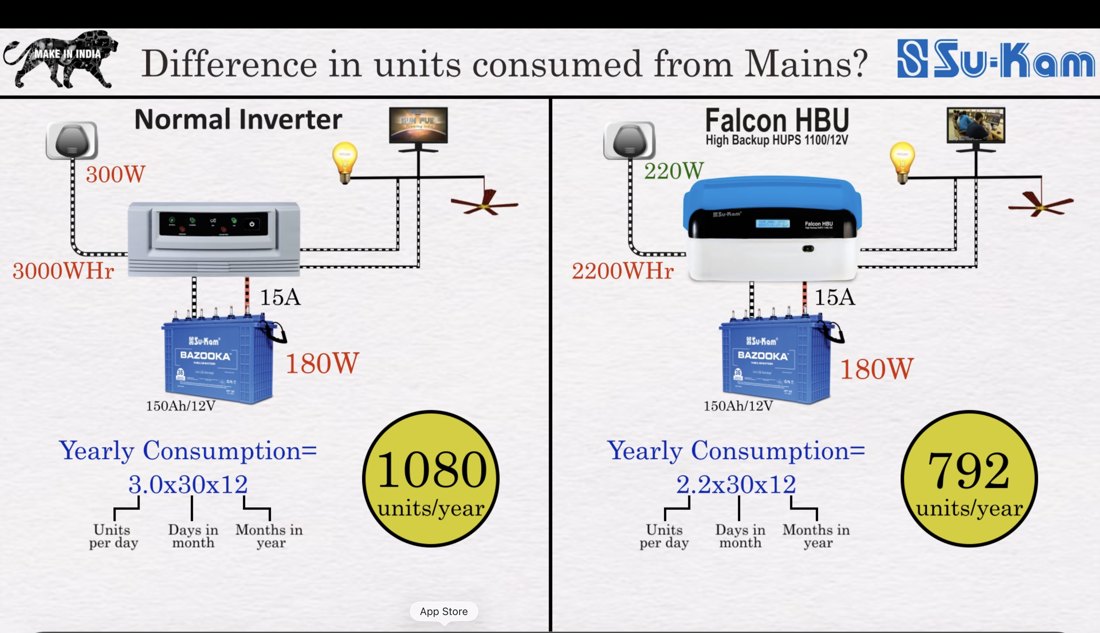
It even saves you at the moment of purchase: because the Falcon HBU converts energy so efficiently, a 100Ah battery on it performs close to a 150Ah battery on an ordinary inverter — so you can buy a smaller, cheaper battery and still get the backup you need. All told, the video puts the saving at about 25% on overall running costs.
4 Not Another Grey Metal Box in the Corner
Look at the Falcon and you will notice it does not look like the grey metal box that used to sit ashamed in a corner. We made it as a plastic-body inverter using a different technology altogether — and to be clear, this was a newer, different plastic body, not the first plastic inverter we built (that one came years earlier). It is moulded from better plastic granules engineered to withstand heat, so the body stays safe and stable even as the electronics work hard inside. The body design is patented. Unlike metal, it will not rust, it is lighter to handle, and it is safer in a home.
And because an inverter lives in your home, we made it good-looking — designed in different colour schemes so it fits the room instead of hiding from it.
5 What Makes It Work When Rural Power Is Brutal
Bluetooth & mobile app
Monitor and control the Falcon HBU from your phone.
Lowest no-load current
Draws very little just to stay on — less waste on your bill.
Auto temperature compensation
Adjusts charging to the weather for a longer battery life.
Low harmonics
Clean, pure DC to the battery — less ripple, more battery life.
DT-6S six-stage charging
Six charging stages vs the usual three — healthier batteries.
No-noise UPS
Instant, silent switchover — you never hear the power go.
India led on this one — first high-frequency inverter, first 4-star home UPS, a patented design in a good-looking plastic body. That is the Falcon HBU, and that is the kind of product I built Su-Kam to make. — Kunwer Sachdev
6 90% Efficient. Smaller Battery. Longer Backup.
- Up to 90% efficiency — the most efficient home UPS in India
- Saves about 0.8 units of electricity every day on charging
- Up to 3 hours of extra backup on the same battery
- Run a smaller, cheaper 100Ah battery in place of a 150Ah
- About 25% lower running cost than an ordinary inverter
- Instant, silent UPS switchover — you never hear the cut
- Six-stage DT-6S charging for a longer battery life
- Patented, rust-free plastic body in multiple colours
7 We Failed Twice. Then We Built the Perfect Product for India
The Falcon HBU was the most ambitious project of my life. We had tried to build a high-frequency inverter earlier and failed. This time we did not only build one that survived Indian conditions — we designed India’s first BEE 4-star inverter before those efficiency standards were even implemented, and we filed a technology patent on the bidirectional technology at its heart.
This is the part I care about most. Around this time, the Bureau of Energy Efficiency (BEE) was working to bring efficiency standards to India’s inverter and UPS industry. To hit those numbers — both in charging and in the inverter itself — there was really only one way to design the product: it had to be a high-frequency inverter / UPS. A high-frequency design is what makes 90% efficiency physically possible.
But here was the hard part, and the reason this mattered so much. The product also had to work in Indian rural areas, where the power is brutal on electronics — the frequency is not stable and the voltage fluctuations are very high. High-frequency inverters are sensitive to exactly these conditions. The two high-frequency designs we had built earlier failed twice in the field, precisely because rural power was so erratic. To finally make a high-frequency inverter that stayed efficient and survived real Indian conditions — that is why the Falcon HBU was, to me, a perfect product made in India.
8 I Fought for BEE Star-Rating — The Standard Still Hasn’t Come
I will be honest about this, because it still stings. I was, in truth, the crusader for BEE star-rating of inverters in India — personally involved in the Bureau of Energy Efficiency committee set up to make energy standards for inverters. I believed then, and I still believe, that a mandatory efficiency standard would push the whole industry to build cleaner, better products and save the country an enormous amount of electricity. But alas — that inverter standard still has not been implemented to this day.
The proof of how far ahead we were is simple: even today, no other company claims a 4-star rated inverter — let alone reaches for a 5-star category that does not yet exist. The Falcon HBU showed it was possible years ago. The standard to make that efficiency the norm for every Indian home is still waiting.
The Falcon HBU launch and its BEE 4-star, 90%-efficiency rating were independently reported by Electronics Maker, Energetica India and ELE Times, with the BEE 4-star rating also covered by Energetica India. Product page: ELE Times coverage of India’s first star-rated Home UPS.
What a product like this could save India
The Falcon HBU was never just a better box for one home — it was proof of a national opportunity. If an efficient, 4-star inverter standard and a matching battery standard were made mandatory, the savings would be enormous. On conservative estimates, India could save around 11 billion units of electricity a year — roughly ₹7,000–8,000 crore off the country’s electricity bills, every year. I make the full case in my open letter to the Bureau of Energy Efficiency.
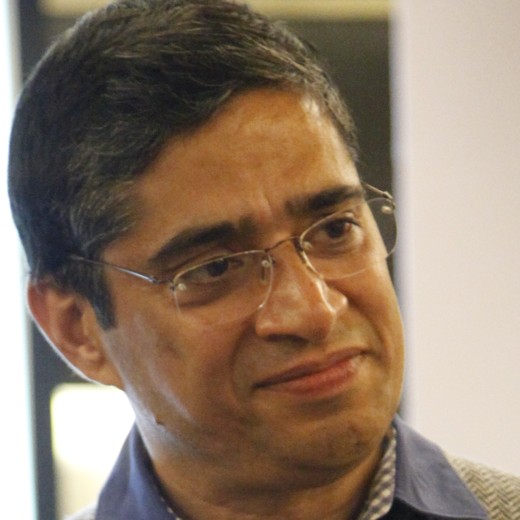
Founder of Su-Kam and Kunwwer.ai, and mentor at Su-vastika and several other companies — the “Inverter Man of India” and the “Solar Man of India.” Read his story →
24 products and instruments. This page is one of them. The others are here.
- Colossal overview
- Colossal 1P 10 kVA
- Colossal 3P 30 kVA
- Colossal 3P 40 kVA
- Colossal 3P 100 kVA
- Brainy Eco 1100
- Brainy Eco hybrid PCU
- Brainy Hybrid GTI
- Brainy S modular
- Brainy Touch PCU
- Intelli S 40 kVA
- Here — Falcon HBU
- Falcon Plus 1100
- Chic plastic inverter
- DT-6S charging
- Solar online UPS
- Electroscopy
- Battery life-cycle tester
- Lithium BMS
- Sun Way street light
- IoT solar monitoring
- Tubular gel battery
- Commercial solar / MPPT
- UPS charging