When Su-Kam Became the First Indian Inverter Company to Get CE Certification
Europe Was Open. I Was There. And I Let the Momentum Slip.
CE mark Intersolar Munich — The CE mark, Intersolar Munich, Spain, Portugal — and one of the failures I still think about

This is not a story about a certificate on a product. It is a story about a door that opened — and how I failed to walk through it fast enough.
In the early 2000s, if you wanted to sell electronics in Europe, you needed the CE mark — Conformité Européenne. Without it, your product could not legally enter the European Union. No Indian inverter company had ever achieved it. Su-Kam became the first. But the certificate was only the beginning. What happened after — the exhibitions, the buyers, the first shipments to Spain and Portugal, the technical problems, and the momentum I could not hold — that is the part worth telling honestly.
While India Imported from China, I Wanted to Export to Europe
By the mid-2000s, the conversation in Indian manufacturing had turned defensive. Everyone was trying to survive the flood of cheaper Chinese goods. Importers were bringing inverters into India. The logic was simple: China is the factory of the world. India should protect its market.
I saw it the other way. I was clear in my mind that we had to export Indian inverters and solar systems to European countries — not someday, not when the market felt ready, but now. If our engineering was genuinely built for harsh conditions — heat, voltage fluctuation, rough handling, long backup hours — then the only honest test was to put our products in front of the world’s most demanding buyers.
That conviction pushed us down a road almost nobody in our category attempted from India: pursue international certification at home, build to global standards, and then walk into European exhibition halls with products made in our own factories.
The CE Mark — August 2005
In August 2005, Su-Kam was awarded the Conformité Européenne (CE) certification by Det Norske Veritas (DNV) of Norway — the first time any Indian company had received CE certification in the inverter and UPS category.
First Indian inverter company to receive CE certification
Det Norske Veritas (DNV), Norway · August 2005
The CE mark was not a sticker for marketing brochures. It was proof that our products met European safety, health, and environmental standards — tested, documented, auditable. For a company that had started in a garage in Delhi, it was validation on the world stage.
As I told The Economic Times: “The CE mark is required for manufacturers wishing to sell their products in the 28 countries of the EU. While we are already exporting our power systems to many Asian and African countries, we can now legally export our products to various European markets.”
We pursued the UL mark on the same principle — not because America was our largest market, but because building to UL standard forced the same engineering discipline. CE opened Europe. UL opened North America. Together they became a global quality passport — one that would later matter in African distributor meetings, Gulf procurement conversations, and even in China, where we eventually showed up at exhibitions as one of the few Indian inverter brands willing to compete on the world’s hardest factory floor.
A Week in Munich — Intersolar Europe 2011
Certification gave us the legal right to enter Europe. Intersolar Europe gave us the stage to be seen. Held at the New Munich Trade Fair Centre, it is the world’s largest exhibition for the solar industry — the fair everyone in our sector knows. In June 2011, I was there personally for a full week — not sending a delegate, not reading a report afterwards. I walked every hall, stood at our booth, and sat across the table from buyers who had never met an Indian inverter manufacturer before.
🔗 Founder stories — read the series
- 📖 Marriott Chandigarh 2011 — Innovation & R&D Talk
- 📖 Technovations at Su-Kam 2012 — SlideShare Deck
- 📖 Exporting Inverters to China
- 📖 BSF Border Solar Posts
- 📖 Why I Started the Su-Kam YouTube Channel
- 📖 Solar PCU Invented in 2005
- 📖 India’s First 3-Phase Solar System in 2006
- 📖 Baddi Factory & Tubular Gel Battery
- 📖 Kashmir Shikaras — Floating Billboards of Hope
- 📖 Brainy Eco Solar Hybrid PCU
- 📖 Colossal Solar PCU — Inverter to Power Plant
- 📖 0% Chinese Share in Inverters — India’s Pride
- 📖 My Story — Twelve Chapters on SolarManOfIndia.com
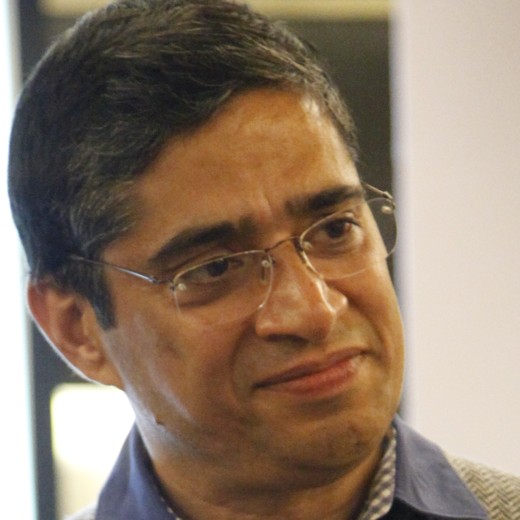
Founder of Su-Kam and Kunwwer.ai, and mentor at Su-vastika and several other companies — the “Inverter Man of India” and the “Solar Man of India.” Read his story →
You must be logged in to post a comment.