Kashmir’s Shikaras: Solar Powered Floating Infrastructure
After a Dealer Meet, I Stepped Into a Shikara — and Could Not Look Away
Shikara Project Dal Lake — Srinagar, 2005 — when a torn tripal and leaking rain told me more than any sales chart
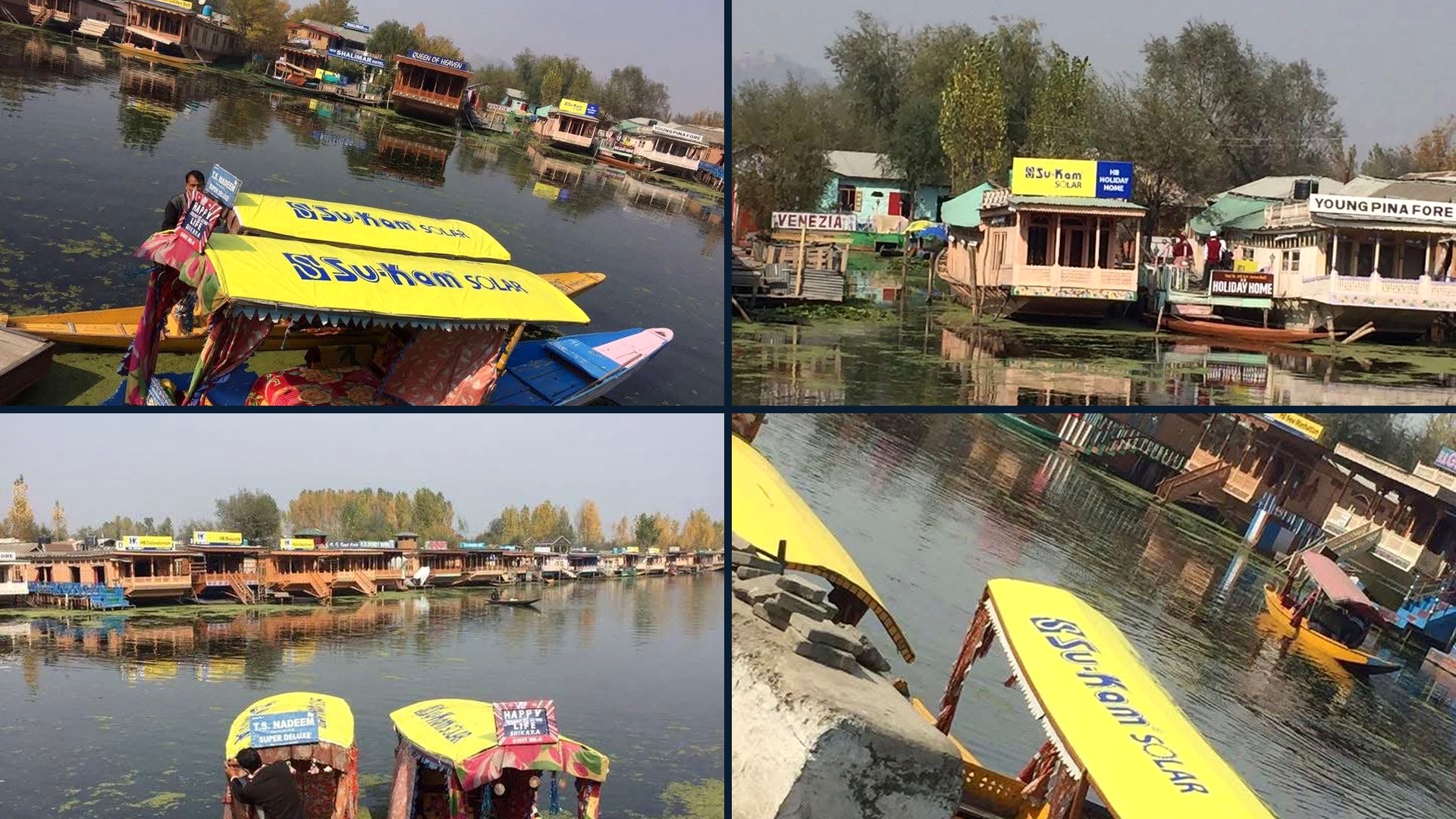
This is not a case study in outdoor advertising. It is a memory from 2005 — finishing a dealer meet in Srinagar, walking down to Dal Lake, and stepping into a shikara because I wanted to see Kashmir the way locals saw it, not from a hotel lobby. Within minutes I understood something no presentation had prepared me for: the men who row these boats — Kashmir’s most photographed symbols — were poor in a way that had nothing to do with laziness or lack of effort. Their entire livelihood floated on wood that was slowly losing the fight against weather.
Explore solar category firsts at https://solarmanofindia.com and energy storage technology at https://lithiuminverter.in.
For founders seeking AI legal diagnostics and business co-pilots, explore Legal Shield on https://kunwwer.ai/.
After the Dealer Meet — What the Brochure Never Shows
The dealer meet had gone well. Numbers, targets, the usual energy of a growing company. Su-Kam was stretching across India — factories multiplying, ambition multiplying. I could have flown back to Delhi satisfied. Instead I went to the lake.
Up close, the shikaras told a different story from the postcards. Timber grey with age. Seating cushions soaked through old repairs. The boatmen — polite, dignified, unwilling to complain — spoke about tourist seasons the way farmers speak about monsoons: hope mixed with dread. A shikara is not a hobby boat. It is a man’s shop, his taxi, his inheritance. And I could see, without anyone saying it aloud, that many of these families had no margin left for proper maintenance.
Rain Through the Old Tripal
Then it started to rain. Not a dramatic cloudburst — the ordinary Srinagar rain that tourists forget to pack for. Water began dripping through the old tripal — the tarpaulin cover stretched over the boat — and pooling on the seats and floorboards. The boatman did not panic. He moved a bucket. He apologised, as if the leak were his fault. That is when the picture became unbearably clear: he had no means to get the cover replaced properly. Patching held for a week. A new tripal cost money his season might not earn back. Every monsoon was another small defeat.
I sat there feeling rain on my sleeve and thought: we sell protection — inverters that keep homes running when the grid fails, covers and systems that shield what people depend on. These men were sitting in the one workspace they owned, and the sky was coming in through the roof. I asked myself the question that would not leave: Why do they look so defeated?
“When rain drips through a man’s only roof and he apologises to you for it — that is not a marketing problem. That is a human problem. And if you can fix it, you should.”
Branding and a New Strong Tripal
Back at the hotel that evening I called my team. I did not want a photo opportunity. I wanted two things done together, in that order of importance: get these boatmen a new, strong tripal — weather-resistant, built to last more than one season — and put the Su-Kam name on it as branding. Not branding instead of help. Branding on help. Protection first. Visibility second. The sequence was the whole idea.
Within days we launched what our teams later called the Shikara Project. Durable covers that could shield hull and seating from sun, freeze-thaw, and the rain I had felt on my own skin. Fewer emergency repairs. Less panic before tourist season. The Su-Kam logo rode on something useful — a tripal that actually kept water out.
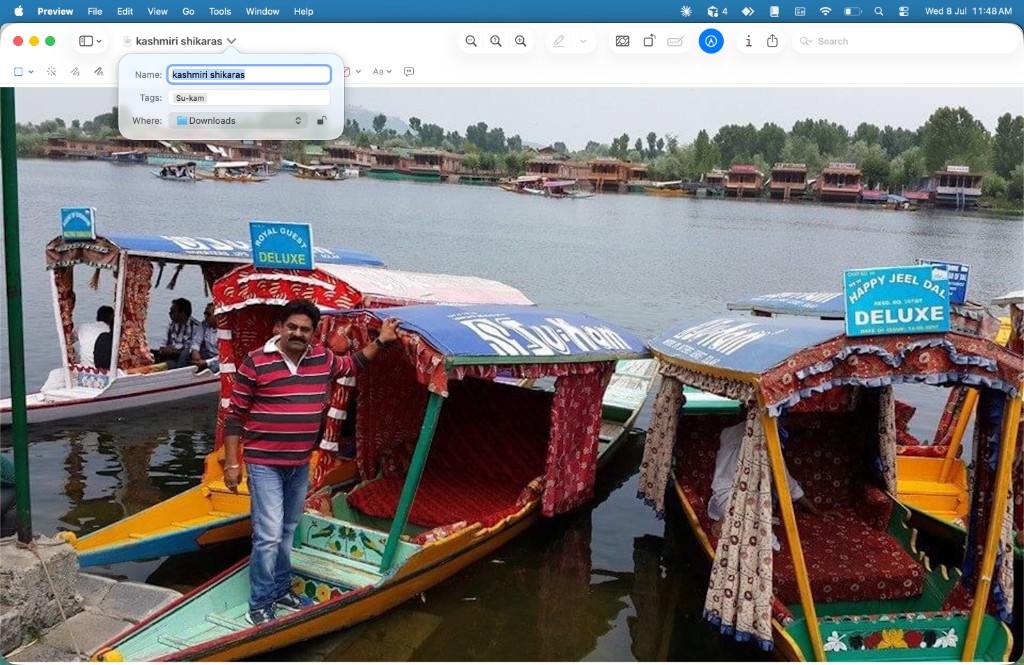
For the boatmen, the covers meant something more valuable than advertising: fewer rupees lost to rot and rain. For Su-Kam, something unexpected happened. Dal Lake became a moving gallery. Bright tripals caught sunlight. Tourists on houseboats and ghat steps pointed and asked the question every brand dreams of but cannot buy: “What is Su-Kam?” Grassroots visibility without a single billboard on Mall Road. The highway twin of this play — boards at dhabas instead of boats on Dal Lake — is Part 6 — Dhaba boards.
Give them a tripal that holds — then let the logo float on something that actually protects
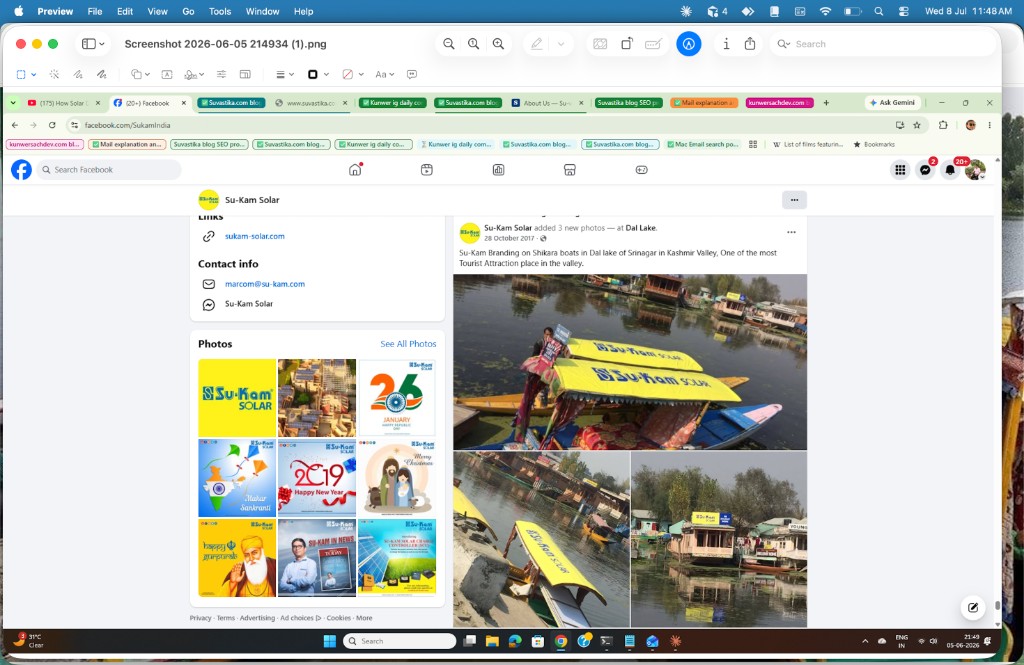
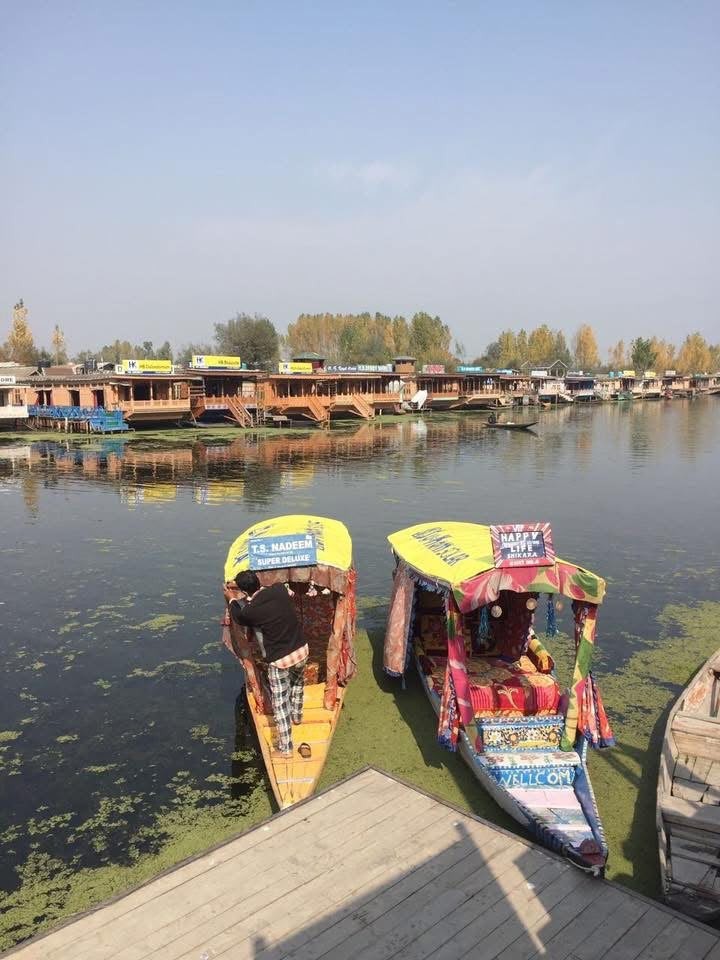
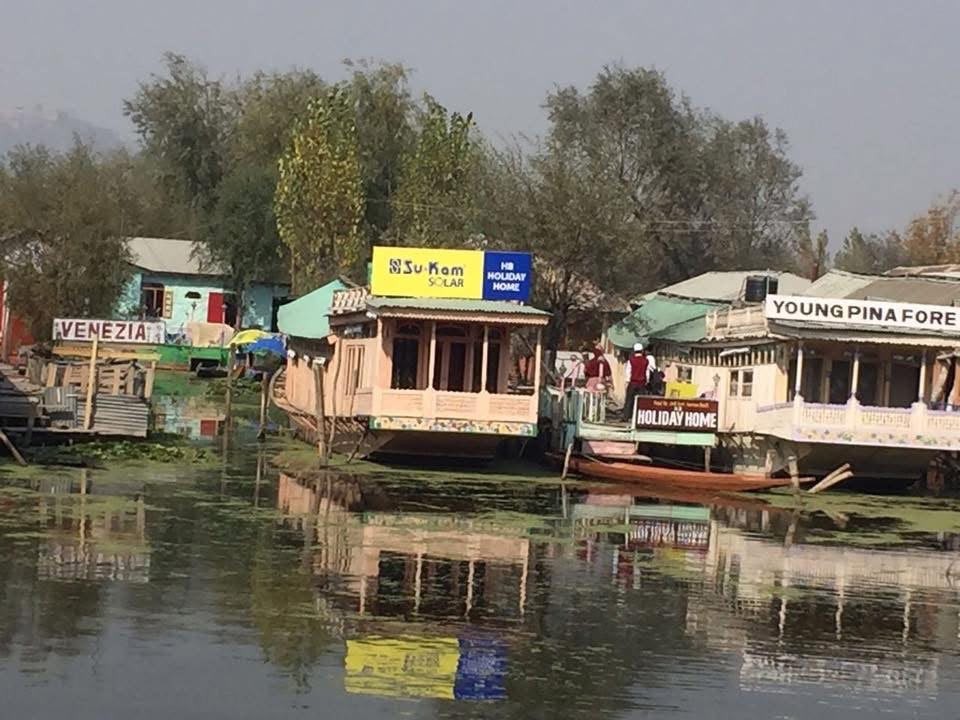
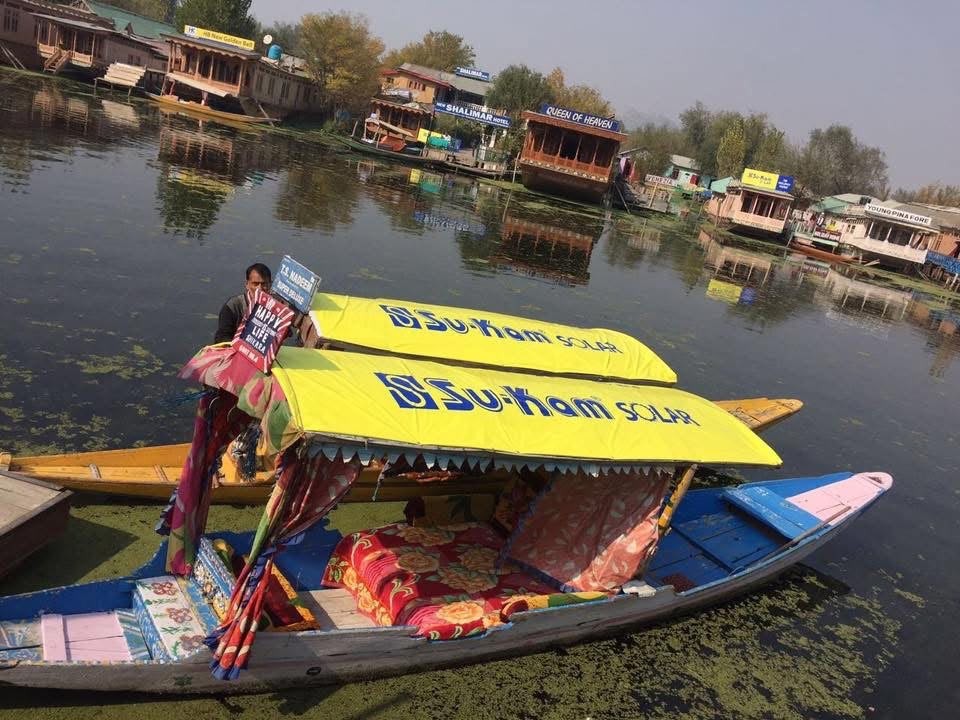
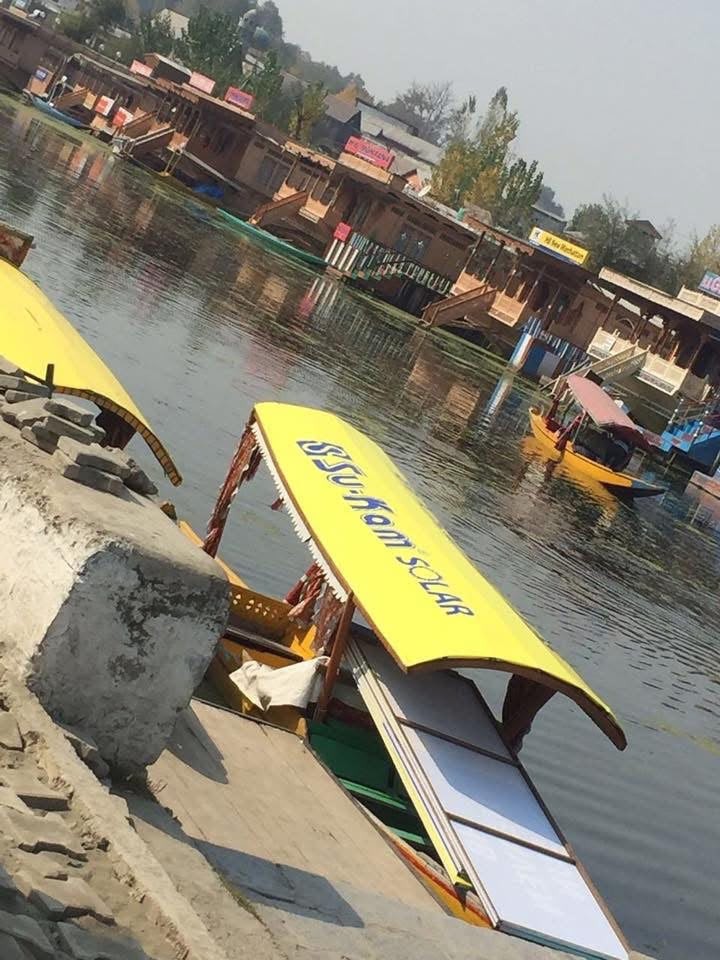
From the Dal Lake archive — houseboats and Su-Kam Solar shikaras
These frames are from the water itself: the shikaras at the ghat, a houseboat carrying a Su-Kam Solar board, yellow canopies with the brand written large enough for tourists to ask the same question from every shore — what is Su-Kam? — and, up close, panels under the canopy where branding and power sat in the same place.
When Airtel Followed — A Year Later
Ideas that work do not stay secret long. About a year after our project, I watched the same model appear on Dal Lake under a different name: Airtel began paying boatmen to carry branding on their shikaras — money in their pockets, logos on their tripals. Others followed. Telecom companies, consumer brands, the whole floating-billboard vocabulary that Indian marketers now treat as normal.
I do not say this with bitterness. I say it with clarity. The trend started with Su-Kam — with a founder who saw poverty on the water and chose practical help before publicity. Competitors copied the surface. The community remembered who arrived when the boats looked defeated and the rain came through the old cover. First-mover advantage is not only commercial. It is emotional.
One boatman told a journalist, years later, words I still carry: “For the first time, someone thought about us, not just about business.” That sentence is the whole point. Kashmir was not a stunt. It was a reminder that enterprise in India is not only factories and export certificates — though we were building those too, as I write in Building the Empire. Enterprise is also noticing the man whose entire capital floats on wood and water.
Branding With Meaning
Marketing departments love the phrase emotional connection. Most of the time it is manufactured in a conference room. On Dal Lake, the connection was literal: a tripal that kept rain out of a man’s workspace. I have always believed — and still believe at Su-vastika and kunwwer.ai — that branding is strongest when communities can own the story. The shikara owners did not read our press releases. They felt the difference when repair season shortened. Tourists supplied the amplification. Airtel and others supplied the proof that the model had legs.
This was 2005 — the same period when we were obsessing over electrochemistry in Baddi, inventing monitoring culture around the Solar PCU, and learning that Indian customers reward companies who show up in unlikely places with practical help. Kashmir fit that ethos. Not solar panels on boats in this chapter — though our solar journey would grow vast — but the same instinct: protection as dignity.
What I Learned
The Shikara Project taught me that the distance between a Gurgaon boardroom and a Srinagar ghat is not geography — it is attention. Founders who only watch spreadsheets miss the defeated boat and the dripping tripal. Founders who walk the mooring lines after a dealer meet sometimes find a brand strategy more durable than television ever offered.
Today, when I think about Kashmir, I do not think first about logos or who copied whom. I think about rain on a seat cushion. I think about a boatman who apologised for the sky. I think about a strong new tripal that floated — and a lake that taught Su-Kam how to be visible without being loud. The fuller arc of building, losing, and rebuilding is in My Story on SolarManOfIndia.com.
Related on this site
Grassroots & spectacle marketing
🔗 Founder stories — read the series
- 📖 CE Mark & Intersolar Munich 2011
- 📖 Exporting Inverters to China
- 📖 BSF Border Solar Posts
- 📖 Why I Started the Su-Kam YouTube Channel
- 📖 Solar PCU Invented in 2005
- 📖 Baddi Factory & Tubular Gel Battery
- 📖 Brainy Eco Solar Hybrid PCU
- 📖 Colossal Solar PCU — Inverter to Power Plant
- 📖 India’s First 3-Phase Solar System in 2006
- 📖 0% Chinese Share in Inverters — India’s Pride & Post-NCLT Reality
- 📖 Marriott Chandigarh 2011 — Innovation & R&D Talk
- 📖 Technovations at Su-Kam 2012 — SlideShare Deck
- 📖 My Story — Twelve Chapters on SolarManOfIndia.com
Frequently Asked Questions
How were Kashmir's Dal Lake shikaras electrified with solar power?
Kunwer Sachdev designed compact solar power backup systems for Kashmir's Dal Lake shikaras, replacing noisy petrol generators with silent solar energy.
Founder of Su-Kam and Kunwwer.ai, and mentor at Su-vastika and several other companies — the “Inverter Man of India” and the “Solar Man of India.” Read his story →
You must be logged in to post a comment.