6-Stage Battery Charging: how we taught a Su-Kam inverter to make batteries last longer
6-stage battery charging — in a power-backup system, the battery is the most expensive part — and the first to die. So we built charging that nurses the battery, stage by stage. We called it DT-6S.
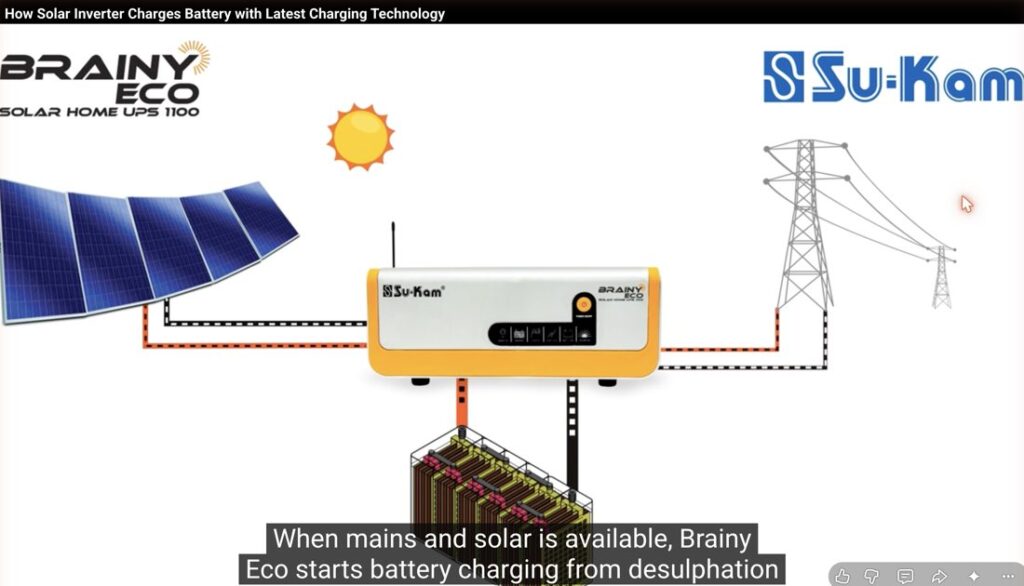
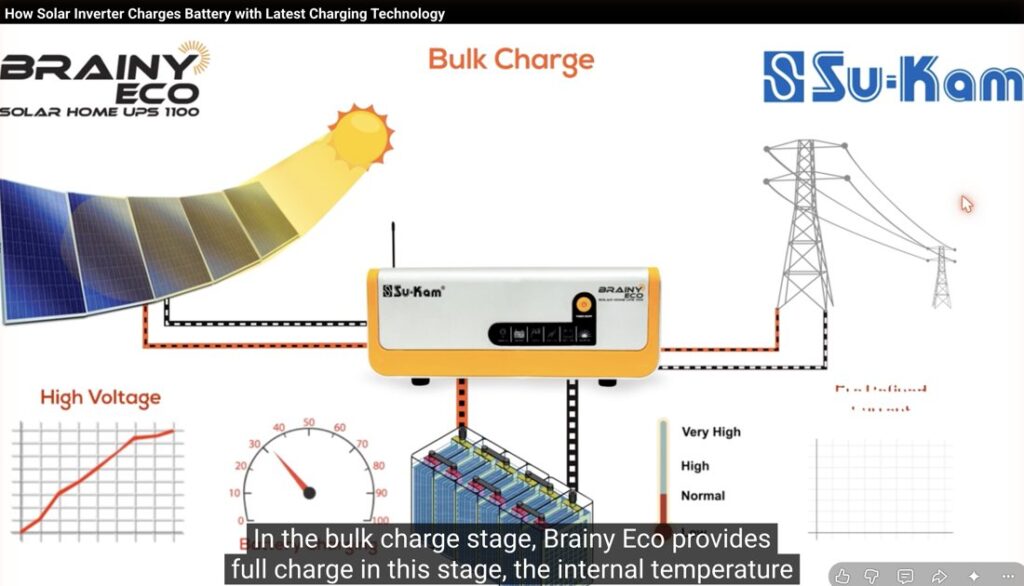
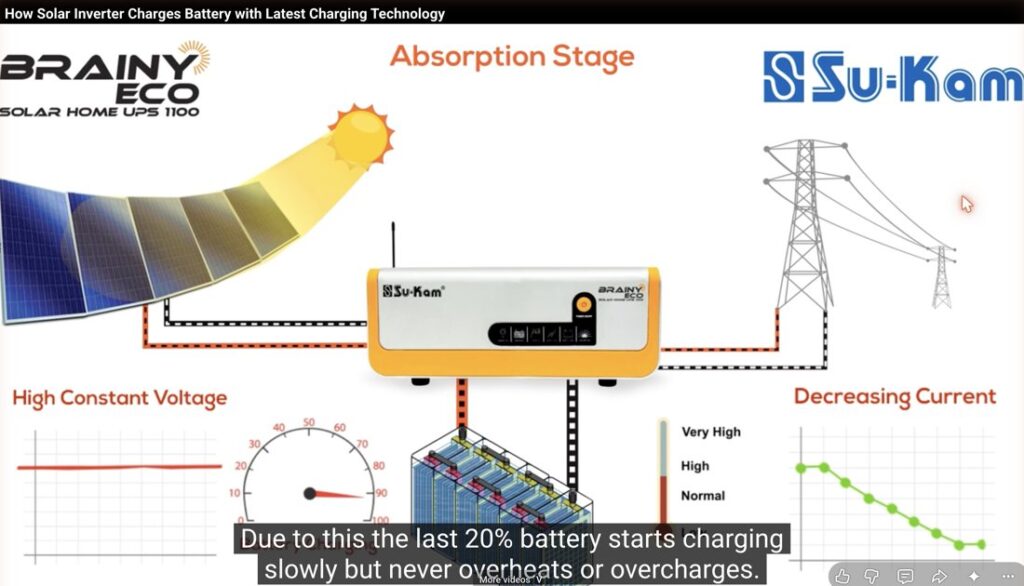
The secret to extending battery life is intelligent 6-stage battery charging — a method that treats every moment of the charge cycle differently. Anyone can push current into a battery. Charging it intelligently is a different craft.
Honestly, battery charging was the biggest challenge we won in our time. Lead-acid batteries are temperamental, unlike some modern solar power systems, and getting their charging right was a constant learning — we made design after design after design. This six-stage method, DT-6S, was the best of all of them, and we built it for our smaller inverter range, where battery life matters most to an ordinary household.
And here is the part people forget: it was software. Alongside inventing the pure sine wave inverter, the achievement I’m proudest of is the charging software we wrote for the charging section of our inverter-UPS. It controlled the charger so precisely that it improved both the backup you got and how long the battery lasted.
For most of the industry, charging was crude: pour power in until the battery is full. But a battery treated that way ages fast — plates sulphate, acid stratifies, performance fades. We wanted Su-Kam’s solar hybrid inverters to do the opposite: to charge in a way that actually extends the battery’s life. The result was DT-6S six-stage charging, and the claim we put on film was simple — it increases battery life by at least six months.
How 6-stage battery charging works: the DT-6S method
Clean the plates first
High-voltage, low-current pulses break down the sulphate deposits that build up on the battery plates — restoring capacity, reducing internal resistance, and setting up a longer life.
Ease it awake
Charging begins gently, with low current and low voltage, so the battery’s temperature stays normal instead of spiking.
The main fill
Now it delivers high voltage at a pre-defined current for a full charge — the battery voltage rising gradually, but never tipping into overcharge.
Top it off, safely
Voltage is held constant while the current is gradually reduced, letting the battery reach a complete charge without the damage that overcharging causes.
The stage that protects life
The most important step for longevity: a controlled high voltage at constant current mixes the electrolyte — the sulphuric acid and water — preventing acid stratification and keeping the battery at peak performance. Equalization is why Su-Kam’s inverter technology stands apart — most competitors skip this step entirely.
Hold it there
Finally, periodic low-voltage, low-current charging maintains the battery’s charge level and keeps its temperature normal — ready for the next power cut.
This is the kind of engineering that never makes a headline but quietly defines a brand. We didn’t just sell an inverter; we built the intelligence that looked after the battery behind it.
The next challenge: teaching it
A technology this good is wasted if no one understands it. Six charging stages, electrolyte chemistry, desulphation — that is a lot to explain to a busy dealer or a first-time customer. So we faced the same challenge we always did: how do we teach our own people, our dealers and our customers? The answer, once again, was to put it on film — to show the six stages clearly, simply, so anyone could understand why a Su-Kam inverter looks after a battery better. We took this approach with our company culture at Su-Kam — show, don’t tell. That video is the one above.
Frequently Asked Questions
What is 6-stage battery charging?
A charging method that treats each phase of the battery charge cycle differently — from desulphation (cleaning plates) through soft start, bulk charge, absorption, equalization, and float maintenance — to extend battery life and performance.
How much longer does a battery last with DT-6S charging?
Su-Kam’s DT-6S charging extends lead-acid battery life by at least 6 months compared to standard single-stage charging, reducing costs for Indian households and businesses.
What is the desulphation stage in battery charging?
The first stage uses high-voltage, low-current pulses to break down sulphate deposits that build up on battery plates over time, restoring capacity and reducing internal resistance.
Why is equalization important for battery longevity?
Equalization mixes the electrolyte (sulphuric acid and water) to prevent acid stratification, keeping the battery at peak performance and extending its usable life significantly.
What batteries work with Su-Kam’s DT-6S inverter?
DT-6S 6-stage charging is designed for lead-acid batteries in backup power systems. Any quality lead-acid battery (tubular, flat-plate, or gel) will benefit from intelligent charging.
Can I upgrade my existing inverter to use 6-stage charging?
6-stage charging is built into Su-Kam’s newer inverter models like the DT-6S. If you have an older inverter, you may be able to upgrade the charging module — contact a Su-Kam dealer for options.

Founder of Su-Kam and Kunwwer.ai, and mentor at Su-vastika and several other companies — the “Inverter Man of India” and the “Solar Man of India.” Read his story →
You must be logged in to post a comment.