Colossal Solar PCU: How Su-Kam Turned an Inverter Into a Solar Power Plant
What the Colossal Solar PCU actually was
I Was Not Stopping on Any Invention — One After the Other
2008 inverter. Solar PCU. Brainy Eco. Colossal. The industry followed — because we never sat still after one win.
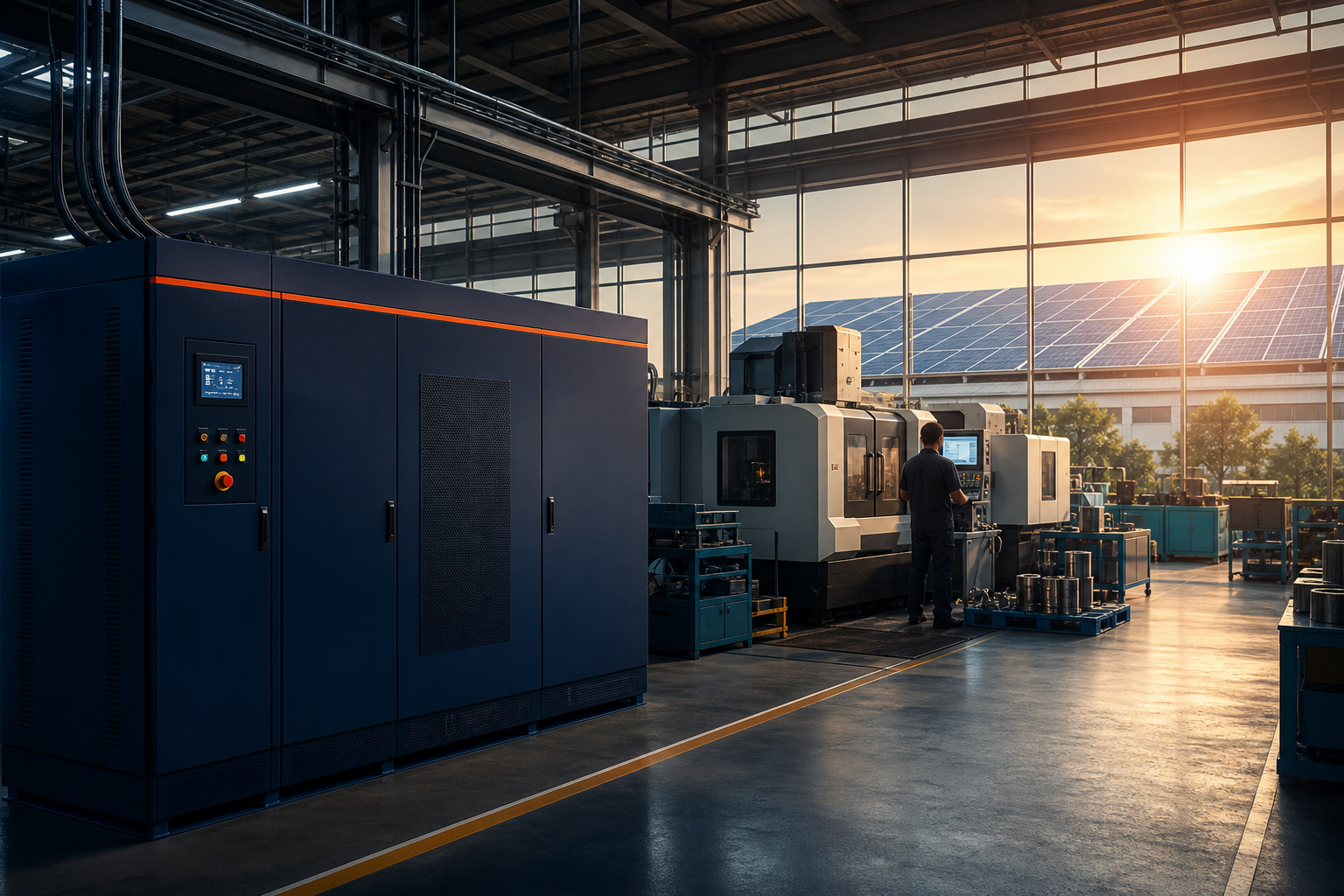
People remember Colossal as a product. I remember it as a refusal to stop. We had already invented the Solar PCU in 2005 — monitoring on screen when the market did not know it wanted to see. We had shipped Brainy Eco into living rooms where families were paying the grid to babysit batteries. And still I was not satisfied. The thought and energy we poured into product development was unmatched — not because we had more people, but because I could not imagine sitting still while India’s factories and hospitals still ran on diesel when the sun was free overhead.
The Garage-to-Factory Journey — and Why Colossal Had to Exist
Su-Kam did not begin in a boardroom. It began in a garage — a founder’s obsession with making power reliable when the grid was not. By 2008 we had grown into factories, dealer networks, and a reputation dealers repeated like a prayer: “Su-Kam is the only company that designs and launches new products — no one else.” That sentence was not marketing. It was fatigue — their fatigue, comparing us to brands that refreshed paint on old platforms while we kept shipping something genuinely new.
The Colossal was born in that restless rhythm. First as a high-capacity inverter — IGBT and DSP, pure sine wave, transformer-based — built to do what only a diesel generator could do until then: carry heavy loads through the long Indian power cut. Homes with deep freezers. Offices with servers. Small factories with motors that did not forgive square-wave distortion. I watched dealers’ faces when the Colossal started a load their old inverters would not touch. That moment — the dealer’s surprise, the customer’s relief when the lights stayed on through the third outage of the evening — that was dignity in electrical form.
“I was not stopping on any invention — one after the other. Solar PCU, Brainy Eco, Colossal. Each one fed the next. The whole industry followed because we set the pace. Competitors chased. I never sat still after one win.”
One New Ability — and a Completely Different Purpose
The Colossal inverter had no solar in it when we first built it. That was deliberate. We proved the heavy-duty backbone first — the IGBT power stage, the DSP-based PWM control, the pure sine wave output that sensitive equipment could trust. Only then did we do something deceptively simple and genuinely hard: we built an in-built, heavy-duty solar charge controller into the very same machine.
The moment we did, the Colossal stopped being only a backup inverter. It became a Solar PCU — a Power Conditioning Unit. Same platform. One new ability. A completely different purpose. Not a bolt-on solar box sitting beside a dumb inverter — but three machines fused into one: solar charge controller, inverter, and grid charger, deciding second by second where your power should come from. Solar and battery first. Grid only when it had to. The opposite of a generator, which burns fuel no matter what the sky offers.
Colossal Inverter + Solar Charge Controller → Colossal Solar PCU
3-in-1 power plant · pure sine wave · DSP + IGBT · up to 100 KVA three-phase
The Unbroken Chain — Each Invention Feeding the Next
Colossal is not an isolated chapter. It is the industrial crescendo of an unbroken chain. In 2005 we proved that a PCU could show you what it was doing — data before WiFi, monitoring before the market had language for it. Around 2010, Brainy Eco took that intelligence into the middle-class home: solar priority, intelligent charging, temperature compensation — a brain in the hallway cupboard. Colossal took the same philosophy to scale: prove India could build at industrial KVA class, not copy imports and apologise for Indian conditions.
The whole industry followed. Within seasons, competitor catalogues listed hybrid labels and solar-priority stickers. Some copied well. Many copied the words and skipped the engineering nights. I did not mind the copying as much as people expect. Copying meant we had moved the definition of normal. But I knew — and dealers who had installed our machines knew — that the thought and energy behind each launch could not be photocopied. You had to live through the failures that earned the feature.
Power Cuts, Factory Floors, and Proving India Could Build at Scale
I remember a dealer in Punjab calling after a demonstration: Sir, fourteen CNC machines ran on the Colossal. Fourteen. The factory owner did not believe it until he watched. That call is why we built the 100 KVA three-phase class — 360V, heavy enough to run a factory floor on sunlight with battery and grid as intelligent backup. Not a pilot project for a brochure. A real answer to real power cuts that were costing Indian industry diesel money and dignity every summer.
Crucially, we did not water the machine down to make it solar. The Solar PCU kept everything that made the Colossal formidable — pure sine wave output, DSP control, IGBT power, three-phase capacity scaling into the tens of KVA. We were simultaneously obsessing over electrochemistry in Baddi, taking hybrid systems to Munich after CE certification, and teaching installers on the YouTube channel because a machine this serious deserved an educated market. Policy momentum around renewables was building — bodies like MNRE were part of the landscape — but Colossal was our way of making policy tangible on a factory floor.
12 V Battery entering Intercell Welder — Su-Kam factory floor
Can 14 CNC machines run on Colossal 3P 100 KVA / 360V Solar PCU?
A factory owner once told me: “For twenty years I budgeted for diesel as if it were rent. Your machine made sunlight feel like an employee who never takes leave.” That is the emotional spine beneath the spec sheet. Not KVA numbers on a slide — a man who stopped apologising to his workers every time the grid failed.
Dealer Moments That Still Live in Memory
Dealers are the unsung witnesses of Indian manufacturing. They see the customer’s face when a product works — and when it does not. I travelled constantly in those years, not to cut ribbons but to hear what the field was saying before it reached a spreadsheet. The Colossal demos were theatrical in the best sense: start a load everyone said needed a generator, let the room go quiet, watch scepticism become belief.
When we added solar to the Colossal platform, the conversation shifted again. Dealers who had sold backup for fifteen years suddenly had to learn sizing for panels, battery banks at industrial scale, priority logic between sun and grid. We did not abandon them to catalogue PDFs. We put the training on video — Colossal playlists on the Su-Kam Solar channel — because I had learned the hard way that knowledge walks out the door unless you preserve it somewhere competitors cannot poach it.
Colossal 3P 80 KVA / 360V — Solar PCU inverter introduction
“We took a machine built to replace the generator and gave it the power to replace the grid’s monopoly too — running heavy three-phase loads on solar, with battery and grid as intelligent backup. That was not incremental improvement. That was a statement about what India could build.”
Industry Leadership — Setting the Pace, Not Chasing It
There is a difference between being first to market and being first to think. Su-Kam set the pace because we treated product development as a continuous obligation, not a quarterly event. Plastic-body inverter. Sine wave. Home UPS. Solar PCU with PC monitoring. Touchscreen PCU. Falcon. Brainy. Colossal. Each launch fed the next — shared firmware philosophy, shared respect for Indian voltage chaos, shared refusal to ship a sticker instead of a solution.
The wider scale story — six factories, institutional capital, the long arc of building — lives in Building the Empire. The human moments live elsewhere: rain on a Srinagar shikara in the Kashmir project, border posts in Rajasthan, Munich exhibition floors. Colossal belongs in that family. It is the industrial proof that the same founder instinct — see the problem, build the answer, do not stop, teach the market — could scale from a garage to a factory floor without losing its soul.
What I Learned
Colossal taught me that restless inventor energy is only virtuous if it serves people the grid has ignored. It taught me that dealers and factory owners are not audiences — they are partners in belief, and their surprise when a machine works is the only review that matters. And it taught me that industry leadership is not a trophy you keep after one win. It is a pace you set every year, knowing competitors will chase and customers will benefit either way.
The inverter that killed the generator had grown up into a solar power plant. I was already thinking about the next chapter — because that is who I am. The fuller arc of building, losing, and rebuilding is in My Story on SolarManOfIndia.com.
Related on this site
🔗 Founder stories — read the series
- 📖 CE Mark & Intersolar Munich 2011
- 📖 Exporting Inverters to China
- 📖 BSF Border Solar Posts
- 📖 Why I Started the Su-Kam YouTube Channel
- 📖 Solar PCU Invented in 2005
- 📖 Brainy Eco Solar Hybrid PCU
- 📖 Baddi Factory & Tubular Gel Battery
- 📖 Kashmir Shikaras — Floating Billboards of Hope
- 📖 India’s First 3-Phase Solar System (2006)
- 📖 0% Chinese Share in Inverters — India’s Pride & Post-NCLT Reality
- 📖 Marriott Chandigarh 2011 — Innovation & R&D Talk
- 📖 Technovations at Su-Kam 2012 — SlideShare Deck
- 📖 My Story — Twelve Chapters on SolarManOfIndia.com
Founder of Su-Kam and Kunwwer.ai, and mentor at Su-vastika and several other companies — the “Inverter Man of India” and the “Solar Man of India.” Read his story →
24 products and instruments. This page is one of them. The others are here.
- Here — Colossal overview
- Colossal 1P 10 kVA
- Colossal 3P 30 kVA
- Colossal 3P 40 kVA
- Colossal 3P 100 kVA
- Brainy Eco 1100
- Brainy Eco hybrid PCU
- Brainy Hybrid GTI
- Brainy S modular
- Brainy Touch PCU
- Intelli S 40 kVA
- Falcon HBU
- Falcon Plus 1100
- Chic plastic inverter
- DT-6S charging
- Solar online UPS
- Electroscopy
- Battery life-cycle tester
- Lithium BMS
- Sun Way street light
- IoT solar monitoring
- Tubular gel battery
- Commercial solar / MPPT
- UPS charging
You must be logged in to post a comment.