India Built Its First 3-Phase Solar System in 2006 — and I Was Not About to Stop There
When Consultants Said It Was Impossible, We Built the Testing Protocols Alongside the Product
3-phase solar system 2006 — 2006 — one year after the Solar PCU, and India still had no commercial three-phase solar. Su-Kam changed that.
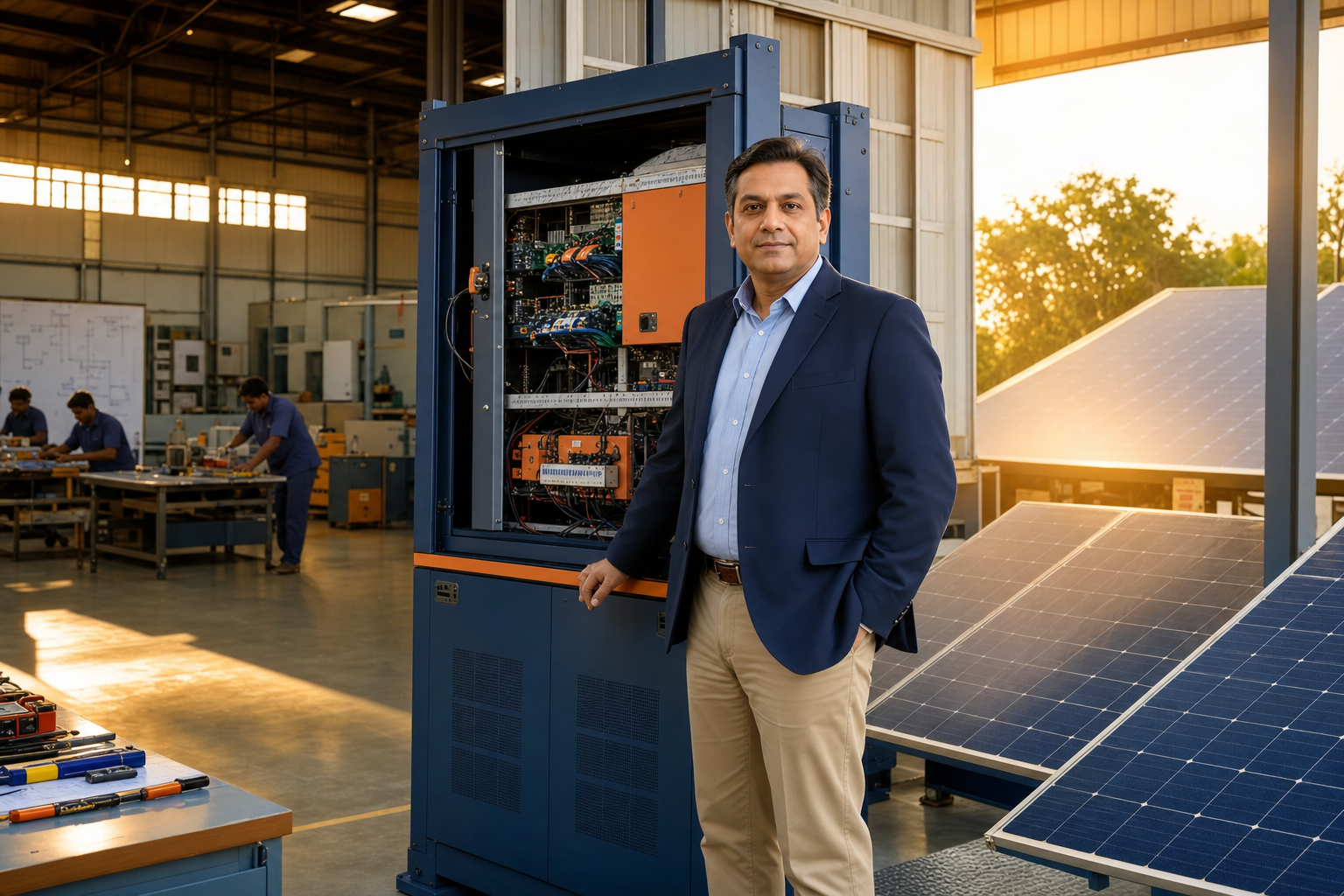
In 2006, solar in India meant a bulb in a village hut. The idea of a commercial three-phase solar system running industrial machinery was dismissed as fantasy — even by consultants who flew in from abroad and told us Indian R&D lacked the instrumentation to validate it. I did not listen. We had already invented the Solar PCU in 2005 — monitoring on screen when nobody asked for screens — and I was not stopping on any invention. The thought and energy we poured into product development was unmatched. One launch fed the next. The whole industry followed.
The Unbroken Chain — Solar PCU to Three-Phase to Brainy to Colossal
This story does not stand alone. It is the industrial bridge in an unbroken chain. In 2005 we proved a Power Conditioning Unit could show you what it was doing — data before WiFi, intelligence before the market had language for it. In 2006 we took that philosophy to three live phases simultaneously: synchronising 120-degree electrical displacement under variable solar irradiance while carrying real commercial loads. Around 2010, Brainy Eco brought hybrid intelligence into the middle-class home. Years later, Colossal scaled the same restless DNA to factory floors — 100 KVA three-phase running CNC machines on sunlight. Each invention fed the next. Competitors chased. I never sat still after one win.
Dealers used to say: “Su-Kam is the only company that designs and launches new products — no one else.” That was not vanity. It was exhaustion — their exhaustion, comparing us to brands that refreshed paint on old platforms while we kept shipping something genuinely new. The 2006 three-phase solar system was one of those moments when the field went quiet and then the phones started ringing.
“When we announced we were building a three-phase commercial solar backup installation in 2006, global technical consultants told us Indian R&D facilities lacked the instrumentation to validate it. We didn’t listen. We built the testing protocols alongside the product.”
Breaking the Three-Phase Engineering Barrier
Standard off-grid inverters of that era could not synchronise phase angles across three live lines under changing sunlight. Developing a reliable commercial solar power conditioning unit at three-phase scale meant rewriting the power-electronics rulebook — locally, in our own labs, with our own engineers staying late on nights when the grid itself was unreliable irony.
We approached it as architectural redesign, not assembly. Heavy-duty IGBT switching configured to process dynamic inputs from solar arrays while maintaining perfect phase displacement. DSP control logic that could decide, second by second, where power should come from. This was not a brochure pilot. It was the engineering spine that later became normal when businesses today evaluate a 3-phase solar system price in India for cold storage, factories, and commercial complexes — a market we helped create by refusing to accept “impossible.”
What It Felt Like on the Factory Floor
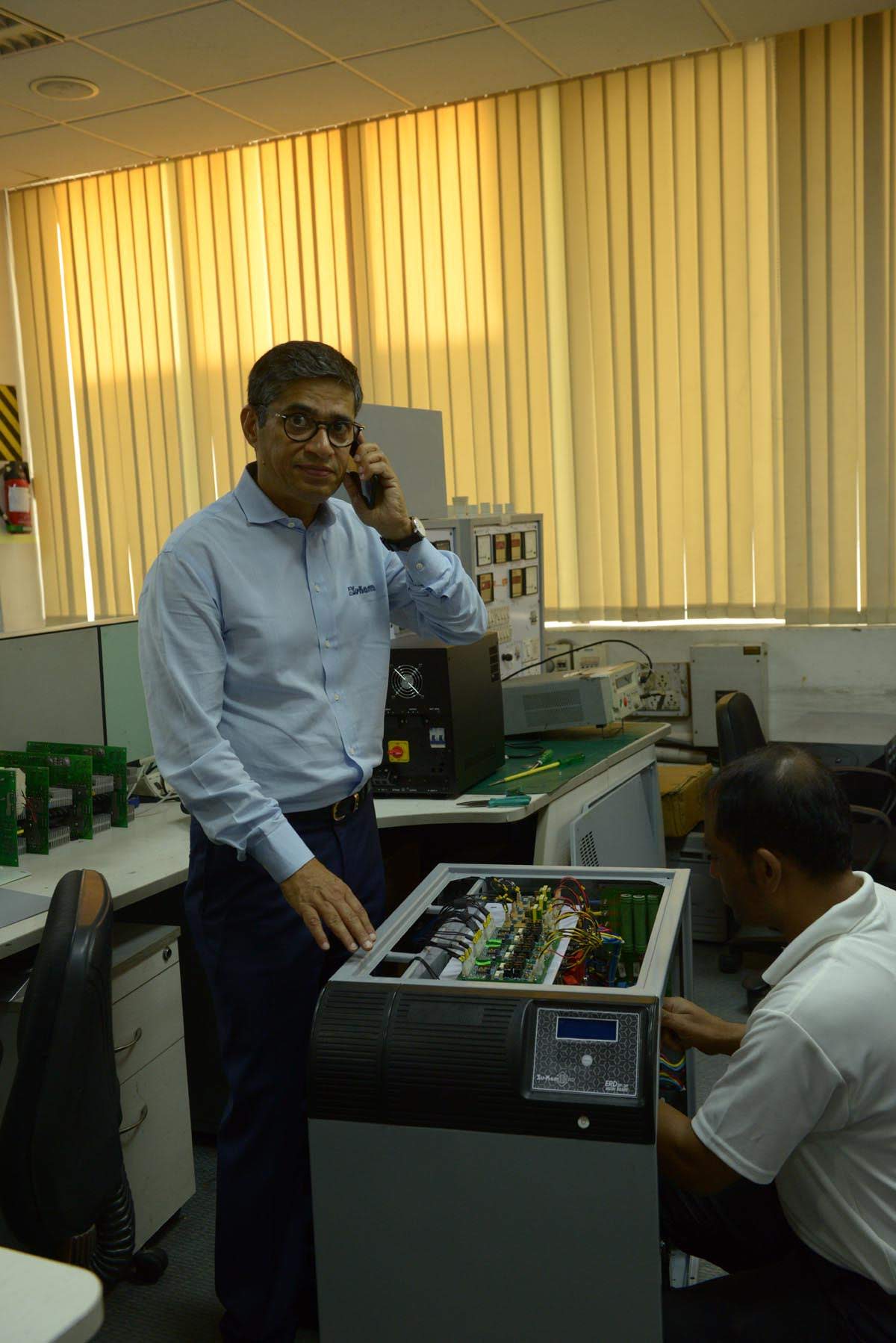
I remember standing beside the first functional unit — the photograph above is from that era — and feeling something I rarely put into words: we are not copying the world anymore; the world will copy us. When the system went live, it demonstrated that large industrial setups could offset peak demand using indigenous clean-energy configuration. Cold storage operators who had budgeted for diesel as permanent rent suddenly had vocabulary for another future.
We were simultaneously obsessing over electrochemistry in Baddi, teaching installers on the YouTube channel, and taking hybrid systems to Munich after CE certification. The 2006 three-phase milestone did not pause the rest of the company — it accelerated it. That is what unmatched product-development energy looks like: not one hero project in isolation, but a conveyor belt of inventions each raising the bar the industry had to meet.
2005 Solar PCU → 2006 3-Phase Solar → Brainy Eco → Colossal
An unbroken chain · each invention feeding the next · industry followed Su-Kam
From 2006 Proof to Factory-Scale Colossal
The 2006 system proved three-phase solar could exist commercially in India. Colossal proved it could run a factory. When a Punjab dealer called to say fourteen CNC machines ran on the Colossal Solar PCU, I heard an echo of 2006 — the same disbelief, the same silence in the room, the same moment when scepticism becomes belief. We had been building toward that call for years. The lineage is direct: PCU intelligence, three-phase backbone, hybrid priority logic, industrial KVA scale.
Colossal 3P 80 KVA / 360V — Solar PCU inverter introduction (three-phase lineage from 2006)
Within seasons of each major launch, competitor catalogues listed hybrid labels and solar-priority stickers. Some copied well. Many copied the words and skipped the engineering nights. I did not mind copying as much as people expect — copying meant we had moved the definition of normal. But dealers who had installed our machines knew the thought and energy behind each launch could not be photocopied.
Can 14 CNC machines run on Colossal 3P 100 KVA / 360V Solar PCU?
A factory owner once told me: “For twenty years I budgeted for diesel as if it were rent. Your machines made sunlight feel like an employee who never takes leave.” That sentence started in homes with Brainy Eco and reached factory floors with Colossal — but the conviction began earlier, in 2006, when we refused to accept that three-phase solar was an import-only fantasy.
Industry Leadership — Setting the Pace, Not Chasing It
There is a difference between being first to market and being first to think. Su-Kam set the pace because we treated product development as a continuous obligation. Plastic-body inverter. Sine wave. Home UPS. Solar PCU with PC monitoring. Three-phase commercial solar. Touchscreen PCU. Falcon. Brainy. Colossal. Each launch shared firmware philosophy, respect for Indian voltage chaos, and refusal to ship a sticker instead of a solution.
The wider scale story — six factories, institutional capital — lives in Building the Empire. Human moments live elsewhere: rain on a Srinagar shikara in the Kashmir project, border posts in Rajasthan, Munich exhibition floors. The 2006 three-phase milestone belongs in that family — the industrial proof that the same founder instinct could scale from a garage to a factory floor without losing its soul.
“I was not stopping on any invention — one after the other. Solar PCU, three-phase solar, Brainy Eco, Colossal. The whole industry followed because we set the pace. That is not arrogance. That is the only way I know how to build.”
What I Learned
2006 taught me that consultants with foreign slide decks are not oracles — they are snapshots of what already exists elsewhere. It taught me that three-phase synchronisation under solar is as much about courage as calculus. And it taught me that industry leadership is not a trophy you keep after one win; it is a pace you set every year, knowing competitors will chase and customers will benefit either way.
India’s commercial solar boom did not appear from policy alone. It appeared because someone built the first machine when the market said don’t. The fuller arc of building, losing, and rebuilding is in My Story on SolarManOfIndia.com.
Related on this site
- 📖 Solar PCU Invented in 2005
- 📖 Brainy Eco Solar Hybrid PCU
- 📖 Colossal Solar PCU — Inverter to Power Plant
- 📖 Colossal 3P 100 KVA Solar PCU
- 📖 Baddi Factory & Tubular Gel Battery
- 📖 CE Mark & Intersolar Munich
- 📖 Why I Started the Su-Kam YouTube Channel
- 📖 Kashmir Shikaras — Floating Billboards of Hope
- 📖 My Story — Twelve Chapters
🔗 Founder stories — read the series
- 📖 CE Mark & Intersolar Munich 2011
- 📖 Exporting Inverters to China
- 📖 BSF Border Solar Posts
- 📖 Why I Started the Su-Kam YouTube Channel
- 📖 Solar PCU Invented in 2005
- 📖 Brainy Eco Solar Hybrid PCU
- 📖 Colossal Solar PCU — Inverter to Power Plant
- 📖 Baddi Factory & Tubular Gel Battery
- 📖 Kashmir Shikaras — Floating Billboards of Hope
- 📖 0% Chinese Share in Inverters — India’s Pride & Post-NCLT Reality
- 📖 Marriott Chandigarh 2011 — Innovation & R&D Talk
- 📖 Technovations at Su-Kam 2012 — SlideShare Deck
- 📖 My Story — Twelve Chapters on SolarManOfIndia.com
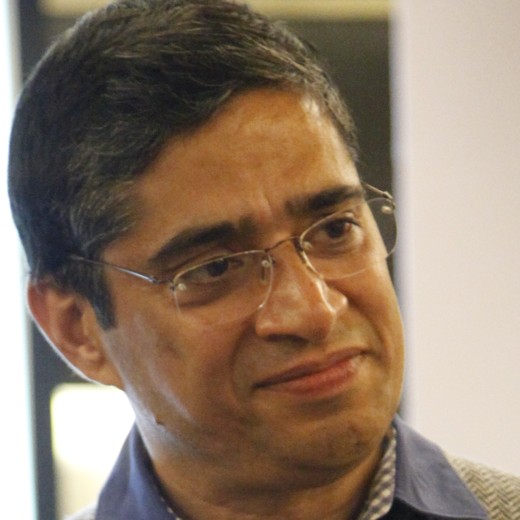
Founder of Su-Kam and Kunwwer.ai, and mentor at Su-vastika and several other companies — the “Inverter Man of India” and the “Solar Man of India.” Read his story →
You must be logged in to post a comment.