Inverter vs Generator: how I challenged India’s 10 KVA generator industry — and won
When every business in India reached for a diesel generator, I bet on a different idea: a silent, high-capacity inverter. The inverter vs generator argument had to be seen, not just spoken. So we made a film — in Hindi — to show dealers and customers the real difference, and to take on an entire industry.
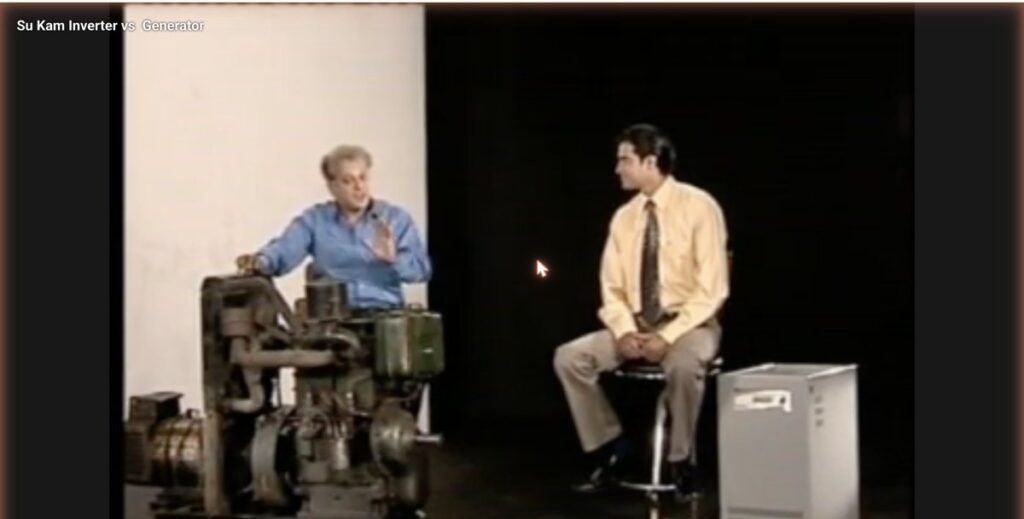
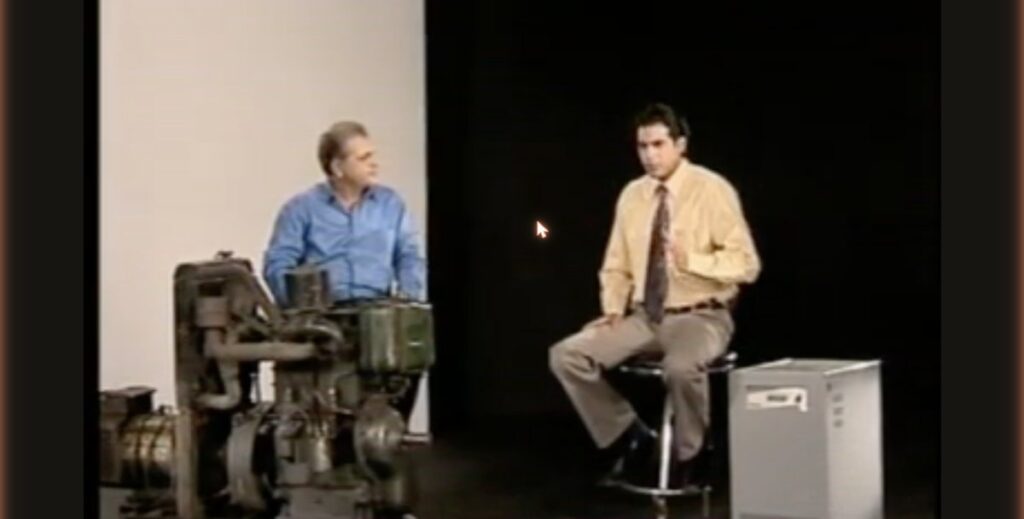


Dealers already had a 10 KVA diesel SKU on the floor. That was the slot. If an inverter could not sit in that same capacity band — silent, indoor, no diesel drum — they had no reason to unlearn a product that paid the rent. The 10 KVA machine was not a bigger home UPS. It was a replacement for the generator they already sold.
You cannot change a habit you haven’t first explained.
When we started, the reflex across India was automatic: if you needed serious backup power, you bought a generator. Nobody stopped to ask whether there was a better way — because nobody had shown them one. So this became one of the very first videos we ever made, and we made it deliberately in Hindi, for the people who actually make the decision: the dealer on the shop floor and the customer in the home or business.
1 Why we put it on film — when our own team couldn’t
I was trying my best to educate our dealers — and our own sales and service people first. But the truth is, our sales and service teams simply weren’t able to reach the dealers and convince them about this product. The idea was too new, and a spoken pitch kept falling short.
The resistance was not a lab argument. It was habit: diesel relationships, generator margins, and a shop-floor story that had worked for years. Our people could not break that in a five-minute visit. A film could play the same comparison every time a dealer walked in.
So I made a decision: if our people couldn’t land the message in person, we would put it into a form that could land every single time. We brought in a professional agency, and I was directly involved in writing the script myself — because the explanation had to be exactly right, in the customer’s own language. It was made before YouTube was even popular in India, and uploaded there only two to three years later.
2 The inverter vs generator difference the film showed — point by point
Generator
- No warning before the diesel runs out
- Risk of short-measure or fraud when buying diesel
Su-Kam inverter
- LCD display shows battery charge and the inverter’s health — the same obsession we later put into 6-stage battery charging
- No endless cycle of buying fuel
Generator
- Someone must start it on a cut and switch it off on return
- In those seconds, computers and equipment shut down
Su-Kam inverter
- Switches over instantly and automatically — no break
- Your computer never even blinks
Generator
- Voltage fluctuation and signal distortion
- Can damage costly electronics like computers
Su-Kam inverter
- Pure sine wave power supply
- On high grid voltage it shifts to a safe mode — protecting AC, fridge and computer
Generator
- Burns a full ~3 litres of diesel an hour — even on a light load
- The engine runs flat-out regardless of how little you draw
Su-Kam inverter
- Costs about half the price of a 10 KVA silent generator
- Draws only the power the load actually needs
Generator
- Smoke and heavy noise pollution
- Regular maintenance — oil changes, filter cleaning
- Vibration means it lives on the ground floor or outside only
Su-Kam inverter
- Completely silent and pollution-free
- Digital, no moving parts — practically no maintenance; UPS and smart charging is the same idea, smaller
- Fits on any floor, anywhere inside the building
3 The first — and then everyone followed
Here is what I want on the record. When we started, nobody in the industry believed these inverters would sell — or even work — in India. A 5 KVA or a 10 KVA inverter as a real, sellable product simply wasn’t thought possible. We engineered it, manufactured it, and sold it across the country. And then, three to four years later, the whole industry copied us. Copying is how you know a market has moved. They followed the 10 KVA inverter into the same shops, three to four years late. Later we took the same bet into grid-feed hybrid inverters — still no diesel, still a fight with habit.
So let the credit sit where it belongs: the first 5 KVA and 10 KVA inverters in India were ours — built under my leadership, from my own idea — and I built them into a name the country came to trust: Su-Kam.
Questions I still get about that film
What was special about Su-Kam’s first 10 kVA inverter?
It sat in the same capacity band as the 10 KVA diesel generator dealers already sold — silent, indoor, no fuel drum. That was the point. Until then nobody in the industry believed a 10 KVA inverter was even available as a real product. We built it at Su-Kam, under my leadership, and put the difference on film so a dealer did not have to take our word for it.
How did the Hindi dealer film shape the inverter vs generator story?
Our own sales and service teams could not land the pitch in person. The idea was too new. So I scripted a film in Hindi, with a professional agency, for the shop floor — before YouTube was popular in India. The same comparison played every time: fuel, change-over, power quality, cost, smoke. Language was the distribution channel.
Why did a 10 kVA inverter challenge the generator industry?
Serious backup in India meant diesel. A 10 KVA generator was the habit. The inverter offered instant change-over, sine-wave power, no 3 litres-an-hour burn on a light load, and a box that could live inside a building. Three to four years later the rest of the industry copied the capacity. That is how you know the habit had cracked.
What was the dealer resistance?
Not a specification sheet. Diesel relationships, generator margins, and a story that had worked for years. Dealers did not need another lecture. They needed to see the product in their language, on a screen, next to the noisy machine they already knew how to sell.

Founder of Su-Kam and Kunwwer.ai, and mentor at Su-vastika and several other companies — the “Inverter Man of India” and the “Solar Man of India.” Read his story →
Category & brand creation
The same founding arc is compressed in the Su-Kam category-creation case study. For the live-load proof that made high-capacity inverters believable on the street — fans still spinning in a real outage — see Part 9 — Power On Wheels.
You must be logged in to post a comment.