The Baddi Factory & the Birth of Tubular Gel Battery
Why the tubular gel battery started in Baddi
A Battery Flaw Might Not Show for Three Years. We Built a Factory to Find It in Three Months.
Baddi tubular gel battery — Baddi, Himachal Pradesh — where Su-Kam learned that failure is the most honest teacher in electrochemistry

While sorting my archive recently, I found an old presentation titled “Battery R&D.” Slides from July 2016 — strap weights, jig boxes, plate envelopes, partial state-of-charge curves. Most people would see engineering paperwork. I saw something else: the years we spent in Baddi proving that India could not buy its way to battery reliability. We had to earn it plate by plate, failure by failure, in a factory built for patience.
Why Baddi — and Why Not an Off-the-Shelf Battery
Our factory in Baddi was never meant to be a copy-paste production line. It was an R&D powerhouse tucked into the Himalayan foothills — close enough to supply chains, far enough from the noise of Delhi that teams could think in years, not quarters. Under my direct guidance, we faced a truth the Indian market kept hiding: customers did not need batteries that looked good in a brochure. They needed batteries that survived frequent power cuts, summer heat, voltage spikes, and discharge cycles that would shame a laboratory datasheet.
Dealers wanted price. Distributors wanted margin. What end users wanted — often without words — was a battery that still started the inverter on the hundredth outage of the season. That gap between showroom promise and living-room reality is why we refused off-the-shelf designs. We had to master the electrochemistry ourselves. Baddi was where that mastery was forged.
The wider factory story — six plants, Reliance-Temasek, scale — lives in Building the Empire. This post is the intimate chapter: the room where prototypes died so customers would not have to.
The Genesis of Tubular Gel Technology
Tubular gel was not a marketing label we stuck on an existing plate. It was a deliberate, long-term bet on a chemistry and mechanical stack that could handle partial state-of-charge abuse — the slow torture Indian homes inflict on storage every day. I hand-picked a team that did not think in silos. R&D sat beside Quality Assurance. Failure analysis was not a department; it was a religion.
We studied grid corrosion, gel viscosity, water loss, vent sealing, envelope materials, carbon additives — parameters that sound dry until you realize each one is a line between a battery that lasts and a battery that fails quietly under a customer’s bed. Foundational reading like Battery University’s lead-acid battery primer gave the theory. Baddi gave the Indian reality. Later work at institutions such as DOE Energy Storage research would echo methodologies we were already running in our own lab — teardown first, trust later.
A manufacturing flaw might not surface for two or three years — long after the sale
So we built a culture that destroyed prototypes on purpose
The Rigorous Testing Pipeline
The battery business is misunderstood as metal and acid in a box. It is a high-stakes, long-latency game. You can ship a batch that passes every exit test and still face a reputation fire three monsoons later. That asymmetry — instant revenue, delayed truth — is what makes battery R&D emotionally exhausting and morally serious.
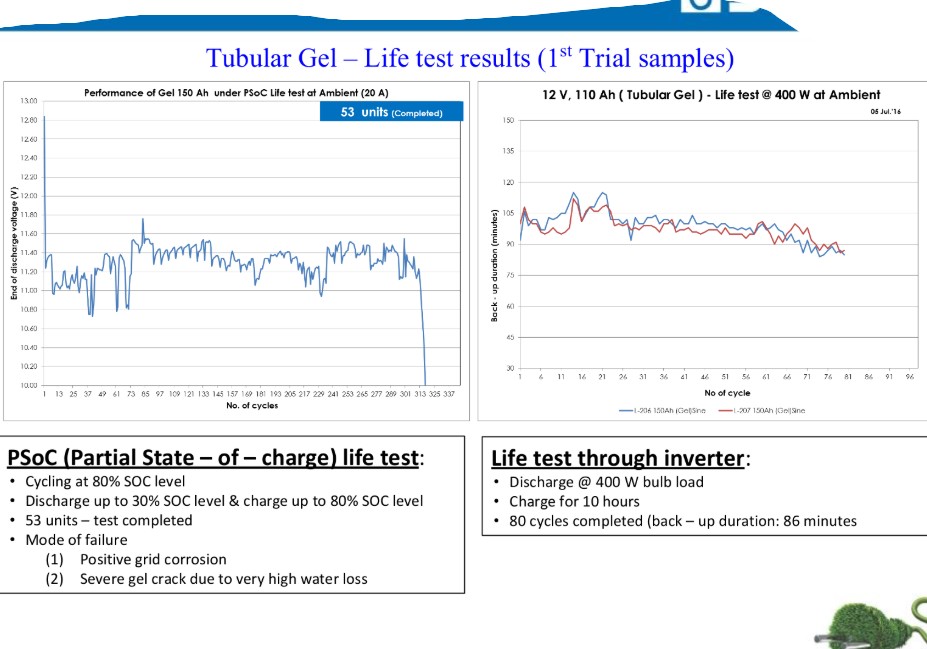
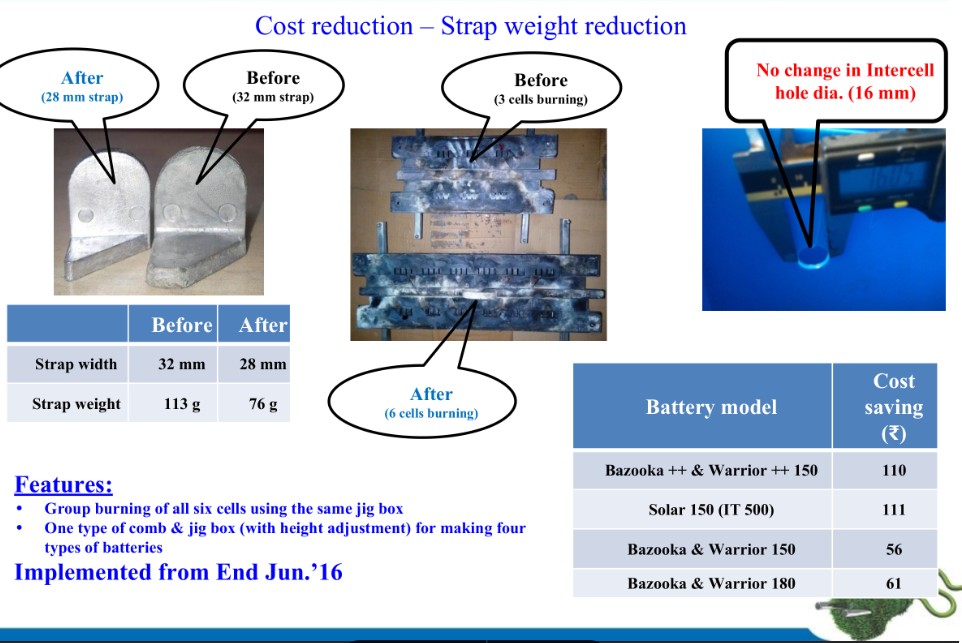
We initiated a test-first culture at Baddi. Validation began at the harshest levels we could justify — plate combinations, electrolyte mixes, seal geometries — all scrutinized for PSoC (partial state-of-charge) capability, the silent killer in Indian backup systems. We standardized jig boxes for group burning so four battery types did not mean four different kinds of human error on the floor. Small mechanical discipline — strap weights trimmed without compromising inter-cell integrity — was not cost cutting for its own sake. It was proof that innovation and frugality could coexist when engineers owned the outcome.
“Failure is the most valuable data point we possess. If we do not destroy a prototype to understand its limits, we are not learning — we are gambling with someone else’s trust.”
Technical Parameters and Development Strategy
The technical parameters were exacting. We scrutinized grid corrosion rates, gel viscosity, and water loss metrics. To be truly innovative, we had to rethink physical assembly — standardized jig boxes for group burning, consistency across four distinct battery types, envelope materials and carbon additives chosen for partial state-of-charge survival, not brochure aesthetics.
What It Felt Like on the Floor
Baddi was not glamorous. It was hot aisles, acid-neutralizing routines, nights when a cycle test had to be watched because a two-degree drift meant restarting weeks of work. Young engineers learned that electrochemistry does not reward confidence speeches. It rewards notebooks — thickness logs, tear-down photographs, the humiliating moment when a promising lot fails at cycle 847 instead of 1,200.
I walked those floors regularly. Not to perform oversight from a distance, but to ask the questions only a founder can ask without sounding like an auditor: What are we assuming? What would kill this in Punjab in July? What would a dealer never tell us until it was too late? The team learned that I was not there to rush a launch date. I was there to make sure we could sleep when the product reached a village where returning a battery costs more than buying a new one.
From Trials to Small Lots — and the Patience Nobody Sees
We moved from bench trials to controlled small-lot production only when the data — not enthusiasm — said we were ready. Competitors shipped fast and marketed faster. We shipped when the teardown photographs stopped surprising us. That discipline is what separated Su-Kam in dealers’ minds when they said the line I still remember: “Su-Kam is the only company that designs and launches new products.”
Tubular gel was part of that reputation. So was the inverter stack that fed it — the 2005 Solar PCU with monitoring on screen, the hybrid systems we later took to Munich after CE certification. Batteries and electronics were never separate stories in my head. They were one promise: power you can see, storage you can trust.
What I Learned
Building in Baddi taught me that manufacturing pride is not how fast you fill a truck. It is how calmly you can face a failed lot at 11 p.m. and begin again without blaming the floor. It taught me that R&D and QA must share one vocabulary. And it taught me that in India, the harshest test is not a certificate — it is a summer when the grid dies every evening and a family decides whether your name still means reliability.
The Baddi archive slide I found was not nostalgia. It was a receipt — proof that we did the unglamorous work of making energy storage real. Tubular gel was born there, in patience and teardowns and data, long before any headline cared.
Related on this site
🔗 Founder stories — read the series
- 📖 CE Mark & Intersolar Munich 2011
- 📖 Exporting Inverters to China
- 📖 BSF Border Solar Posts
- 📖 Why I Started the Su-Kam YouTube Channel
- 📖 Solar PCU Invented in 2005
- 📖 Kashmir Shikaras — Floating Billboards of Hope
- 📖 Colossal Solar PCU — Inverter to Power Plant
- 📖 India’s First 3-Phase Solar System (2006)
- 📖 Brainy Eco Solar Hybrid PCU
- 📖 0% Chinese Share in Inverters — India’s Pride & Post-NCLT Reality
- 📖 Marriott Chandigarh 2011 — Innovation & R&D Talk
- 📖 Technovations at Su-Kam 2012 — SlideShare Deck
- 📖 My Story — Twelve Chapters on SolarManOfIndia.com
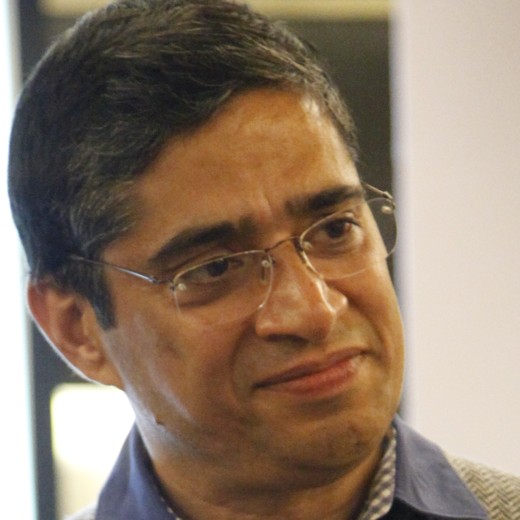
Founder of Su-Kam and Kunwwer.ai, and mentor at Su-vastika and several other companies — the “Inverter Man of India” and the “Solar Man of India.” Read his story →
You must be logged in to post a comment.