Eleven linked essays from CIRP and liquidation, written by a founder who lived them. Series hub: The IBC Files.
- Article 1: IBC Amendments: Who Do They Really Serve?
- Article 2: How IBC, Banks & Bureaucracy Destroy Manufacturing Entrepreneurs
- Article 3: IBC: A Debt Trap for Entrepreneurs — My Personal Ordeal
- Article 4: Fair Value vs Liquidation Value Under the IBC
- Article 5: Section 29A — The Law That Bars Promoters from Bidding
- Article 6: Inside the CIRP — 180 Days of Founder Helplessness
- Article 7: What Happens in NCLT Liquidation: The Su-Kam Case
- Article 8: The Entrepreneur as Criminal — Human Cost of the IBC
- Article 9: Personal Insolvency — The Last Straw
- Article 10: IBBI Penalised the RP & Liquidator — No Compensation for the Entrepreneur
- Article 11: The Silent Bloodbath — How IBC Wipes Out Operational Creditors (this article)
Banks take haircuts. Suppliers take extinction.
The Data: What the Official Records Confirm
The official data from the Insolvency and Bankruptcy Board of India (IBBI) and parliamentary committee reports validate this experience:
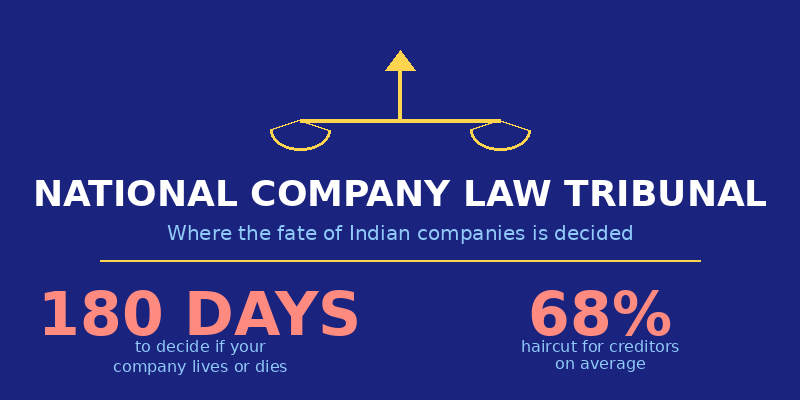
- Realization for Operational Creditors (OCs): In corporate insolvency resolution processes (CIRPs), recovery for operational creditors consistently hovers between 0% and 15% overall, with the overwhelming majority of mid-tier cases yielding 0%. Because Section 30(2)(b) stipulates that operational creditors must only be paid an amount not less than what they would receive in liquidation under the Section 53 “waterfall mechanism,” their entitlement almost always calculates to zero.
- The “Zero” Allocation Mechanism: Financial creditors (banks and NBFCs) form 100% of the voting Committee of Creditors (CoC). When an asset’s liquidation value falls below the total secured financial debt, the law permits the resolution applicant and the CoC to allocate zero rupees to suppliers, while the financial creditors distribute whatever value remains among themselves.
- The Contagion / Domino Effect: While the IBBI tracks the primary corporate debtor, neither the Ministry of Corporate Affairs (MCA) nor the IBBI maintains an official public registry tracking the downstream insolvencies triggered among vendors. The Parliamentary Standing Committee on Finance noted that MSMEs—which form the majority of operational creditors—bear the highest collateral damage, often being forced into distress or liquidation after absorbing 100% write-offs.

The Silent Bloodbath: How the IBC Destroys the Unsung Backbone of Indian Industry
When the Insolvency and Bankruptcy Code (IBC) was enacted in 2016, it was heralded as India’s modern financial revolution. It promised to clean bank balance sheets, eliminate zombie firms, and instill credit discipline.
The reform addressed bad debt, but it created an unintended consequence: the quiet, systematic ruin of India’s operational creditors.
For every large corporate that enters the National Company Law Tribunal (NCLT), headlines focus on the banks: “Consortium takes an 80% haircut,” or “Lenders recover ₹1,500 crore.” What the financial press rarely reports are the names of the small sheet-metal fabricators, the plastic molders, the cable vendors, the logistics contractors, and the raw-material suppliers who kept that factory’s lights on until the final day.
When an enterprise falls into insolvency, banks lose balance-sheet provisions. Suppliers lose their livelihoods.
The Illusion of “Commercial Wisdom”
Under the IBC framework, rights are heavily weighted toward financial creditors. The law establishes an absolute barrier:
- The Committee of Creditors (CoC) consists exclusively of financial lenders. The very people who supplied the raw goods, provided the logistics, and extended trade credit have no seat, no voice, and zero voting power at the table.
- The Waterfall Mechanism (Section 53) pushes operational creditors to near the bottom. Under the legal formula, an operational creditor is only guaranteed what they would receive if the company were liquidated today. Because assets are eroded by the time a resolution is passed, that liquidation value for unsecured creditors is mathematically almost always zero.
The Supreme Court has consistently held that the “commercial wisdom of the CoC” is supreme and non-justiciable. What that means on the ground is simple: financial institutions routinely approve resolution plans where they take a 70% or 80% haircut, but give operational creditors a 100% wipeout. I have written about that doctrine from the outside in Commercial Wisdom: The Myth I Watched From Outside the Room.
A multinational bank can absorb a ₹200 crore haircut through reserves, write-offs, and sovereign recapitalization. But an MSME supplier cannot absorb a ₹50 lakh or ₹2 crore default. To them, that is not a line item—it is their entire working capital, their family home pledged as collateral, and the salaries of their workers.

The Human Toll: Beyond the Corporate Veil
Behind every supply contract in India is not a faceless corporate entity, but human trust.
Suppliers do not extend 90-day credit lines to balance sheets; they extend credit to reputation, personal relationships, and handshakes. When a company is dragged to the NCLT, the corporate veil is pulled down, but the moral liability remains squarely on the shoulders of the entrepreneur.
In the case of Su-Kam, when the company entered the IBC, approximately ₹40 crore was owed to suppliers. When the dust settled, those operational creditors received zero. Not a single rupee. The shop-floor post-mortem of that process is Part 1 — Two Hundred Products and a Broken Clock.
What followed is an untold ordeal that no tribunal transcript ever captures. The banks walked away to their air-conditioned boardrooms. But the small suppliers—many of whom had run their family workshops for decades alongside the company—landed directly at the promoter’s doorstep. Desperate men pleading for unpaid bills. Small vendors facing foreclosure.
To look a vendor in the eye—someone who trusted your word, whose children’s school fees or daughter’s wedding depended on that payment—and know the law allows a resolution plan that gives them nothing is devastating. In that situation, founders end up taking personal loans, liquidating personal assets, and draining their own pockets just to hand over small amounts of relief money to keep those vendors afloat. That personal aftermath is why I also wrote Personal Insolvency: The Last Straw.
Yet, despite those efforts, the ripple effect was inevitable: at least three vendor companies permanently shut their doors. How many more took high-interest private debt, had their machines seized, or eventually drifted into insolvency themselves?
The Untracked Epidemic: Downstream Contagion
The fundamental systemic flaw of the IBC is that it treats every corporate insolvency in isolation. The system does not measure the contagion effect.
When a large manufacturing anchor collapses:
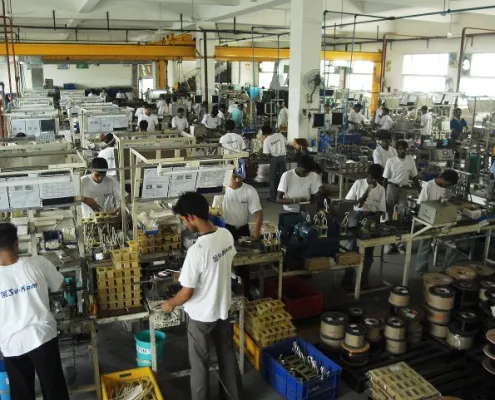
- 50 to 200 Tier-2 and Tier-3 vendors face sudden liquidity shocks.
- Their cash flows dry up overnight, forcing them to default on their own working-capital loans.
- Their credit ratings crash, vendor networks collapse, and their own employees are laid off.
The state celebrates “resolving” one company while ignoring the fact that the resolution process silently dragged three, four, or five vendor businesses into bankruptcy behind it. Because no central authority tracks the downstream mortality rate of vendors post-IBC, the system treats this collateral damage as invisible. Part of that machinery is mapped in Part 3 — The IBC Liquidation Machine.
The Urgent Need for Reform
The Insolvency and Bankruptcy Code cannot continue to function as an exclusive debt-collection playground for banks at the total expense of the supply chain. If India wants to build a self-reliant manufacturing economy, suppliers cannot be treated as second-class citizens:
- Mandatory Pro-Rata Allocations: Resolution plans must mandate a non-negotiable minimum floor recovery for MSMEs and operational creditors, tied directly to whatever percentage the financial creditors realize.
- Representation in the CoC: Operational creditors above a certain threshold must have proportional voting rights on the committee, preventing banks from voting solely for their own recovery while zeroing out suppliers.
- Impact Assessment on Ecosystems: Before approving a plan that awards zero to operational creditors, an economic contagion audit should assess how many suppliers will be pushed to the brink.
A legal code that rescues a company by starving the very ecosystem that built it is not a resolution framework—it is an economic tragedy. It is time the policymakers look beyond the bank ledgers and confront the real cost paid by the backbone of Indian industry. The reform roadmap in Part 4 — Section 29A and a Manufacturing Comeback and the statutory blueprint in the Insolvency & Industrial Asset Preservation policy paper are where that fight continues.
This essay is the supplier wipeout. Return to the IBC Files hub. Previous: Part 4. Evidence: Part 1. IBC Files archive (10+ essays): IBC & banks vs manufacturing entrepreneurs · IBC amendments · The day Su-Kam died · Section 29A · Inside the CIRP · The entrepreneur as criminal under IBC · IBBI penalised the RP and the liquidator · IBC · Fair and liquidation value in the IBC · IBC India critique.