How Startup India hype and IBC wrecked Indian manufacturing
- Part 1: Two Hundred Products and a Broken Clock — 77 patents dispersed
- Part 2: The VC hardware graveyard
- Part 3 (this essay): The IBC liquidation machine — Videocon, Educomp, Hero Electric
- Part 4: What needs to change — Section 29A, the clock, a comeback
The IBC Liquidation Machine: Videocon, Educomp, Hero Electric
IBC liquidation machine is what the 330-day rescue becomes when a manufacturer is left in court while the plant, the channel, and the people die on a different clock.
This article answers
- What is the IBC liquidation machine — delay that never ends, or a clock that expires into liquidation?
- What happened to Videocon Industries after admission on 6 June 2018 — and has it been liquidated?
- What happened to Educomp’s approved Ebix plan?
- Why was Hero Electric Vehicles liquidated if two plans were found feasible?
- Is Hero Electric the same company as Hero MotoCorp?
- Does about 744 days of average CIRP match the 330-day brochure — and is Essar Steel proof the Code works for manufacturing?
I did not sit on these Committees of Creditors. I read the orders the way I read my own CIRP file: for the factory underneath the adjectives. Dates and rupees below are from NCLT/NCLAT reporting and IBBI-linked orders I can point to. I will not invent a 30,000-job census, a peak-valuation trophy, or a case number I have not seen in those sources.
The Code was sold as speed. Rescue the company. Save the going concern. One hundred and eighty days, extendable toward three hundred and thirty, as administered by the Insolvency and Bankruptcy Board of India. For a spreadsheet, that is a project plan. For a manufacturer, that is whether the line still runs.
In Part 1 I told you what that calendar did to Su-Kam 77 patents. In Part 2 I told you software capital can hollow a plant without waiting for a thirty-year brand. This chapter is the other established names in the same machine — not as gossip, as pattern.
What the IBC liquidation machine actually is
Two failures wear the same uniform.
One is delay: CIRP that does not end, while assets rot, talent leaves, and a “resolution” that finally arrives is a residual. Videocon Industries was admitted on 6 June 2018. Educomp Solutions was admitted on 30 May 2017. I am writing this in 2026. That is not a 330-day story.
The other is deadlock: CIRP that does expire, more or less on a legal clock, and still produces liquidation because the Committee of Creditors cannot assemble 66% behind a plan that the resolution professional has already called feasible. That is Hero Electric Vehicles in March 2026. Not Hero MotoCorp. Not a three-wheeler startup from a briefing note. An electric-scooter maker whose creditors split, and whose plant then met Section 33.
I have already written, on the 2026 amendments essay, that average CIRP duration as of March 2026 was about 744 days — more than double the 330-day mandate. I will keep that figure as mine, published on this site, not as a fake “manufacturing-only” IBBI table I have not got.
The brochure is 330 days. The factory lives on working capital and belief. When those two clocks diverge, you do not get rehabilitation. You get an IBC liquidation machine — slow or fast, the output is the same: capability gone.
I watched the first clock inside those 180 days. Section 29A locked the builder out. Commercial wisdom was the doctrine in the corridor. This essay is what that doctrine looks like when the brand on the gate is not Su-Kam.
Videocon Industries: admitted 2018, still a court file in 2026
Videocon was a household name before it was a cause list. Televisions. Appliances. A group that also wandered into oil and gas and telecom leverage. I am not writing a corporate biography. I am writing what the Code did with the file.
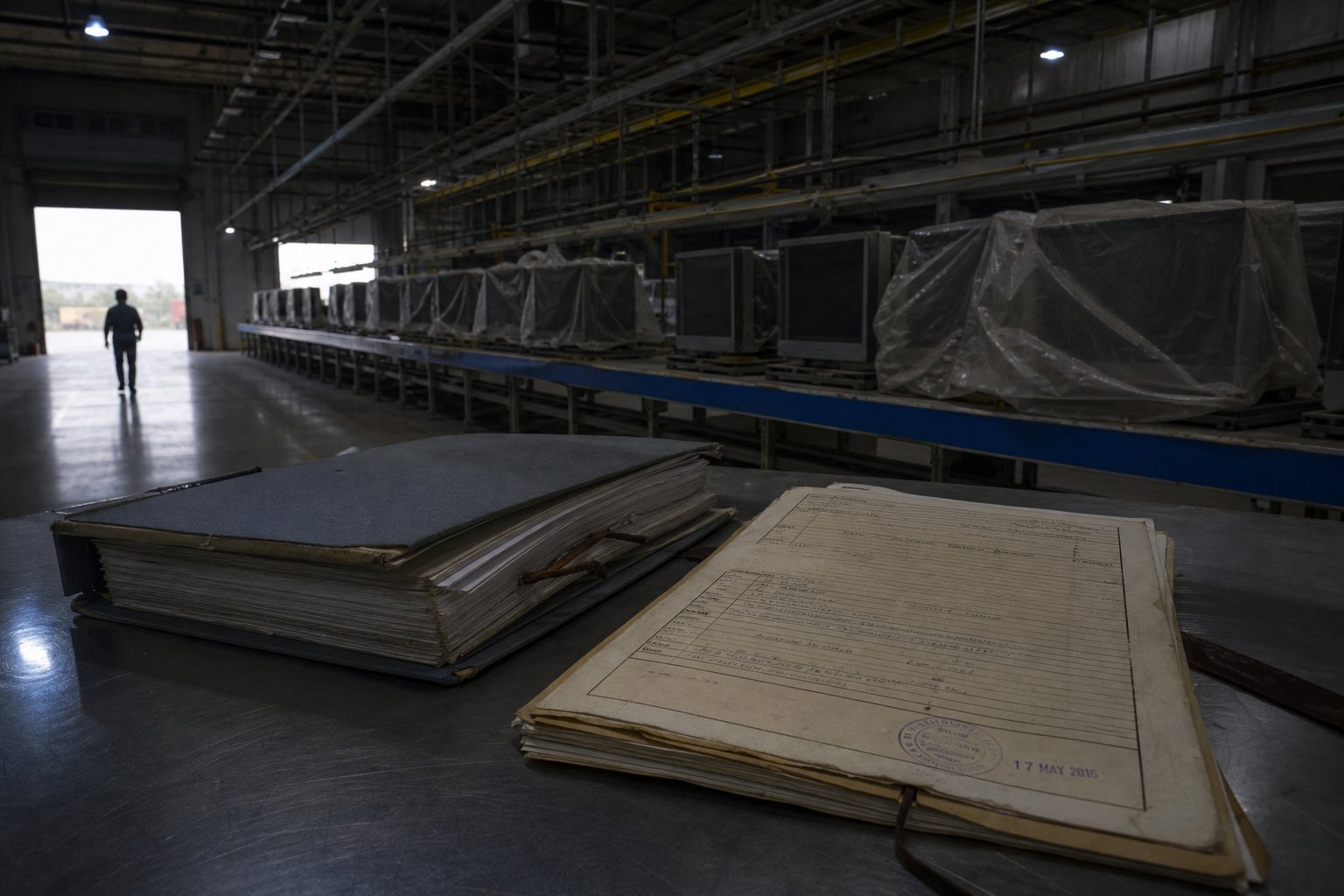
The Mumbai bench of the NCLT admitted Videocon Industries Limited into CIRP on 6 June 2018, on a Section 7 application by State Bank of India. Contemporary reporting put group debt in the tens of thousands of crores; Firstpost, in 2018, printed about ₹20,000 crore at commencement. I will not upgrade that to a rounder scare number. What later NCLAT coverage printed, when a plan was on the table, is the claim pile: Economic Times wrote of admitted financial claims around ₹61,773 crore against a Twin Star / Vedanta-group plan a little over ₹3,000 crore. Financial Express printed Twin Star’s bid at ₹2,962 crore against admitted claims of about ₹64,838 crore — a haircut NCLT itself flagged as enormous. Times of India quoted the appellate record: a meagre ₹2,962 crore against roughly ₹65,000 crore admitted, haircut “approx over 95 per cent.”
A plan that small, against a manufacturer-plus-conglomerate claim book, is not a factory rescue. It is a remainder. Even that remainder did not stick. In January 2022, NCLAT set aside NCLT’s approval of Twin Star’s plan and remitted the CIRP to the CoC. Dissenting financial creditors had challenged it. The lead bank later told the appellate court that implementing the plan was not feasible.

Eight years on, the file was still splitting. In May 2026, NCLAT upheld separate CIRPs for Videocon Industries and Videocon Oil Ventures, reversing an earlier NCLT direction to club oil-and-gas assets into VIL. Venugopal Dhoot’s 12A withdrawal attempt, that same reporting said, had been rejected by lenders with 98.14% of votes. Foreign oil assets, ring-fencing, flip-flops — the appellate court used that language. I will not pretend I sat in those meetings. I will say what a manufacturer hears: the Code is still arguing over the perimeter of the estate while the consumer brand that paid salaries is a memory.
I will not type “30,000 jobs lost.” I have not got a labour-ministry census. I have got a CIRP that began in 2018 and, in 2026, was still a consolidation fight. That is the IBC liquidation machine in slow motion. IBBI’s own order list for Videocon Industries runs from the 6 June 2018 admission through years of miscellaneous applications. A process that needs an archive that long is not a 330-day rescue.
Educomp Solutions: a plan approved, then a company that still was not rescued
Educomp is not a steel mill. It is an education-technology manufacturer of a kind India used to brag about: Smart Class, schools, content, a network that sat in classrooms. The Code does not care. A going concern that lives on contracts and people dies the same way a plant does — when the calendar replaces the customer.
On 5 May 2017 Educomp filed under Section 10 — a voluntary CIRP. NCLT admitted it on 30 May 2017. LiveLaw records the case as Company Petition No. (IB)-101/(PB)/2017. Ebix Singapore became the successful resolution applicant; CoC voted 75.35%. Then the file went into the long Indian night: MCA investigation, withdrawal attempts, Supreme Court on whether a successful applicant can walk away, years.
On 9 October 2023 — six years after admission — NCLT Delhi approved Ebix’s plan: ₹325 crore against admitted claims of ₹3,008.3 crore. Financial creditors were to get ₹314 crore against about ₹3,003 crore admitted. That is the arithmetic of “resolution” after the ecosystem has already aged out of the original business.
Approval is not implementation. Insolvency Tracker had already called Ebix a reluctant applicant. By March 2026, NCLT’s own order, as Educomp disclosed to the exchanges, recorded that the successful resolution applicant had not implemented the plan. A consortium holding 63% voting share wanted a fresh Form-G. The tribunal, on 13 March 2026, remitted the matter for a new process to be completed in 100 days, and referred the failed implementation toward IBBI under Section 236(2). It also said the usual course, when a plan is not implemented, is liquidation — and still chose a second CIRP because creditors asked for value maximisation.
Nine years. A plan. No implementation. Another 100-day clock on a company that has been in the machine since 2017. I will not invent “4,000 employees to a skeleton crew.” I will say what the order says: the SRA defied implementation, and the company was still not out. That is the IBC liquidation machine as purgatory. The brochure promised closure. The classroom never got a new owner who actually showed up.
Hero Electric Vehicles: the clock ran — liquidation anyway
Read the name slowly. Hero Electric Vehicles Private Limited. Not Hero MotoCorp. Part 2’s Hero cheque into Euler is a different legal person. Mixing them is how a briefing note becomes a lie.
NCLT New Delhi admitted the company into CIRP on 20 December 2024 on a Section 9 application by operational creditor Metro Tyres Limited. Case: IB No. 397/ND/2024. LiveLaw’s report of the later order, matching the IBBI-hosted PDF, is the spine I will stay on.
Two resolution plans arrived. Both were found feasible and viable. Neither got 66%. The highest vote was 47.66%. Re-voting under the regulations did not break the split: about half the CoC wanted a plan, the rest wanted liquidation. CIRP, including extensions, expired on 13 February 2026. On 3 March 2026 the bench of Bachu Venkat Balaram Das and Reena Sinha Puri ordered liquidation under Section 33(1)(a). They held that a separate CoC resolution for liquidation at 66% is not a precondition once the period has expired without an approved plan. Continuing CIRP, they said, would only perpetuate a deadlock. Lekhraj Bajaj was appointed liquidator. ET Auto printed the CoC mix: Bank of Baroda with a large secured claim and voting share, South Indian Bank, IDFC First, and unsecured SLK Software with a heavy vote.
This is the sentence the 330-day priests do not like. You can honour the calendar and still destroy the company, because the Code gives a blocking minority the power to refuse revival without having to assemble 66% for death. Feasible plans sat on the table. The machine chose the default: liquidation.
I have written what liquidation did to Su-Kam on a single order day. Hero Electric’s order is shorter in years than Videocon’s file. It is not kinder to a plant. Deadlock is not commercial wisdom. It is a hung jury with a statutory guillotine.
The pattern: delay, haircut, deadlock — same Code
Three files. Three speeds. One statute.
| Company | What I can cite | What I will not claim |
|---|---|---|
| Videocon Industries | CIRP admitted 6 June 2018 (SBI, Mumbai NCLT). Twin Star ~₹2,962 Cr vs admitted claims ~₹65,000 Cr; NCLAT set the plan aside (2022). Separate VIL/VOVL CIRPs upheld May 2026. | A 30,000-job census; “still in court” as a liquidation order I have not got; a ₹6,000 Cr peak I cannot source here |
| Educomp Solutions | Admitted 30 May 2017 (IB-101/PB/2017). Ebix ₹325 Cr vs ~₹3,008 Cr admitted (Oct 2023). Plan not implemented; fresh process ordered 13 March 2026. | A 4,000-employee headcount; that the 100-day redo has already saved the classrooms |
| Hero Electric Vehicles | CIRP 20 Dec 2024; expired 13 Feb 2026; liquidation 3 Mar 2026. Highest plan 47.66% vs 66%. IB 397/ND/2024. | That this is Hero MotoCorp; a 500-job figure; that the plans were “unviable” (the order said feasible) |
Who benefits from eight years? Lawyers, professionals, a process that invoices the estate. Who loses? Workers I will not pretend to have counted, suppliers who stop shipping, dealers who cannot warrant a product, and a country that calls this “resolution statistics.” I argued the same on The Broken System. The IBC liquidation machine does not need a cartoon villain. It needs a CoC, a clock, and a founder locked out by 29A.
Here is the manufacturing-specific damage the Code still does not publish as a dashboard. A television assembly line, a classroom hardware stack, an EV scooter plant — none of them pause politely while NCLAT writes 213 pages. Tooling walks. Service contracts lapse. Engineers take the Chinese-subsidiary job I already described in Part 1. By the time a “successful resolution applicant” is even on paper, you are often bidding for a name and a shed. Videocon’s first approved plan was in the neighbourhood of four per cent of admitted claims. Educomp’s approved plan sat unimplemented. Hero Electric’s feasible plans could not clear 66%. Different arithmetic. Same result: the going concern is not what entered the tribunal.
Section 12 of the Code is the time-bound object. Section 29A is the lock on the promoter. Section 33 is the default when the clock dies without a plan. I lived the first two. Hero Electric is the third in public view, with the votes printed. If you still believe CoC “commercial wisdom” is a substitute for industrial policy, explain why a 47.66% vote against a feasible plan is wisdom and not a hung room with a statutory ending.
There is a counter-example the Code’s defenders always reach for: Essar Steel. Admitted 2017. ArcelorMittal’s plan, in the range of ₹42,000 crore, survived to a Supreme Court finish in November 2019. That is still years, not 330 days. What it had, which Videocon’s first plan and Educomp’s unimplemented plan and Hero Electric’s hung vote did not, was a buyer with domain and cash large enough to drag the file across the finish. I will not turn Essar into proof that IBC “works for manufacturing.” I will say: when the buyer is ArcelorMittal, you sometimes get a steel mill. When the buyer is a ₹2,962-crore remainder against ₹65,000 crore of claims, or a plan nobody implements, or a 47.66% vote, you get the machine.
Su-Kam was not a one-off. It was a template.
I do not need Videocon’s oil assets to understand delay. I do not need Educomp’s Smart Class to understand a plan that exists on paper. I do not need Hero Electric’s CoC percentages to understand a hung creditor room. I had the corridor. I had 29A. I had a COVID-period sale and bank recovery I have already published as ₹8 crore.
The pattern is not “all manufacturers are Videocon.” The pattern is: the Code’s time-bound object is optional in practice, and mandatory liquidation is available when creditors deadlock. Either way the plant loses the only resource it cannot buy back — time with its people still inside.
Part 4 is reform. I will not smuggle the four changes into this essay. If you are a founder, read Inside the CIRP and 29A before you treat 330 days as a promise. If you are a policymaker, stop pointing at Essar and calling the rest “outliers.” Videocon’s eighth year, Educomp’s unimplemented plan, and Hero Electric’s 47.66% are not outliers. They are the machine.
Word count: 2,383 · The Manufacturing Mirage, Part 3
Frequently Asked Questions: IBC liquidation machine
What is the IBC liquidation machine in this essay?
The pattern in which CIRP, sold as a 330-day rescue, becomes years of court process while a manufacturer’s capability dies — or a short CIRP ends in liquidation because creditors cannot agree. The three names here are Videocon, Educomp, and Hero Electric Vehicles.
Do Videocon, Educomp, and Hero Electric share one pattern?
Yes, but not one funeral. Delay: Videocon Industries was admitted in 2018 and was still a group-CIRP fight in 2026. An unimplemented plan: Educomp’s Ebix approval did not become a rescue. Deadlock: Hero Electric Vehicles had feasible plans and still went to liquidation at 47.66% against 66%. The 330-day object is optional in practice; Section 33 is available when creditors deadlock.
Is Hero Electric the same as Hero MotoCorp?
No. This essay is about Hero Electric Vehicles Pvt. Ltd., admitted to CIRP in December 2024 and ordered into liquidation in March 2026 after no plan hit 66% CoC support. Hero MotoCorp is a different company; it appears in Part 2 as Euler’s later investor.
Has Videocon been liquidated?
Not as a completed, quiet ending in the press used here. CIRP of Videocon Industries was admitted on 6 June 2018. A Twin Star plan was later set aside. As of May 2026, NCLAT was still deciding how group CIRPs should run. That is eight-plus years, not 330 days.
Did Educomp get a resolution plan?
NCLT approved an Ebix Singapore plan of ₹325 crore in October 2023 against admitted claims of about ₹3,008 crore. The successful applicant then failed to implement it. In March 2026 the tribunal sent the case back for a fresh process.
Why was Hero Electric liquidated if plans existed?
LiveLaw and the NCLT order as reported: two plans were found feasible, but the highest vote was 47.66% against a 66% requirement. CIRP expired on 13 February 2026. Liquidation followed under Section 33(1)(a) without a separate 66% vote for liquidation.
Is this the Su-Kam story again?
No. Part 1 is Su-Kam’s patents and China fill. Part 2 is VC hardware. This chapter is other manufacturers in the same Code — the calendar, the CoC, and what happens when 330 days is a brochure.
Founder, Su-Kam Power Systems (1988–2019) and Kunwwer.ai, and mentor at Su-vastika and several other companies — the “Inverter Man of India” and the “Solar Man of India.” Read his story →
Disclaimer: Kunwer Sachdev exited Su-Kam in 2019 and is not responsible for any activity of the company since. Anyone dealing with Su-Kam does so solely with its current management. Full disclaimer →