How Startup India hype and IBC wrecked Indian manufacturing
- Part 1: Two Hundred Products and a Broken Clock — 77 patents dispersed
- Part 2: The VC hardware graveyard
- Part 3: The IBC liquidation machine — Videocon, Educomp, Hero Electric
- Part 4 (this essay): What needs to change — Section 29A, the clock, a comeback
What Needs to Change: Section 29A, the Clock, and a Manufacturing Comeback
Section 29A reform is the lock this series has been walking toward: a clock that binds, a plant that keeps running, and a rebuild outside the name the Code took.
This article answers
- What is Section 29A, and why does it lock a manufacturing founder out of bidding for a viable plant?
- What is the IBC clock (180 / 330 days), and why is average CIRP about 744 days on this site?
- Why did a hung 47.66% vote send Hero Electric Vehicles to liquidation?
- What four changes does this essay ask the Code to make?
- Where is the comeback — Su-vastika and Kunwwer.ai, outside the name the Code took?
This is a prescription, not a second case-study chapter. The rupees, dates, and votes below are ones I have already published on this site or that Parts 1–3 already cited. I will not invent a jobs-saved model, a “29A-reform recovery percentage,” or a UK/EU league table.
Section 29A reform is not a slogan you paste after three wrecks and call the series finished. It is the door they locked on the person who still knew the firmware. Bind the calendar. Keep the line running while the file lives. Stop treating every founder as a fraudster. Give the Code a second object besides creditor recovery. Then, if the State still will not, rebuild outside the name it took.
In Part 1 I told you what CIRP did to Su-Kam 77 patents, and what filled the inverter aisle after 2018. In Part 2 I told you software capital can hollow a plant without waiting for a thirty-year brand. In Part 3 I told you the 330-day rescue is a brochure — Videocon still a court file from 2018, Educomp’s plan unimplemented, Hero Electric Vehicles liquidated on a hung 47.66% vote. This essay is the four changes those three chapters already earned. I will not smuggle a fourth memoir into the reform.
What Parts 1–3 already proved
Two clocks wrecked the same industrial base. Startup India paid for growth slides. The Insolvency and Bankruptcy Code paid for a legal calendar. A manufacturer lives on a third clock: tooling, warranty, working capital, people who still know the board.
Part 1 is what happens when IBC meets a going technology stack. Section 29A barred the builder. The process cost ₹45 crore to run a company that then sold for ₹49.50 crore so banks could take about ₹8 crore. Chinese inverter brands — Growatt, Sungrow, Solis, Huawei, Goodwe — went from a negligible 2018 presence to majority share by 2024, as I had already written and as trade press linked from that essay. That is not a valuation argument. It is a capability argument.
Part 2 is what happens when the factory never had twenty-six years. Ola Electric is still listed. Log9 did go to NCLT after the market failed the chemistry. Altigreen’s plant went quiet without a CIRP I could cite. Euler is the contrast, not the corpse. You do not need a thirty-year brand for hardware jobs to vanish. You need a fund cycle and physics.
Part 3 is the other names the courts already have. Delay that does not end. Deadlock that ends in Section 33 anyway. I will not re-try Videocon’s oil assets or Educomp’s Smart Class here. I will use them as the proof that Su-Kam was a template, not a one-off.
What the State counts — and what it refuses to
India publishes bank recovery percentages. IBBI publishes admission, resolution, liquidation counts. I have already written, on the 2026 amendments essay, that average CIRP duration as of March 2026 was about 744 days — more than double the 330-day mandate. I will keep that figure as mine, published on this site.
What the State does not publish, as a manufacturing dashboard, is the thing the factory actually loses. Plants that never restarted. Skilled people who left the sector. Dealer books that went to zero. Patents that remained on a register while the team that could ship them dispersed. Founders barred by 29A who never built a second line under the old name.
If it is not counted, it is not a crisis. It is a rounding error in a recovery table. Reform zero — count what you break — is not a fifth slogan. It is the condition for the other four. I will not invent what that census would show. I will say: until it exists, every minister who points at a recovery percentage is pointing at the only number the machine was built to print.
Reform 1: bind the clock — or stop calling 330 days a rescue
Section 12 of the Code is the time-bound object: one hundred and eighty days, extendable toward three hundred and thirty, as the IBBI text still sells it. Part 3 already put the brochure next to the cause list. Videocon Industries was admitted on 6 June 2018 and, in May 2026, was still a consolidation fight. Educomp was admitted on 30 May 2017; a plan was approved in 2023 and then not implemented. Hero Electric Vehicles’ CIRP expired on 13 February 2026; liquidation followed on 3 March 2026 under Section 33(1)(a).
A clock that does not bind is not a clock. It is interior decoration for a statute. Binding it does not mean “liquidate faster so the file looks tidy.” Hero Electric is the warning. Two plans were found feasible. The highest CoC vote was 47.66% against a 66% requirement. The calendar ran out. Liquidation did not need a separate 66% vote for death. That is not commercial wisdom. That is a hung room with a statutory ending.
What I want written into the Code is narrower than a slogan. If CIRP expires without a plan that has 66%, do not treat liquidation as the default where a resolution professional has already called a plan feasible. Require a positive creditor decision to kill a going concern — the same 66% you demand to save one — or send the feasible plan back with a short, guarded clock while the plant is kept alive. I will not draft the clause for the ministry. I will say the object: time should not be a weapon that only points at the factory.
Reform 2: keep the plant running while the file lives
I watched this from the corridor. The RP’s first task, as I wrote in a 2020 letter to the Prime Minister and published in Inside the CIRP, is to tell the promoter he has no role. From there the working concern starts dying on a different clock than the NCLT’s.
A manufacturer is not a land parcel that holds value while lawyers invoice. Purchase orders go stale. Warranty centres go dark. Engineers update résumés. By the time a “resolution applicant” arrives — if 29A has left anyone who knows the product eligible to bid — you are often valuing a hollowed shell. That is why a process that costs ₹45 crore can “succeed” at selling the remainder for ₹49.50 crore. Success for whom? I told that arithmetic in Part 1. I will not relitigate the rupees. I will relitigate the duty.
If you file a company into CIRP, you should have a duty to keep an operationally viable plant running — working capital, vendor payments, service, the line — unless a court records why that would harm creditors more than shutting it. The banks who sit on the Committee of Creditors rarely write that cheque. They file. They wait. They are shocked at the recovery. I have already asked, on the amendments essay, how many liquidated companies could have survived if the CoC had funded the asset they claimed to be rescuing. Nobody tracks it. That is the point.
Section 29A reform: bar fraud, not the builder
The full legal and human argument is not this post. It is Section 29A: The Law That Punishes the Builder. One sentence from that record belongs here, because Part 1 promised 29A would not be a footnote.
When I set out to save Su-Kam, Section 29A did not yet exist. I arranged a rescue. Kotak’s term sheet, as I have published, was ₹250 crore. Then the ineligibility list arrived, given retrospective reach, and the person who knew the dealers, the firmware, and the export complaints was the one person the statute treated as contamination. A company is not a benami plot of land. Whoever buys under IBC has to show net worth and source of funds. The slogan was “no back-door buybacks.” The result was a blanket ban.
Section 29A reform, as I mean it in this essay, is not “let fraudsters bid.” It is a filter that still exists — wilful default, actual fraud, asset stripping, dummy fronts — and a door that reopens for an honest builder who can still commercialise the stack. Conditions, not a bricked entrance: independent scrutiny of price, disclosure of funds, CoC approval, clawbacks if the disclosures are lies. I wrote that list on the 29A essay. I will not pretend IBBI has published a before-and-after study showing the ban improved recoveries or jobs. I asked for that study there. I have not seen it.
What manufacturing adds, which a real-estate CIRP does not, is this: the patents do not walk by themselves. Su-Kam 77 patents sat in a going company. CIRP scattered the R&D. China filled the inverter market we had built. Barring the founder did not protect those patents as a national capability. It removed the only bidder who still knew how to ship them. That is the industrial-policy sentence. The rest is in the Files.
Reform 4: dual object — recovery and a going manufacturer
Commercial wisdom is the doctrine in the corridor. Creditor recovery is the printed object. Manufacturing ecosystem preservation is not. When those two conflict, the factory loses, because the Code does not name it.
I want a dual object written where a court can see it. Creditor recovery, yes. And a going concern where one still exists — plant, channel, people, IP as a living programme, not a PDF in a data room. When they conflict, the tribunal should have to record why killing the manufacturer was better for India than a slower recovery. That is not anti-creditor. It is anti-pretence. A remainder after professional fees is not a rescue.
Part 3 already refused to turn Essar Steel into proof that IBC “works for manufacturing.” ArcelorMittal’s plan, in the range of ₹42,000 crore, survived to a Supreme Court finish in November 2019. That is still years, not 330 days. What it had was a buyer with domain and cash. Videocon’s first approved remainder, Educomp’s unimplemented plan, and Hero Electric’s hung vote did not. Dual object is how you stop treating Essar as the rule and the rest as “outliers.”
One sourced contrast, not a tour. The UK’s administration statute — Insolvency Act 1986, Schedule B1, paragraph 3 — tells the administrator to pursue rescuing the company as a going concern first, then a better result for creditors than a winding-up, and only then a realisation for secured or preferential creditors, and only if the first two are not reasonably practicable. I am not claiming British administration saves Indian inverter plants. I am claiming India’s Code never wrote that hierarchy for a factory. We copied a recovery culture and called it rescue. The 29A essay already covers how the UK later regulated connected-party pre-packs with an evaluator rather than a blanket promoter ban. This paragraph is the other UK fact: going concern is named as the first objective, on the face of the statute.
The comeback outside the name the Code took
I exited Su-Kam in 2019. Anyone dealing with that name deals with whoever holds it now. That is not a legal footnote. It is how I sleep. What I refused to exit was manufacturing as a calling.
My wife Khushboo built Su-vastika under my guidance — lithium, hybrid PCUs, UPS, storage. It is a product company, not a mentorship slogan. I mentor there. The line is new. The name is not the one NCLT took. That is the irony this series has been walking toward: the Code can take the corporate shell and still leave a country that needs backup power, solar, and people who know a transformer from a pitch deck.
I built Kunwwer.ai because founders should see IBC risk before the first NCLT stamp, not after. Legal Shield on that site is diagnostics, not a promise that a statute will become kind. If you are raising for hardware, read Part 2’s clocks. If you are already in a bank’s stressed-asset file, read Inside the CIRP, 29A, liquidation, and personal insolvency before you treat 330 days as a project plan.
I will not invent a census of “founders who successfully rebuilt after IBC.” I will say what I can defend. The rebuild happened outside the name the Committee of Creditors processed. That is not a happy ending for Su-Kam 77 patents as a national programme. Those patents did not come with me as a living line. China filled the aisle. Su-vastika and Kunwwer.ai are what you build when the statute has already spent the first company. They are not proof the machine works. They are not a second Su-Kam under a fresh CIN. They are proof an entrepreneur’s spirit is not bound to the file the Code closed — and that a country still needs the hardware even after it has processed the manufacturer.
If you are a policymaker, do not point at Essar and call the rest outliers. Do not point at my second act and call the Code merciful. Pass the four changes, and start counting plants. If you are a founder, do not donate a factory to a recovery percentage. Bind your own clock. Assume 29A unless you have read it. And if the system takes the name anyway — step out of the house into the light, and build where the statute is not standing on the line.
Word count: 2,265 · The Manufacturing Mirage, Part 4
Frequently Asked Questions: Section 29A reform
What does Section 29A do?
Section 29A of the IBC makes many promoters ineligible to bid in a CIRP. In this record it barred the builder who still knew the product. The full legal argument is the Section 29A essay. Reform here means keep the bar on fraud, wilful default, and dummy fronts — not a blanket ban on an honest founder.
What is the “clock” in this essay?
Section 12’s time-bound CIRP: 180 days, extendable toward 330. On this site, average CIRP as of March 2026 was about 744 days. Binding the clock means liquidation should not be the default after a hung vote on a feasible plan — Hero Electric Vehicles, 47.66% against a 66% requirement.
What is Section 29A reform in this essay?
Keeping a bar on fraud, wilful default, and dummy fronts, while letting an honest manufacturing founder bid for a viable plant under scrutiny — independent price check, disclosure of funds, CoC approval, clawbacks. The full argument is the Section 29A essay; this chapter is the series close.
What are the four changes?
Bind the 330-day clock so liquidation is not the default after a hung vote on a feasible plan; keep operational plants running during CIRP; Section 29A reform as above; write a dual object — creditor recovery and a going manufacturer. Count plants and capability, not only bank recovery %.
Would a faster CIRP have saved Su-Kam?
Speed without going-concern duty and without 29A reform still sells a hollowed shell. He has published CIRP cost ₹45 crore, a COVID-period sale of ₹49.50 crore, and about ₹8 crore recovered by banks. The patents needed the people 29A removed.
Is this a UK or EU comparative paper?
No. One sourced paragraph: UK administration names rescuing the company as a going concern as the first statutory objective (Insolvency Act 1986, Schedule B1, paragraph 3). No league table, no invented success rate.
Where is the rebuild?
Su-vastika — a product company Khushboo Sachdev built under his guidance (lithium, hybrid PCUs, UPS, storage) — and Kunwwer.ai for IBC risk before the first NCLT stamp. Rebuild outside the name the Code took, not proof the Code is merciful.
Is this the last part of The Manufacturing Mirage?
Yes. Part 1 is Su-Kam 77 patents and China fill. Part 2 is VC hardware. Part 3 is Videocon, Educomp, Hero Electric. This is reform plus the close.
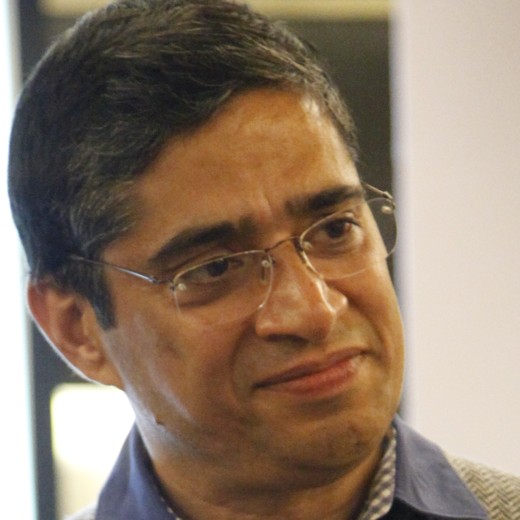
Founder, Su-Kam Power Systems (1988–2019) and Kunwwer.ai, and mentor at Su-vastika and several other companies — the “Inverter Man of India” and the “Solar Man of India.” Read his story →
Disclaimer: Kunwer Sachdev exited Su-Kam in 2019 and is not responsible for any activity of the company since. Anyone dealing with Su-Kam does so solely with its current management. Full disclaimer →
How the brand was built before CIRP ever arrived — dealers, dhaba boards, YouTube, Facebook — is the Sales & Marketing series.