Insolvency and Industrial Asset Preservation: Reforming IBC for Indian Manufacturing
Startup India sold a growth story. CIRP sold a recovery calendar. A manufacturer lives on a third clock — plant, people, and indigenous R&D. This brief asks IBBI and Parliament to write industrial-asset preservation into that calendar.
1. Executive Summary: Startup India versus the liquidation reality of CIRP
India ran two industrial stories in the same decade. One was Startup India: pitch decks, fund cycles, and a political claim that manufacturing would follow the software playbook. The other was the Insolvency and Bankruptcy Code, 2016 — the IBC — administered by the Insolvency and Bankruptcy Board of India (IBBI). The Corporate Insolvency Resolution Process (CIRP) is sold as a 180-day rescue, extendable toward 330 days. On this site the author has already published that average CIRP duration as of March 2026 was about 744 days — more than double the brochure clock (IBC amendments essay; Manufacturing Mirage, Part 4).
For a going manufacturer the mismatch is not academic. In 2018 Su-Kam Power Systems entered CIRP as a running technology company: about 5,000 people at organisational scale, shipments into 90 countries, 77 granted patents, and about ₹600 crore of generation at filing — a stressed plant asking for time, not scrap (Mirage, Part 1). Section 29A then barred the founder from bidding for the company he had built. The Resolution Professional’s first task, as published from a 2020 letter to the Prime Minister in Inside the CIRP, is to tell the promoter he has no role. From that morning the factory clock and the court clock diverge.
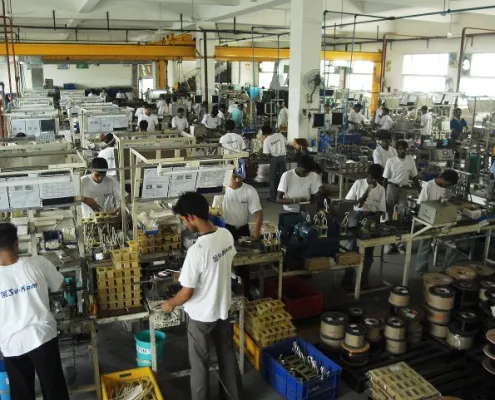
Startup India does not fund patent annuities inside a CIRP. CIRP does not name indigenous R&D as an asset class that must be kept alive. The political language is “resolution.” The manufacturing outcome, in this record, is a hollowed shell sold after the people who could commercialise 77 grants had left the field. Chinese inverter brands — Growatt, Sungrow, Solis, Huawei, Goodwe — moved from a negligible 2018 Indian presence to majority share by 2024, as already written and as trade press linked from the Hybrid GTI essay. That is the dichotomy this whitepaper starts from: a growth slogan, and a Code that treats a plant as a recovery file.
A remainder after professional fees is not a rescue. Dual object — creditor recovery and a going manufacturer — is how you stop pretending it is. The series close is Part 4. This paper is the IBBI-facing instrument: IP budgets, guarantee caps, promoter-as-advisor for preservation, and a success metric that is not liquidation yield.
2. The technological asset blindspot: 77 grants, no CIRP maintenance protocol
The national figure this site now uses is 77 granted patents in the going company. How they were filed is a separate essay. An earlier CIRP essay used 74; the later, tighter count is 77. This paper will not list chemistries. It will not claim the grants were “dispersed among creditors.” It will not claim they vanished from a registry the day the RP arrived. Part 1 is explicit: the files can remain; the programme does not.
What the Code lacks is a maintenance protocol for industrial IP during CIRP. Indian patents are not freehold. They require renewal. A Resolution Professional who has been told the promoter has no role is not, under present practice, under a published IBBI duty to budget annuities, keep the inventors available, or treat firmware and tooling as going-concern assets rather than data-room PDFs. Earlier essays on this site said “patents abandoned” and “all gone” as a capability sentence — nobody counted the national loss — not as an IPO-register deletion. The blindspot is the missing protocol. Without it, 77 manufacturing-ready grants can sit on a docket while the team that could still ship them scatters to other Indian manufacturers, to Chinese subsidiaries that set up to absorb that talent, or out of the industry (Hybrid GTI; Part 1).
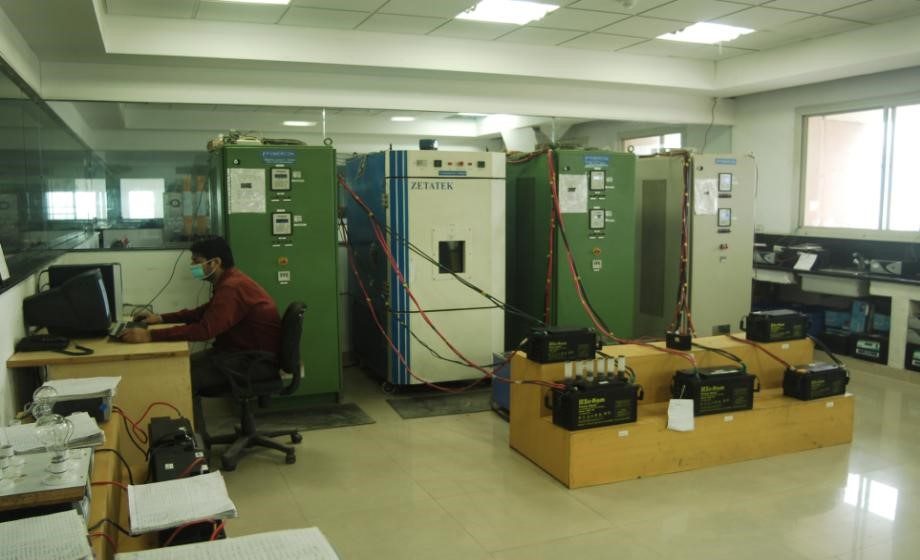
R&D policy and insolvency law are therefore the same subject. A country that files Make in India slideshows while CIRP has no line item for patent renewal, inventor retainers, or export-approval continuity is not running an industrial strategy. It is running a recovery dashboard. IBBI publishes admission, resolution, and liquidation counts. It does not publish plants that never restarted, skilled people who left the sector, or IP that remained a file while the living line died. If it is not counted, it is not a crisis. Reform zero in Part 4 was: count what you break. This paper’s first legislative ask is the operational twin: pay to keep the IP alive while you count.
3. The valuation disconnect: ₹300 crore FMV, ₹9 crore recovery — and the CIRP invoice
Two published arithmetic sets sit on this site. They are not a licence to invent a third.
| What the number is | Figure published on this site | Where |
|---|---|---|
| Going concern at filing | about ₹600 crore generation | Mirage Part 1 |
| Independent / Big-4 fair-market picture the founder records | ₹300 crore valuation (two Big-4 firms; promoter not in the room) | The Broken System |
| Founder rescue term sheet (Kotak) | ₹250 crore — barred by Section 29A | Broken System; 29A essay; Part 4 |
| Spent running CIRP | ₹45 crore | Part 1 (also the hybrid-inverter essay) |
| COVID-period sale of the company | ₹49.50 crore | Part 1 |
| What banks recovered | ₹8 crore (also written ~₹9 crore on The Broken System) | Part 1 keeps ₹8 crore as the tighter figure |
The valuation disconnect this brief names is the one already sworn in How IBC, Banks & Bureaucracy Destroy Manufacturing Entrepreneurs: banks recovered about ₹9 crore against an asset they had valued at ₹300 crore without involving the promoter. The same essay records a ₹250 crore Kotak-backed proposal that Section 29A made ineligible. Part 1 then shows why “recovery” is the wrong success word even on the process’s own invoice: CIRP cost ₹45 crore to administer a company later sold for ₹49.50 crore so that banks could take about ₹8–9 crore.
The economic cost of losing the going concern is not a GDP share this paper will invent. It is the factory clock: suppliers in Gurugram and Baddi, a 90-country export map, a Home UPS category, and 77 grants as a programme. Liquidation yield does not capture that. A success metric that only prints creditor recovery will always prefer a cheap sale of a hollowed shell to the slower work of keeping the plant alive. That is not commercial wisdom. It is a dashboard designed to ignore industrial assets.
4. The Delhi High Court holding: CoC conduct and an IBBI mandate
On The Broken System the founder recorded that the Delhi High Court recognised the failure of creditor-committee practice: a verdict emphasising the need for Committees of Creditors to have clear guidelines, and an instruction that IBBI create rules for CoC conduct. The FAQ on that page states the same holding: irregularities in CoC conduct; IBBI to establish a formal code-of-conduct for creditor committees. This whitepaper stores the proceeding the founder identifies as W.P.(C) 10599/2021 (Kunwer Sachdev vs. IDBI Bank & Ors.) in the paper’s court-reference field. It does not invent a judgment date, a paragraph number, or an NCLT company-petition number.
What the holding is for policy is narrower than a victory lap. Commercial wisdom — the doctrine the author watched from the corridor in Commercial Wisdom — cannot remain an unreviewable black box when the asset is a manufacturer. A CoC that can sit on a restructuring request for months, then file, then refuse a domain-knowledge bidder under 29A, then recover single-digit crores against a three-hundred-crore valuation picture, is not a self-justifying market. It is a statutory committee that the High Court has already said needs rules. IBBI’s job is to write them so that industrial assets — IP, plant continuity, promoter-as-advisor for preservation — are named, not implied.
5. Four legislative and regulatory reforms for IBBI and Parliament
Part 4 of The Manufacturing Mirage already asked the Code for four objects: bind the 330-day clock; keep the plant running while the file lives; Section 29A reform that bars fraud not the builder; and a dual object — recovery and a going manufacturer — with the UK’s administration hierarchy cited once (Insolvency Act 1986, Schedule B1, paragraph 3: rescue as a going concern first). This paper does not replace that list. It specifies four instrument reforms IBBI and Parliament can draft without waiting for a new religion of insolvency.
5.1 Mandatory IP preservation and renewal budgets during CIRP
Require, as a condition of a manufacturing CIRP, a ring-fenced budget for patent and design renewal, inventor/contractor retainers where the RP certifies they are necessary to keep the stack current, and a public IP schedule (application numbers, grant numbers, next annuity dates) filed with IBBI. Failure to renew without a recorded court reason should be reportable misconduct, not a silent lapse of a national capability. The object is not to pretend every grant is a jewel. It is to stop treating 77 manufacturing-ready patents as optional stationery.
5.2 Restrict promoter personal guarantees to the initial independent valuation
Personal insolvency after a corporate CIRP is the second war, as already written in Personal Insolvency: The Last Straw and The Entrepreneur as Criminal. If lenders take a personal guarantee, its enforceable ceiling in a manufacturing insolvency should be anchored to the initial independent valuation on the record — here, the ₹300 crore picture the founder says two Big-4 firms produced — not to a later distressed remainder after the CoC has starved the plant. Guarantees that expand as CIRP destroys value are not credit discipline. They are a put option on the founder’s family after the committee has already chosen the hollowed-shell path. Draft the cap. Require the valuation to be shared with the promoter when it is commissioned.
5.3 Promoter advisory participation on an asset-preservation committee
Section 29A can still bar a promoter from bidding where fraud, wilful default, or dummy fronts are found. It should not bar the builder from an advisory seat on an asset-preservation committee whose only mandate is going-concern continuity: vendors, warranty, export approvals, patent annuities, key engineers. The RP keeps the keys. The CoC keeps the vote. The person who knows the firmware is in the room for preservation, not for a back-door buyback. Part 4 already said the first RP morning is when destruction starts. This clause is how you stop that morning from being a total information blackout.
5.4 Measure CIRP success by going-concern preservation, not liquidation yield
IBBI tables that only print recovery percentages will keep producing ₹8–9 crore “successes” against ₹300 crore valuation pictures and ₹45 crore process invoices. Add a manufacturing dashboard: plant operating at admission versus at close; headcount of specialised staff retained; IP schedule still in force; whether a feasible plan died on a hung vote (Hero Electric Vehicles: 47.66% against a 66% requirement — Part 3). Count going-concern preservation as the primary success mark where a viable plant entered the tribunal. Liquidation yield is a residual, not the object. Align that metric with Part 4’s dual object and with the UK hierarchy already cited: rescue as a going concern first, then a better result for creditors than winding-up, and only then realisation for secured creditors if the first two are not reasonably practicable. India’s Code never wrote that hierarchy for a factory. Write it.
What this paper is not
It is not a claim that Su-Kam would have single-handedly held off Chinese inverter dominance. Part 1 already refused that sentence. It is not a jobs-saved model. It is not a request to let fraudsters bid. It is not a second Su-Kam under a fresh CIN. The rebuild outside the name the Code took — Su-vastika and Kunwwer.ai — is Part 4’s close, not proof the machine is merciful.
If you are at IBBI, start with CoC conduct rules the Delhi High Court already asked for, then add the IP budget and the preservation committee. If you are in Parliament, write the dual object and the guarantee cap where a court can see them. If you are an insolvency professional, treat 77 grants as a plant, not a PDF. The files will outlive the people unless you pay to keep the people.
Sources (primary, on this site unless noted)
- The Broken System — ₹300 crore valuation / ~₹9 crore recovery; ₹250 crore Kotak proposal; Delhi High Court on CoC conduct
- Manufacturing Mirage, Part 1 — 77 patents; CIRP ₹45 crore; sale ₹49.50 crore; banks ~₹8 crore
- Part 4 — clock, going-concern duty, 29A reform, dual object; UK IA 1986 Sch B1 para 3
- Section 29A
- Inside the CIRP
- Personal Insolvency
- How 77 patents were filed
- IBC / IBBI legal framework

Kunwer Sachdev
Founder & MD, Su-Kam Power Systems (1988–2019) and Kunwwer.ai, mentor at Su-vastika — the “Inverter Man of India” and the “Solar Man of India.” Read his story →