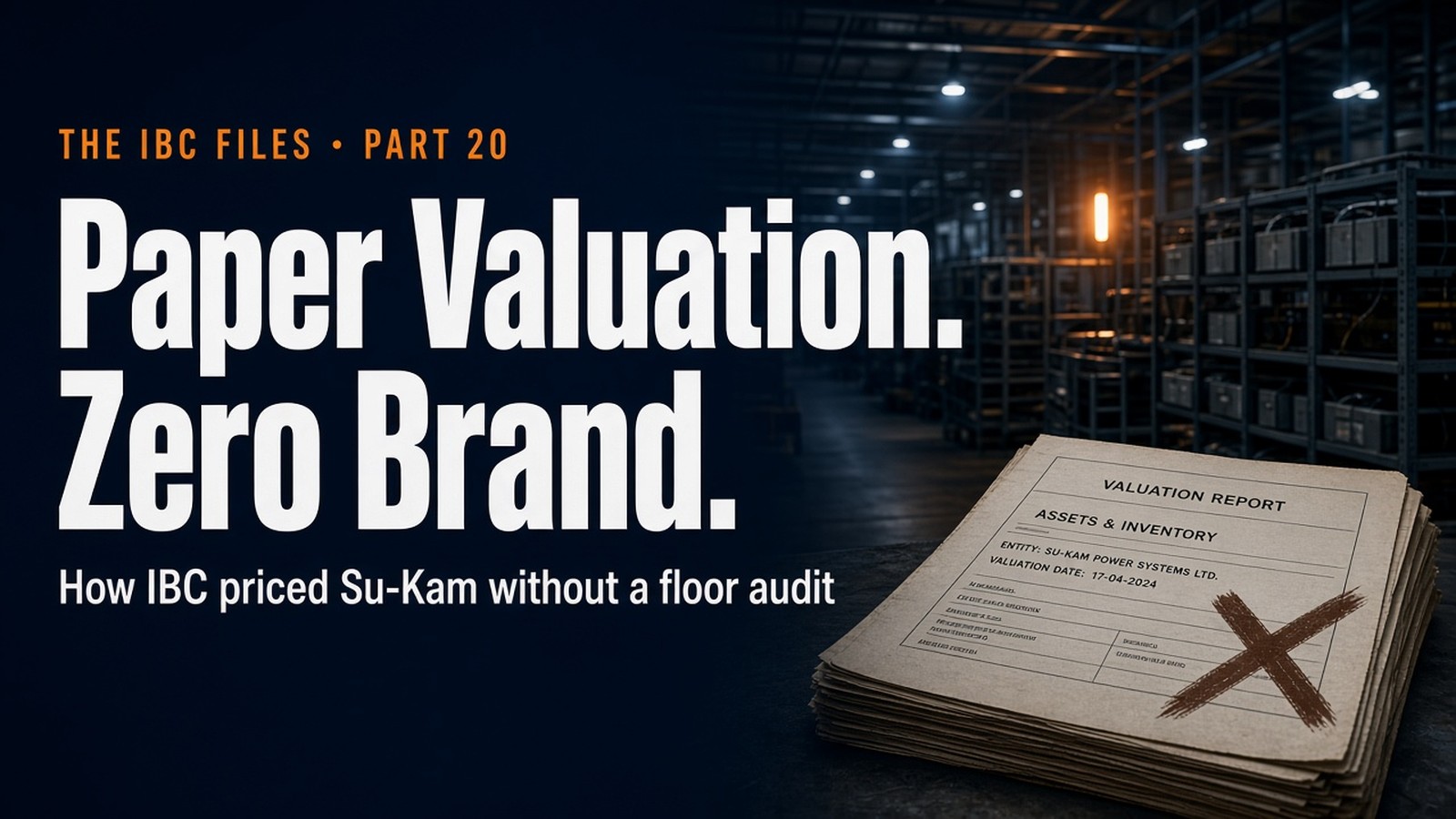
Paper Valuation, Zero Brand: How IBC Priced Su-Kam Without a Floor Audit
A company taken over under the IBC can be sent for “forensic audit” — and still never get a proper physical audit of assets and inventory. Then the brand is sold for zero. This is what that process looked like from inside Su-Kam.
1. Valuation on paper — and a brand at zero
What still surprises me is this: under the IBC process I lived through, the valuation of the company was treated as a paper exercise. Numbers moved. Files moved. Committees moved. But the thing that makes a manufacturing company real — machines on the floor, inventory in the stores, a brand that dealers and customers still recognise — was not valued the way any ordinary buyer would value a going concern.
Su-Kam was sold on an as-is-where-is basis. Documents were destroyed by the liquidator’s process as I experienced it. The brand was sold at zero value. Equipment and inventory went missing during the period. And when a company is closed down first, what “valuation” do you really get? A closed plant is not the same asset as a living one. That is not a technical quibble. That is the whole game.
2. Forensic audit without a floor audit
When a company is taken over by a Resolution Professional, people hear the phrase forensic audit and assume the floor has been counted. In both the situations I watched, that assumption was false. There was process language. There were professionals. There was not, in my lived experience, a proper physical audit of assets and inventory that would make a valuation trustworthy.
Without that floor check:
- Inventory can disappear and the record will still look tidy.
- Equipment can walk and the paper valuation will not scream.
- Anyone close to the process can exploit the gap between the register and the rack.
- The “enterprise value” becomes a story about documents, not about what is actually there on the day of takeover.
Su-Kam’s brand needed a valuation as on the day of takeover — as a living Indian brand with dealers, service memory, and product history. Close the company first, destroy continuity, and then pretend the brand is worth zero. That is not discovery of value. That is destruction of value, followed by a certificate.
There is a deeper unfairness inside the forensic label itself. In the process I lived through, the forensic audit was done without taking my inputs — without sitting with the founder who built the books, the products, the plants, and the people. How fair can a “forensic” exercise be when the person who knows the company is locked out of the room where the questions are framed?
Then the timing turns into a trap. About six years later, answers about that same forensic are asked from me — to prove my innocence — when I no longer have the papers, and I no longer have the people, with which anyone could fairly prove innocence. The records were not preserved for me. The team that could speak to every voucher and every shipment had been scattered by the process. And still the demand arrives: explain yourself, with empty hands.
What a floor actually looks like
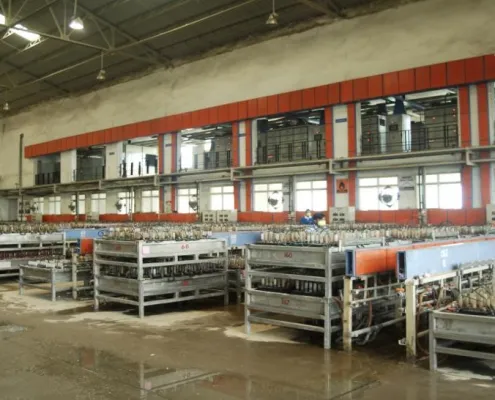
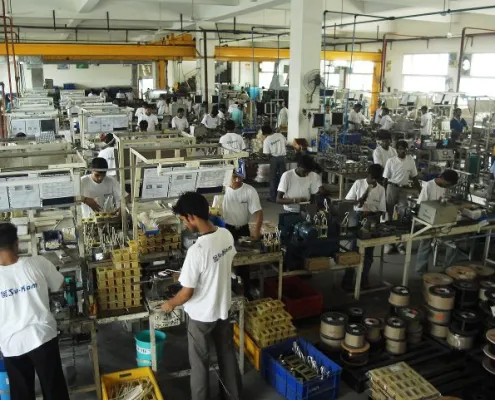
These are not brochure abstractions. They are Su-Kam plant floors — process lines, battery/test racks, and a branded assembly hall — the physical reality that paper valuation, missing handover audits, and as-is sales refuse to count.

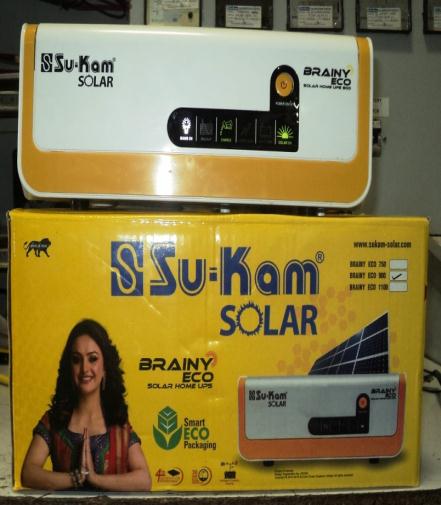
Finished goods the brand actually shipped
From the internal Su-Kam Katha Inverter Plant manufacturing review (June 2016): Brainy Eco Solar Home UPS units in retail packaging — the kind of branded finished inventory that must be counted on takeover day, and that an as-is sale can price as if the brand were worth nothing.

3. No audited handover and takeover under NCLT
There is another structural hole that makes every later number suspect: there is no proper handover and takeover under the NCLT process that is audited by an independent third party.
When control moves from the promoter-management to the Resolution Professional, and later toward the liquidator, that transfer of custody over plant, stores, books, keys, servers, and brand assets should be a sealed event — counted, photographed, signed, and certified by someone who is not a party to the fight. In the process I lived through, that third-party audited handover/takeover simply was not there as a discipline.
Without it:
- Nobody can say with clean evidence what existed on day one of takeover versus what remained on the day of sale.
- “Forensic audit” language can float above an empty floor protocol.
- Missing inventory and equipment become arguments instead of exhibits.
- Valuation, as-is sale, and zero brand price all rest on an unbroken chain of custody that was never independently locked.
If IBC is serious about value maximisation, NCLT-supervised handover and takeover must be third-party audited — assets, inventory, documents, and digital records — before any paper valuation is treated as real.
4. As-is sale, destroyed documents, missing inventory
An as-is-where-is sale sounds commercially neutral. When liquidator and buyer are effectively in sync, it becomes darker still: nobody with power at the table is paid to document what was stolen or eroded before the keys changed hands again. In a liquidation where documents have been destroyed and inventory has not been locked down, it becomes something else: a licence to buy darkness.
If the paper trail is incomplete, the buyer does not inherit a clean factory. The public does not get a clean account of what was lost. And the founder — watching from outside the room — cannot even prove the full scale of what walked out, because the very records that would prove it were not preserved as they should have been.
Thefts of equipment and inventory during the IBC period are not a side plot. They are what happens when control passes, the floor is not sealed by real audit discipline, and accountability is procedural instead of physical.
5. Four years, no MCA balance sheets — a double standard
Here is the blunder that still burns. During the whole IBC period — almost four years — no balance sheet was filed with the MCA for the company, as I found the record. That failure sat with the RP and the liquidator’s watch.
Had I, as promoter, failed to file statutory accounts in ordinary times, it would have been treated as a serious offence — with criminal colour attached to my name in the public imagination and in enforcement practice. Under IBC control, the same silence could stretch across years while the company’s carcass was processed.
That double standard is not a footnote. It is the moral geometry of the Code as I experienced it: promoters are policed as potential criminals; office-holders who control the company during CIRP and liquidation are protected by process.
6. The idle property nobody put in the sale
After everything, I found one property of the organisation that was lying idle — and had not been considered during the sale of Su-Kam. I was frustrated to the point of disbelief. How do you sell “the company” and miss a real asset? How does a process that speaks the language of maximising value skip what is simply sitting there?
That discovery was not a victory. It was confirmation that the map used for the sale was not the territory.
7. Company cars, a police complaint, and IBBI’s wall
There is a smaller fact that tells the larger story. The liquidator used two cars that were company property for two or three years. I raised a police complaint. The facts of that use were proved in the course of that complaint, as I understand the record. And then the wall appeared: IBBI did not give permission to the police to file the case against the liquidator — this is on record as I lived it.
So the process can strip a founder’s company, sell a brand at zero, miss a property, run for years without MCA filings — and when the founder points to misuse of company cars, the regulator’s posture becomes a shield. If that is “commercial wisdom,” it is wisdom that only travels one way.
8. What should we see — and why the heartbreak is evidence
People ask me what we should see in the IBC process. I will answer without theatre.
See the gap between forensic language and floor reality.
See how a closed company produces a closed valuation — and how a brand built over decades can be written down to zero once continuity is killed.
See how as-is-where-is, destroyed documents, and weak inventory control make theft hard to detect and easy to deny.
See the MCA silence across years of professional control — and ask why the same silence would have destroyed me as promoter.
See the idle asset left out of the sale. See the cars. See the police complaint. See the IBBI refusal on record.
My heartbreak is not a private mood. It is field evidence. It is what happens when a Code designed in the language of rescue and value maximisation becomes, in practice, a machine that can price a living manufacturer as paper, sell its name for nothing, and then protect the process from the very scrutiny it imposed on the builder.
This is why The IBC Files exists — not as nostalgia, but as a docket. And why the reform papers on this site — including Industrial Stress Is Not Insolvency — argue that manufacturing cannot be liquidated on stationery alone.

Founder, Su-Kam Power Systems (1988–2019) — the Inverter Man and Solar Man of India. Read his story →
Disclaimer: Kunwer Sachdev exited Su-Kam in 2019 and is not responsible for any activity of the company since. Anyone dealing with Su-Kam does so solely with its current management. Full disclaimer →
Data note: This essay is a founder’s first-person field account of the IBC process as lived in the Su-Kam matter. It is not a court judgment and not a substitute for the official record. Where regulatory or police process is described, it is described as experienced and understood by the author.