The Light that Never Failed: Why Off-Grid Solar Was a Medical Necessity for Tripura
Off-grid solar in Tripura — Series · Project 02 · Off-Grid & Storage
By Kunwer Sachdev — Founder, Su-Kam Power Systems · April 2026
In March 2014, Su-Kam commissioned a 45 kWp off-grid solar photovoltaic plant at the Ujjayanta Market Complex in the heart of Agartala. On a capacity basis, it was a modest installation. On a symbolic basis, it was the anchor project of Agartala’s bid to become the first solar city in North-East India, and Su-Kam’s first solar installation in Tripura.
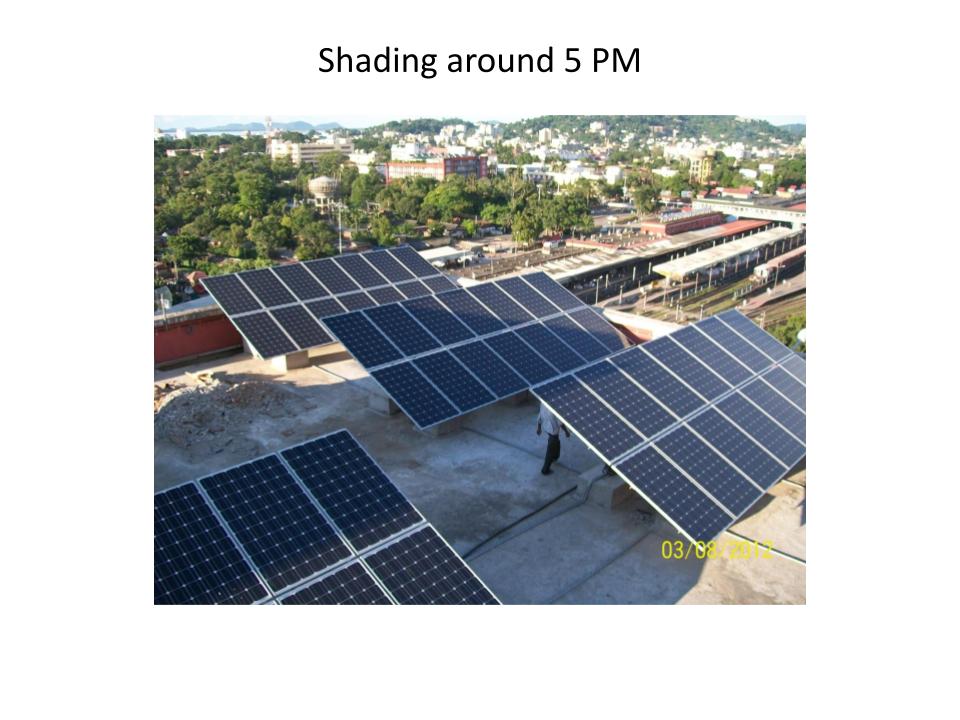
What the press releases recorded that month was the technical fact of a 45 kWp off-grid plant. What they did not record was that getting the equipment to the site had been one of the hardest things our logistics team had ever done — or that, two years later, a doctor in a Tripura primary health centre would tell me about a baby who had been safely delivered under our solar lights during a grid blackout, and that I would walk out of that conversation and not say much for a while.
The state farthest from power
To understand why the Ujjayanta Market plant mattered, you have to understand what Tripura was dealing with in 2014. The state sits in the geographical corner of India — bordered on three sides by Bangladesh, cut off from the rest of the country by a narrow corridor through Assam. Grid power reached Tripura late and unevenly. Outages were a routine feature of daily life. In some districts, hospitals were still delivering babies by candlelight.
The Tripura Renewable Energy Development Agency (TREDA), the state nodal agency for renewable energy, had a specific and ambitious plan. Under the Ministry of New and Renewable Energy’s Solar City Programme, TREDA and the Agartala Municipal Corporation had drawn up a master plan to make Agartala the first solar city in the North-East region. The Ujjayanta Market installation was chosen as the programme’s flagship — a visible, public anchor that would show the city’s residents that solar was not a lab experiment but a working part of their daily commerce.
TREDA awarded Su-Kam the contract to commission, install, and maintain the plant. It was our first solar project in Tripura, and it committed us to a part of the country where most of our competitors had no service presence at all.
How we actually got the work done
This is the part that does not appear in any press release.
Su-Kam, in 2014, did not have a permanent execution team in Tripura. We did not have one in most of the North-East. The North-East market for solar was, in 2014, too thin and too operationally difficult for any company in our size class to justify a permanent regional presence. So we built the team for the project, and we built it the way you build any team in a region where the market does not yet exist: senior engineers and project managers from our Gurugram head office flew in to anchor the work, and we hired local technicians in Agartala for the site execution and ongoing maintenance.
This was the model that became Su-Kam’s template for working in geographies where we did not have a deep local team — and we did it again, in different forms, in Tamil Nadu for the Chennai Metro project two years later, and in the North-East for the Assam Rifles deployment. The fly-in-fly-out structure for senior engineering, paired with a permanent local crew for installation and after-sales, was what allowed an inverter company headquartered in Gurugram to commit to a project in a state where the train doesn’t go.
The monsoon problem
The single hardest part of executing in Tripura was not the engineering. It was the monsoon.
Tripura receives some of the heaviest rainfall in India. Agartala’s annual average is over 2,200 millimetres, most of it concentrated between June and September. The land routes into the state — primarily through Assam, then through the National Highways that wind through the Barak Valley — are vulnerable to landslides, washouts, and prolonged closures during heavy rain. We learned this the hard way. Equipment shipments meant for our Tripura sites got stuck in transit for weeks at a time. Solar panels, inverters, batteries, mounting structures, cabling — all of it had to come from manufacturing centres in the rest of India, and during monsoon season, all of it was at the mercy of road conditions our project managers could not control.
There were weeks when we knew our trucks were sitting somewhere on a stretch of NH-44 in Meghalaya or Assam, waiting for a road to reopen, and there was nothing to do except wait. We rebuilt our project schedules around the rainy season. We pre-positioned critical equipment before the monsoon broke. We learned to add float to every commitment we made for sites in the North-East. None of these are particularly clever insights — anyone who has done infrastructure work in the region will recognise them — but you cannot really know them until you have lived through them.
What got built
- Capacity: 45 kWp off-grid solar PV with battery storage
- Site: Ujjayanta Market Complex, central Agartala
- Coverage: ~25% of the market complex’s total electrical load met by solar
- Awarded by: Tripura Renewable Energy Development Agency (TREDA)
- Programme: Anchor project of Agartala Solar City Master Plan, MNRE Solar City Programme
- Commissioned: March 2014
The Ujjayanta Market plant is not a grid-tied installation. It is off-grid — solar panels feeding into battery storage, with the stored energy powering the market’s loads directly. This matters. In 2014, and in much of the North-East even today, grid reliability could not be assumed. A grid-tied solar plant produces power only when the grid itself is up; if the grid fails, the solar inverter shuts down for safety reasons and the solar array effectively becomes useless at the exact moment power is most needed. Off-grid architecture, with batteries, keeps producing regardless of what the grid does. For a commercial market with hundreds of small traders depending on refrigeration, lighting, and point-of-sale systems, that was the whole point.
What came after the market
The Ujjayanta Market plant was not a standalone project. Once it was commissioned and working, TREDA expanded the scope. Su-Kam was awarded a further set of contracts to install solar PV plants at 95 health establishments across 8 districts of Tripura, with an aggregate capacity of approximately 600 kWp. The hospitals ranged from 5 kWp installations at primary health centres, to 10 kWp at community health centres and sub-divisional hospitals, to 25 kWp at the larger district hospitals. Two girls’ hostels in Agartala — the B. R. Ambedkar combined ST/SC Girls’ Hostel and the Maharani Tulsibati No. 1 ST Girls’ Hostel — also received installations.
The hospital programme is the work of which I am most proud. In a state where a hospital losing power for an hour could mean a life lost, the technical choice of off-grid solar with battery storage was not an engineering preference. It was a medical necessity.
The conversation I cannot forget
Some time after the hospital programme had been commissioned, on a site visit, I had a conversation with the doctor running one of the Tripura health centres we had electrified. He told me a story I have not stopped thinking about.
A few weeks earlier, the grid had gone out during the night. A woman had been brought in, in labour. Before the solar plant had been installed, this would have meant a delivery by candlelight or by torch. He had done many such deliveries in his career, he said. They are not safe. The lighting is poor. The risk of complications during a difficult delivery, with inadequate visibility, is real. Babies are lost, and sometimes mothers are lost, in deliveries done in the dark. Every doctor who has ever worked in rural India in conditions like these knows this.
That night, the grid was out, but the lights in the labour room stayed on. The Su-Kam off-grid system had switched to its battery bank automatically when the grid power failed. The delivery happened normally, under proper light. The baby was healthy. The mother was healthy. He told me this matter-of-factly, the way doctors tell you most things — not with melodrama, just with the precision of a man who is used to describing outcomes that could have gone the other way.
I did not have much to say in response. Most of what we do as engineers and as business people is abstract. Megawatts. Tariffs. PPAs. Internal rates of return. You can spend an entire career in this industry and never have a single moment in which the abstract becomes a specific human being whose life turned on whether your equipment did the right thing at three in the morning. That conversation was that moment for me.
The grid was out. The lights stayed on. The baby was healthy.
That is the entire case for off-grid solar with battery storage in rural India, in three sentences.
Why I am telling this story
When people today talk about Indian solar, they talk about gigawatt-scale plants in Rajasthan and Gujarat. Those projects matter. But the Indian solar revolution did not start there. It started in places like Agartala — small, stubborn, politically distant, operationally difficult — where the choice was not between solar and cheap grid power, but between solar and no power at all.
Su-Kam’s Ujjayanta Market plant was 45 kilowatts of capacity. On a national scale, it was a rounding error. On the scale of a market with hundreds of traders, a city with a solar-city ambition, a state that had been told for decades that it was too remote to reliably electrify, and 95 hospitals where babies were no longer being delivered by candlelight, it was a genuine beginning.
Small plant. Large precedent. And, somewhere in a primary health centre in Tripura, at least one specific human being whose first breath was taken under a Su-Kam light.
The verified record
- Business Standard (Press Trust of India), 14 March 2014 — “Su-Kam makes its first solar installation in Tripura”: business-standard.com
- VARIndia — “Su-Kam installs its first solar plant in Agartala” (confirms 45 kWp Ujjayanta Market plant + 600 kWp across 95 health centres in 8 districts + 30 kWp girls’ hostels): mail.varindia.com
- Medical Buyer — “Green Power Solution in Tripura Health Facilities” (TREDA programme detail: 90 PHCs at 5 kWp, 6 CHCs, 11 CHCs at 10 kWp, 13 sub-divisional hospitals, 3 district hospitals at 25 kWp): medicalbuyer.co.in
- SustainabilityZero, May 2014 — “Modi’s dream of solar-powered India takes shape in Tripura” (confirms 25% of Ujjayanta Market load met by the plant; Agartala Solar City programme): sustainabilityzero.com
- Tripura Renewable Energy Development Agency (TREDA) — official government page for the Solar City Programme: treda.nic.in/solar
- Discovery Channel, Sun Fuel India (2015) — documentary featuring the Tripura hospital electrification story: youtube.com
- Saur Energy, 23 January 2016 — “Su-Kam Aims to Empower With Solar Village Lives” (broader context on Su-Kam’s North-East solar work): saurenergy.com
This is the second in a series documenting what Su-Kam built — and what I built as its founder — project by project, during the years when India’s solar industry was still being invented.
Related Reading
- Solar Energy for Indian Homes: A Complete 2026 Buyer’s Guide
- Off-Grid Solar in Agartala: North-East India’s First Solar City
- How Su-Kam Replaced Diesel at Eighteen Assam Rifles Outposts
- When No One Wanted Solar: The SECI Rooftop Project Story
🔗 Read the Full “My Story” Series
Founder of Su-Kam and Kunwwer.ai, and mentor at Su-vastika and several other companies — the “Inverter Man of India” and the “Solar Man of India.” Read his story →