The 90% Hostage Crisis: Section 12A, Settlement Deadlocks, and the Untouchable ‘Commercial Wisdom’ of the CoC
How IBC Section 12A’s 90% CoC threshold and untouchable ‘commercial wisdom’ block ₹250 Cr settlements, force manufacturing into scrap, and hostage viable founders.
Historical disclosure: Kunwer Sachdev ceased all association with Su-Kam Power Systems Ltd. in April 2018. References to Su-Kam’s CIRP and liquidation arc are archival — not a current affiliation.
When the Insolvency and Bankruptcy Code (IBC) was amended in 2018 to introduce Section 12A (see the IBC Act via IBBI), it was framed as an essential exit ramp.
Recognizing that litigation is often blunt and value-destructive, the legislature gave corporate debtors a legal mechanism to withdraw an admitted Corporate Insolvency Resolution Process (CIRP) if they could reach an out-of-court settlement with their financial lenders.
On paper, Section 12A was an escape hatch for solvent or viable businesses caught in cyclical insolvency traps.
In practice, Section 12A is a legal mirage.
By saddling the withdrawal mechanism with a punishing 90% voting share threshold of the Committee of Creditors (CoC)—while the Supreme Court simultaneously declared the “commercial wisdom” of that same CoC virtually immune from judicial review—the system created an institutional hostage situation.
I witnessed this deadlock firsthand during the Su-Kam proceedings. Viable, capital-backed exit plans that offered multiple times what eventual liquidation could ever yield were stalled, fractured, and discarded.
Here is the anatomy of how Section 12A and the doctrine of “commercial wisdom” systematically drive going-concern manufacturing enterprises into the scrapyard. Companion pillars: What Really Happens to a Manufacturing Brand Under NCLT and the Section 29A Paradox — including the personal guarantee trap.

1. The Mathematics of Extortion: The 90% Voting Wall
In ordinary corporate governance, a special resolution requires a 75% majority. Under the IBC:
- Approving a third-party resolution plan under Section 30(4) requires a 66% majority.
- Ordering the liquidation of a company under Section 33(2) requires a 66% majority.
- Replacing an Insolvency Resolution Professional (IRP) requires a 66% majority.
Yet, to settle with your creditors, pay them out, and take back your own company under Section 12A, the law demands an astronomical 90% approval by value.
| Action | Threshold |
|---|---|
| Liquidation Order (Section 33) | 66% |
| Approve Third-Party Takeover (Section 30) | 66% |
| Exit CIRP via Full Settlement (Section 12A) | 90% ← the roadblock |
This statutory asymmetry hands absolute veto power to small, recalcitrant, or rogue minority creditors.
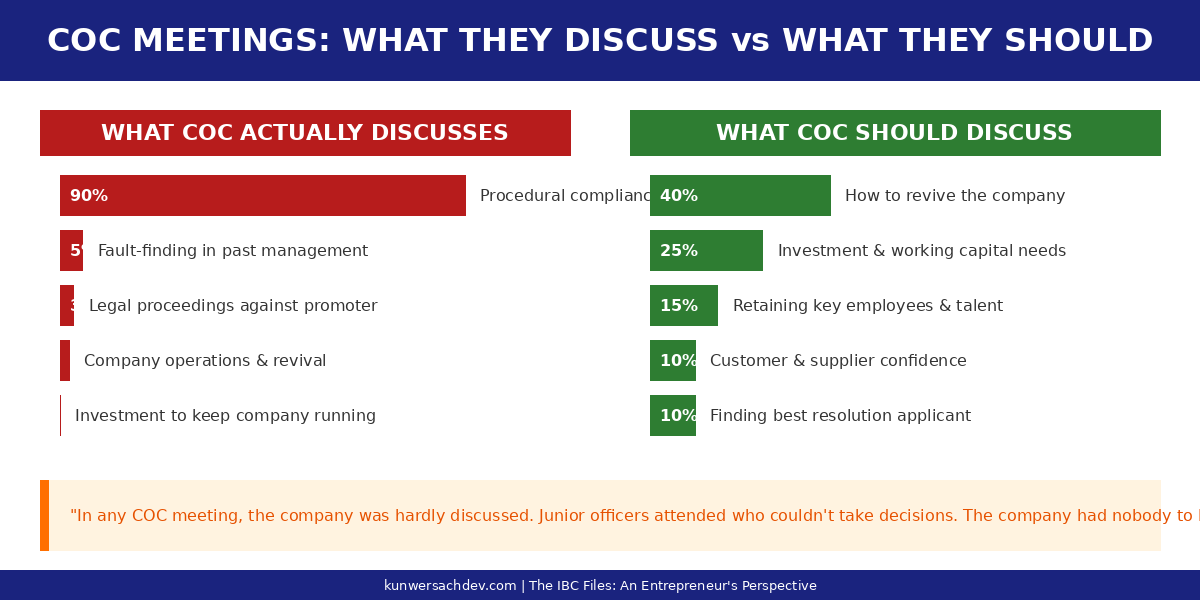
Consider a typical Indian banking consortium of 10 to 14 financial institutions. If a single lender holding an 11% voting share decides to dig in its heels—whether due to internal bureaucratic friction, rigid provisioning rules, or a junior officer’s fear of vigilance scrutiny—the entire settlement collapses.
The remaining 89% of lenders who want to recover their money immediately are held hostage. The promoter who brought structured recovery capital to the table is turned away. The company’s plants, patents, and workers are propelled directly into liquidation — pressure-test that path in the IBC Value Destruction Modeler. Why CIRP clocks blow past 180/330 days is mapped in Pillar #1.
2. The Shield of “Commercial Wisdom”: Judicial Abdication
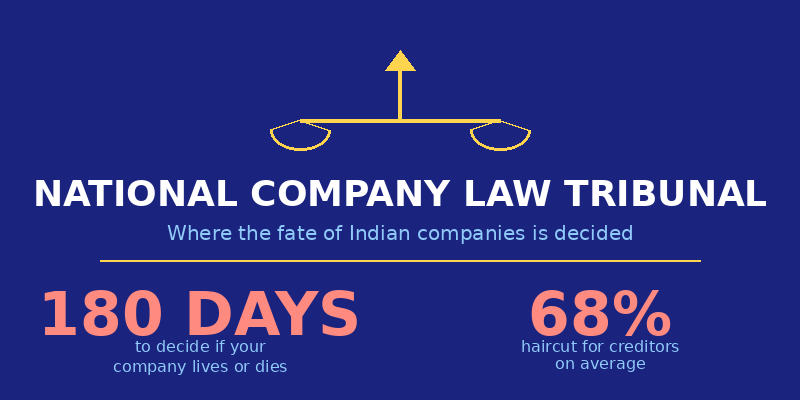
Why don’t the National Company Law Tribunal (NCLT) or the National Company Law Appellate Tribunal (NCLAT) step in when an irrational minority lender or a fragmented CoC sabotages a commercially superior settlement?
The answer lies in the Supreme Court’s landmark rulings in K. Sashidhar v. Indian Overseas Bank (2019) and Essar Steel India Ltd. v. Satish Kumar Gupta.
These judgments established the doctrine of the “Commercial Wisdom of the CoC”:
- Adjudicating Authorities (NCLT/NCLAT) are barred from assessing the business or economic merit of a CoC decision.
- Tribunals have no jurisdiction to question the quantum of recovery, distribution ratios, or the business judgment of financial creditors.
- Unless there is a blatant violation of statutory procedure, the subjective vote of the CoC is absolute, non-justiciable, and final.
While this doctrine was created to prevent endless frivolous appeals by erstwhile promoters, it removed every judicial check and balance. I wrote about watching that mythology from outside the room in Commercial Wisdom: The Myth.
Empirical Reality: The CoC is a fractured committee of risk-averse, public-sector committee delegates whose primary driver is personal insulation from the 3Cs: CBI, CAG, and CVC.
When bankers sit in a CoC meeting, they are not evaluating risk like venture capitalists or turnaround specialists. They are asking one defensive question:
“If I vote in favor of a Section 12A promoter-backed settlement, will an investigative agency accuse me of colluding with the borrower five years after I retire?”
That fear is compounded by Section 29A paranoia and eleventh-hour wilful/fraud tagging — walk the playbook in the MSME 240A Neutralization Flow.
Voting for liquidation carries zero personal vigilance risk for a banker. Liquidating an industrial titan for 2% scrap value is considered an “impartial, statutory outcome.” Voting for a negotiated 60% recovery via Section 12A, however, carries endless audit trails.
The “commercial wisdom” of the CoC is not wisdom at all; it is institutional self-defense.
3. The Su-Kam Empirical Case: ₹250 Crore on the Table
During Su-Kam’s CIRP, the destructive reality of this deadlock played out in explicit financial terms — the shop-floor chronology is in Pillar #1 and Inside the CIRP.
Su-Kam was not a bankrupt holding shell. We were an active engineering firm with 77 patents, 6 factories, and global market presence. When CIRP ground our operations to a halt, serious efforts were made to bring structured third-party and institutional capital to execute a clean exit under Section 12A.
Institutional term sheets—including proposals supported by major private financing entities like Kotak—offered recovery packages in the range of ₹200 to ₹250 crore.
| Decision Pathway | Proposed Recovery | Impact on Assets & Technology | Actual Outcome |
|---|---|---|---|
| Section 12A Settlement | ₹200 – ₹250 Crore | 6 plants operational; 77 patents preserved; vendor ecosystem revived | Blocked & Stalled by consortium deadlock and Section 29A paranoia — including personal guarantee / Part III fear |
| Section 33 Liquidation Auction | ₹8 – ₹9 Crore | Plants dismantled; equipment sold as scrap; patents abandoned | Executed under the banner of “Commercial Wisdom” |
Use our interactive IBC Value Destruction Modeler to simulate how prolonged CIRP timelines erode 96%+ of enterprise capital — ₹250 Cr revival fog vs scrap neighbourhood.
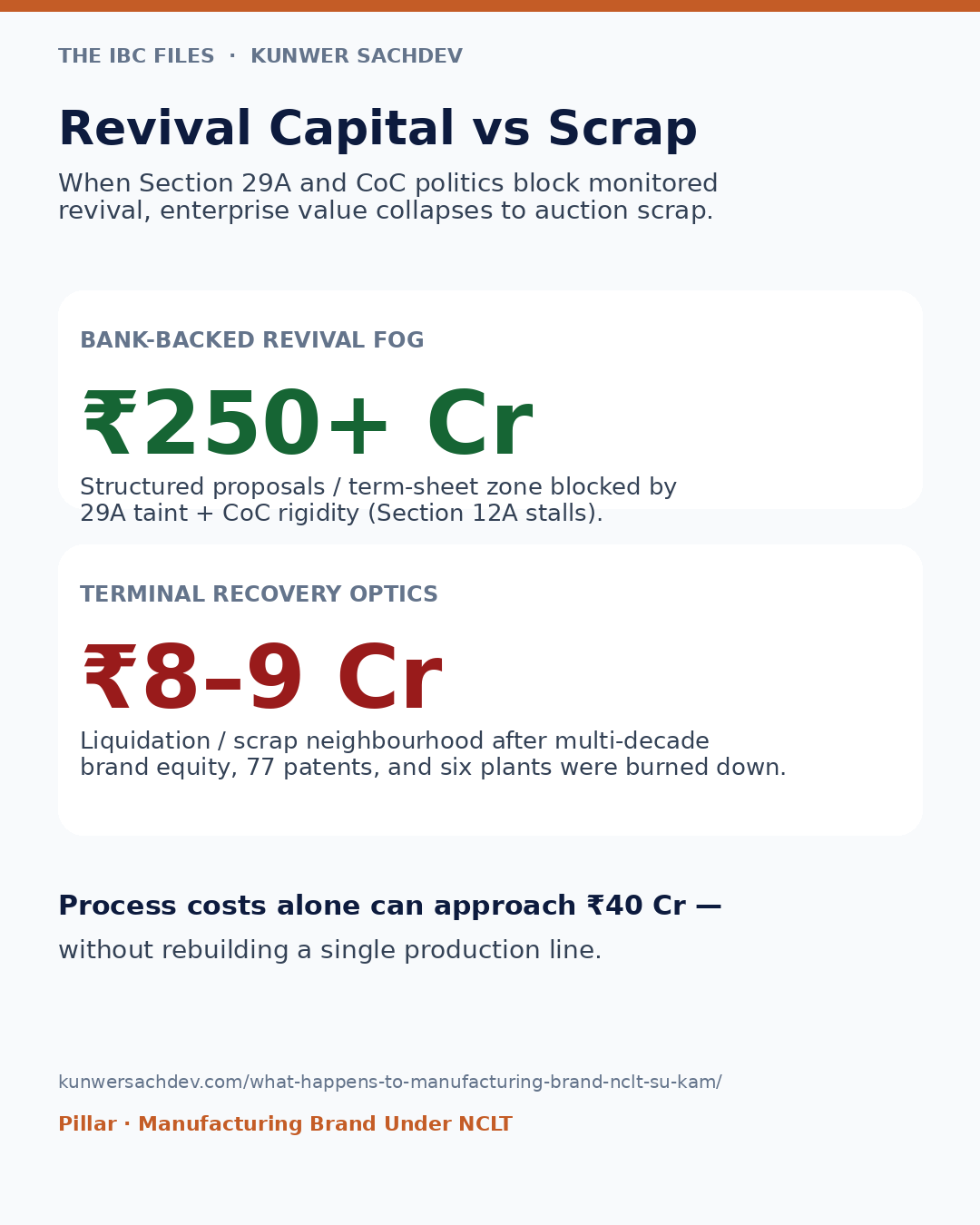

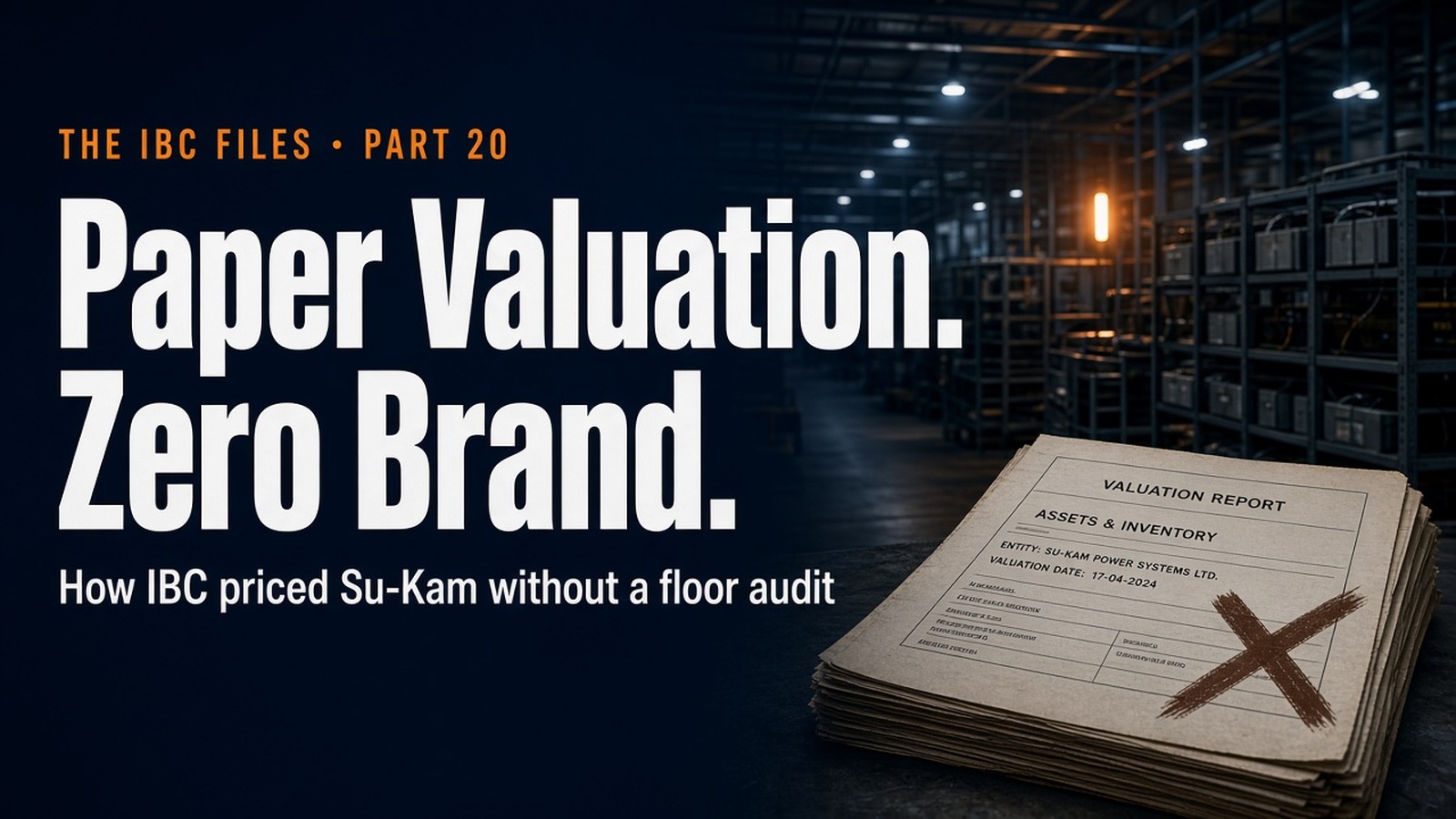
Under the banner of “commercial wisdom,” lenders walked away from a ₹250 crore recovery to eventually auction off physical assets for less than ₹9 crore — also told in The Day Su-Kam Died, the 30-year liquidation case study, and Paper Valuation, Zero Brand.
That is not a commercial haircut. That is a 96% destruction of available capital orchestrated by bureaucratic inertia, shielded by judicial non-intervention, and enabled by the impossible 90% statutory barrier.
4. The Structural Incentives of the CIRP Machinery
There is another unstated reason why Section 12A settlements face silent institutional resistance inside CIRP: the conflict of interest within the insolvency bureaucracy.
Once an application is admitted:
- The Resolution Professional (RP) and Legal Retainers: A large CIRP creates an ecosystem of billable hours — see also Founder vs Resolution Professional.
- Alignment of Interest: A successful Section 12A withdrawal terminates the CIRP immediately. The fees stop. The process ends.
- Piecemeal Liquidation as an Industry: Prolonged litigation and liquidation provide years of administrative billing and liquidator fee percentages.
When the law demands 90% unanimity to stop the clock, the ecosystem running the clock has little economic incentive to see the clock stopped. That fee-vs-factory asymmetry is also visible in the IBBI penalties without entrepreneur restitution record.
5. Blueprint for Policy Reform: Fixing Section 12A
If the IBC is to function as a genuine corporate rescue mechanism rather than an asset slaughterhouse, Section 12A and the doctrine of commercial wisdom require urgent statutory recalibration. The IBBI and the IBC Act remain the primary reform surfaces.
1. Reduce the Section 12A Voting Threshold to 66%
There is zero legal or economic justification for requiring 90% approval to settle a debt while allowing a 66% vote to liquidate a company or sell it to a third party. Harmonizing Section 12A with Section 30(4) and Section 33(2) at a 66% majority would immediately eliminate the extortionary leverage of minority creditors.
2. Introduce a “Comparative Recovery Test” (The Best-Interest Rule)
In US Chapter 11 proceedings, courts apply the “Best-Interests-of-Creditors Test”. Indian insolvency law must amend Section 12A so that if an independent valuer certifies a settlement substantially exceeds certified Liquidation Value, the NCLT can override irrational minority dissent. See also fair vs liquidation value.
3. Grant Statutory Immunity to Bankers for Commercial Compromises
Public sector bank delegates on the CoC must be shielded from retroactive vigilance inquiries (CVC/CBI) for commercially sound votes cast under Section 12A, provided the settlement is ratified by an independent oversight committee. Without protection from personal liability, bankers will continue to vote for zero-recovery liquidation every time.
4. Close the 29A / Part III Fear Loop Around Settlements
A Section 12A vote cannot remain hostage to Section 29A circumvention paranoia or Part III personal-guarantee chase after Lalit Kumar Jain. Align with the reform agenda in the MSME 240A Neutralization Playbook and pull MSMEs out of the IBC where the debtor is founder-dependent manufacturing.
The Illusion Must End
The Insolvency and Bankruptcy Code was designed to prevent value destruction, not codify it.
As long as Section 12A retains an impossible 90% threshold, and as long as tribunals treat the paralysis of the CoC as sacred “commercial wisdom,” Indian manufacturing companies will continue to be crushed between bank paranoia and legal dogma.
It is time for the Supreme Court and the legislature to acknowledge the hard truth: when institutional fear dictates the vote, “commercial wisdom” is nothing more than legal cover for catastrophic industrial waste.
— Kunwer Sachdev
Founder, Su-Kam Power Systems (1988–2018) · Founder, Kunwwer.ai
Further reading in The IBC Files
- What Really Happens to a Manufacturing Brand Under NCLT
- The Section 29A Paradox
- Personal Guarantee Trap
- Commercial Wisdom: The Myth
- Pillar #4 — Silent Bloodbath (Operational Creditors)
- Pillar #5 — CIRP Cost Parasite
- IBC Value Destruction Modeler
- MSME 240A Neutralization Playbook
- Fair vs Liquidation Value
- The IBC Files — Series Hub
Key external references
Found this story worth sharing? Post it to your network — it takes one click: