India’s first sine wave inverter, solar home lighting, and the birth of “Home UPS”
“No Indian company had made a sine wave inverter. I motivated our team, who were not sure whether the product could even work. I was confident we would make it successful.”
01India’s first sine wave inverter (2002)
In 2002, every inverter in India produced a square wave or modified sine wave — harsh, noisy power that could damage sensitive electronics. I wanted something radically better: a pure sine wave inverter using DSP (Digital Signal Processing) technology.
I created two competing R&D teams — both racing to build the same product. In competition, both delivered. The first model was 24V, bulky, and ran hot in battery mode. But it worked. We kept improving until we had a single-battery sine wave inverter — compact, efficient, producing power purer than the grid itself.
First R&D recognition
Su-Kam became the first inverter company recognised by the Dept of Science & Technology — changing the R&D landscape for the whole industry.
First BEE 4-star inverter
The first inverter with BEE four-star certification — when nobody in the industry even thought about inverter efficiency.
“Inverter Man & Solar Man of India”
It was during this period that a magazine gave me the title that stuck and defined my identity ever since.
02Solar home lighting — light for the powerless
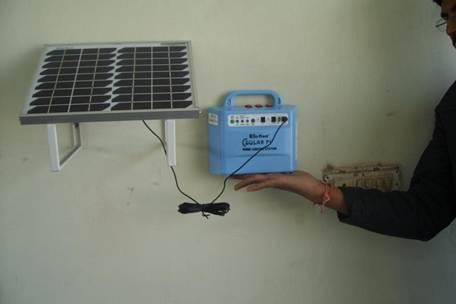
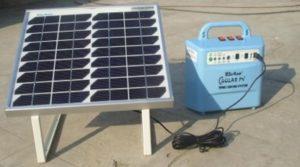
On a foreign visit I discovered the Chinese were selling small solar home-lighting systems in huge volumes worldwide — for places with 10-12 hours of no power. But their systems were unreliable. I brought a sample home and told my R&D team: “We need to make this better.”
We designed a system with two small lights and a radio — the real challenge was making it attractive, with a supplier ecosystem where nobody wanted to develop new components. It took almost a year of design changes to get a beautiful, reliable product. This was Su-Kam’s first step into solar — the journey that led to megawatt solar projects, solar hybrid inverters and the first Solar Online UPS.
03The birth of “Home UPS” — a name I gave the industry
Three problems, one solution. Problem 1: imported plastic granules were getting expensive, making plastic inverters unprofitable against cheap metal chassis. Problem 2: customers wanted to run computers and TVs, but switchover time was too slow — screens went black during power cuts. Problem 3: inverters carried 12% sales tax.
My solution: a new category called “Home UPS” — metal chassis with plastic front, near-zero switchover time, classified under the UPS HSN code at just 4% tax. My R&D team was completely against it, fearing it would backfire. I took the risk and pushed them to cut the switchover time until computers and TVs ran seamlessly through power failures.
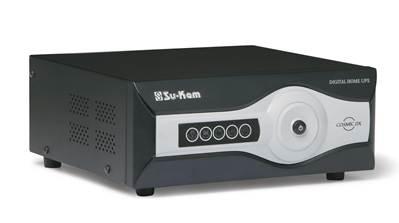
We launched in 2005. Within one year, the entire industry renamed their inverters to “Home UPS” to compete with us. Fans and lights worked without blinking, IT dealers started stocking us, and the tax advantage made every dealer want it. I didn’t just make a product — I created a category the entire Indian industry adopted.
04LED indications — inspired by an airplane
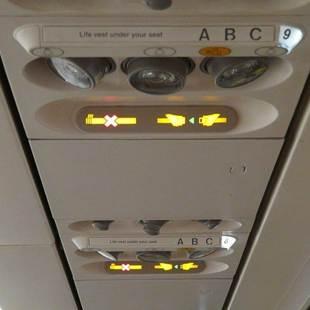
Innovation can come from anywhere. On a flight I looked up at the overhead panel — seatbelt sign, no-smoking light, air-conditioning controls — all simple, clear LED indicators. Why couldn’t our inverters communicate with users the same way?
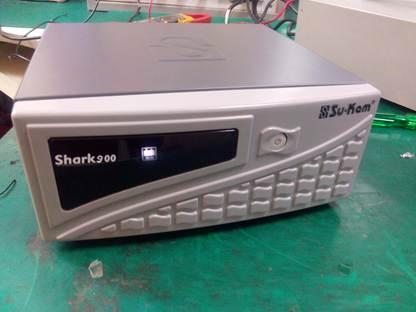
We designed an LED indication system that told users everything at a glance: mains status, inverter mode, battery charging, low battery, overload. Simple, intuitive, beautiful. The Shark 900 embodied that philosophy — bold aesthetics with clear user communication.
- My Story with Jagdeep Chauhan — the man who invented India’s sine wave inverter
- My Story with Sanjeev Saini — the man who built Su-Kam’s mind
- India’s first Solar Online UPS — the full technical story
- The Solar Projects — the installations that made us proud
- How Su-Kam came to file 77 patents
- Su-Kam Brainy Eco — Solar UPS with Bluetooth (YouTube)
- Su-Kam Power Systems — Wikipedia
- Power Inverter — Wikipedia
- YourStory: The ₹10,000 start that built India’s inverter giant
- Pioneer Timeline — four decades of firsts, at SolarManOfIndia.com
- Verification — documented proof of the firsts, at SolarManOfIndia.com
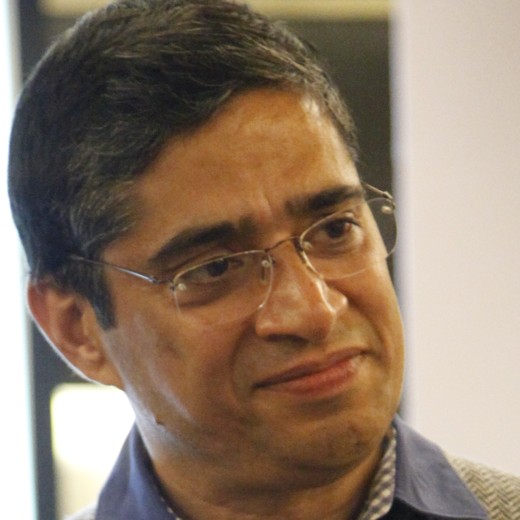
Founder of Su-Kam and Kunwwer.ai, and mentor at Su-vastika and several other companies — the “Inverter Man of India” and the “Solar Man of India.” Read his story →
Found this story worth sharing? Post it to your network — it takes one click: