Jagdeep Chauhan: Engineering DSP Sine Wave Inverters
One of the people stories. Open the full alumni web →
People of Su-Kam — #1
I Was Always Hungry for Technology
There is something that drove every decision I made at Su-Kam — a hunger. A hunger for technology. A hunger to build things that did not exist yet in India, to understand how things worked at the deepest level, to find the people who could turn that understanding into products that millions of people would use.
Explore energy storage and lithium battery innovations at https://lithiuminverter.in and solar category firsts at https://solarmanofindia.com.
For founders seeking AI legal diagnostics and business co-pilots, explore Legal Shield on https://kunwwer.ai/.
That hunger is what brought Jagdeep Chauhan to Su-Kam. And what happened after he arrived changed the Indian power industry forever.
A Chip Salesman Who Changed Everything
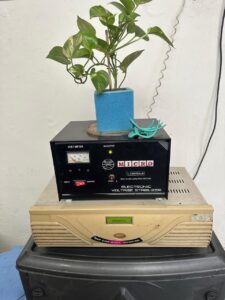
Jagdeep Chauhan had started his career at S K Dynamic in Roorkee — a brilliant company in the power electronics space. After that, he moved to a semiconductor manufacturing company, and it was in that role that he came to meet me. He came to sell me a chip.
I was not in the market for a chip. But I was in the market for a mind. And the moment Jagdeep started talking, I knew I was sitting across from someone who understood technology at a level that was rare. His knowledge of DSP — Digital Signal Processing — chips and embedded electronics was exceptional. He was not just selling a product. He was thinking about what that product could do, what problems it could solve, how far it could go.
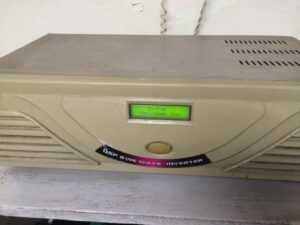
At that time, I had one very specific ambition — I wanted to build a sine wave inverter. Not the square wave inverters that were common in India at that time. A true sine wave, the kind that could power sensitive electronics, ACs, refrigerators — the kind that would make Su-Kam’s inverters genuinely superior. The technology was hard. Very few people in India had the knowledge to attempt it. I thought Jagdeep might be one of them.
I took a chance. I asked him if he wanted to stop selling chips and start building something that had never been built in India before. He said yes.
Two From Roorkee, One Big Idea
Before Jagdeep joined, he told me about someone else — Narender Singh Negi, a colleague from his S K Dynamic days. He said Negi was brilliant, that together they had the experience on DSP technology that this project needed. I also met Mr. Rakesh Goyal, the owner of S K Dynamic — a respected man and a serious engineer. We discussed the possibility of working together on inverter technology, but ultimately it did not come together.
What did come together was this: I hired both Jagdeep and Negi and brought them to Su-Kam in 2001 to work on the sine wave inverter project using DSP chip technology. Two people from Roorkee, with years of hands-on experience on DSP embedded systems, now sitting in our R&D lab with one mission.
S K Dynamic, Roorkee → Semiconductor company → Su-Kam R&D (2001) → Founder & MD, EAPRO Global (2012)
S K Dynamic, Roorkee → Su-Kam R&D (Sept 2001–June 2009) → Head of R&D & Board Member, V-Guard Industries Ltd.
The Race That Built an Industry
When Jagdeep and Negi joined, there was already a strong R&D team at Su-Kam — led by Sanjeev Saini, who had been working with me for three years on inverter and solar technologies. Two teams, two very different engineering approaches, one lab.
They did not gel. The experienced existing team had their ways, Jagdeep and Negi had theirs. Rather than force a merger that would create friction, I made a decision — I separated them into two competing teams and gave them the same task: build a DSP-based Sine Wave Inverter.
Let the best engineering win.
What followed were months of intense, difficult, brilliant work. DSP circuitry is complex — the software that runs on a DSP chip to control an inverter’s output waveform involves layer upon layer of precision code. Timing errors, feedback loop instabilities, waveform distortions — there were a hundred ways to get it wrong and very few ways to get it right. Every day there were new problems. We solved them one by one.
Jagdeep’s team crossed the finish line first. They built a working DSP sine wave inverter — running on two batteries. It had challenges in those early weeks, things to refine and fix, but the core technology was there. It worked. India had its first domestically designed DSP sine wave inverter.
A few months later, Sanjeev’s team delivered their version — a single-battery sine wave inverter, with its own innovations. Both achievements mattered. The competition had pushed both teams beyond what they might have reached working alone.
The Silent One Who Thought Ahead
Jagdeep Chauhan was never a loud personality. In meetings, in the lab, in conversations — he was quiet. But his silence was not emptiness. It was depth. He was always thinking ahead of the current problem, already working in his mind on what came next, what was possible, what the technology could become.
That is a rare quality. Most engineers solve the problem in front of them. Jagdeep was solving the problem two steps ahead.
He joined Su-Kam in 2001. He gave years of his mind and his patience to building technology that was genuinely new. And when I think about what he quietly achieved — not just in those years at Su-Kam, but in everything that came after — I feel the particular pride of someone who recognised something in a person before the world did.
What He Built After
In 2012, Jagdeep founded EAPRO Global in Roorkee — the city where his engineering journey had begun. The company is built entirely on the DSP Sine Wave Inverter technology that was born at Su-Kam. Today, EAPRO holds 5 granted patents and 4 patents pending on this technology — patents built on the same foundation that Su-Kam itself once pioneered. You can read the full story of how Su-Kam came to file 77 patents and what eventually happened to them. The company produces over 50,000 inverters per month, has a presence in more than 20 countries, and has over 10 million satisfied users globally.
Ten million people. Powered by a technology that was invented in our R&D lab in 2002. By a quiet man from Roorkee who came to sell me a chip and ended up changing the Indian power industry.
The First Inverter — A Photograph Worth More Than Words
I have a photograph of the very first sine wave inverter that Jagdeep and Negi’s team built. A prototype from 2002. It does not look like much — components on a board, wires, a rough casing. But that photograph represents the beginning of something that would go on to power tens of millions of homes.
📷 Photograph coming soon — The first DSP Sine Wave Inverter prototype built by Jagdeep Chauhan and Narender Singh Negi’s team at Su-Kam, 2002.
Jagdeep — you came to sell me a chip and you ended up building an industry. The silence you carried in those years was full of ideas the world is still catching up with. I am proud to have been the one who gave you the first chance. EAPRO is proof that the chance was well placed.
Read the next story in this series: Venkat Rajaraman — The Man Who Left Nvidia for a Dream
Related Reading
- From a Malfunctioning Inverter to a National Standard: The Su-Kam R&D Story
- The Man Who Built Su-Kam’s Mind — My Story with Sanjeev Saini
- The Man from IIT Who Came Back — My Story with R. Sivarajan
- The Man Always Lost in His Thoughts — My Story with Narender Singh Negi
🔗 Read the Full “My Story” Series
Frequently Asked Questions
Who engineered India's first DSP sine wave inverter at Su-Kam?
Engineer Jagdeep Chauhan worked closely with founder Kunwer Sachdev at Su-Kam R&D to design India's first commercial DSP sine-wave Home UPS before founding EAPRO Global.
Founder of Su-Kam and Kunwwer.ai, and mentor at Su-vastika and several other companies — the “Inverter Man of India” and the “Solar Man of India.” Read his story →
- Venkat Rajaraman — Su-Kam R&D → Cygni Energy
- Sunil Badesra — Boy who became a leader → Sungrow India
- Arun, Rajnish & Ravi — Three people who built Smarten Power Systems