The Citizen’s Camera: How Social Media Broke the Feudal Iron Triangle
DECOLONIZING THE NARRATIVE · PART 08 The Citizen’s Camera: How Social Media Broke the Feudal Iron Triangle For seventy-five years,
DECOLONIZING THE NARRATIVE · PART 08 The Citizen’s Camera: How Social Media Broke the Feudal Iron Triangle For seventy-five years,
DECOLONIZING THE NARRATIVE · PART 07 The War for the Gavel: Why the State and the Judiciary Fight Over Control,
DECOLONIZING THE NARRATIVE · PART 06 The Stolen Prime: How India’s Family Courts Sabotaged Their Own Promise Parliament designed family
How independent India kept the colonial courtroom — two-speed justice, summer vacations, Collegium secrecy, English as intimidation — while Britain kept case management and the JAC for itself.
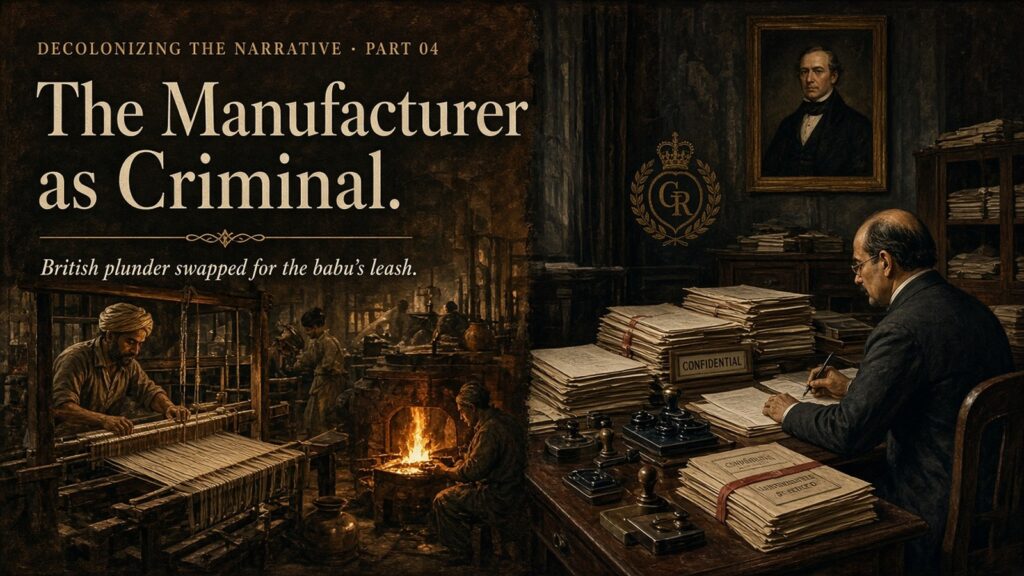
How India made the Sarkari Babu a hero and the manufacturer a permanent suspect — from smashed looms to License-Permit Raj, inspectors, and Bollywood’s factory villain.
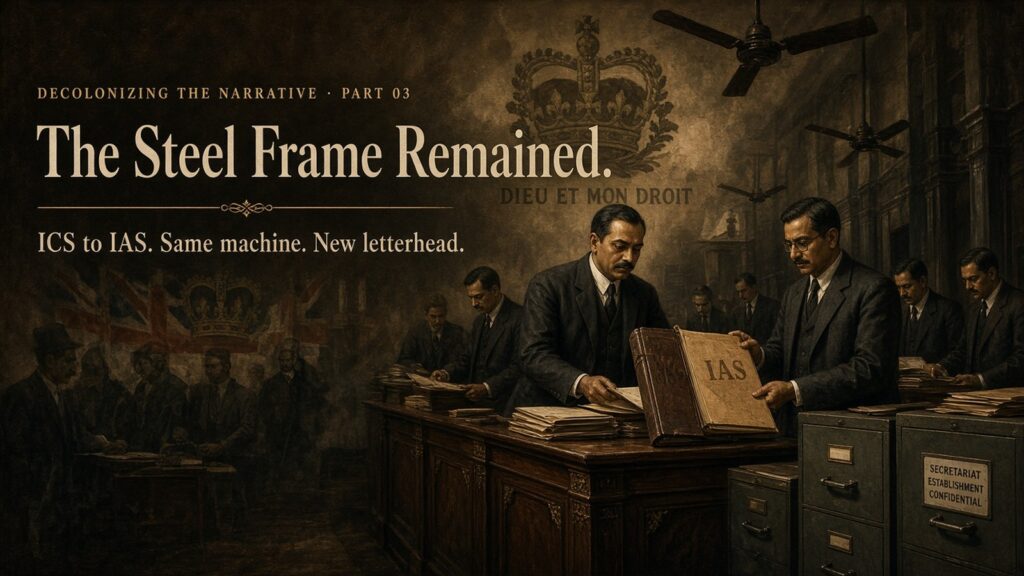
ICS to IAS, Imperial Police to IPS, colonial revenue to IRS — how 1946 preserved the steel frame, and why Indian officers are still judged upward more than outward.
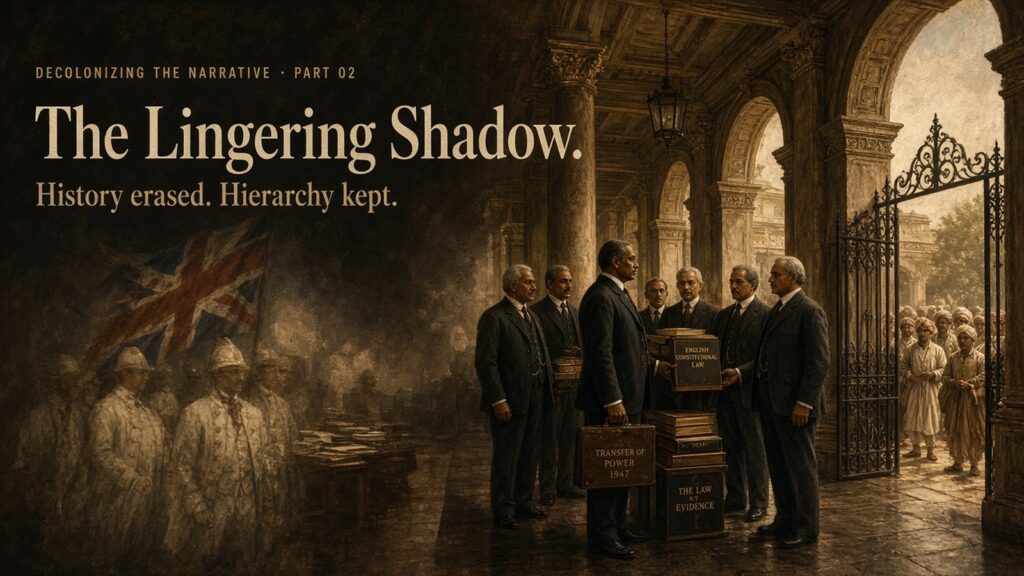
After 1947, incomplete decolonization left fair-skin bias, BBC-as-gospel, and the Brown Sahib Oxbridge monopoly intact. Kunwer Sachdev on reclaiming the Indian mind.
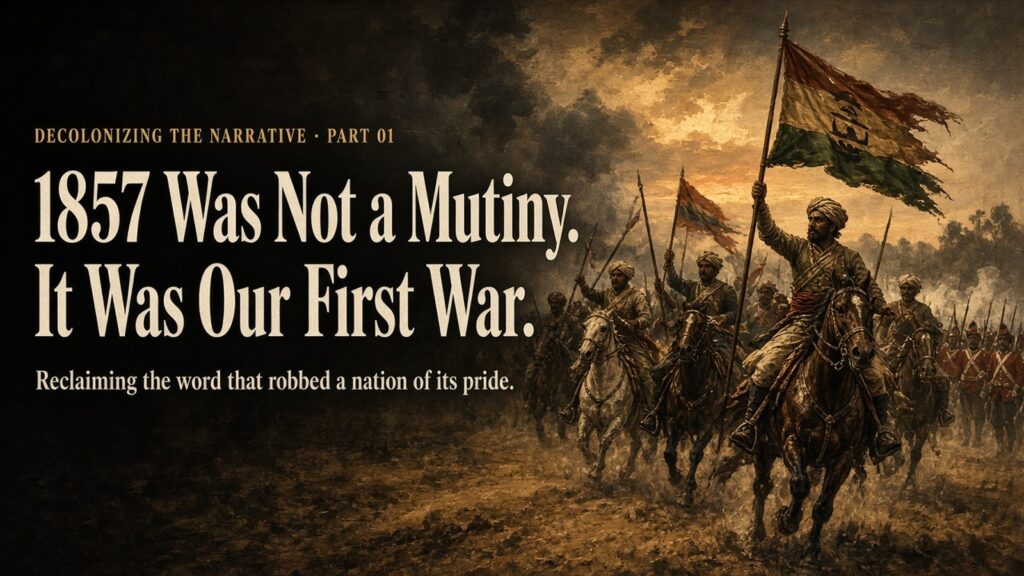
Essays reclaiming Indian history and civilizational memory from the colonial lens — beginning with 1857 as India’s First War of Independence.
When textbooks call 1857 a mutiny or revolt, they teach children that conquerors were rightful masters. Why sovereign India must name it the First War of Independence.

Under IBC, Su-Kam was valued on paper, sold as-is, brand at zero — without a proper floor audit of assets and inventory. A founder’s Part 20 field account.