India’s First BMS Was Built by Su-Kam — Under Kunwer Sachdev
Series battery strings silently go unbalanced. Kunwer Sachdev’s idea — Su-Kam’s Battery Equalizer, India’s first lead-acid Battery Management System — kept every cell at the same charge level, won patent protection under his leadership, and tripled pack cycle life.
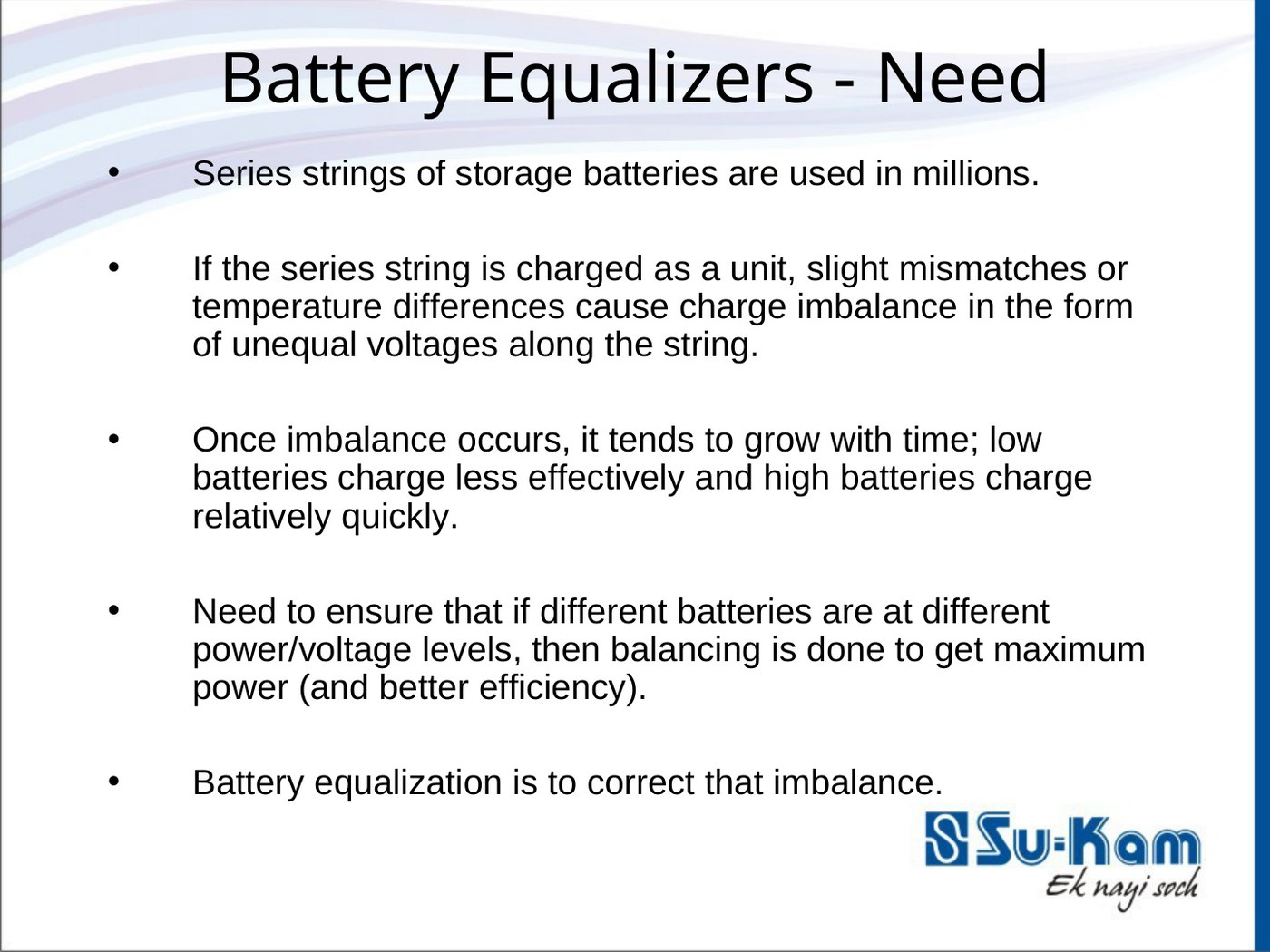
Millions of inverter, UPS, solar, telecom, and automotive systems in India run on series strings of lead-acid batteries. Charge them as a unit and slight mismatches — or temperature differences — create charge imbalance: unequal voltages along the string. Once imbalance starts, it grows. Weak batteries charge poorly; strong ones race ahead. Backup time shrinks. Battery life collapses.
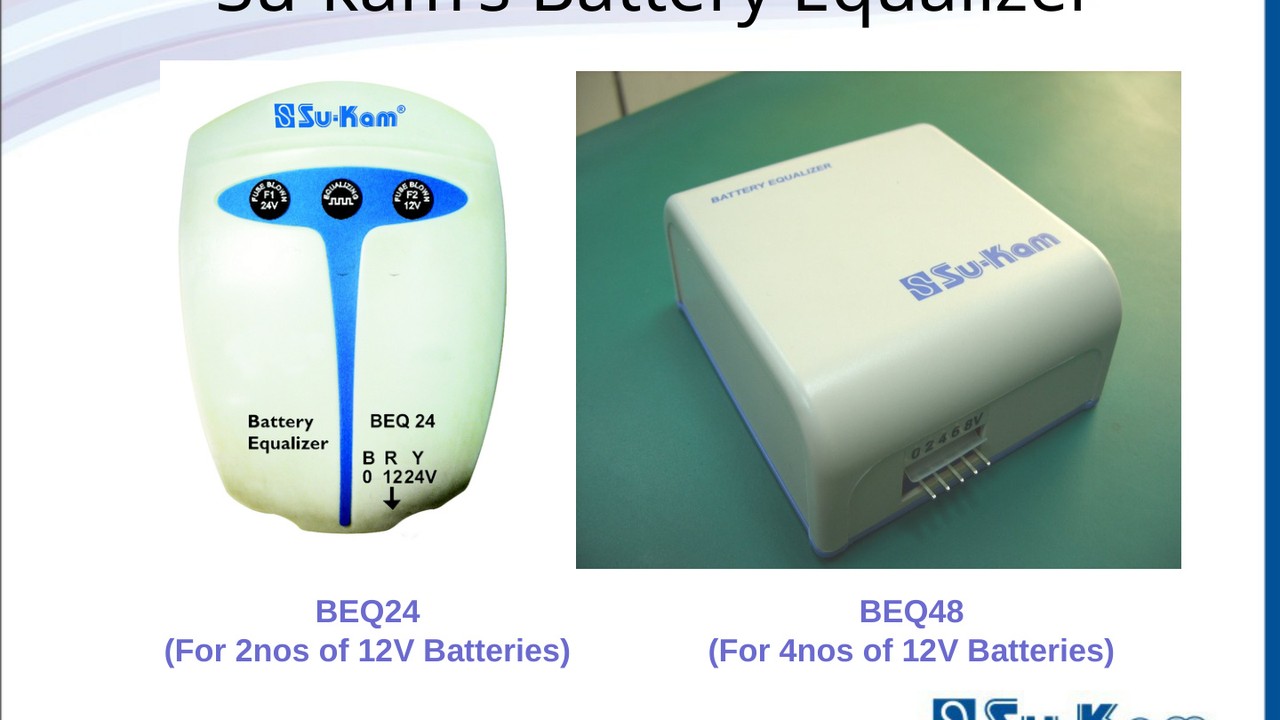
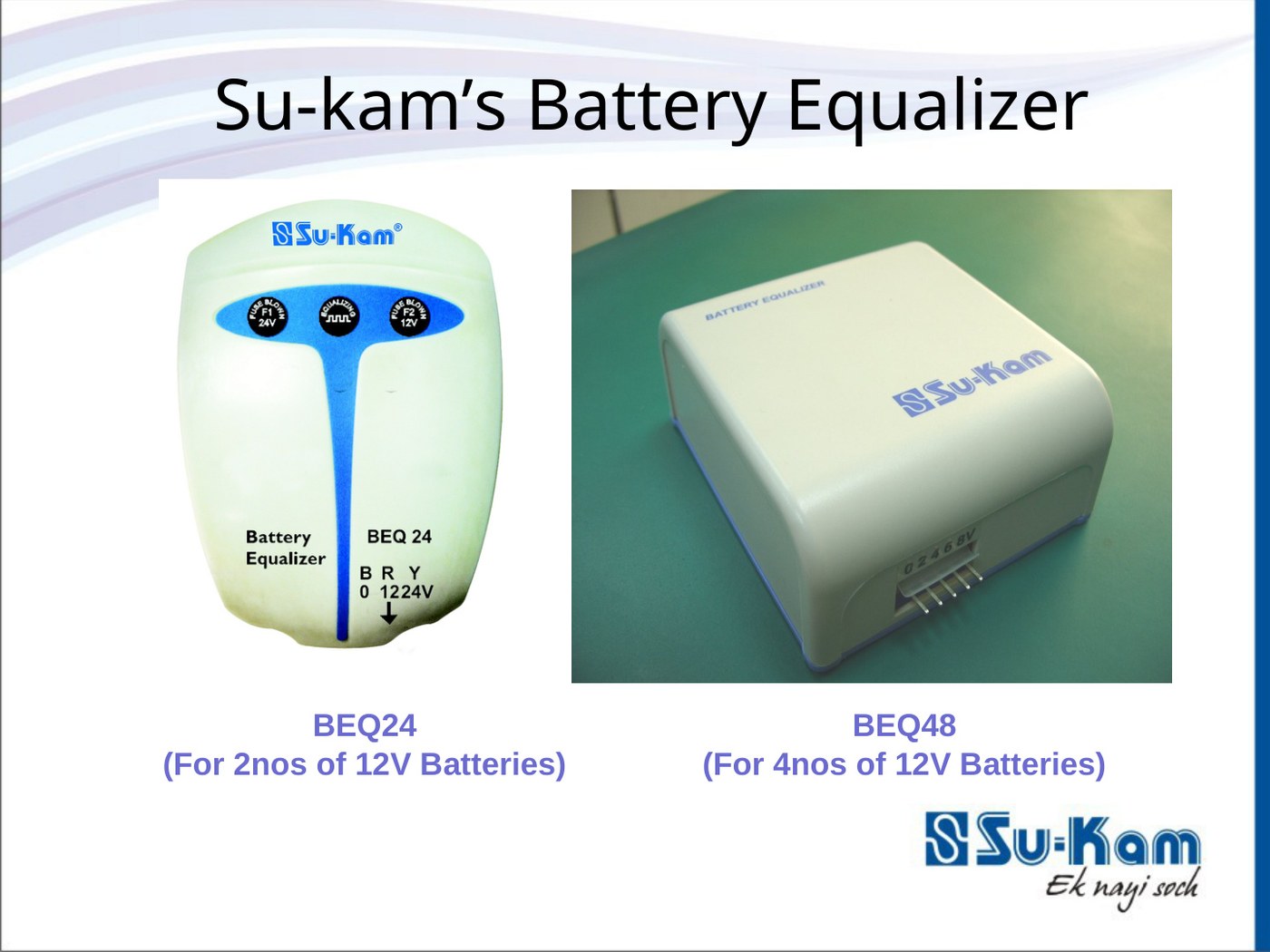
That problem needed a product India did not yet have. Under Kunwer Sachdev, Su-Kam designed and manufactured the Battery Equalizer — India’s first indigenous lead-acid Battery Management System (BMS) / Battery Balancing Unit. The idea was his. The patent was filed and taken under his leadership. The hardware shipped as BEQ24 (two 12V batteries) and BEQ48 (four 12V batteries) — with a roadmap for 2V, 6V, higher-voltage banks, and monitoring variants.
1. Why India Needed a BMS Before Anyone Called It BMS
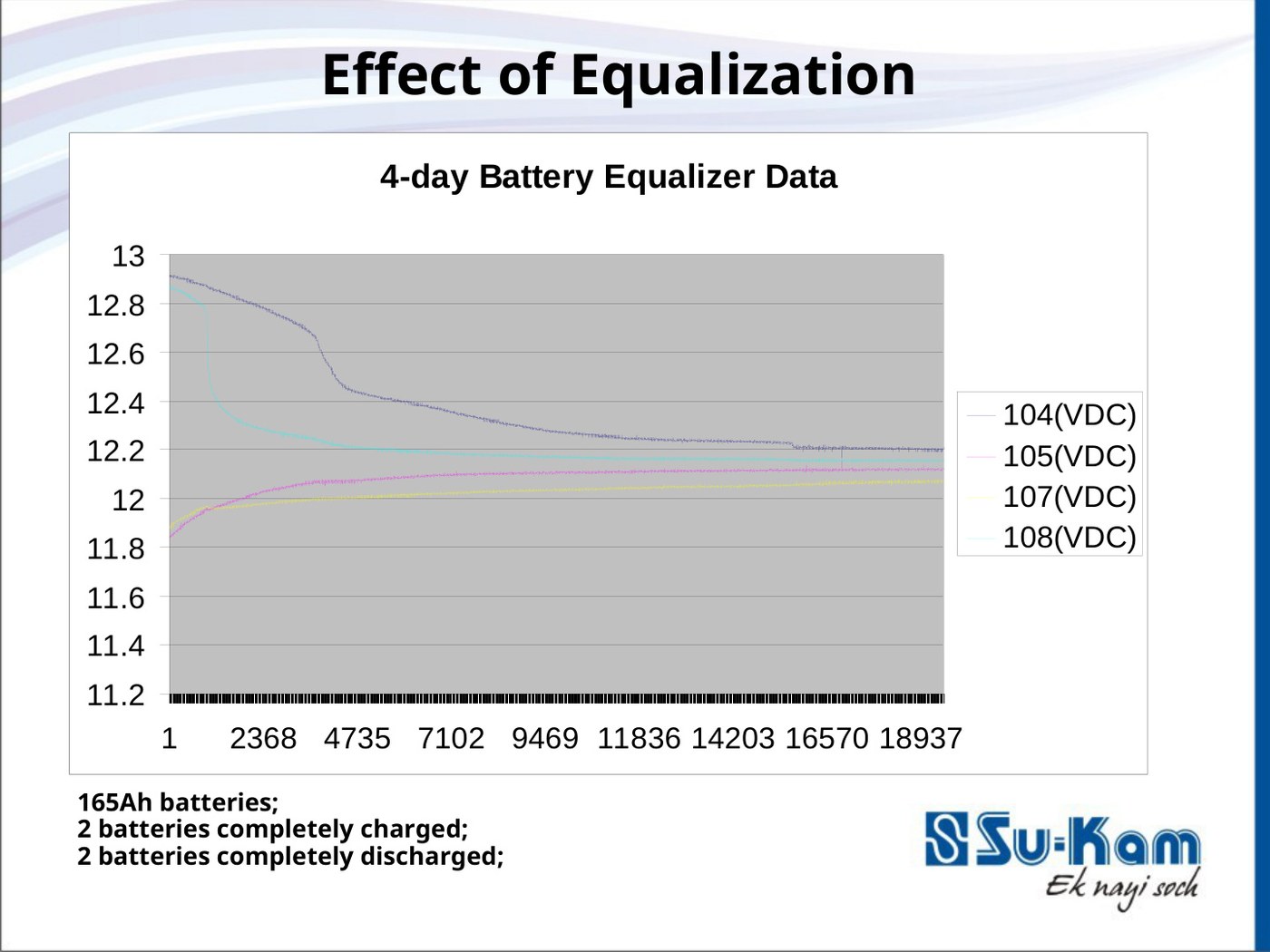
Series strings are everywhere. Without active equalization, voltage difference between batteries grows with every cycle. The equalizer’s objective — spelled out in Su-Kam’s own deck — was simple and ruthless: keep battery potential equalized, especially in charging mode, so every battery in the string ends at the same charge level.
- Without an equalizer, different batteries charge to different levels; the gap widens; backup time and life fall.
- The equalizer cannot invent ampere-hours a weak cell never had — it stops AH degradation caused by voltage imbalance.
- Maximum equalizing current was about 4A (model-dependent); most effective on matched new batteries, less so on mixed good/bad strings.
→ Mismatch / temperature → unequal voltages
→ Imbalance grows every cycle
→ Less backup + shorter life
→ Su-Kam Battery Equalizer (BMS) corrects the imbalance
2. What Su-Kam’s Battery Equalizer Actually Was
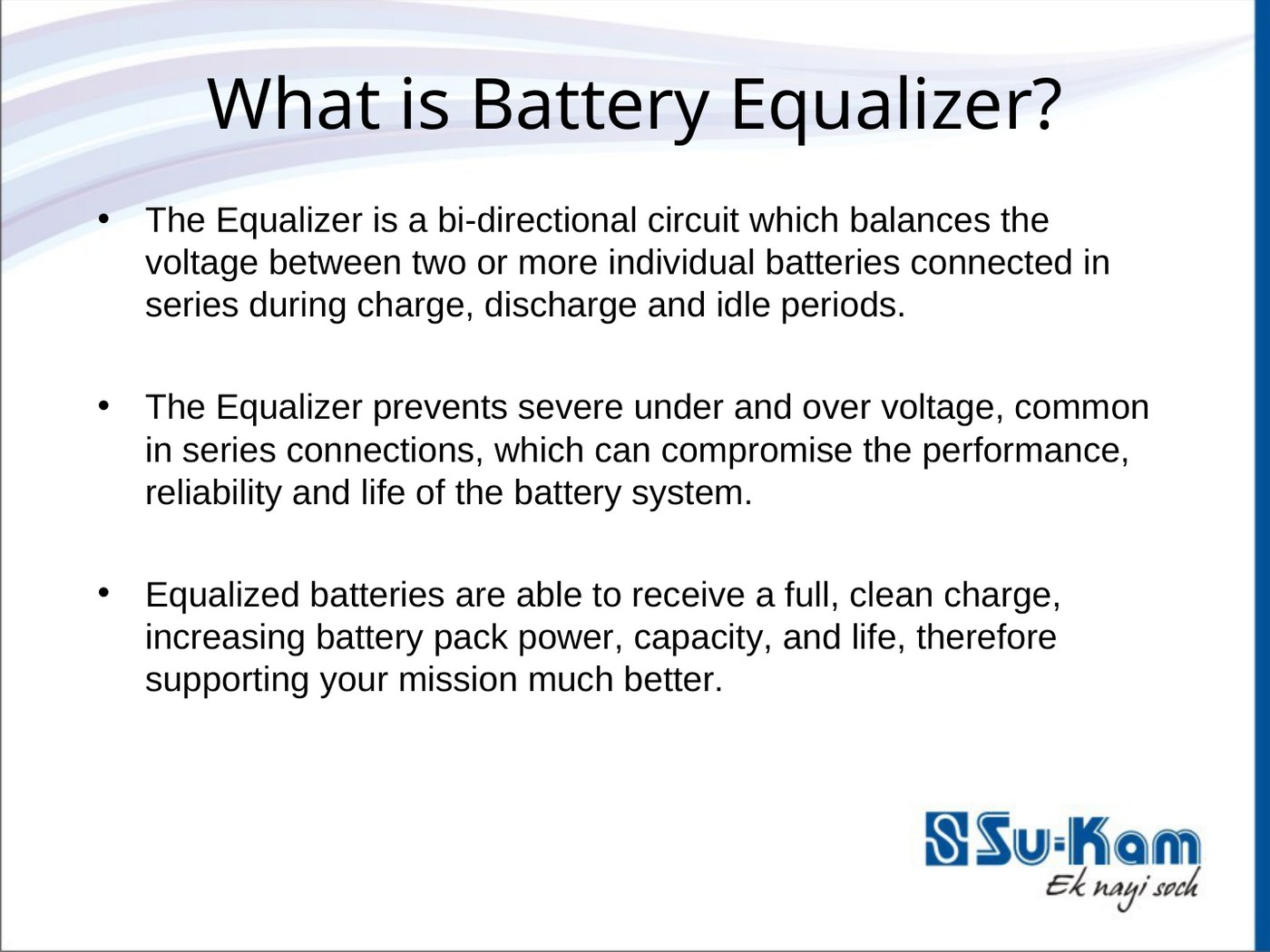
The Equalizer is a bi-directional circuit that balances voltage between two or more batteries in series during charge, discharge, and idle. It prevents severe under- and over-voltage common in series packs — the silent killers of performance, reliability, and life. Equalized batteries receive a full, clean charge: more pack power, more capacity, longer life.
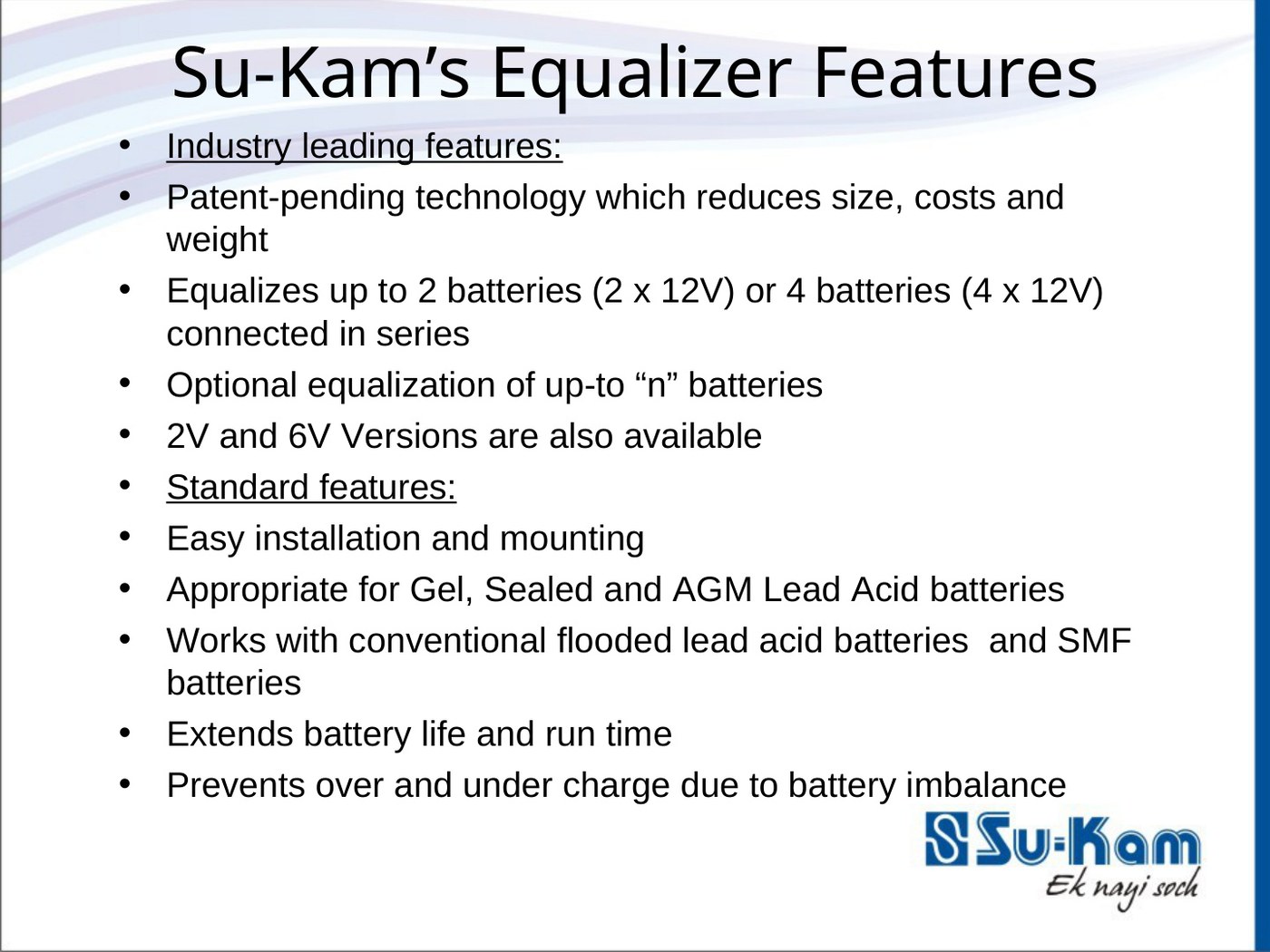
- BEQ24: 2 × 12V batteries · max equalization current 4A · reverse-polarity protection · ~0.22 kg
- BEQ48: 4 × 12V batteries · max equalization current 4A · reverse-polarity protection · ~0.46 kg
- Applications: 24V/48V inverter, UPS, solar, automotive; 2V telecom banks; roadmap to 96–360 Vdc and railways
- Models family: four 12V, four 2V cells, two 12V, 6V versions — plus “equalizer with monitoring” in R&D
3. The Proof: Triple the Cycle Life
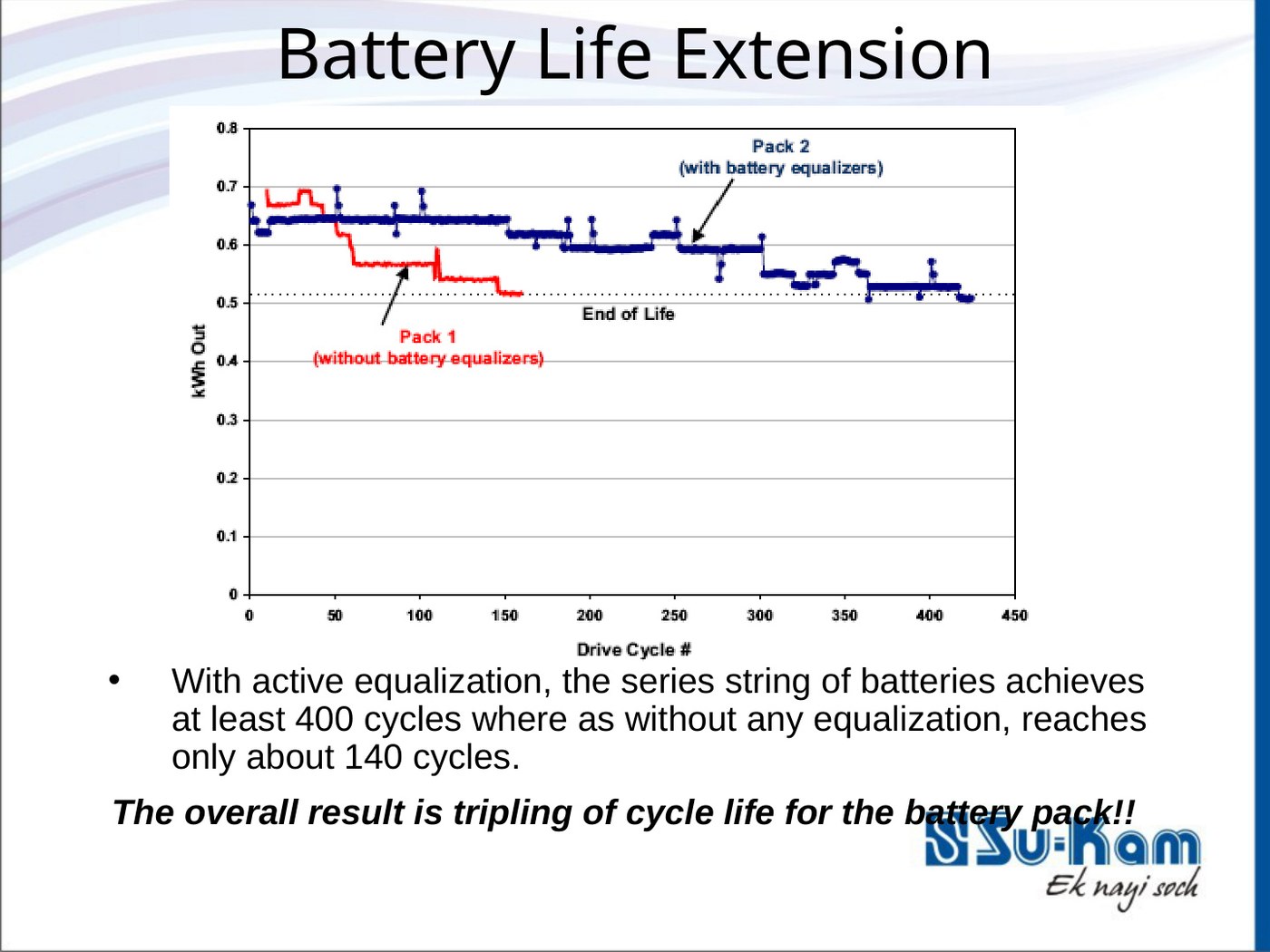
With active equalization, a series string achieved at least 400 cycles. Without equalization, about 140 cycles. The deck’s conclusion was blunt: tripling of cycle life for the battery pack.
4. From Wiring Diagrams to Field Reality
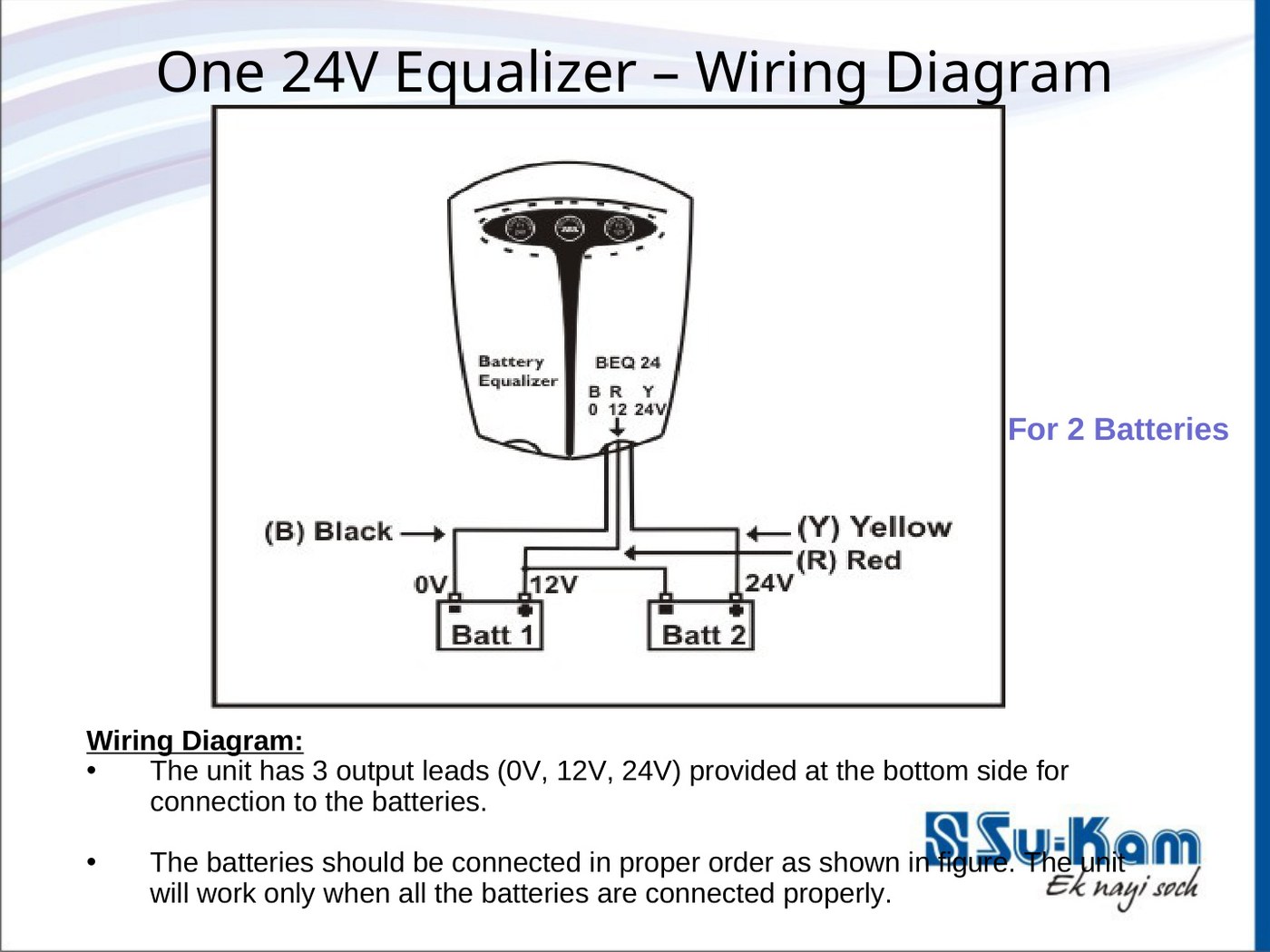
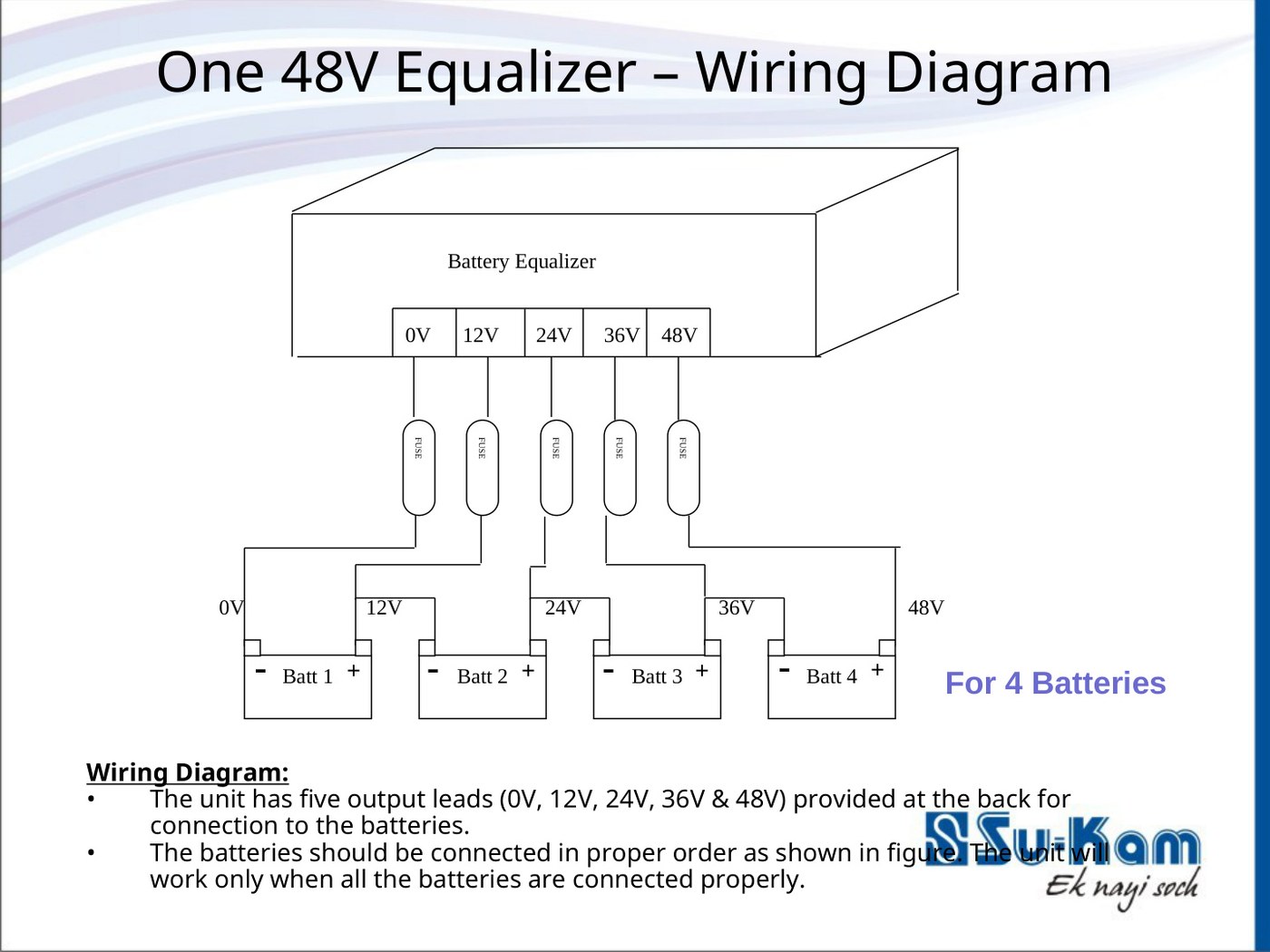
The 2011 deck was a field tool: wiring for one 24V equalizer (2 batteries), cascaded 24V units for 3–4 batteries, one 48V unit for 4 batteries, and multi-unit formulas — e.g. with u units of 48V equalizers, max batteries B(u)=3u+1. Installation precautions warned that wrong terminal order blows the lead fuse — and insisted on verifying 12/24/36/48V points with a meter after install.
Patent filed & taken: 1899/DEL/2008
India’s first indigenous lead-acid BMS
Field decks + wiring for distributors & engineers
Cycle life: ~140 → ~400
Conclusion
India’s first BMS was not a lithium buzzword imported a decade later. It was a lead-acid Battery Equalizer — designed and manufactured by Su-Kam under Kunwer Sachdev, patented under his leadership, and proven in the field to multiply pack life. That is Battery Management when management still meant keeping every battery in the string alive.
In this series
Su-Kam Founder Series
- Part 01
Falcon HF — India’s First 4-Star High-Frequency Inverter - Part 02
TFT Touchscreen Solar PCU - Part 03
Low-Voltage Charging Challenge & Protection - Part 04
Static Bypass, DT-6S & ATC - Part 05
SOLARCON — Conversion Kit Savings Revolution - Part 06
India’s First MPPT — Built by Su-Kam under Kunwer Sachdev - Part 07 · You are here
India’s First BMS — Su-Kam Battery Equalizer under Kunwer Sachdev
Kunwer Sachdev
Founder & MD, Su-Kam Power Systems (1988–2019) and Kunwwer.ai — writing on manufacturing, insolvency, and civilizational memory. Read his story →
Found this story worth sharing? Post it to your network — it takes one click: