Static Bypass Was Our Biggest Win: Power Stays On Even If the Inverter Fails
When an inverter goes bad, many homes go dark — even if the grid is still alive. Under Kunwer Sachdev, Su-Kam’s biggest user win was Static Bypass: software that automatically passes mains through so the house keeps electricity. DT-6S and ATC completed the stack for battery life.
For Indian families, the nightmare was not only a power cut. It was an inverter that failed while the street still had electricity — and the whole house went dead anyway. Getting an electrician at night was nearly impossible. Under the leadership of Kunwer Sachdev, Su-Kam solved that with Static Bypass — then paired it with DT-6S six-stage charging and ATC so the battery lasted as well. This post explains each concept with the original Su-Kam training videos.
1. Static Bypass — Our Biggest Win: The House Keeps Power When the Inverter Fails
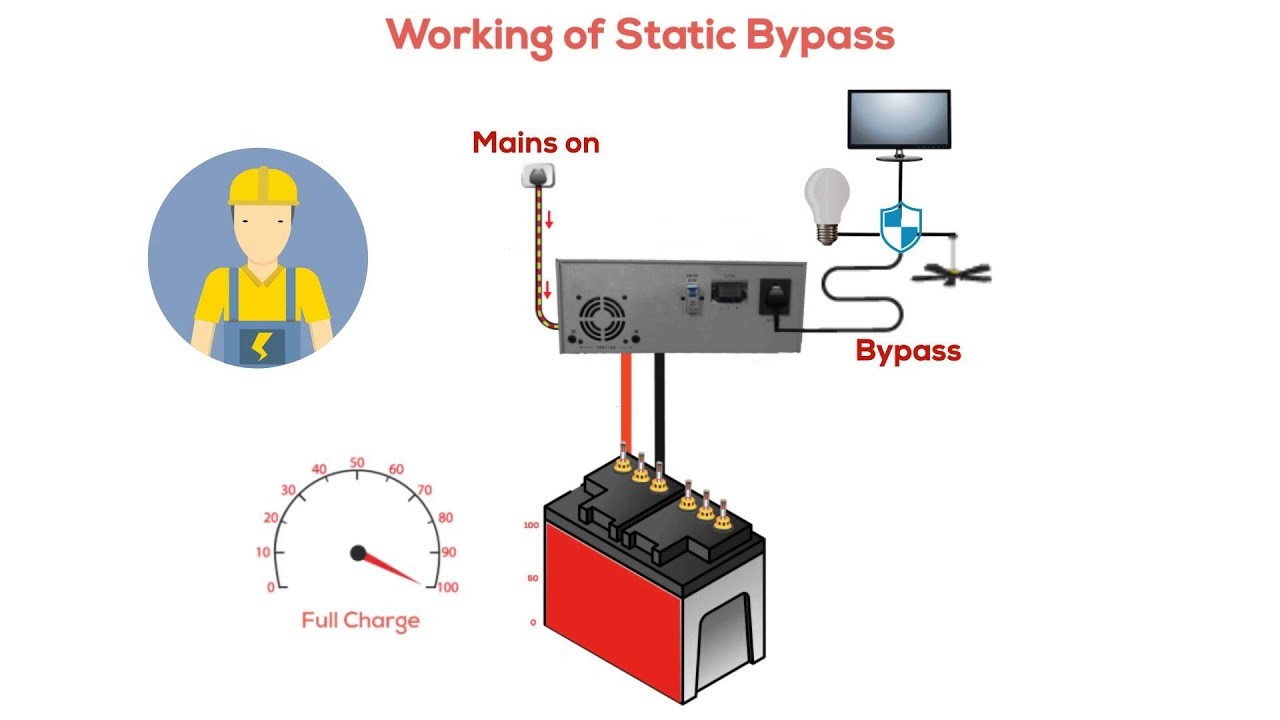
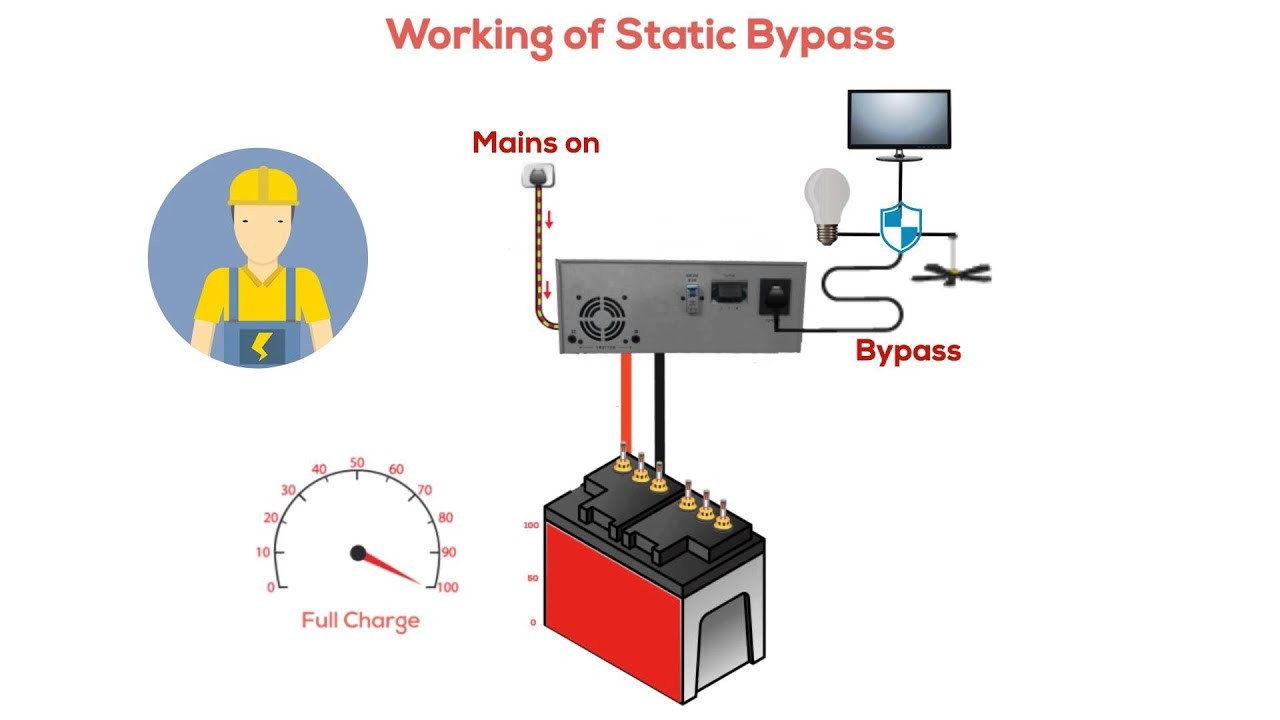
Static Bypass was the biggest win for Su-Kam and for the user. In a normal setup, the inverter sits in the path of the home’s electricity. Once that inverter goes bad — or fails for any reason — the whole house can lose power even when mains is still coming. The family is left in the dark for a product fault, not a grid fault. At night, calling an electrician was a nightmare. That was the challenge we refused to accept.
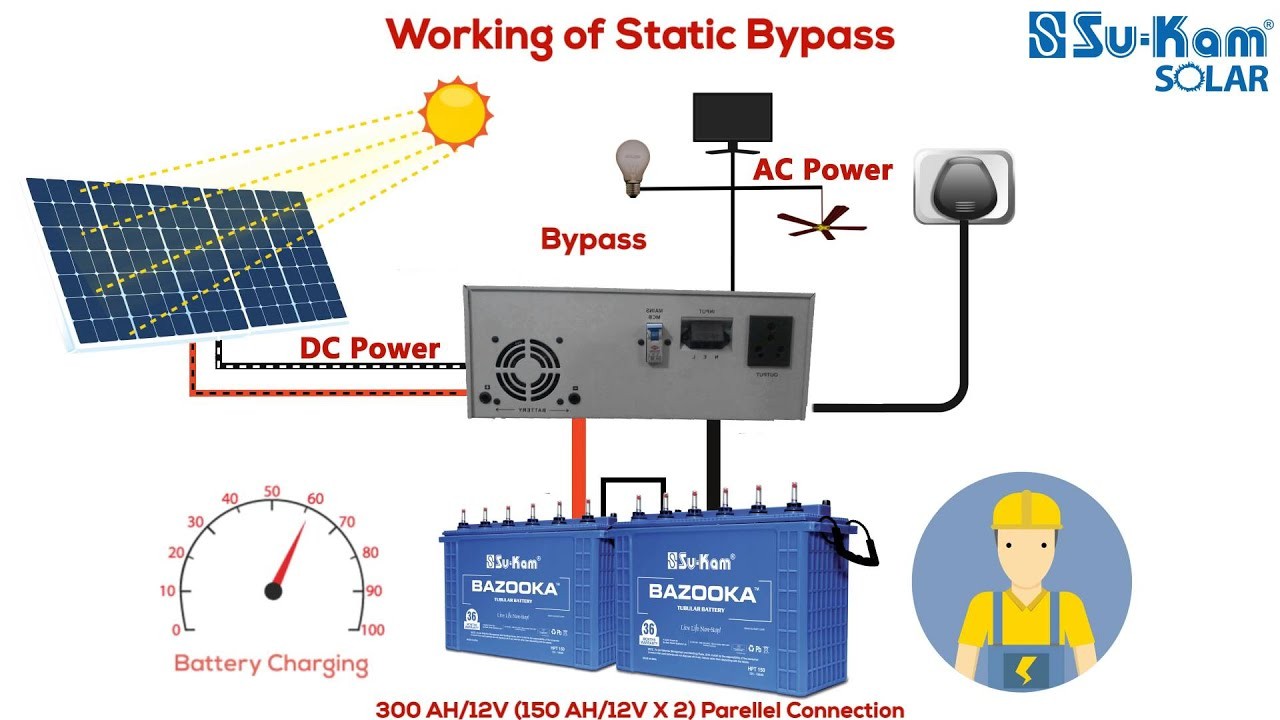
We solved it by creating software inside the inverter that watches for failure. The moment the inverter fails, it automatically bypasses and lets grid power feed the house. The user keeps electricity. No panic. No waiting until morning for a technician just to get lights back when the grid was fine all along. That relief — especially after midnight — is why Static Bypass mattered more than a brochure feature list.
The same philosophy also delivers a clean mains ↔ backup handoff in normal operation, so the home does not blink through every changeover. But the founder’s point is sharper: Static Bypass is first a fail-safe for the user, not only a seamless-transfer trick.
Night reality: electrician nearly impossible to get
Su-Kam answer: software Static Bypass — auto pass-through on failure
User relief: lights stay on; service can wait till morning
2. DT-6S — Six-Stage Charging That Respects the Battery
DT-6S is Su-Kam’s six-stage charging algorithm. Instead of slamming a battery with one aggressive bulk current until a voltage setpoint and calling it done, DT-6S walks the battery through a controlled sequence — typically covering soft start / bulk / absorption / equalization (as applicable) / float / and maintenance-oriented stages — so the chemistry is charged fully without chronic overcharge or undercharge.
Indian tubular and flat-plate batteries live hard lives: deep cycles, heat, irregular grid. A crude charger either leaves capacity on the table or cooks plates over months. DT-6S was Su-Kam’s answer: discrete stages, measurable behavior, and lower harmonic stress on the charging path compared with crude topologies. On Falcon+ and related lines, this was sold and trained as “latest 6-stage charging technology” — because dealers could demonstrate healthier charge curves, not just wattage stickers.
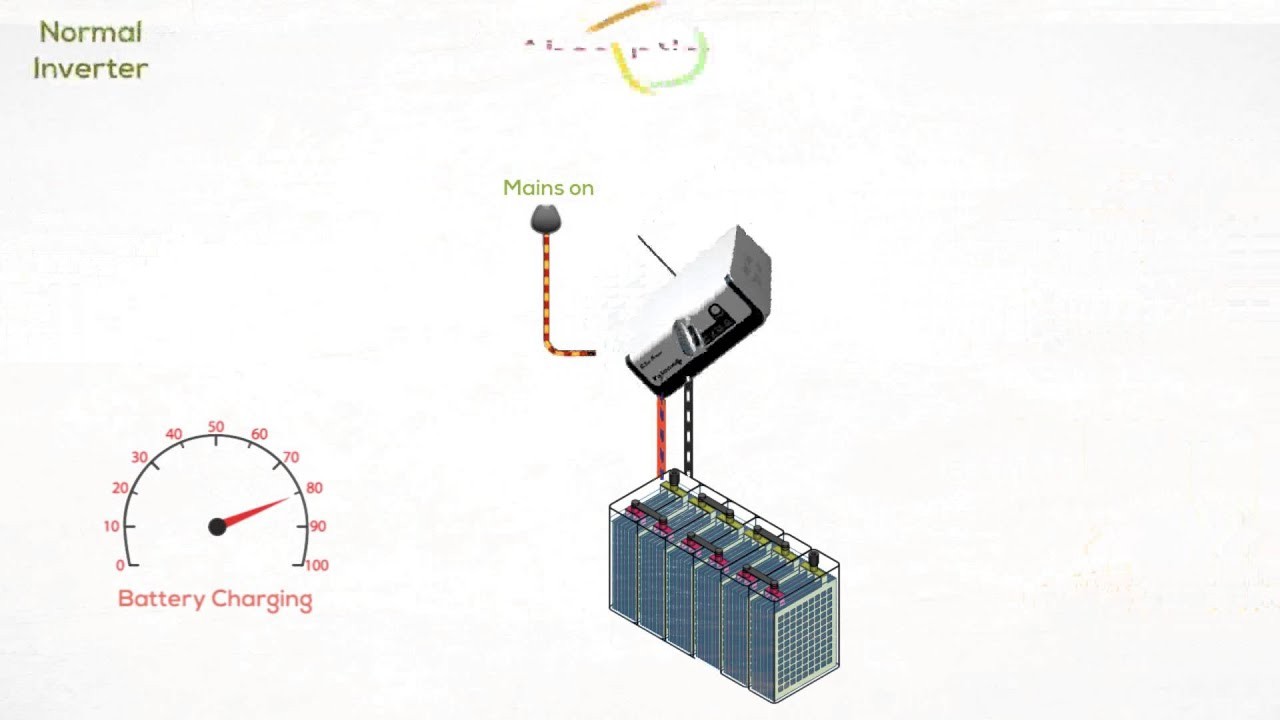
Goal: full capacity without chronic overcharge
Paired with: harmonics control & Indian tubular battery reality
3. ATC — Automatic Temperature Compensation
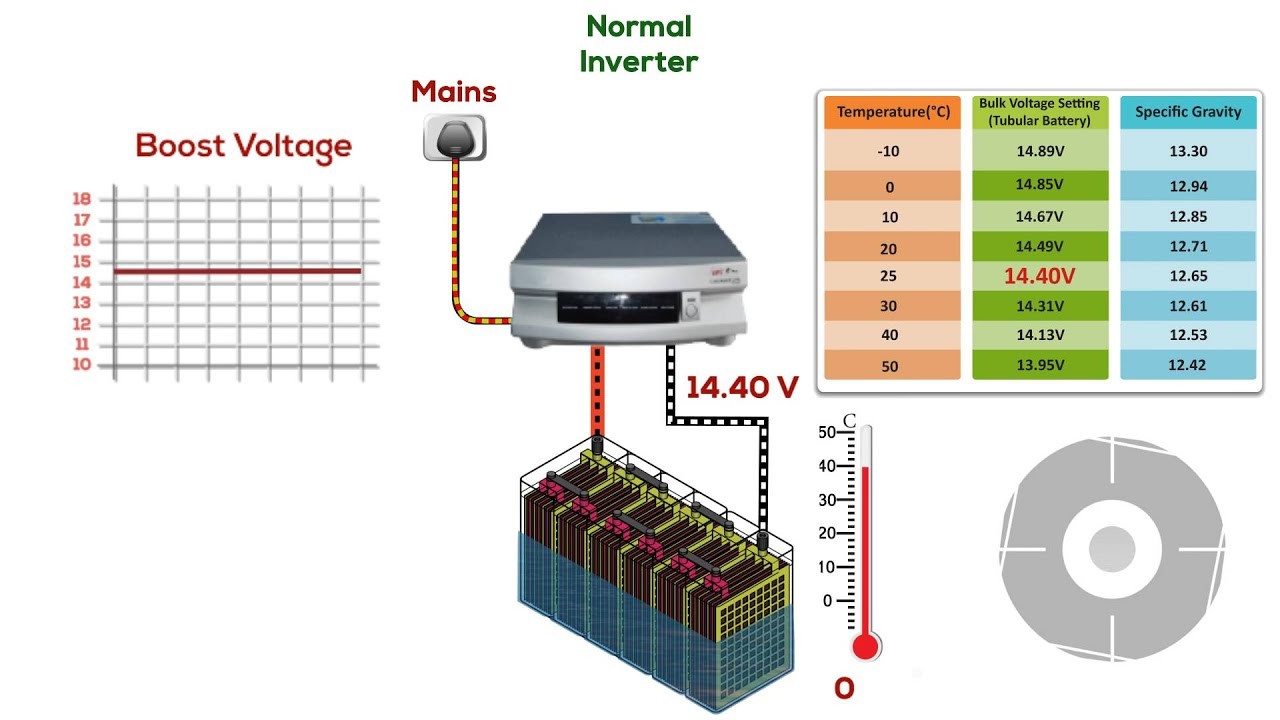
Automatic Temperature Compensation (ATC) adjusts bulk charging voltage as ambient (and battery) temperature changes. Battery electrolyte specific gravity and safe charge voltage are referenced around roughly 25°C. In Indian summers, a charger that ignores temperature will overcharge hot batteries; in colder conditions it can undercharge. Either way, life shortens.
Su-Kam’s ATC uses thermal sensing so the inverter retunes charge voltage in real time. Hot day → lower bulk setting. Cooler day → raise toward the calibrated band. That is the same principle trained in Su-Kam’s field videos and the water-bath style calibration thinking behind serious R&D — not a checkbox, a battery-life policy written into firmware. (For the wider India grid story that ATC sits inside — including 90V charging — see Part 03.)
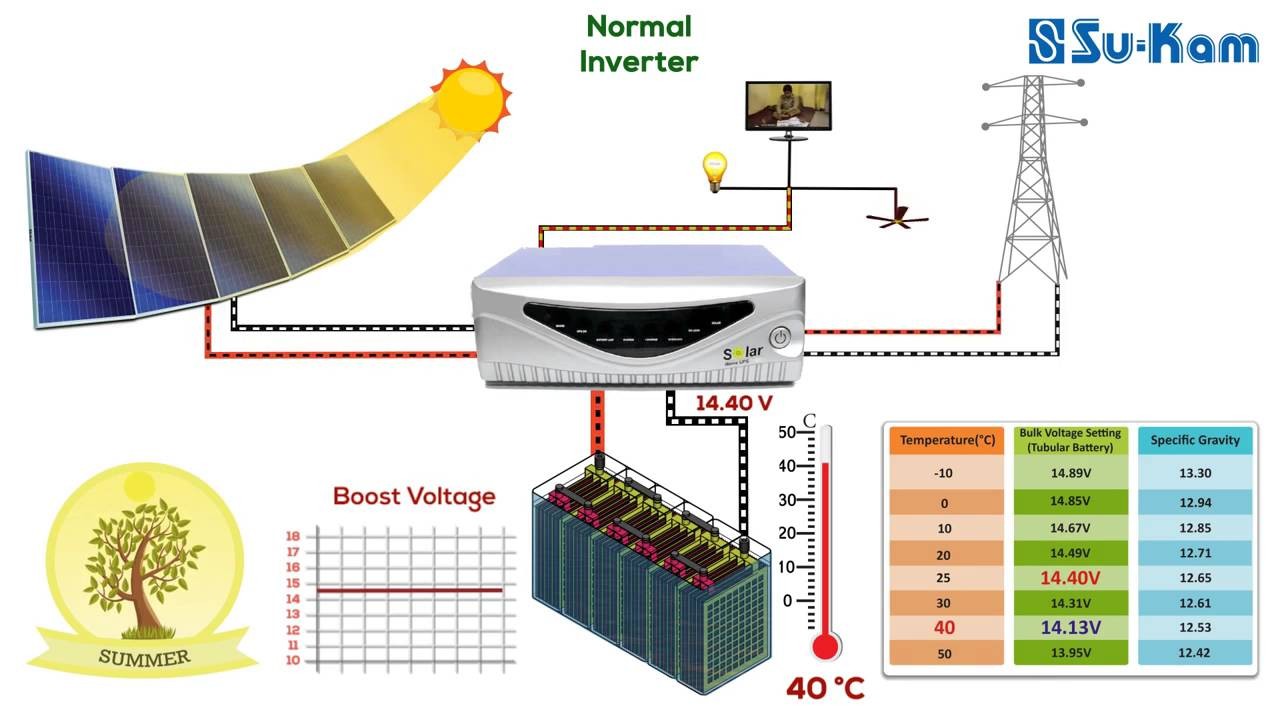
Hot ambient → reduce bulk voltage
Cool ambient → raise toward calibrated charge
Outcome: months of battery life kept, not boiled away
How the Three Fit Together
Static Bypass was the biggest user win: if the inverter fails, the house still gets grid power automatically — no midnight darkness and no emergency electrician hunt. DT-6S then protects how the battery is charged every day. ATC protects that same battery across hot Indian seasons. Under Kunwer Sachdev, Su-Kam trained the channel on all three — but led with Static Bypass, because peace of mind at night is what families remember.
Conclusion
Static Bypass was our biggest win because it solved a fear every Indian home understood: inverter dead, grid alive, house still dark — especially at night. Software that automatically bypasses on failure gave users power and relief. DT-6S and ATC completed the engineering so batteries lasted longer once that trust was earned. These ideas sit in the same innovation culture behind Kunwer Sachdev’s broader portfolio of 106 technology filings across Su-Kam, Su-Vastika, and later ventures.
In this series
Su-Kam Founder Series
- Part 01
Falcon HF — India’s First 4-Star High-Frequency Inverter - Part 02
TFT Touchscreen Solar PCU - Part 03
Low-Voltage Charging Challenge & Protection - Part 04 · You are here
Static Bypass (Biggest Win), DT-6S & ATC
Kunwer Sachdev
Founder & MD, Su-Kam Power Systems (1988–2019) and Kunwwer.ai — writing on manufacturing, insolvency, and civilizational memory. Read his story →
Found this story worth sharing? Post it to your network — it takes one click: