Ahead of Their Time: How Engineering for the Worst-Case Electrical Fault Saved Homes Across India
Low grid voltage was not a rare “fault” — it was India’s everyday power challenge, in metro cities as much as smaller towns. Under Kunwer Sachdev, Su-Kam engineered inverters that still charged the battery when the mains dipped, then carried that same answer into Africa and the Middle East.
India’s power problem was never only blackouts. For years, even when the grid was “on,” voltage sagged so low that ordinary inverters simply stopped charging the battery. Families then faced a cruel choice: install an expensive stabilizer before the inverter just to get a proper charge — or live with very little backup when the lights finally went out. Under the leadership of Kunwer Sachdev, Su-Kam’s R&D treated that low-voltage reality as a product requirement, not an afterthought.
1. The Low-Voltage Challenge: Charging When the Grid Dips to 90V
This was one of the biggest challenges in India’s inverter market — and it was not limited to villages. In the main cities as well, peak-hour voltage could fall far below what imported or poorly engineered chargers expected. Traditional inverters cut off charging under low voltage. The battery sat half-empty for hours. When a real outage hit, backup time collapsed. Dealers and electricians answered with a workaround: put a stabilizer before the inverter so the charger would see “proper” voltage. That added cost, another failure point, and still did not make the inverter honest about Indian grid conditions.
Su-Kam engineered 90V charging into the product itself. Laboratory and field work showed that even when grid input dropped to 85V–90V, the system kept a safe, active charging current into the battery — without forcing every home to buy a stabilizer just to get charged. That single capability changed the conversation from “why is my backup so weak?” to “the battery charged through the dip.”
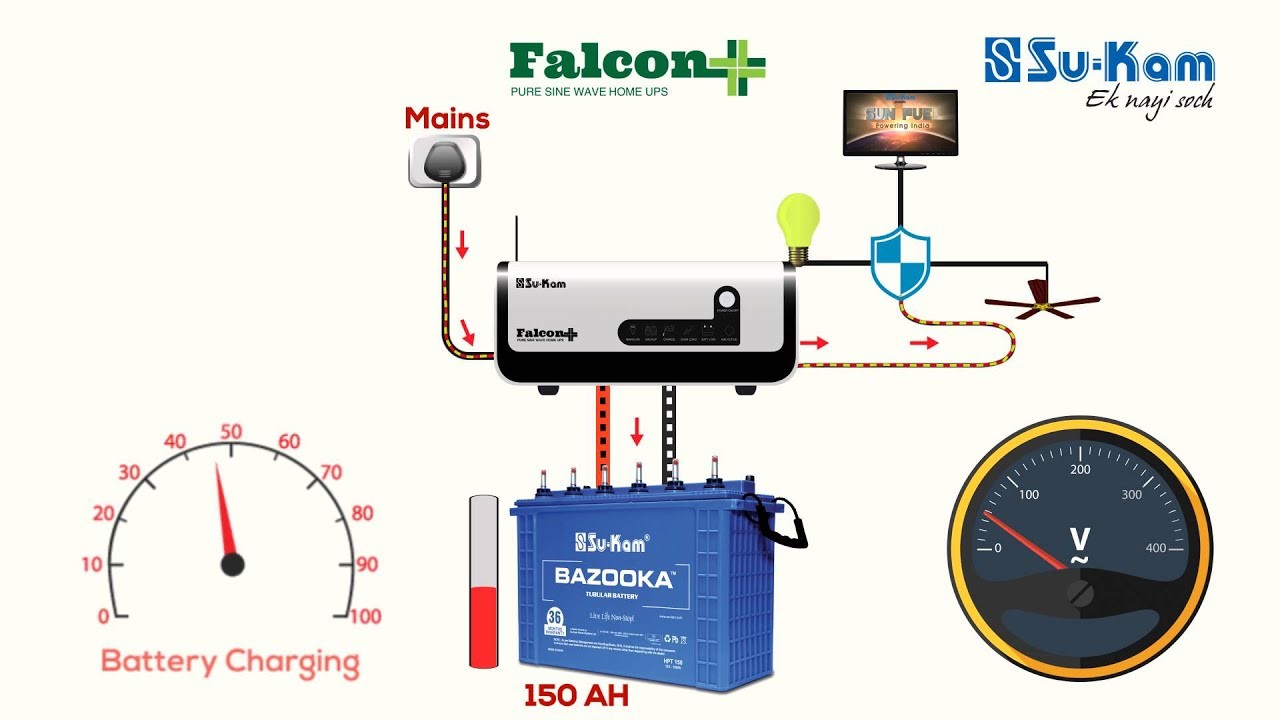
Old workaround: stabilizer before the inverter, or accept weak backup
Su-Kam answer: 85V–90V active charging built into the inverter
Export: same challenge across Africa & the Middle East — became a best-selling model
2. The Science of Thermal Safety: Automatic Temperature Compensation (ATC)
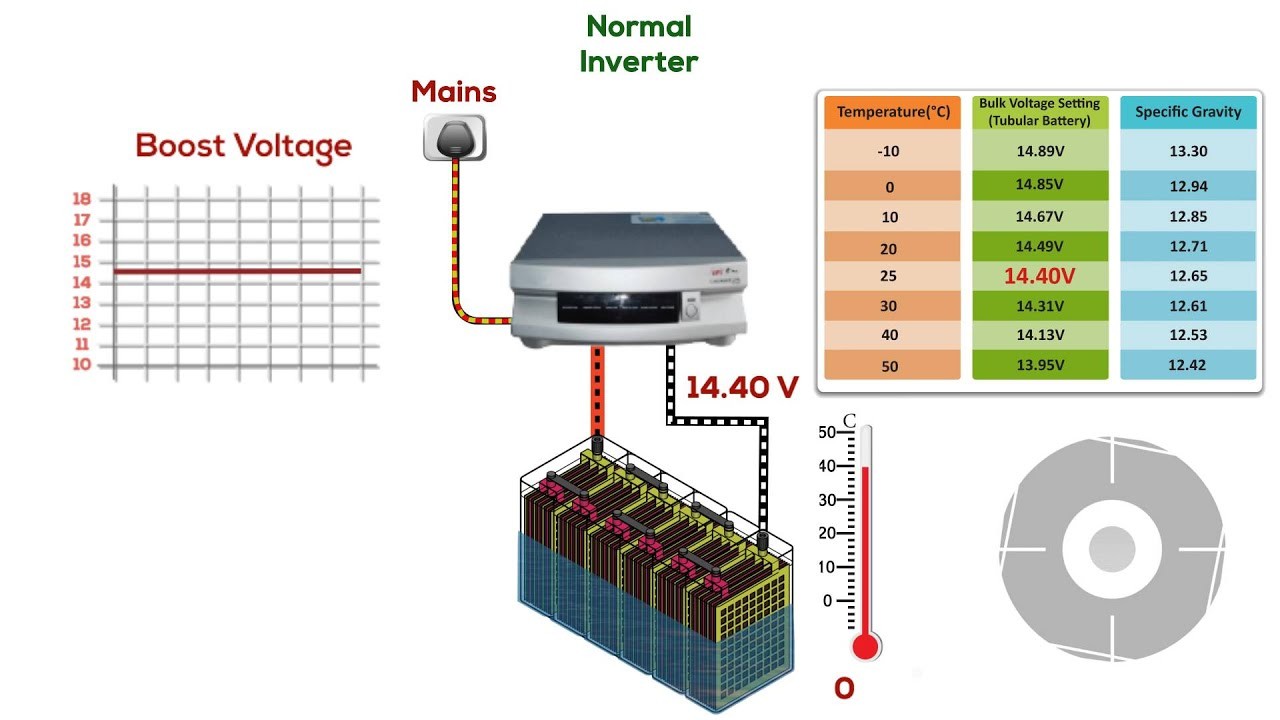
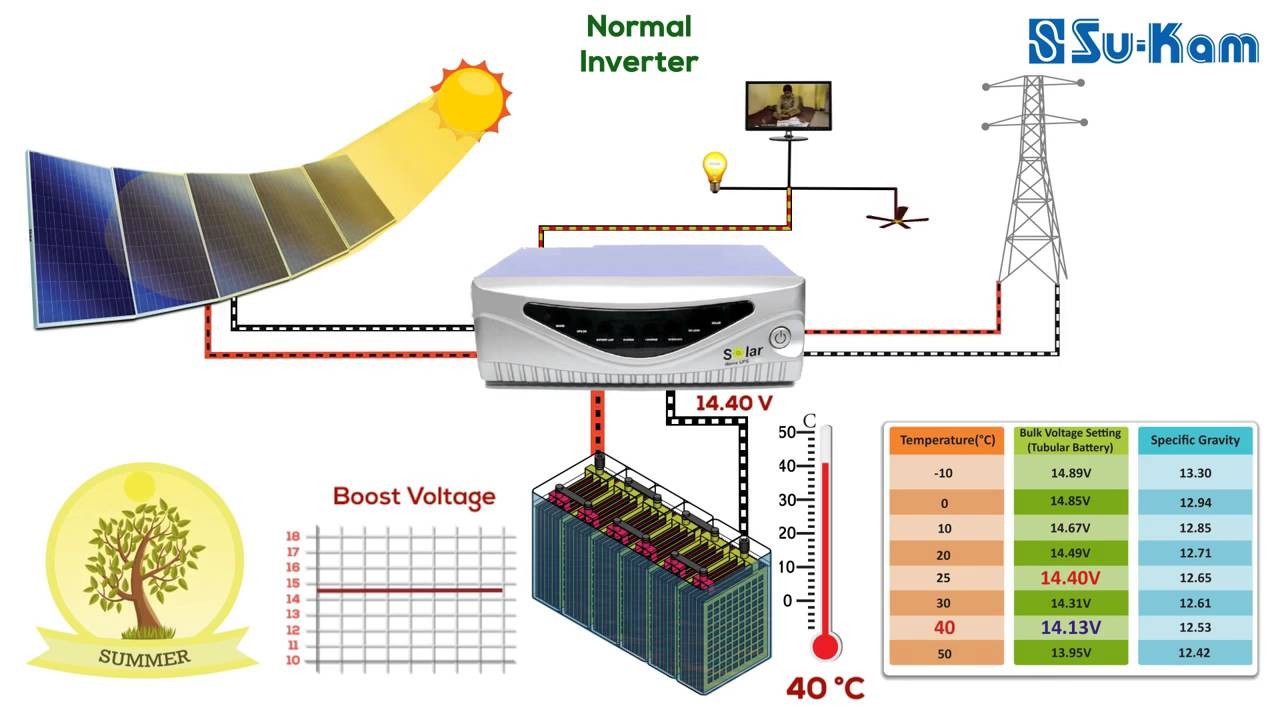
Battery health in India is constantly threatened by ambient heat. Charging a battery at improper temperatures degrades internal electrolyte specific gravity and drastically shortens its lifespan.
Using precision thermal sensors and lab testing rigs (such as controlled hot and cold water-bath calibration setups), Su-Kam introduced Automatic Temperature Compensation (ATC). The inverter dynamically adjusts bulk charging voltage based on real-time temperature tracking, protecting tubular and flat-plate batteries from thermal runaway and extending their usable life by months.
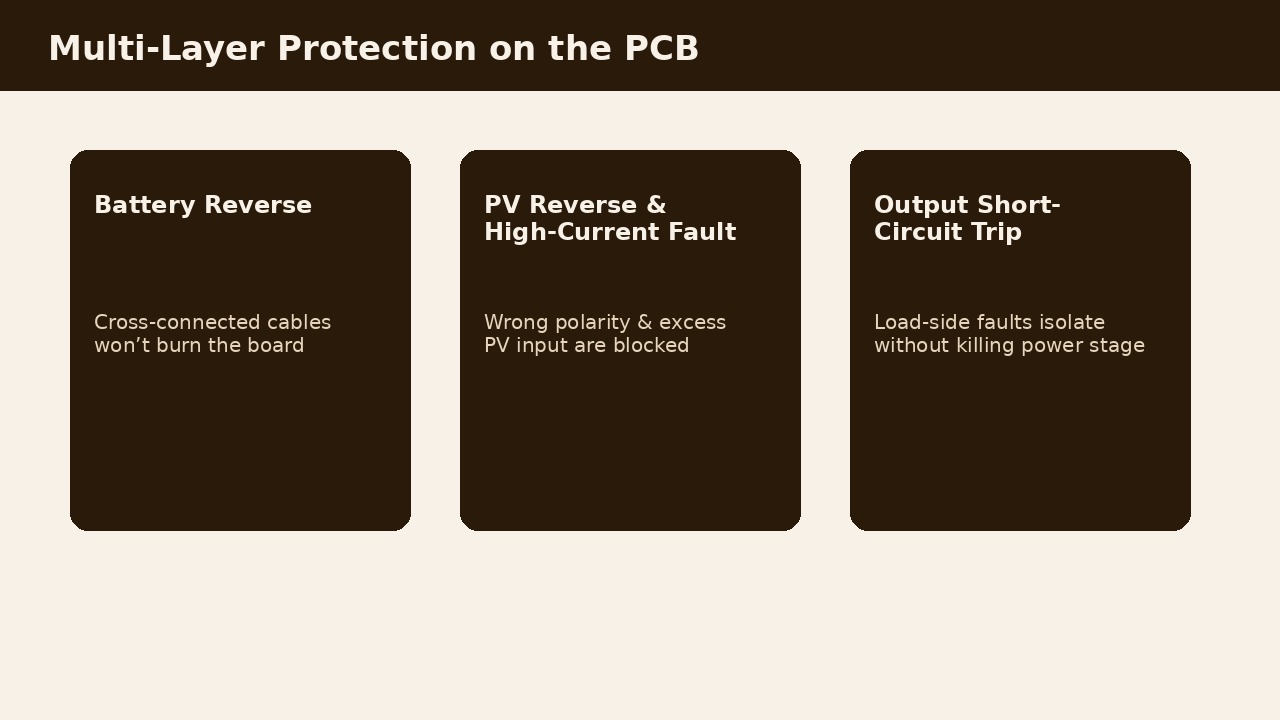
3. Bulletproofing Power Electronics: Multi-Layer Protection Systems
Real-world installations often suffer from human error or sudden grid surges. To prevent catastrophic hardware failures, engineering teams integrated robust, multi-layer protection mechanisms directly onto the circuit boards:
- Battery Reverse Protection: Prevents circuit burnout if battery cables are mistakenly cross-connected.
- PV Reverse & High-Current Fault Protection: Shields solar charging circuits from incorrect solar panel polarity and excessive photovoltaic input loads.
- Output Short-Circuit Protection: Instantly trips or safely isolates the unit during severe load-side electrical faults without damaging internal power components.
Conclusion
By solving India’s low-voltage charging challenge — and carrying that same engineering into Africa and the Middle East — Kunwer Sachdev’s teams built more than a feature. They built a best-selling export model that carried the Su-Kam brand and Brand India abroad, while ATC and multi-layer protection kept homes safe at home. These innovations sit inside a portfolio of 106 technology filings (77 at Su-Kam, 25 at Su-Vastika, and 4 personal ventures, with 24 patents granted by the Indian Patent Office) — proving that true engineering excellence is designed for the real world.
In this series
Su-Kam Founder Series
- Part 01
Falcon HF — India’s First 4-Star High-Frequency Inverter - Part 02
TFT Touchscreen Solar PCU - Part 03 · You are here
Engineering for Worst-Case Electrical Faults
Kunwer Sachdev
Founder & MD, Su-Kam Power Systems (1988–2019) and Kunwwer.ai — writing on manufacturing, insolvency, and civilizational memory. Read his story →
Found this story worth sharing? Post it to your network — it takes one click: