Enterprise proof · Retail backup
How Heavy-Duty Backup Kept Bharti–Walmart EasyDay Stores Running Through Grid Failure
Around 2010, in the early days of Bharti–Walmart in India, we built the power-backup system for their EasyDay stores — a 25KVA inverter, a 360-volt battery bank, and a load-shedding ladder I designed to decide, volt by volt, what stayed on.
Retail giants like Wal-Mart/EasyDay could not tolerate a single second of cash-register or chiller failure — generators that took time to start were not good enough.
We provided heavy-duty, clean multi-KVA power backup without the fumes, noise, and diesel theft that quietly ate into retail margins.
Su-Kam systems powered massive commercial chains through peak summer grid blackouts — when stores went dark, our backup kept tills and refrigeration alive.
“When the grid collapsed across north India, retail stores went pitch black—except where Su-Kam systems were humming. That is when corporate India realized heavy-duty inverters could replace diesel generators.”
Walmart Easyday power backup — This was one of the greatest projects of my time. Around 2010, in the very early days of Bharti–Walmart in India, we built the power-backup system for their Easyday stores — and my R&D team and I learnt more from it, challenge by challenge, than from almost anything else we built.
The problem was a real one — keeping a modern retail store lit, cooled and transacting through India’s unreliable grid — and we solved it in stages. I am writing this straight from our own working document for the store at Jagadhri, because the engineering still reads clean to me today.
01How it began — a phone call
This was the very early days of Bharti–Walmart entering India, around 2010. The CFO they had appointed was someone I already knew, and one day he called me with a problem his stores were living with every day.
The grid was unreliable, and every power cut hurt. Whenever the power went, the generator took time to switch on — and in those seconds a store full of tills, lights and refrigeration simply stopped. The generators themselves were expensive to run, and on top of that there was diesel theft quietly eating into the numbers. He wanted a better way.
So we sat down and planned a system. In the first phase, we made it work — a backup that carried the store through outages cleanly, with no generator delay and without burning diesel it did not need to.
02The problem we were actually solving
An Easyday store is not a home. It cannot flicker. The point-of-sale terminals, the lighting, the refrigeration and the cooling all expect continuous, stable, three-phase power — and the grid in a town like Jagadhri simply does not provide it. The usual answer was a diesel generator running almost all day: expensive, noisy, and wasteful, because a DG set burns nearly as much fuel lightly loaded as fully loaded.
I did not want to solve this with a bigger generator. I wanted a layered system in which the grid, a battery-backed inverter, and a small diesel set each did the job it was actually good at — and handed off to one another automatically, without anyone on the shop floor noticing.
03The hardware we put on the wall
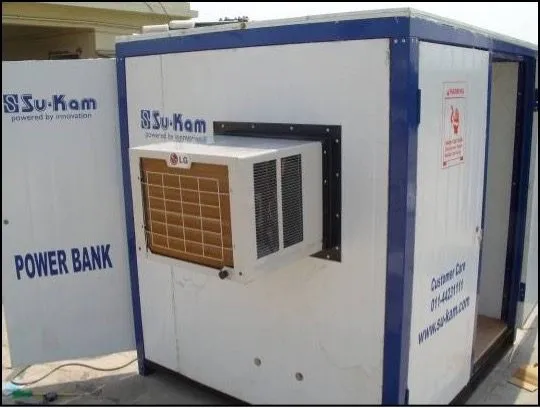
The inverter
The heart of the system — it conditioned power for the whole store.
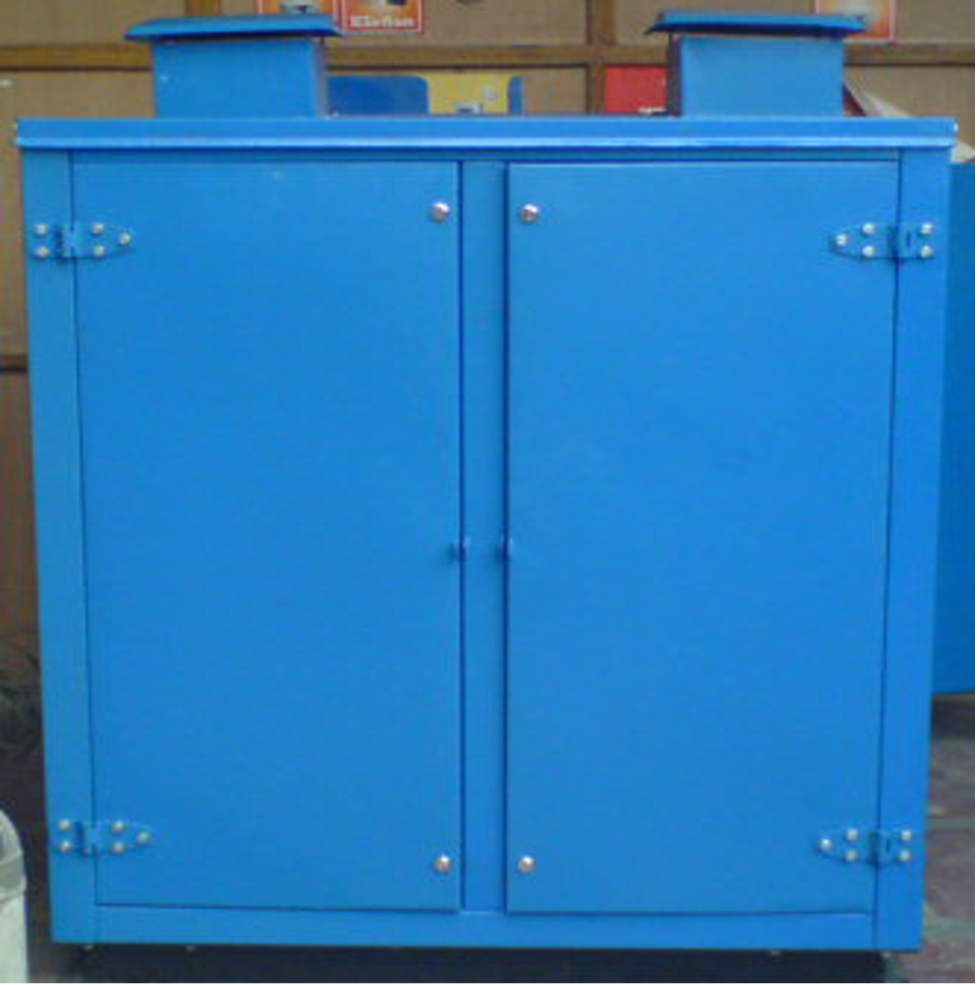
Battery bank
Sized to carry the store through an outage, kept balanced by an equaliser.
Diesel set
A deliberately small generator on Auto Mains Failure — a backstop, not the main source.
Battery equaliser
Kept the 360V string of cells alive — the lead-acid discipline I had been building since 2005.
04How the three sources hand off
Power came in from the 3-phase SEB supply into an AC distribution board, and from there our integration logic took over.
Grid · SEB supply
230V AC · 3-phase into the ACDB.
25 KVA inverter + charger
Battery-backed clean power for critical retail loads.
Diesel + AMF · 7.5 KVA
Auto-start backstop — not the primary source.
Battery bank · 360V · 200AH
Equalised string feeding the inverter.
Grid, diesel set and battery-backed inverter feed the ACDB, which powers the store’s prioritised circuits.
When mains was available, everything ran on by-pass — the load sat on the grid, the inverter’s built-in charger topped up the battery bank, and the diesel set stayed off. No fuel burned, nothing running that didn’t need to.
When mains failed, the load transferred seamlessly onto the inverter, drawing from the battery bank. For a normal outage, that was the whole event: the customer at the till never noticed.
The part I was proudest of is what happened when an outage ran long — long enough that the battery began to deplete. That is where most backup designs simply collapse. Ours shed load intelligently instead.
05The ladder — volt by volt, what stays on
We ranked the store’s circuits, and I had the system watch the battery voltage and drop them in order as the reserve fell — bringing the small diesel set in only when it was truly needed, and protecting that expensive battery bank right to the end.
- ~362–350 V — Full store load on inverter; diesel standby.
- ~348–340 V — Non-critical lighting / comfort loads shed first.
- ~338–330 V — Secondary circuits drop; tills & refrigeration held.
- ~328–320 V — AMF diesel starts; inverter supports critical only.
- ~318–316 V — Protection floor: only life-safety / critical POS retained.
That ladder is not simply “turning things off.” It spends the store’s stored energy in order of what matters — keeping the tills and the essentials alive longest, bringing the small diesel set in only when needed, and refusing, at the very end, to wreck an expensive battery bank for a few extra minutes of non-essential load. The DG set could be small precisely because the inverter and the ladder were doing the intelligent work.
06Phase two — putting eyes on the system
Once the backup was working reliably, they raised the next challenge: monitoring. A system spread across stores is only as good as your ability to see it — to know the state of the mains, the inverter, the battery and the generator without sending someone to stand in front of the panel. So in the second phase, we built that in.
This was years before “remote monitoring” became a fashionable phrase. Being able to watch a store’s power system from a distance — its battery health, its load, whether the diesel set had kicked in — turned a clever box on the wall into something you could actually manage at scale. That instinct, to make hardware observable, is one I have carried all the way into the connected, IoT-driven work I do now.
07Why this was one of my greatest projects
I am genuinely proud of this one. It was not easy — we kept hitting one challenge after another, and every single time, my R&D team went back and engineered a way through it. A 25KVA, three-phase, priority-managed, generator-integrated backup system, delivered in phases for one of the most demanding retail clients in the country: we specified it, we built it, we monitored it, and it worked.
That is exactly why I remember it so fondly. A hard, real-world problem, a client who kept raising the bar, and a team that refused to stop learning. That same habit — treat every obstacle as something to engineer your way through — is what now drives my battery-management work at Su-vastika and the company-running tools I am building at kunwwer.ai.
The diagrams from that Jagadhri file are, to me, a reminder of just how much a good team can learn when the problem is genuinely hard.

Founder of Su-Kam and Kunwwer.ai, and mentor at Su-vastika — the “Inverter Man of India” and the “Solar Man of India.” Read his story →