Part 05
Committees, HOD presentations, executive sessions — what I had to surrender for the board to work.
An independent board is cosmetic theatre if the promoter still controls the narrative and sanitises every report before it reaches the room.
Promoters love big names on the letterhead. They panic when those directors ask for raw operational data. I know, because I felt that panic — and then I chose the harder path.
Recruiting Exide- and ABB-level directors (Part 04) was only half the job. The other half was giving them real power: independent-chaired committees, department heads presenting without my soft-pedalling, and executive sessions where I was not in the room. Without that, governance is public relations.
If the founder filters every departmental number before the board sees it, governance is just public relations. Real governance begins when department heads defend their targets directly to independent directors.
The cosmetic board problem
Indian promoters often treat the board as décor. Famous directors. Polished packs. A scripted meeting. Then, in the corridor, the real decisions get made — by the founder, with filtered information, and without minutes that can embarrass anyone.
That model collapses the moment a serious director asks: show me inventory ageing without commentary. Let manufacturing explain the miss. Let finance own the working-capital story. If every answer still travels through the promoter’s throat, you do not have a board. You have a stage.
At Su-Kam I had to give up being the only narrator. That was the price of a board that could actually protect the company — and challenge me.
Three pillars of real power at Su-Kam
We did not invent a textbook. We installed three practices that made independence operational, not ceremonial. I later put the same operating system on record in the IOD presentation on the importance of the board — especially the committee and transparency slides.
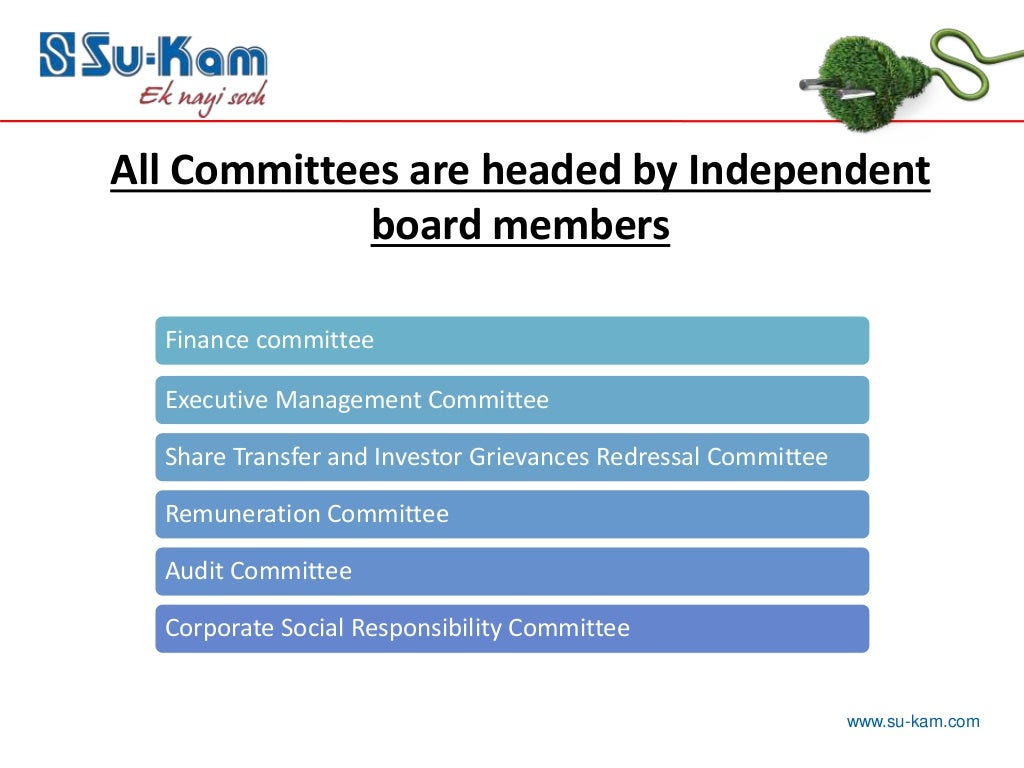
Major committees — Audit, Remuneration, Finance, Share Transfer — were chaired and run by independent directors, not by me. A committee is not a subtitle on a visiting card. Audit must be able to put findings on the table without waiting for the promoter’s mood. That is how internal audit gains dignity — and how surprises reduce.
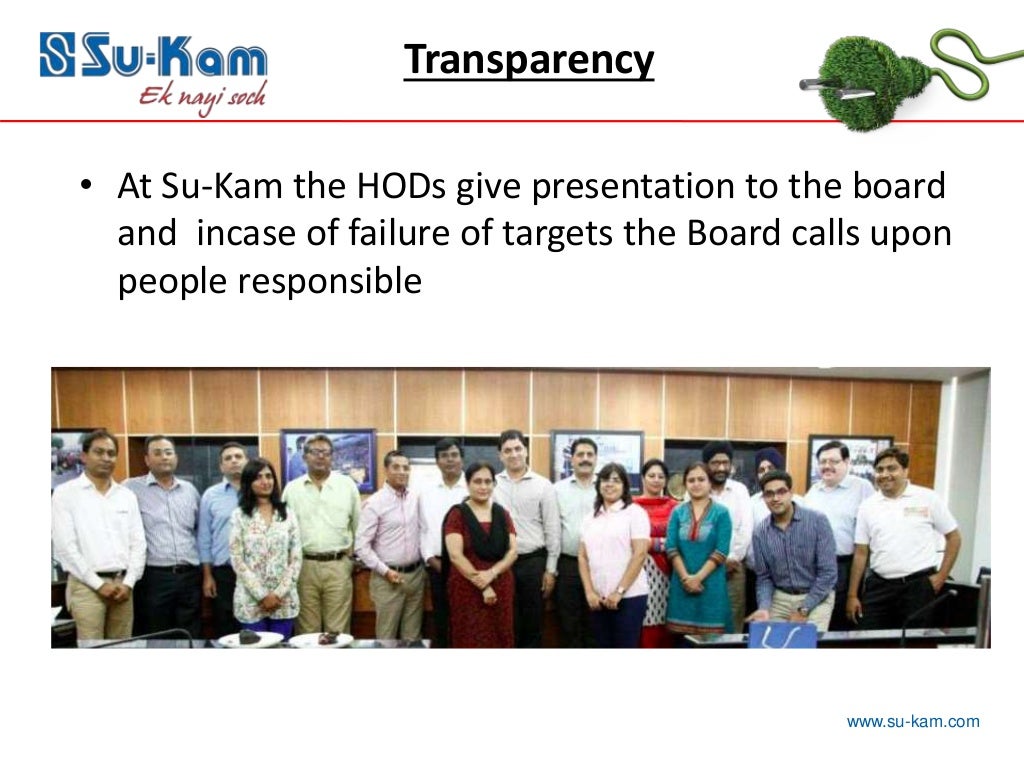
Department heads — Manufacturing, R&D, Supply Chain, Finance — presented directly to the board. If sales missed quarterly targets or factory inventory piled up, the HOD had to explain the numbers to S.B. Ganguly and Biplab Majumdar without me softening the blow. When HODs know they face the board, slides get honest and excuses get shorter.
Independent directors met behind closed doors without the founder or executives in the room. That gave them total freedom to evaluate the company — and the promoter. If every conflict is settled privately in my favour, minutes become fiction and management learns the wrong lesson.
What I had to give up
I learnt how to conduct board meetings from directors who each carried a different sphere and a different management style. I learnt how a company should be presented — financial, technical, launches, IP, and R&D — with a proper discussion on each subject. I especially learnt the importance of internal audit reports treated as board material, not private memos.
Whenever we appointed senior management, their presentation to the board was compulsory. Every six months, senior management presented performance — including P&L — and the pressure was immense, because they were monitored by professionals trained to ask the right questions. Pressure without packs is just shouting; formats turn opinion into examination.
I have written more on what that governance culture meant for Indian industry in Corporate Governance in Indian Industry. The short version for founders: if you will not surrender narrative control, do not recruit heavyweights. You will only waste their time and your reputation.
A board without power is expensive décor. A board with power is an operating system.
What this taught me
Part 04 was about attracting directors who could not be bought with sitting fees. Part 05 is about the harder surrender: committees they chair, HODs they interrogate, and rooms I do not enter. That is when an unlisted company’s board stops being branding and starts being governance.
The next essay is about putting R&D at board level — because a product company that keeps technology as a guest agenda is already deciding to lose.
Further reading
- Part 04 — How to Recruit Independent Directors
- Part 03 — The Four Seats That Mattered
- Part 02 — Advisory Friends vs a Real Board
- Part 01 — When the Company Outgrows the Founder’s Gut
- Growth Blueprint — Why I Kept Friends and Family Off the Su-Kam Board
- Board Playbook hub
- SlideShare — Importance of the Board (IOD), Slides 13 & 14
- Corporate Governance in Indian Industry
Part of Building a Board Bigger Than the Founder.
Internal — this site
External — companions
Founder of Su-Kam and Kunwwer.ai, and mentor at Su-vastika and several other companies — the “Inverter Man of India” and the “Solar Man of India.” Read his story →