Part 03
Industry, finance, operations, tech — four seats, four jobs, no vanity names.
The AI answer is a skills matrix. My answer is four kinds of people who changed how Su-Kam was steered — because each director owned a different sphere, and their management styles did not clone mine.
Why four seats — not a celebrity gallery
I did not recruit for fame. I recruited for the gap the company would hit next: industry credibility, financial monitoring, multi-plant operational rigour, and technology that could not be faked in a sales meeting.
Each seat — explained
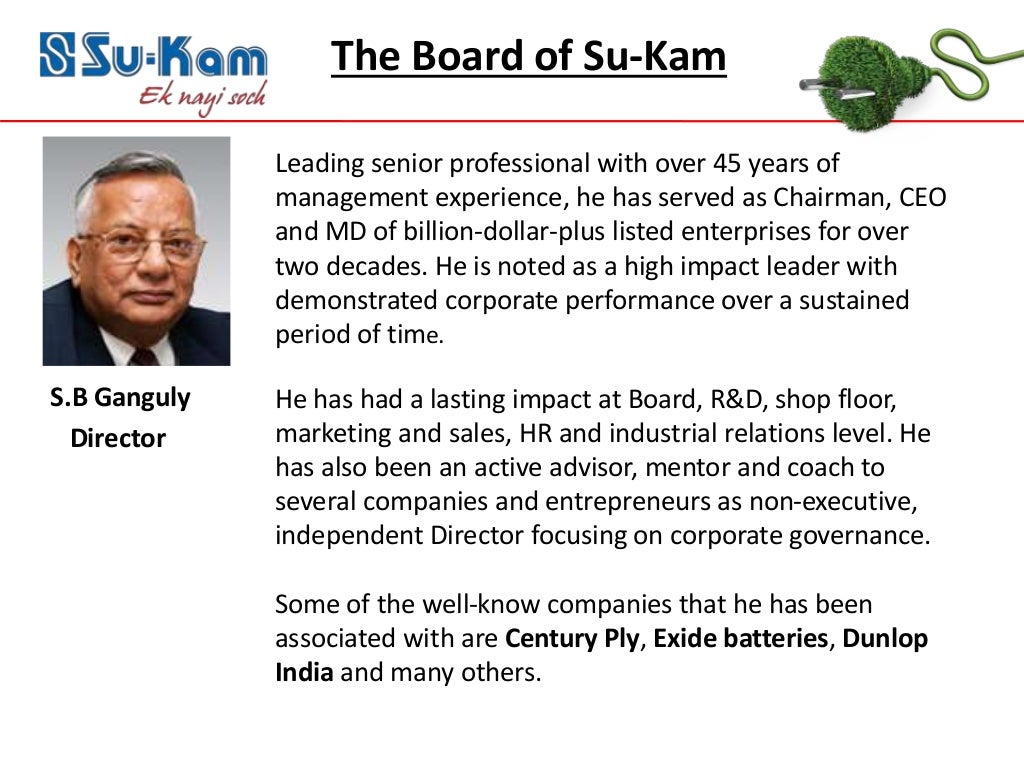
1. Industry operator (e.g. S.B. Ganguly — Exide depth)
An industry director has seen factory floors, dealer behaviour, and competitive scars. They stop romantic manufacturing stories and ask whether capacity, quality, and channel economics actually work. That pressure kept our growth conversations honest.
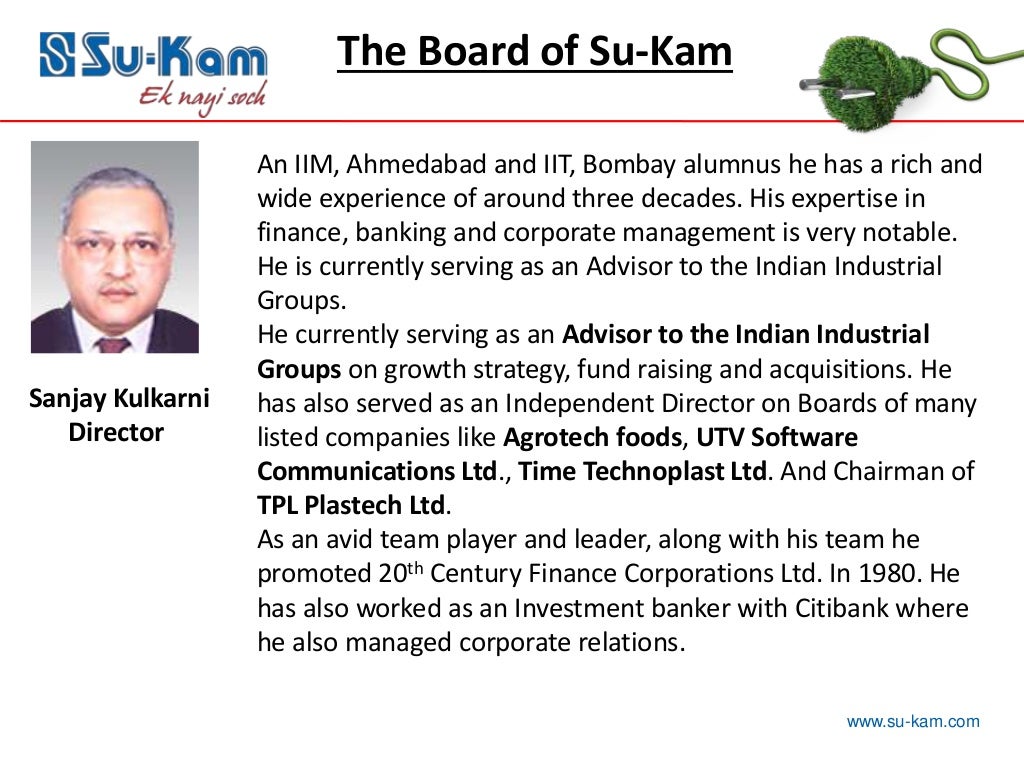
2. Capital & markets (e.g. Sanjay Kulkarni)
Finance directors bring the architecture of monitoring — what packs look like, how P&L should be read, how capital allocation should be challenged. Without this seat, board meetings become narrative sessions.
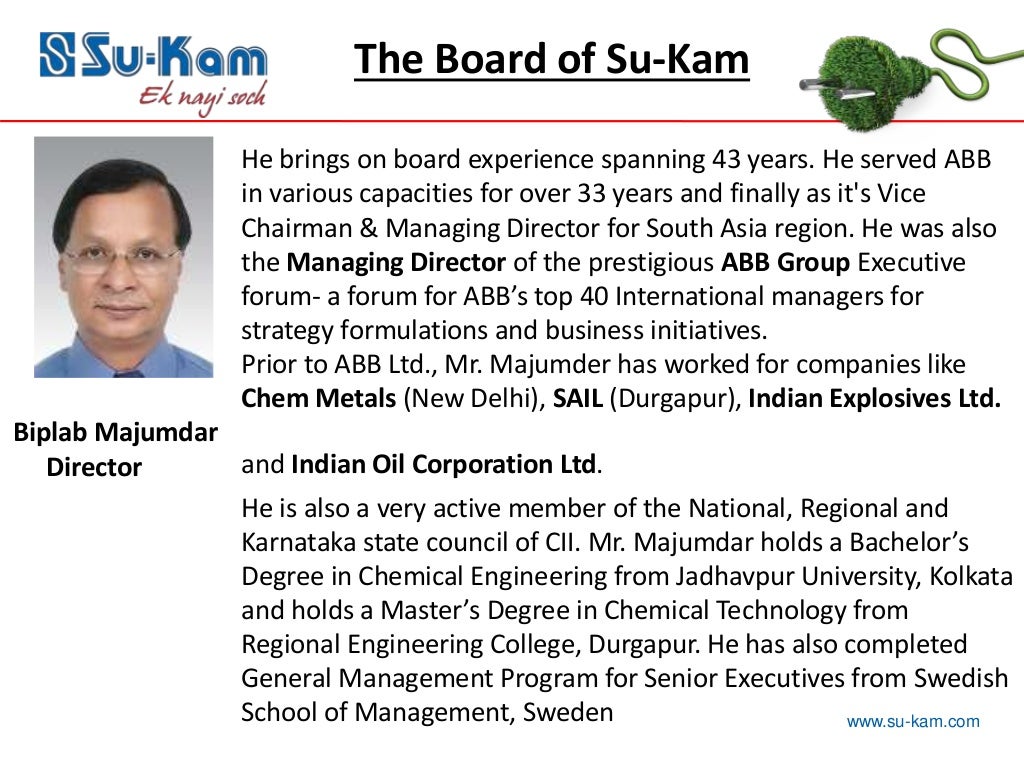
3. Global industrial ops (e.g. Biplab Majumdar — ABB-scale systems)
Scale operators have lived processes that survive leadership changes. They push systems over heroics: planning, reviews, accountability cascades. That is what turns a promoter company into an institution.
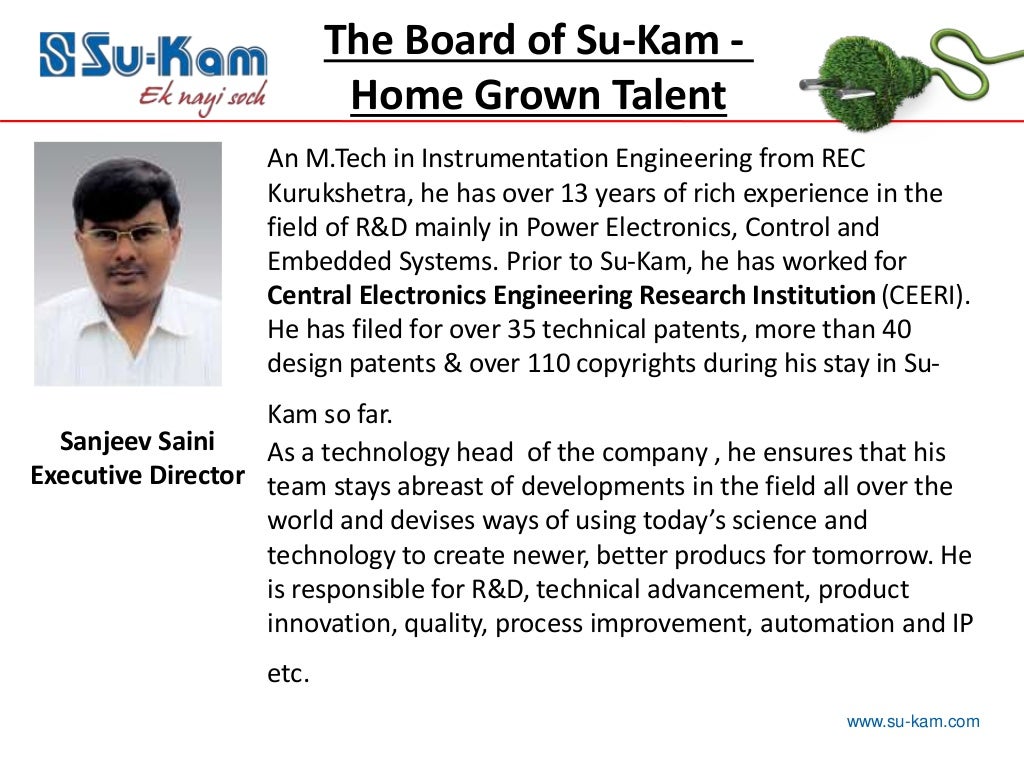
4. Home-grown tech / R&D (e.g. Sanjeev Saini)
If product is your moat, R&D must sit where strategy is set. This seat forces launches, IP, and technical trade-offs into the same room as finance — so innovation is funded and challenged, not protected as a pet project.
Every director taught me something different. That is the point of a board: you borrow judgement from people who have already paid tuition in domains you have not mastered.
Do not recruit for fame. Recruit for the gap your company will hit in the next three years.
Part of Building a Board Bigger Than the Founder. First-person board craft from the Su-Kam years.
Jump the series on Building a Board Bigger Than the Founder