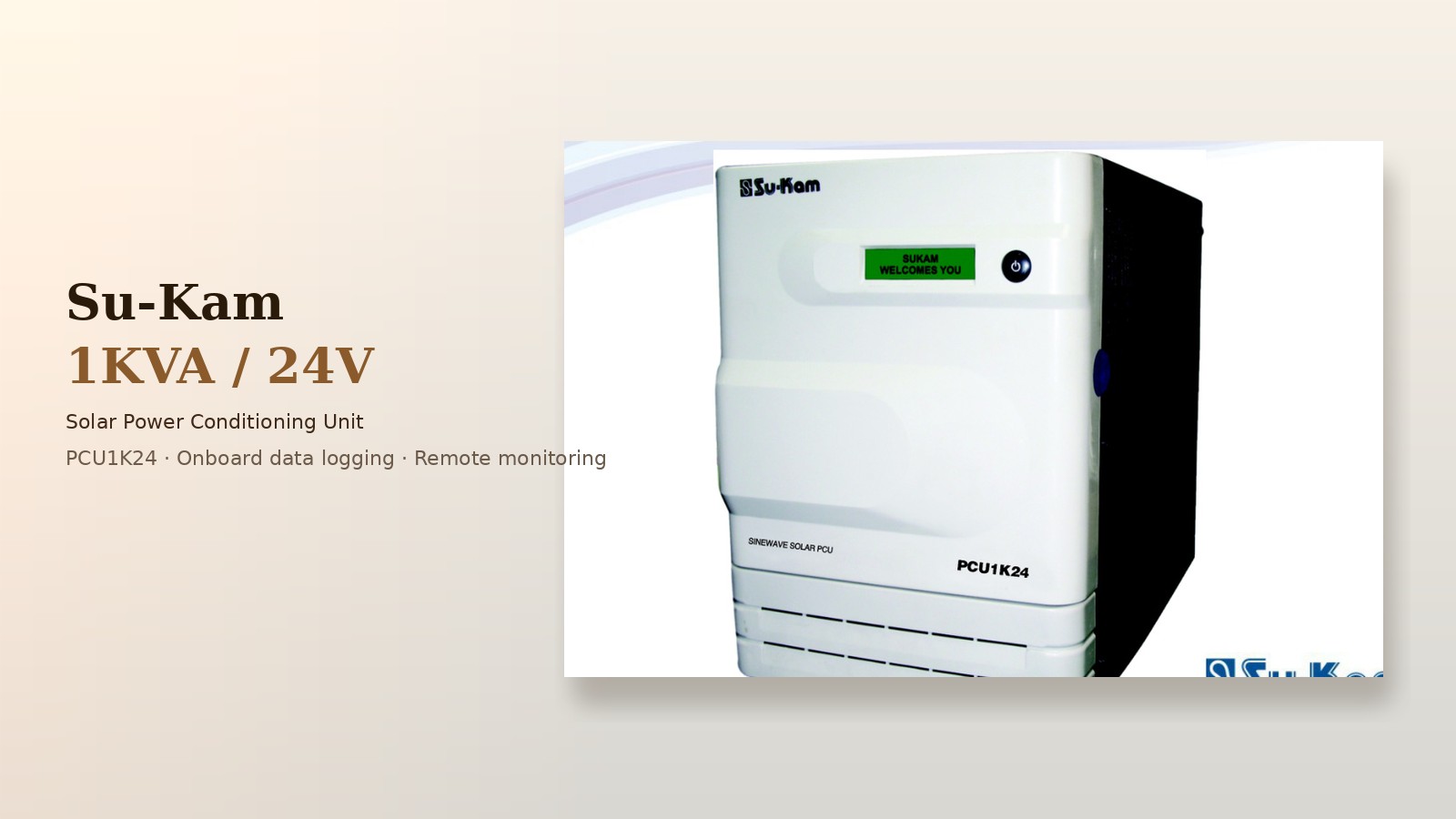
India’s First Solar PCU Was Built by Su-Kam — Under Kunwer Sachdev
When almost no one in India was focusing on solar, Su-Kam built the country’s first Solar Power Conditioning Unit under Kunwer Sachdev — filed the first technology patents under his leadership, started with PWM-based designs, moved to MPPT-based Solar PCUs, learned from every installation, scaled to 100 kVA three-phase, and exported the highest volume of solar PCUs from India from 2009 to 2018.
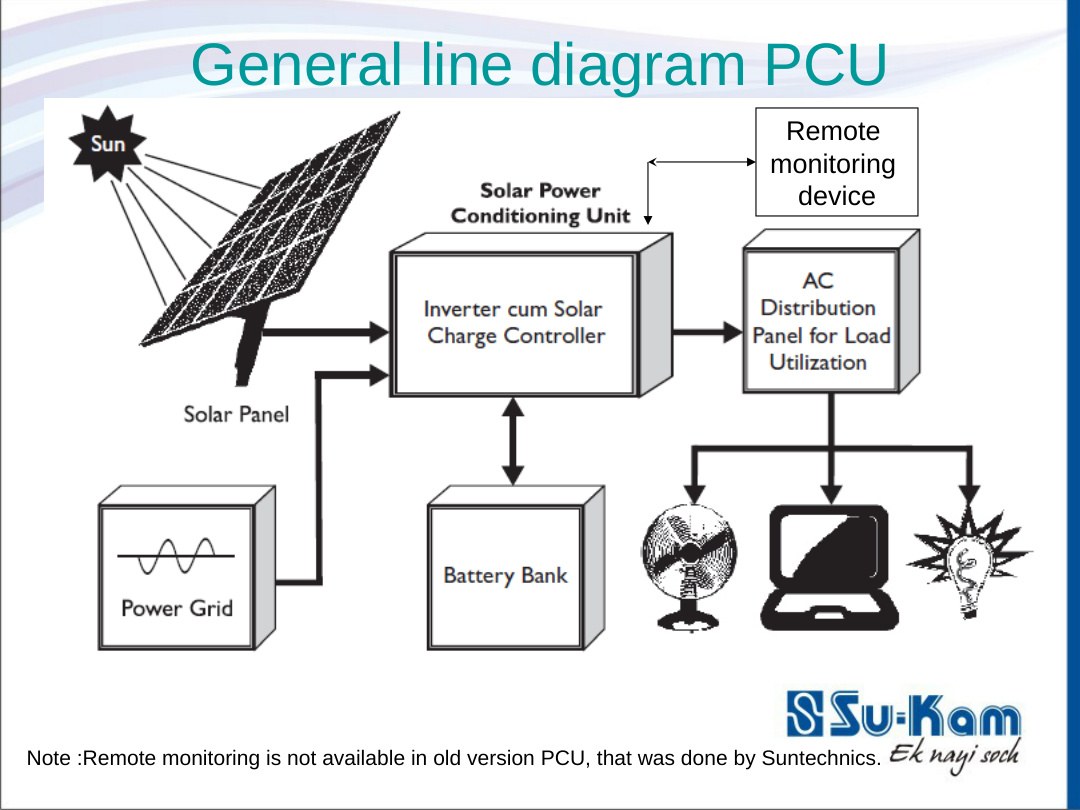
A Solar PCU is not an inverter with a solar sticker. It is the box that decides when to run from PV and battery, when to lean on the grid or DG, how to protect the pack, and how to prove what the plant produced. Under Kunwer Sachdev, Su-Kam became the first company in India to develop the Solar Power Conditioning Unit when the industry’s attention was still elsewhere — then protected the technology with patents filed under his leadership.
Archive video: Su-Kam kept increasing Solar PCU capacity — eventually to 100 kVA three-phase technology.
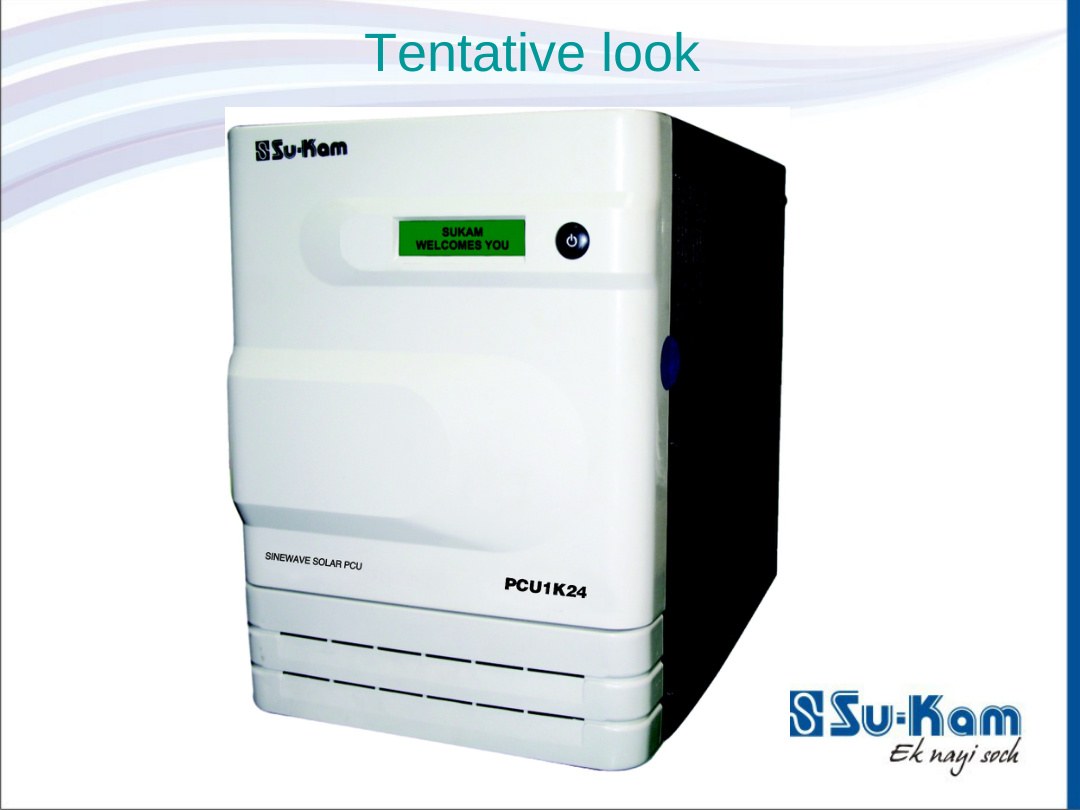
1. What India’s First Solar PCU Had to Be
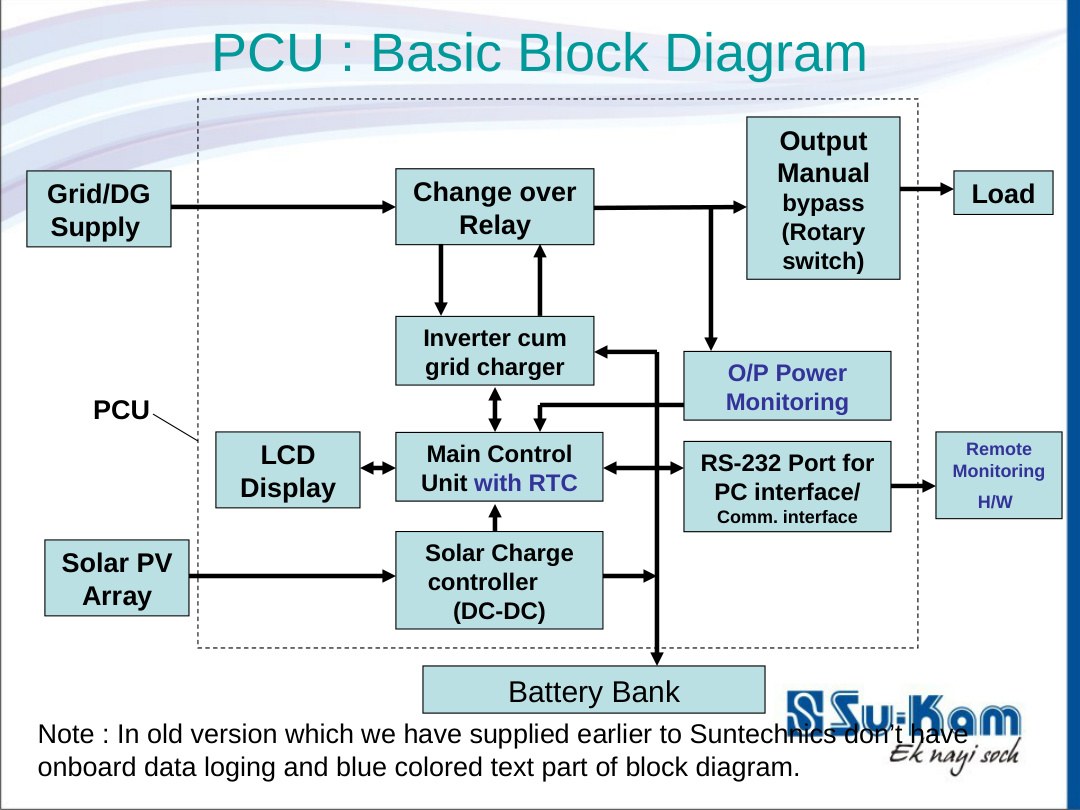
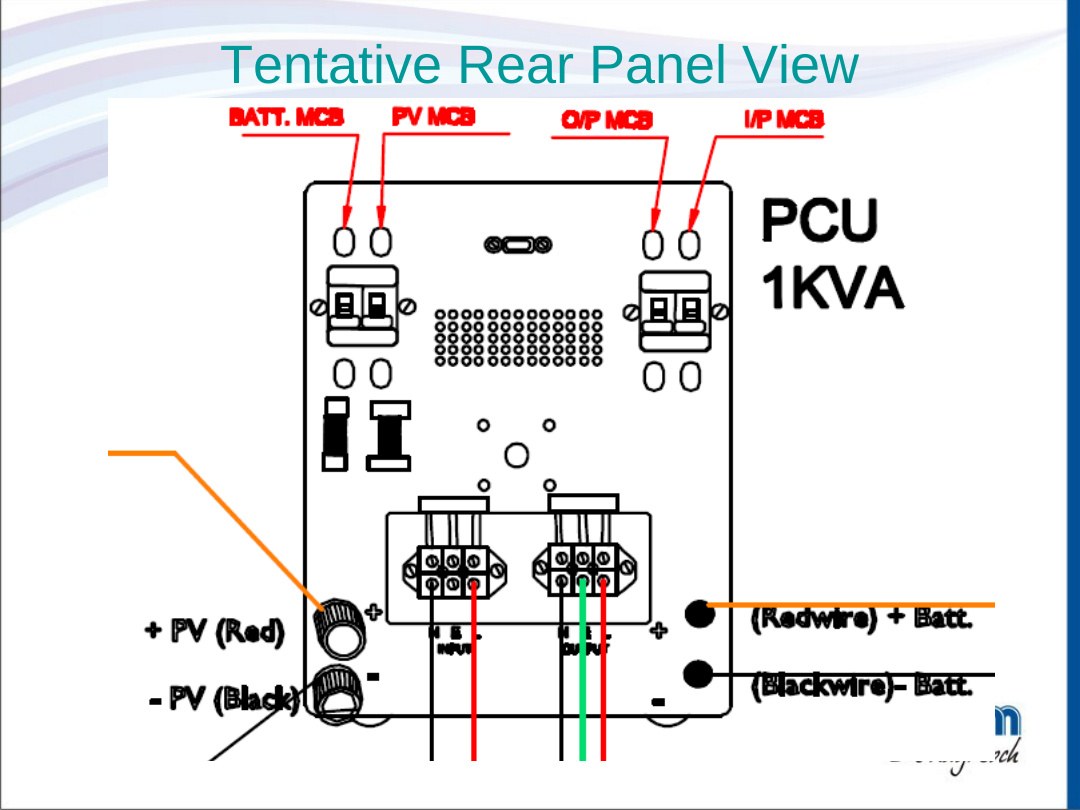
The 1KVA/24V block diagram is the product definition in miniature. Outside the dashed box: Solar PV Array, Grid/DG supply, Battery Bank, Load, and Remote Monitoring hardware. Inside: Solar Charge Controller (DC-DC), inverter-cum-grid charger, change-over relay, main control unit with RTC, LCD, RS-232 / comm interface, output power monitoring, and a manual rotary bypass.
Patents filed under his leadership
PWM-based Solar PCU → MPPT-based Solar PCU
Learn from every installation → improve
1KVA class → up to 100 kVA 3-phase
Highest solar PCU exports from India, 2009–2018
2. Solar-First Operation, Indian Mains Reality
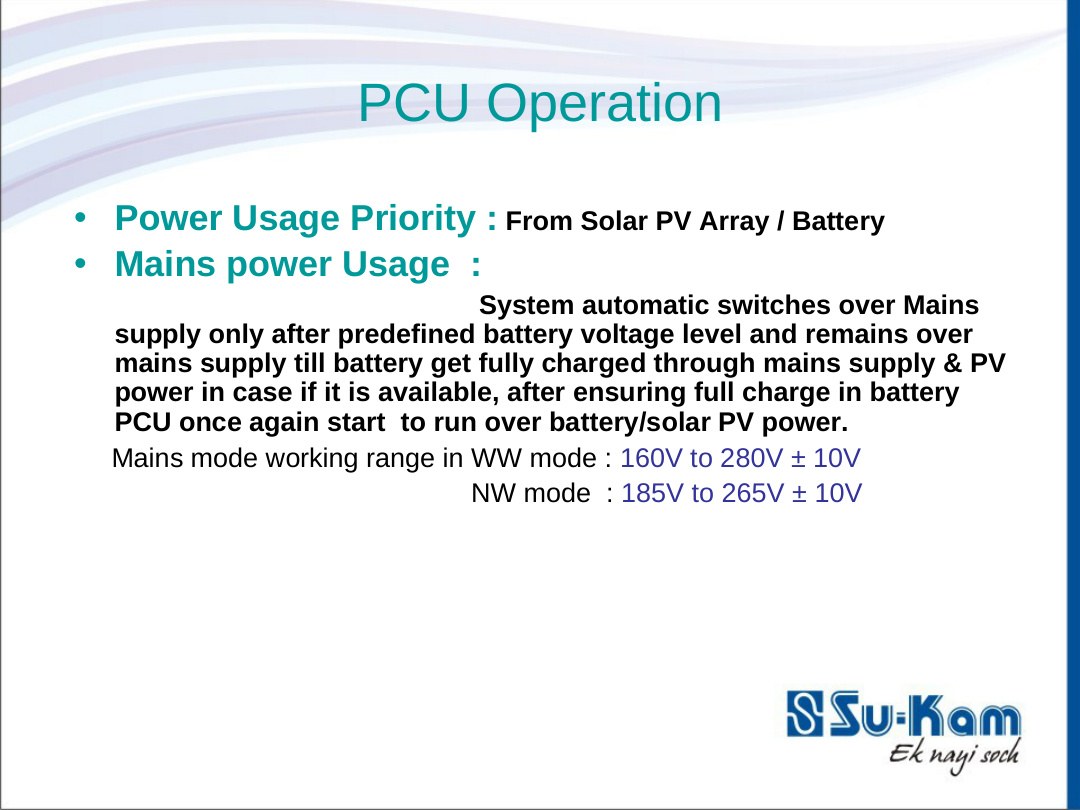
Power usage priority was explicit: Solar PV Array / Battery first. Mains was a recovery path. The system switched to mains only after a predefined low battery voltage, stayed on mains until the battery was fully charged (mains plus PV if available), then returned to battery/solar.
- WW (Wide Window) mode: mains working range 160V to 280V ± 10V
- NW (Narrow Window) mode: 185V to 265V ± 10V
Those windows are Indian grid engineering: accept ugly voltage when the site needs it, or tighten the window when the load demands cleaner mains — the same worst-case discipline that runs through the Founder Series.
3. From Local Logging to Remote Monitoring — Then to 100 kVA
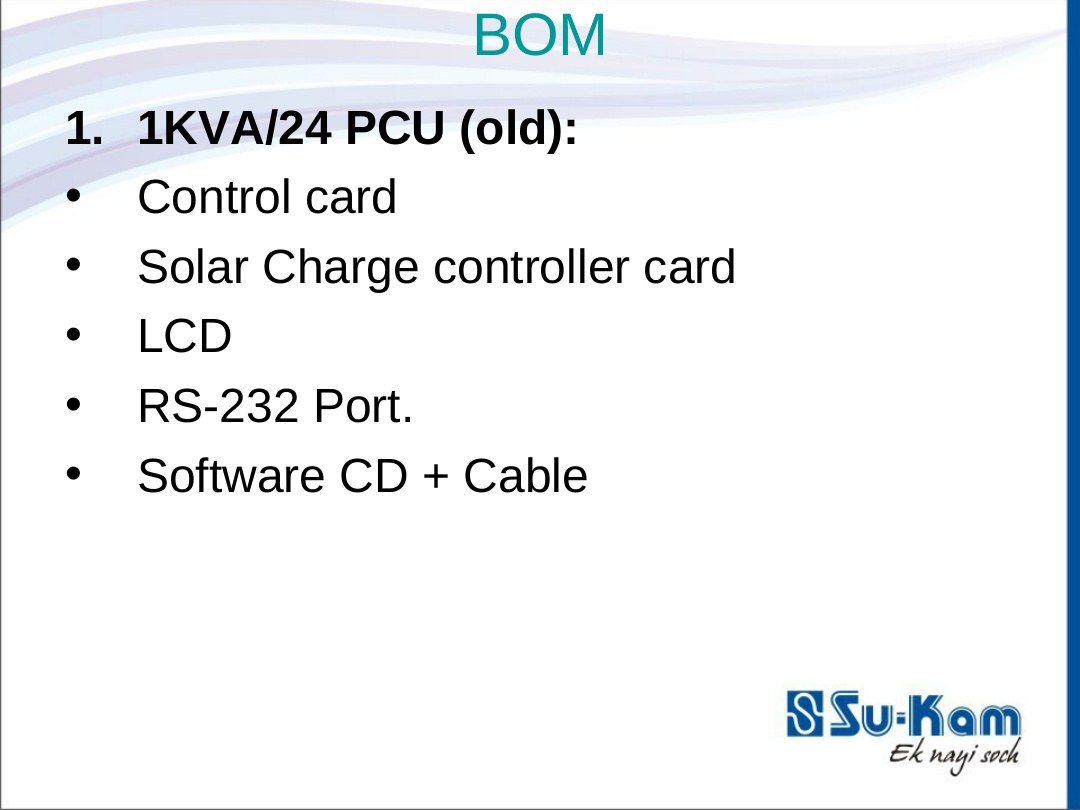
The old 1KVA/24 BOM was lean: control card, solar charge controller card, LCD, RS-232, software CD + cable. Enough for a technician with a laptop on site. An earlier version supplied to Suntechnics had no onboard data logging; remote monitoring sat outside Su-Kam’s box.
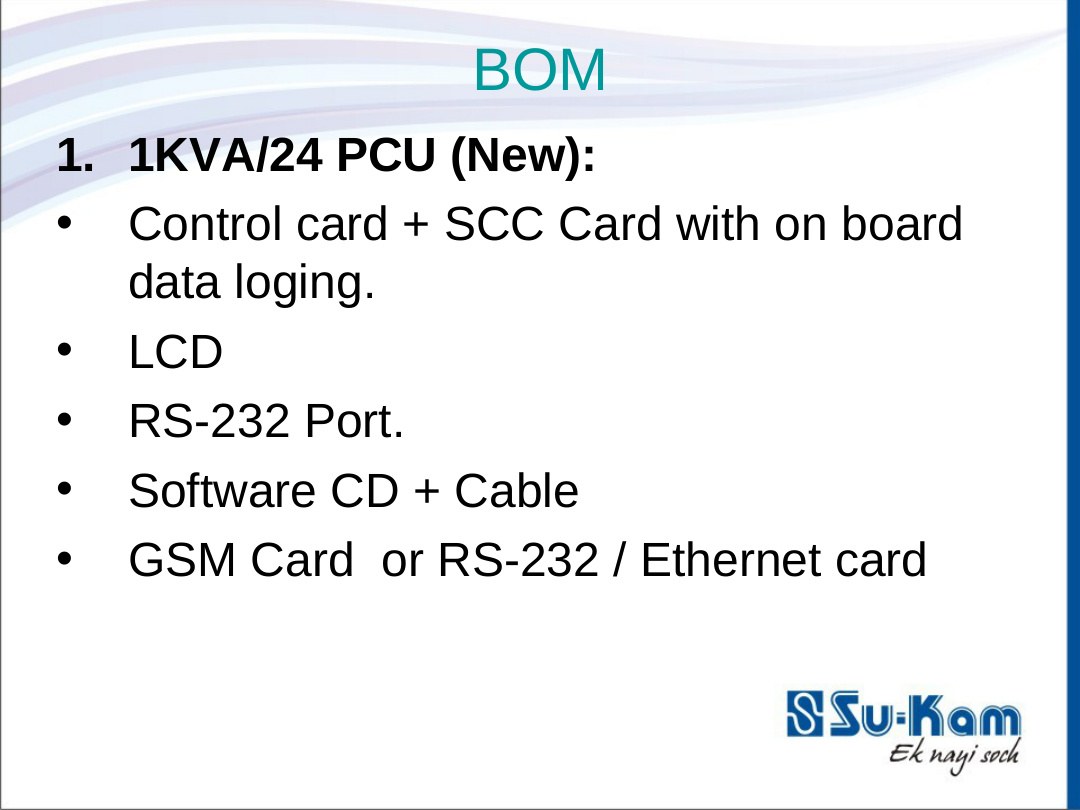
The new BOM changed the product category:
- Control card + SCC card with onboard data logging
- LCD, RS-232, software CD + cable
- GSM card or RS-232 / Ethernet card for remote monitoring
That was one node on a longer curve: keep learning after every installation, keep increasing capacity, and take three-phase Solar PCU technology to 100 kVA — while winning India’s export race in solar PCUs for nearly a decade.
4. GUI Parameters: From Live Values to Cumulative kWh
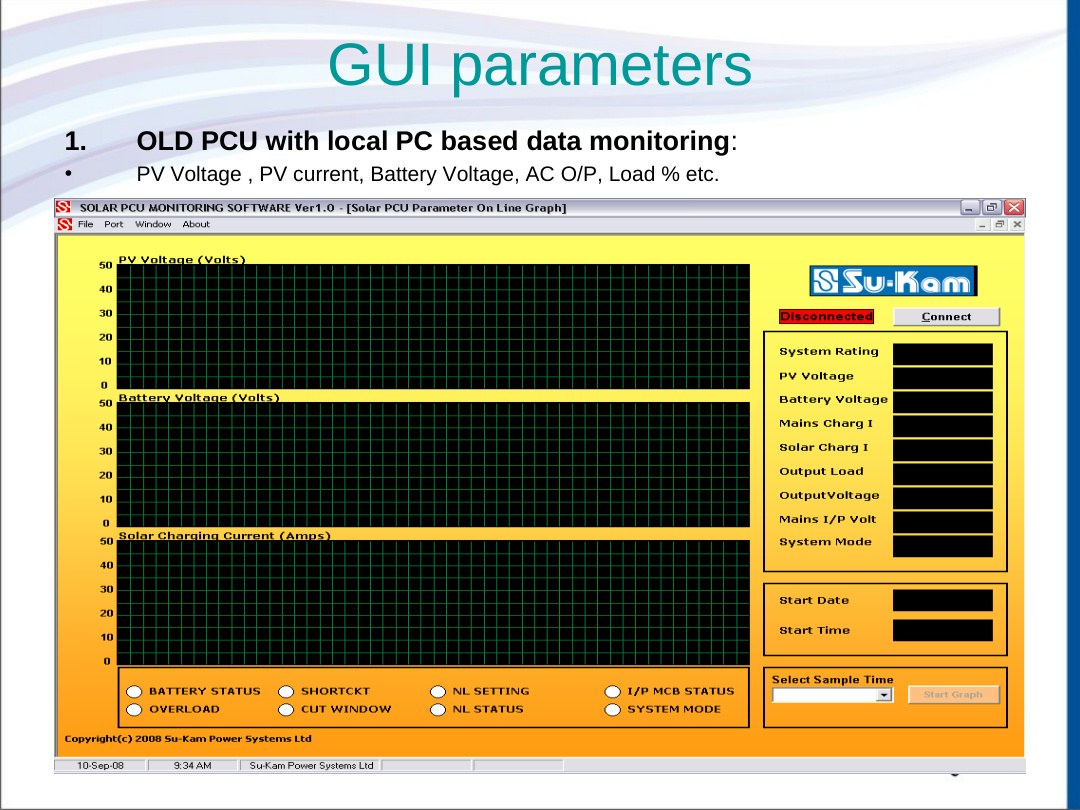
Old GUI (local PC monitoring): PV voltage, PV current, battery voltage, AC output, load % — the live vitals.
New GUI (remote monitoring + data logging): the same vitals plus solar cumulative kWh, and an explicitly different interface for the new version. Energy yield stopped being a guess from a technician’s notebook.
PWM → MPPT Solar PCU path
1KVA/24V PCU1K24 · solar-first · WW/NW windows
Onboard data logging + GSM/Ethernet
Scale to 100 kVA 3-phase · export leadership 2009–2018
Conclusion
India’s first Solar PCU was not a late import of a foreign category name. It was engineered at Su-Kam under Kunwer Sachdev when solar was still a niche, protected by patents under his leadership, iterated from PWM to MPPT, hardened by field installations, scaled to 100 kVA three-phase, and shipped abroad in numbers no other Indian maker matched from 2009 to 2018. The 1KVA R&D deck is one clear frame of that longer film — the moment the PCU learned to condition, log, and phone home.
In this series
Su-Kam Founder Series
- Part 01
Falcon HF — India’s First 4-Star High-Frequency Inverter - Part 02
TFT Touchscreen Solar PCU - Part 03
Low-Voltage Charging Challenge & Protection - Part 04
Static Bypass, DT-6S & ATC - Part 05
SOLARCON — Conversion Kit Savings Revolution - Part 06
India’s First MPPT — Built by Su-Kam under Kunwer Sachdev - Part 07
India’s First BMS — Su-Kam Battery Equalizer under Kunwer Sachdev - Part 08 · You are here
India’s First Solar PCU — Built by Su-Kam under Kunwer Sachdev

Kunwer Sachdev
Founder & MD, Su-Kam Power Systems (1988–2019) and Kunwwer.ai — writing on manufacturing, insolvency, and civilizational memory. Read his story →
Found this story worth sharing? Post it to your network — it takes one click: