Export network & speakership brand
The TiE Years — When India Had No Electronics Story, And I Was The One They Called
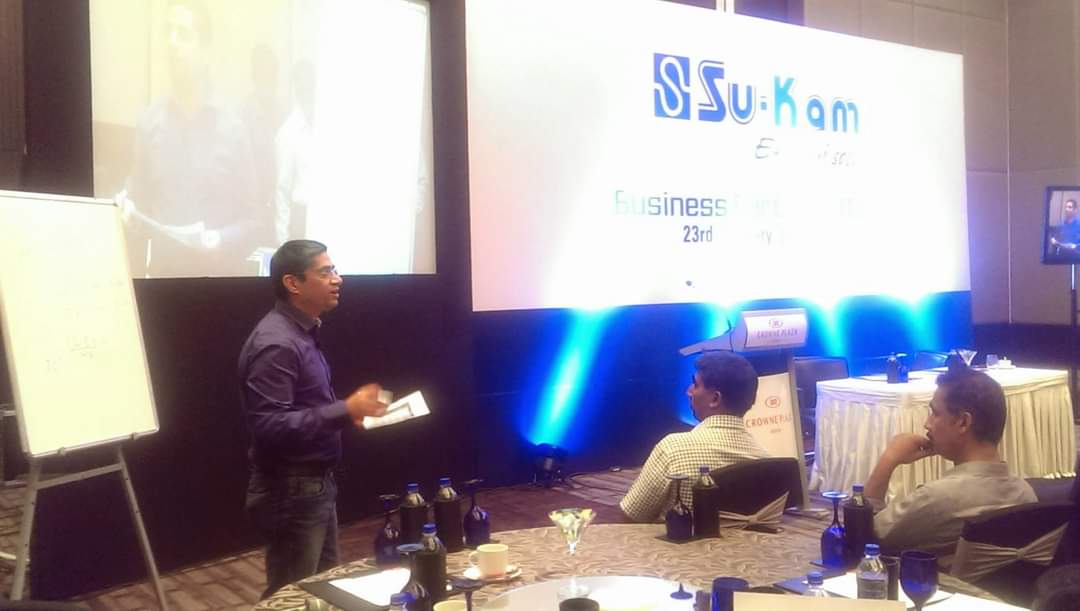
The TiE Years — There was a phase in Indian business when I was, honestly, the blue-eyed boy of every college campus, every TiE chapter, and every business conference. Not because I was the most polished speaker in the room — but because there was hardly anyone else who could stand up and say: I built an electronics brand in India, with our own technology, and we are selling it in seventy countries.
Why TiE Kept Calling
The Indus Entrepreneurs (TiE) was the biggest platform for founders in India then, and Chennai was one of the busiest chapters. Every time they had a conference — TiE Chennai, TiE Delhi, TiE Bangalore, TiE Ahmedabad — my phone would ring. Same for the IIMs, the engineering colleges, the industry conclaves.
The reason was simple, and a little sad. There were hardly any examples in front of the country of an Indian entrepreneur building his own electronics products, with his own R&D, and turning that into a real consumer brand. Software, yes — the whole IT services story was booming. But hardware, electronics, deep-tech products made in India with an Indian brand name? Very few names came up. Su-Kam was one of them.
Power outages were the daily reality in every Indian city and every village. Solar was just starting to emerge — and honestly, it was on the back burner for most people. I was the first torchbearer of solar power in India as a proper commercial category. Designing new products, running the plant, criss-crossing the country to create awareness. And when a founder is bullish and the brand is showing up in every nook and corner of India — from Ladakh to Kanyakumari, from Guwahati to Kutch — people are ready to listen to your story. They were.
“I did not go to those TiE stages to sell inverters. I went to sell the idea that an Indian brand in electronics was possible. Because if I did not say it, who was going to?”
What I Told The Young Founders In Those Rooms
I never went with slides full of jargon. I went with my own story — from a small cable-supply business in Delhi to a plant in Gurgaon to shipping into 70+ countries. And I would look at the room and tell them the two things I most wanted them to hear.
One: the initial days of any real business are tough. You will feel like you are pushing a wall that will not move. That is normal. Nobody who built anything of size skipped that phase. But once you start — once you actually stop planning and start doing — things quietly begin to fall in line. The right supplier calls. The right dealer says yes. The right engineer joins. It is almost magical, but it only starts after you begin.
Two: the best life a human being can live in this world is the life of an entrepreneur. You learn the most and you experience the most in one lifetime. A salaried career gives you one arc — entrepreneurship gives you ten. You will meet the government, the bank, the customer, the factory-floor worker, the international distributor, the press, the auditor, all in the same week. Nothing else on earth compresses that much learning into one life. I said it in the TiE Chennai days. I still believe it today.
If you take one thing from this piece: the reason India had so few electronics-brand stories in that era was not lack of talent — it was lack of belief. TiE, and forums like it, existed to fix exactly that. Every founder who stands up on those stages today is repaying that debt. If you get invited to speak — go. Say yes. The country still needs the story.
Why This Still Matters In 2026
People ask me why I still speak at colleges, mentor start-ups like SkillCircle, and turn up at TiE events even now. The answer is the same as it was in the Chennai years. The country still needs founders to stand up and say — out loud, in front of the next generation — that building a real business in India is possible, hard, worth it, and the best life you can pick. Nothing has changed about that in twenty-plus years. Only the technology on top has.
If you are a young founder reading this: initial days are tough. Once you start, things begin to fall in line. And there is no better life than this one. That is the message I carried into every TiE room. I am carrying it into this blog too.
Sources & Links
Frequently Asked Questions: The TiE Years
What were The TiE Years for Kunwer Sachdev?
They were the years TiE chapters, IIMs and industry conferences kept calling him to the mic — because India had almost no home-grown electronics brand story, and Su-Kam was one of the few.
Why did TiE keep calling him to speak?
Software had examples. Hardware did not. He could stand up and say he had built an electronics brand in India, with its own technology, selling in seventy countries.
What did he tell young founders in those rooms?
Two things: the first days are tough, and once you actually start, things begin to fall in line. And that the best life you can pick is the life of an entrepreneur.
Was he selling inverters on those TiE stages?
No. He says he went to sell the idea that an Indian brand in electronics was possible — because if he did not say it, who would?
Does he still speak at TiE in 2026?
Yes. He still mentors startups and turns up at TiE events for the same reason as the Chennai years: the next generation still needs to hear that building in India is hard, possible, and worth it.
What should a young founder take from The TiE Years?
Start. The wall will feel unmovable. After you begin, the right supplier, dealer, and engineer tend to show up. If you get invited to speak — go.
Kunwer Sachdev
Founder, Su-Kam Power Systems (1988–2019) · The Inverter Man of India · The Solar Man of India
Startup mentor, angel investor and serial entrepreneur. Built Su-Kam from a Delhi component-supply business into a ₹1,200+ crore power-electronics brand across 70+ countries. Now mentors India's next generation of founders. Based in Gurgaon, Haryana. Read his story →
Kunwer Sachdev
Founder, Su-Kam Power Systems (1988–2019) and Kunwwer.ai, mentor at Su-vastika — the “Inverter Man of India” and the “Solar Man of India.” Read his story →