The Home Loan vs. The Factory Loan: How Indian Law Protects the House, but Destroys the Builder
If you default on a housing loan, the SARFAESI Act protects your right of redemption, compels transparent public valuations, and preserves your civil standing. If you default on an industrial factory loan, the IBC bans you under Section 29A, liquidates your life’s work in secret, and uses personal guarantees to take your home anyway.
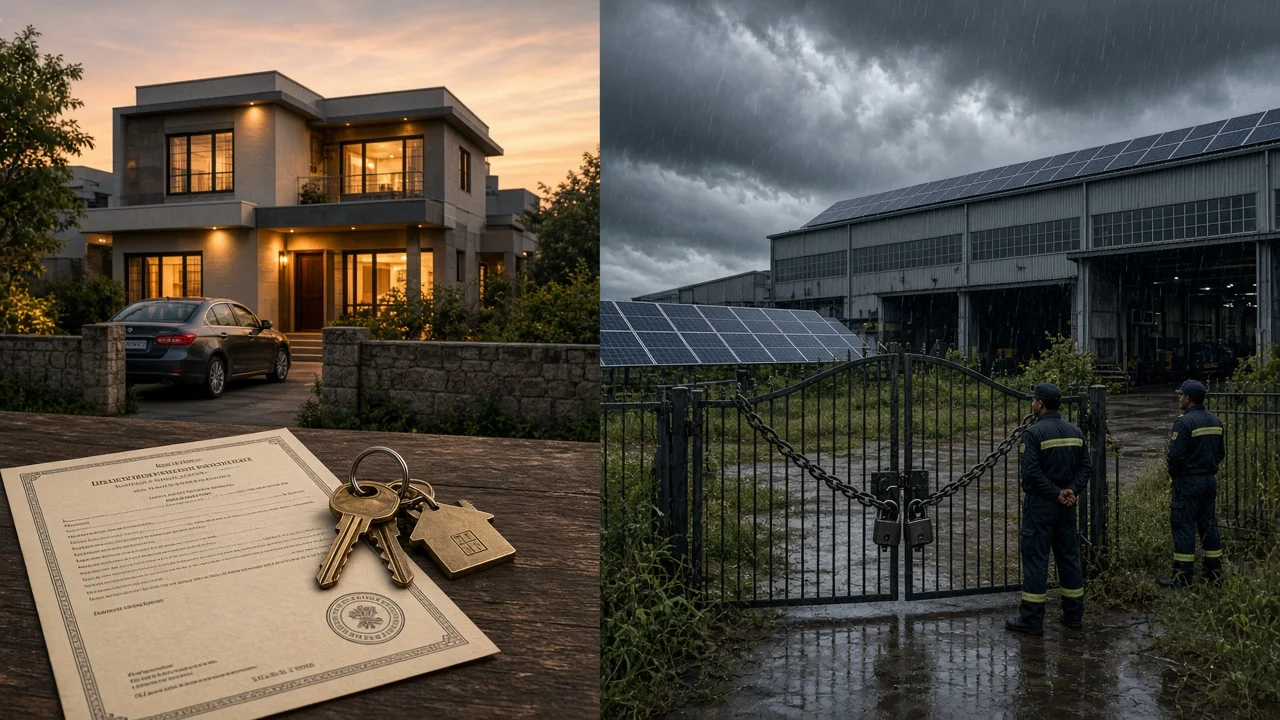
If you borrow money from an Indian bank to buy a home and fall into financial distress, the law surrounds you with statutory shields.
Under the SARFAESI Act, 2002, a bank cannot simply throw you out onto the street:
- Mandatory 60-Day Notice (Section 13(2)): The bank must give you 60 days of written demand.
- The Statutory Right to Object (Section 13(3A)): You have the legal right to submit formal objections. The bank is legally compelled to consider your response and reply within 15 days with reasoned justifications.
- The Right of Appeal (Section 17): Before eviction, you can approach the Debts Recovery Tribunal (DRT) to halt unlawful bank actions.
- The Absolute Right of Redemption (Section 13(8)): Right up until the auction is published, the law allows you to clear the arrears, arrange refinancing, or settle the debt to keep your home and take the keys back.
- Transparent, Challengeable Valuations: The bank must publish reserve prices in two leading newspapers, secure two certified valuation reports, and permit you to bring a private buyer offering a higher price.
- Mandatory Surplus Refund: If the bank auctions your ₹1-crore apartment to satisfy a ₹60-lakh loan, the law requires them to refund every single rupee of the remaining ₹40-lakh surplus to you.
Most importantly, you remain a dignified civil debtor. Your passport is not seized, your family is not branded as outlaws, and you are free to rent another apartment, earn a livelihood, and rebuild your financial life.
Indian law respects the roof over a family’s head.
Now look at what happens when you build a factory that puts a roof over thousands of families.
01A Home Shelters One Family. A Factory Shelters Thousands.
A house is a private shelter. A manufacturing plant is a national economic engine.
Inside a modern manufacturing plant are not just concrete walls, but hundreds of livelihoods. It is 30 years of research and development, custom-built automated testing bays, heavy assembly lines, and vendor ecosystems forged over decades. When a factory runs, it generates GST, fuels local logistics, pays corporate taxes, and stamps “Made in India” on goods exported across the globe.
Yet, if an industrial enterprise defaults due to a macroeconomic downturn, policy shock, or credit freeze, the Insolvency and Bankruptcy Code (IBC) applies a legal framework that is the complete antithesis of natural justice.
Every single protection granted to a home loan borrower is systematically denied to the industrial founder.
02The Right of Redemption: Protected for Homes, Banned for Factories
Under Section 13(8) of the SARFAESI Act, the homeowner has an inalienable right to save their property. If you can arrange funds from family, friends, or a new lender, you can redeem your home.
Under the IBC, the founder is met with Section 29A.
Section 29A treats first-generation industrial creators as pariahs. Even if the founder brings in legitimate institutional investors, presents personal savings, or proposes a full debt settlement under Section 12A, the law looks at them and says:
“You are the promoter. You are barred. You cannot bid to save your own company.”
The homeowner can buy back his house. The industrialist is legally prohibited from rescuing the factory they built with their bare hands. (See: Section 29A: The Law That Bars Promoters from Bidding.)
03Su-Kam vs. The Mortgaged House: The Reality of Section 29A
Consider what happened in my own case at Su-Kam Power Systems:
- Su-Kam was generating over ₹600 crore in annual revenue, operating major manufacturing plants in Gurgaon and Baddi, and exporting power-backup products to over 90 countries.
- When working-capital shocks pushed the company into the NCLT, I did not run away. I arranged financial backing and proposed a ₹250-crore resolution and settlement plan to clear the bank debt and protect thousands of jobs.
- What did the banks and the law do? They used Section 29A to disqualify my offer.
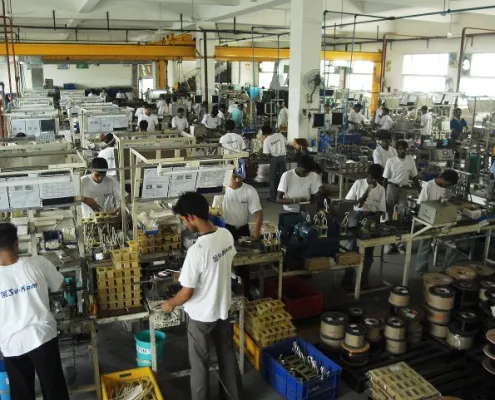
Instead of accepting a ₹250-crore revival from the founder who built the business, the Committee of Creditors (CoC) dragged the company into liquidation. The plants were shut down, the machinery was dismantled, and the company was sold to a third-party liquidator for a fraction of that amount.
If Su-Kam had been a mortgaged residential house, Section 13(8) of the SARFAESI Act would have legally compelled the bank to accept the settlement and return the property. Under the IBC, the law legally compelled them to destroy it.
04Valuation: Transparent Public Auction vs. Secret Scrap Markdown
When a bank auctions a repossessed home, the reserve price is public, the homeowner can inspect the valuation reports, and if the bank undervalues the property, the owner can challenge it before the DRT or bring a buyer willing to pay more.
Under the IBC, valuation is an exercise in bureaucratic secrecy. The Resolution Professional (RP) and the CoC appoint two registered valuers whose calculations are kept strictly confidential. In practice, intangible assets—decades of brand goodwill, distributor networks, and proprietary engineering—are marked down to zero.
At Su-Kam, our portfolio of 77 patents—the fruit of 14 years of R&D—and decades of brand equity were valued at ₹0 in the liquidation estate. (Read: Fair Value vs. Liquidation Value Under the IBC.)
The factory is sold off to scrap merchants for 5% to 15% of its true replacement cost, while the founder is denied any legal standing to stop the fire sale. (See: The Day Su-Kam Died: What Happens in NCLT Liquidation.)

05Physical Asset vs. Living Organism: Who Pays for the Decay?
When a bank locks a house, the house does not die. The walls remain intact, and the land often appreciates. The bank cannot knock down the walls, ruin the plumbing, and bill the homeowner for the damage.
A factory is a living ecosystem. When court-appointed custodians take over, it suffocates: component vendors stop supplying parts on credit; key R&D engineers and technicians leave; long-term institutional customers cancel contracts.
Within 180 to 700 days of CIRP, a running factory generating hundreds of crores is turned into an idle, rusting monument of cold steel.
In normal contract law (Section 141 of the Indian Contract Act), if a creditor impairs or destroys the collateral in its custody, the guarantor is discharged.
Under the IBC, the exact opposite occurs: the promoter gets zero reduction in debt for the enterprise value destroyed while in the bank’s custody.
In Su-Kam’s case, the Insolvency and Bankruptcy Board of India (IBBI) formally penalised both the RP and the Liquidator for serious procedural violations and misconduct. Unattended facilities in Gurgaon and Himachal Pradesh lay idle, patents lapsed because maintenance fees went unpaid, and inventory was mismanaged.
Yet, despite proven regulatory wrongdoing by the custodians, the debt was never adjusted.
06The Irony: The Bank Takes the Factory, Then Takes the House
This brings us to the ultimate tragedy of the Indian manufacturing founder.
A retail borrower who defaults on a home loan risks losing only that home. Their future income is not paralyzed, their savings are not seized, and their family is not subjected to public humiliation.
An industrial founder who defaults on a factory loan loses both the factory and their own home:
- Lenders demand blanket Personal Guarantees for corporate working capital loans.
- Under the IBC, lenders take the factory, bar the founder under Section 29A, and sell the plant for 10% scrap value.
- The lenders then invoke the Personal Guarantee for the remaining 90% deficit—a deficit inflated by compounding penal interest accrued while the factory sat idle in the bank’s custody.
- The bank triggers Personal Insolvency under Part III of the IBC.

As we are seeing in the national headlines regarding Subhash Chandra’s ₹22,000-crore personal insolvency case — examined in depth in Essay 14 — demanding astronomical corporate balances from individual promoters is a legal farce. But while large conglomerates fight multi-year battles through split benches, mid-sized founders face immediate civil annihilation: bank accounts are frozen, Look-Out Circulars (LOCs) are issued, passports are jeopardized, and the founder’s family home—pledged under the personal guarantee—is seized.
The system takes the factory that employed thousands, and then takes the founder’s personal roof, ensuring the builder can never build, employ, or innovate again. (Read: Personal Insolvency: The Last Straw.)
07The Core Inequity: Home Loan vs. Factory Loan vs. Personal Guarantee
| Legal Protection | Home Loan (SARFAESI) | Factory Loan (IBC) | Personal Guarantee |
|---|---|---|---|
| Notice & Defense | 60-day notice + objection right (13(2)/13(3A)) | Immediate ouster on admission | Invocation without credit for destroyed corporate value |
| Right of Redemption | Absolute under Sec 13(8) | Banned under Section 29A | Cannot save company; assets still seized |
| Valuation | Public; challengeable in DRT | Secret; patents/brand at ₹0 | Shortfall vs scrap auction |
| Alternative Buyer | Higher private offers must be considered | Founder settlements rejected | 10% scrap bid, then 90% from guarantor |
| Asset Preservation | Land/structure retain value | Living enterprise suffocated | Zero credit for RP/CoC destruction |
| Interest Clock | Often capped/frozen in delay | Penal compounding over years | Guarantor billed for court-delay interest |
| Personal Outcome | Civil default; free to rebuild | Company sold/dissolved | Civil death — freeze, LOCs, home seizure |
08Why This Must Change
Why does India provide statutory redemption, transparency, and dignity to someone who defaults on a residential apartment, but treats the creator of an industrial plant like an outlaw?
If a nation wishes to champion Make in India and build domestic manufacturing powerhouses, it cannot maintain an insolvency law that penalizes the builder more harshly than a retail debtor:
Non-fraudulent promoters must have the legal right to submit turnaround plans under transparent, open bidding. If a founder offers more than the liquidation value, the law must mandate consideration.
If lenders and RPs mismanage an industrial asset and destroy its enterprise value during CIRP, the personal guarantor’s liability must be discharged to the extent of that destruction.
Personal guarantees must be restricted to cases of proven fraud or diversion of funds, rather than serving as routine tools of financial extortion.
Until Parliament reforms these statutory contradictions, we are sending a chilling message to every young Indian: buy a home, buy a car, but never make the mistake of building a factory.
••The Policy Roadmap
- Read the Full Playbook: The IBC Files
- Next — Essay 14: Why the Subhash Chandra Case Must Force a Rewrite of India’s Personal Insolvency Law
- Companion Essay: The Car and the Factory
- The Structural Crisis: The IBC Files
- Policy Dialogue: Contact Kunwer Sachdev

Founder of Su-Kam and Kunwwer.ai — the “Inverter Man of India” and the “Solar Man of India.” Read his story →