Grassroots & spectacle marketing
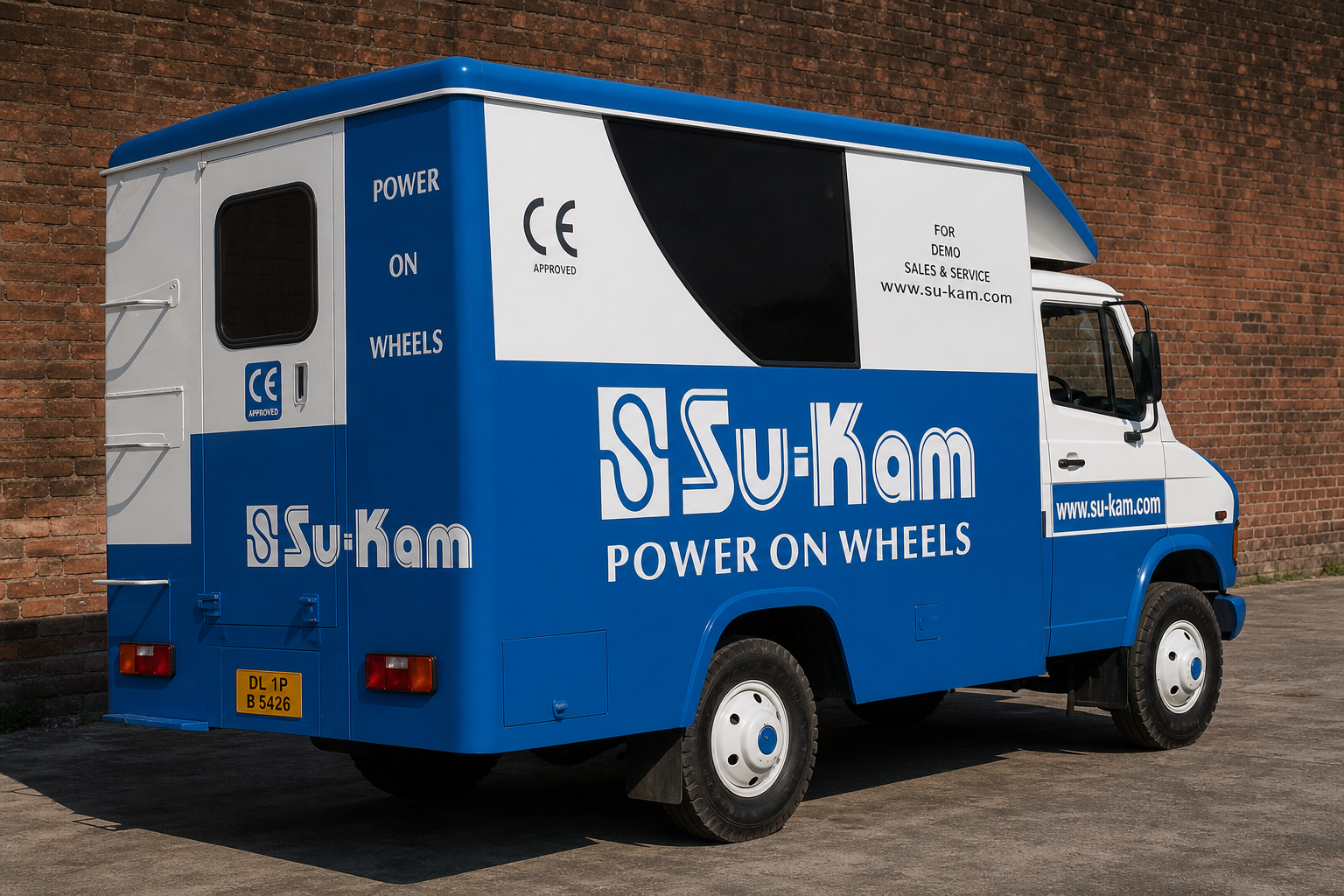
Power On Wheels — the 100 kVA demo truck that made people believe a building could run on an inverter
When the market still thought inverters were for a few bulbs, we put a big inverter and a battery bank on a truck — and took the argument to the customer.
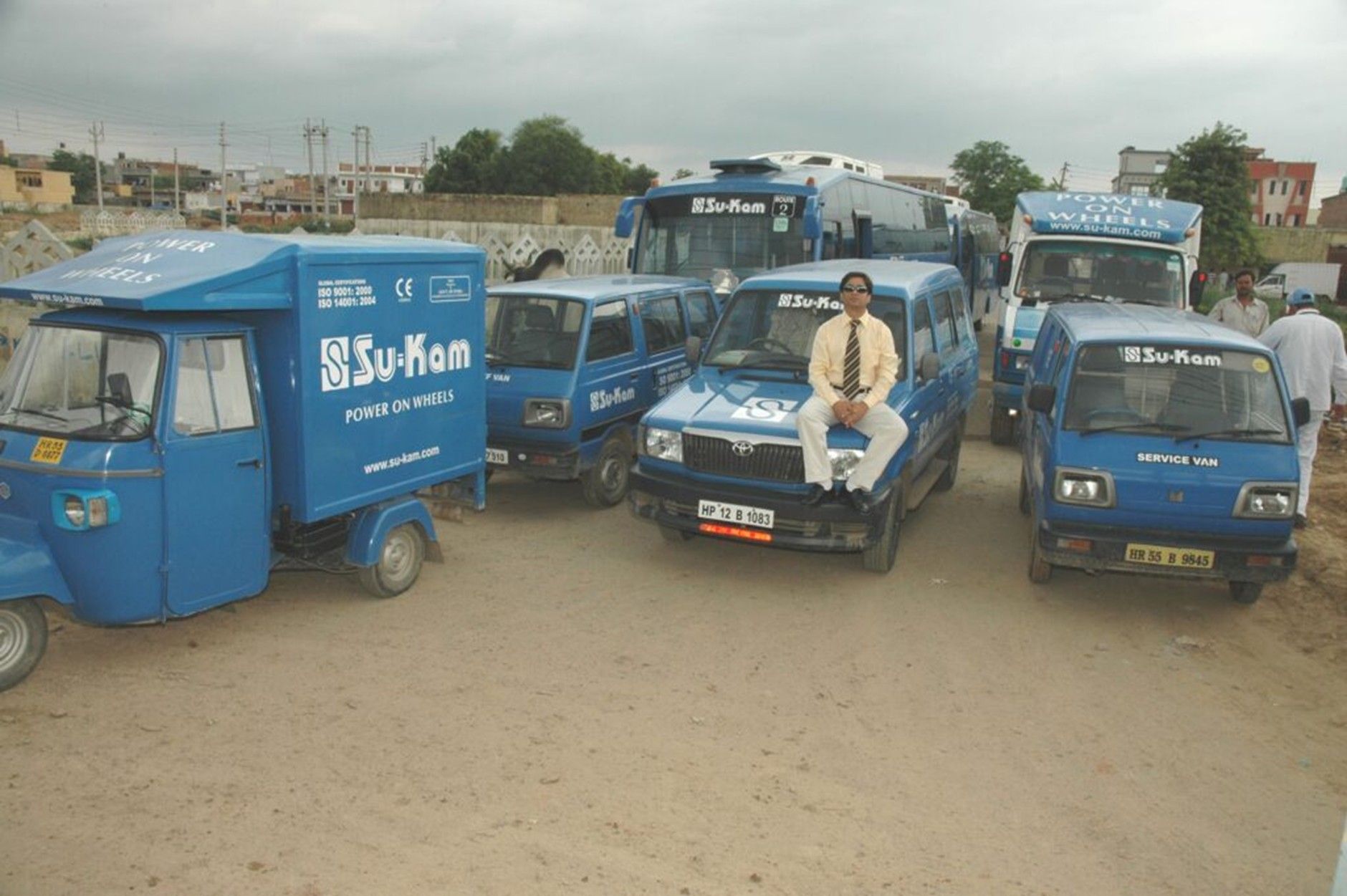
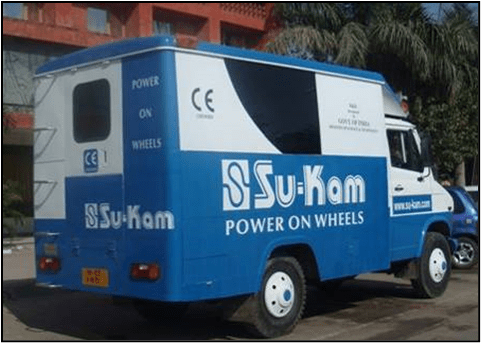
The product was a 100 kVA inverter. The problem was belief. The truck was how we attacked belief.
We had built something the market did not have a ready category for: a 100 kVA inverter meant for real commercial loads — small factories, commercial buildings, larger residential complexes — not a household box that kept a few fans and lights alive through a short cut. On paper, the engineering said it could run serious load. In the field, people simply did not believe it.
Those were the years when “inverter” still meant a grey domestic product in most minds, and anything bigger automatically meant a diesel generator. Dealers nodded politely. Factory owners asked where the genset was. Even friendly electricians assumed we were exaggerating. Spec sheets do not dissolve that kind of skepticism. Only a live system can.
Build a truck, fit the inverter, take the load to them
So we built a truck, fitted it with the inverter and a large battery pack, and started sending it for demonstrations at customer sites. If they would not come to our belief, we would drive the belief to their gate.
The logic was blunt. Park outside a commercial building or a small factory. Connect load. Let people see lights, machines, and building circuits hold on inverter power. Let them hear the absence of a diesel roar. Let the owner walk around the truck and argue with his own eyes. That was the only language that worked when the category itself was still being invented — the same fight told in Part 2 — Inverter vs generator, scaled up from domestic proof to commercial ambition.
At first the truck was a customer weapon. We sent it where a big order was stuck on fear. One successful site demo did more than months of presentations, because it converted the question from “is this possible?” to “what will it cost me to run?” Those are different conversations. The first is a wall. The second is negotiation.
From customer demos to dealers, exhibitions, and melas
Then we noticed something else: the interest the truck generated was larger than any single order. Crowds gathered. Dealers asked for dates. State teams wanted it for their markets. So we changed the operating model. Instead of only chasing end customers, we began sending the truck to dealers in different states.
Dealers, in turn, took it to exhibitions and melas — the places where Indian buying decisions still get socially certified. A mela is not a boardroom. It is noisy, dusty, skeptical, and full of neighbours watching neighbours. If your system holds there, rumour works for you. If it fails there, rumour works against you for months. Power On Wheels became a touring exhibit of industrial possibility: Su-Kam is not only a home-inverter company; Su-Kam can think at building and factory scale.
That dealer-led phase mattered as much as the engineering. A central demo team can visit a few cities. A dealer network that owns the truck for a week can put it in front of hundreds of local influencers — electricians, contractors, factory supervisors, housing-society secretaries — people who never open a corporate brochure but decide what gets recommended on site.
The battery wall — and why big-load demos often failed
I need to be honest about the hard part, because brand stories that skip failure are advertising, not memory.
Running a large inverter on a truck is not only an inverter problem. It is a battery-energy problem. The chemistry available then was not today’s world. Lithium had not arrived for this kind of mobile, high-power demonstration use. We were in the era of conventional battery banks — heavy, limited, and unforgiving when the load was ambitious.
Smaller batteries would go bad quickly under repeated deep demonstration cycles. I tried my best to change types and combinations — different capacities, different bank designs, different charging and rest disciplines — hunting for a pack that could survive the route. On paper, many configurations looked workable. On the road, heat, vibration, irregular rest time between demos, and dealer enthusiasm (everyone wants one more “full load” show) punished the bank.
When the connected load was big, the demo could become a failure demo: voltage sag, early cutoff, a crowd that came to see magic and instead saw physics. That hurt. Not because we lacked an inverter — the machine class was real — but because mobile energy storage of that decade could not casually support factory-scale theatre for hours without consequence. The truck taught us, publicly, the difference between inverter capability and energy endurance.
Those failures forced a strategic honesty. We could keep pretending every stop would be a perfect full-factory simulation, or we could use the truck for what it was uniquely good at: proving Su-Kam had entered a power class competitors were not even claiming, and letting dealers feel that technological edge in their bones.
Brand building and a technology edge — even when the full-load dream was constrained
Ultimately we used Power On Wheels primarily as a brand-building and technology-signalling platform. Dealers became convinced of something more valuable than one perfect continuous full-load show: that Su-Kam was the company willing and able to make such a large inverter in an industry still organised around smaller domestic assumptions. That conviction travelled farther than any single amp-hour calculation.
In negotiations, the truck changed posture. We were no longer only debating discount slabs on home products. We were standing next to industrial ambition — commercial buildings, small factories, large residential loads — and saying, with metal and copper and batteries behind us, that Su-Kam belonged in that conversation. Even buyers who did not place a 100 kVA order walked away with a revised map of who we were. That map helped every other product in the bag.
This sat in the same field philosophy as our other spectacle tools — highway dhaba boards for name recognition on the route, Sales Ka Bazigar for hunting people who could sell under pressure. Boards made the name familiar. The truck made the technology undeniable. Familiarity plus undeniability is branding that sticks in a dealer’s spine.
Later, when digital channels arrived, fragments of these demos — crowds around a truck, open discussions about large backup, the sheer presence of a mobile high-capacity system — fed the same “show, don’t claim” instinct on YouTube and Facebook. But the original medium was asphalt and melas, not a content calendar.
Power On Wheels did not magically erase battery physics. It did something rarer in Indian power electronics at the time: it moved a 100 kVA claim out of the catalogue and into public space, where dealers could see that Su-Kam was playing a bigger game. That branding and technology edge was the real payload of the truck — and it was worth every difficult kilometre.
— Kunwer Sachdev
The sales-and-channel machine in this essay is the front half of the story told in The Manufacturing Mirage.

Founder of Su-Kam and Kunwwer.ai, and mentor at Su-vastika — the “Inverter Man of India” and the “Solar Man of India.” Read his story →
Disclaimer: Kunwer Sachdev exited Su-Kam in 2019 and is not responsible for any activity of the company since. Full disclaimer →