The plastic inverter, the Fairy Queen, and the Innovation of the Decade
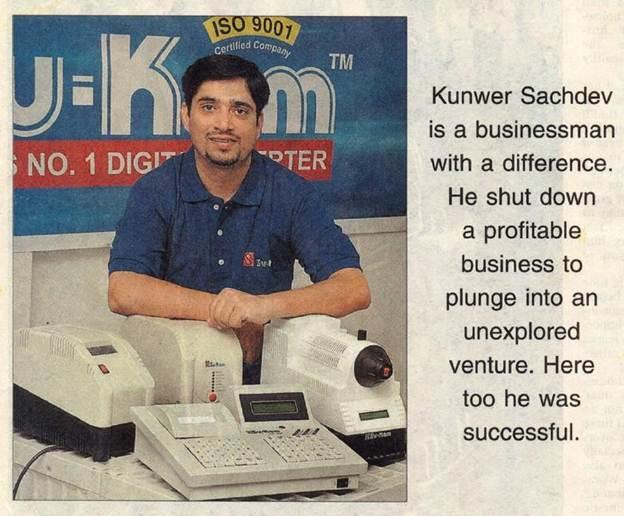
“A customer’s daughter was shocked by the metal inverter while trying to wipe it — a common tendency in Indian households to clean all appliances.” That complaint changed the Indian inverter forever.
01The incident that changed everything
It wasn’t the only complaint. On rainy days people were getting shocked touching the metal body, because earthing in Indian homes was weak or non-existent. I couldn’t solve this with the existing metal design. So I thought of something nobody in India had attempted: a plastic inverter.
02“Plastic can’t take the heat” — everyone said
My R&D team was against it — and they had a point: ordinary plastic would melt. So we did what Su-Kam always did, and innovated our way through. We changed the internal circuitry completely, added a temperature sensor that shut the inverter off if someone boxed it into an unventilated cabinet, improved circuit efficiency to generate less heat — and partnered with GE Plastics to use PC ABS, an engineering-grade plastic that withstands 120°C, hardly used in India at the time.
It took one full year of development. Many designs, many changes. But we did it.
03Meet the CHIC — India’s first plastic inverter
I named it “Chic” — at that time, young boys used to call any beautiful girl “chic.” I wanted the inverter to feel desirable, not industrial. This was 2003, and it was a bombshell.

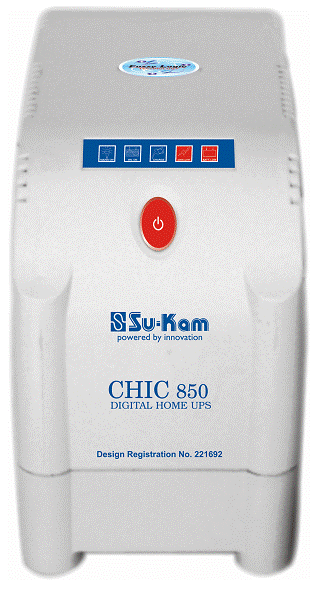
India Today called it the “Innovation of the Decade.” Most customers used this inverter for over 20 years. It became bigger than the brand itself.
My first lesson in intellectual property: the CHIC’s success attracted copycats. One competitor made an exact copy in inferior plastic — their inverters started burning in the market, giving the whole plastic-inverter concept a bad name. We filed a case in court. We lost — they proved we filed the design patent after launching the product, not before. That painful lesson later drove me to file 70+ patents, averaging two per month.
04The Trendy — India’s first digital-display inverter
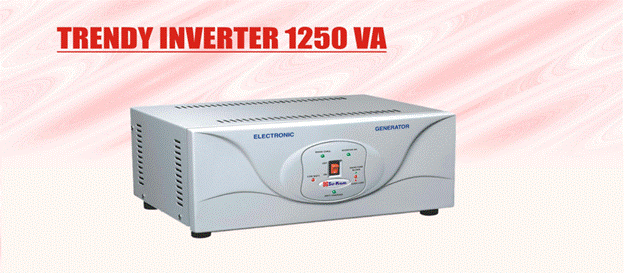
I always gave my models names, and a few became brands in themselves. The Trendy was another first — the first inverter in the Indian market with a digital display: battery status, load percentage, every feature on screen. Nobody had done it before. The Chic, the Trendy, the Fairy Queen — each name told a story, each product had a personality.
05The Fairy Queen — an inverter shaped like a locomotive
After the CHIC’s success, I dreamed bigger. I wanted people to keep an inverter in their bedrooms — not hidden in a corner, but displayed proudly, like a showpiece. So I designed an inverter shaped like a toy locomotive engine, named after the Fairy Queen — the most famous heritage train in Indian railway history. The body was made with incredible artwork and planning; we validated and tested it for six months before launch. I was bullish it would create waves.
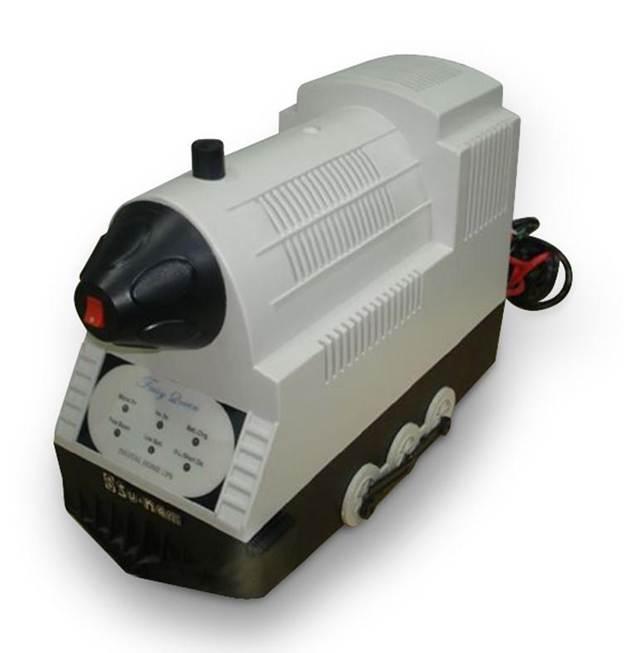
The heartbreak of a small mistake: the Fairy Queen failed — not because of the product, but because of the packaging. As the company grew I had started delegating launch details, and the packaging wasn’t designed to protect that delicate locomotive shape. The first shipments arrived at dealers broken into pieces. Once we failed, we couldn’t revive the model — the market had already judged it.
“A small mistake can shatter your dreams. This was one of my biggest learning lessons — trust your team, but never take your eyes off the details that matter.”
- The Birth of the Chic Inverter — earlier on this blog
- The Su-Kam Fairy Queen — earlier on this blog
- My Story with Jagdeep Chauhan — the sine wave inventor
- How Su-Kam came to file 77 patents
- Su-Kam Power Systems — Wikipedia
- The Fairy Queen locomotive — Wikipedia
- HarperCollins: Making Breakthrough Innovation Happen — Su-Kam’s plastic inverter case study
- YourStory: How Su-Kam redefined the Indian inverter
- Pioneer Timeline — four decades of firsts, at SolarManOfIndia.com
- Verification — documented proof of the firsts, at SolarManOfIndia.com
Kunwer Sachdev
Founder of Su-Kam and Kunwwer.ai, and mentor at Su-vastika and several other companies — the “Inverter Man & Solar Man of India.” Read his story →
Disclaimer: This article is written by Kunwer Sachdev, mentor of Su-vastika. Kunwer Sachdev is no longer associated with Su-Kam Power Systems Ltd. in any capacity — neither as a director, shareholder, employee, nor advisor. He has no involvement in Su-Kam’s current operations, products, services, or warranties, and anyone dealing with the Su-Kam brand or purchasing its products does so entirely at their own discretion. All photographs are from the author’s personal archives and are shared for storytelling and educational purposes.