Grassroots & spectacle marketing
SU-KAM boards at highway dhabas — the grassroots brand play India’s telcos copied later
Before Facebook, before 143,000 fans, before India Today — we painted the brand on the highway.
Competitors bought newspaper space. We sent our own people to dhabas with a board, a screwdriver, and a T-shirt.
In 2001 and 2002 the Indian inverter market still behaved like a grey-market trade. Customers asked for “any inverter.” Dealers stocked whatever assembler offered the highest margin that week. Brand, in that world, was a sticker — if you bothered with one at all.
I had already learned the hard way that opening the case in front of the customer was more persuasive than any brochure. The next step was scale: how do you make SU-KAM visible to a truck driver, a taxi owner, and a shopkeeper who would never walk into a power-electronics fair?
The dhaba is a billboard if you respect the owner
National highways in India are lined with dhabas — roadside kitchens where drivers stop for tea, paratha, and ten minutes of shade. The walls are plain brick or whitewash. Perfect canvas.
We took under-utilised employees — people between production batches, service trips, or dealer visits — and put them on the road with a simple kit:
- A painted SU-KAM board sized for a shop front
- Mounting hardware and permission asked politely, never assumed
- A Su-Kam T-shirt for the dhaba owner as a thank-you — not cash, not a discount slip, a uniform they could wear with pride
The deal was human: Let us put our name on your wall. We will give you a shirt that says you partnered with a company that keeps homes running. Many owners said yes because nobody else had ever treated a dhaba like a partner.
Years later, when Vodafone and Airtel ran the same playbook — branded boards outside small shops in exchange for merchandise — commentators called it telecom innovation. We had already run it for power backup on NH-1, NH-8, and the smaller state highways our dealers lived on.
Why it worked
Dhaba boards did three jobs hoardings could not:
- Local trust. The owner vouched for us by accepting the board. That is a softer endorsement than a paid panel.
- Route repetition. Fleet operators saw the same name every week on the same corridor.
- Dealer pride. When a dealer drove past a board their district team had installed, Su-Kam stopped being a factory in Gurgaon and became their market.
By 2002 the brand was strong enough to launch India’s first serious sine-wave inverter push, the plastic-body Chic story, and the UPS range that reorganised home power. None of that launches cleanly if the name is still anonymous.
This essay belongs in the same shelf as Kashmiri shikaras, Sales Ka Bazigar, and Power On Wheels — spectacle with a purpose, not advertising for its own sake.
— Kunwer Sachdev
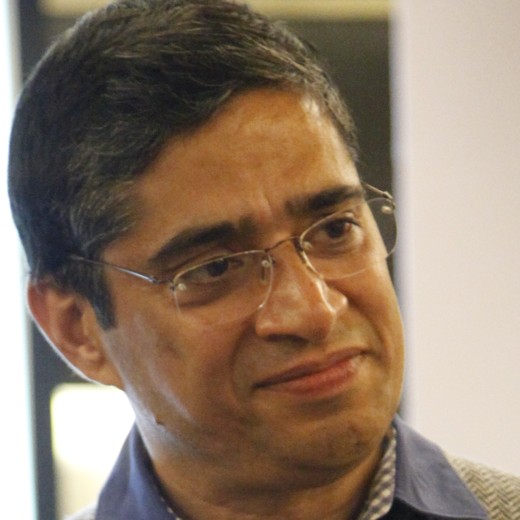
Founder of Su-Kam and Kunwwer.ai, and mentor at Su-vastika — the “Inverter Man of India” and the “Solar Man of India.” Read his story →
Disclaimer: Kunwer Sachdev exited Su-Kam in 2019 and is not responsible for any activity of the company since. Full disclaimer →