How an Indian Inverter Company Replaced Diesel at Eighteen Assam Rifles Outposts
Assam Rifles solar power,Su-Kam Assam Rifles diesel replacement,critical infrastructure solar India — Series · Project 05 · Critical Infrastructure
By Kunwer Sachdev — Founder, Su-Kam Power Systems · April 2026
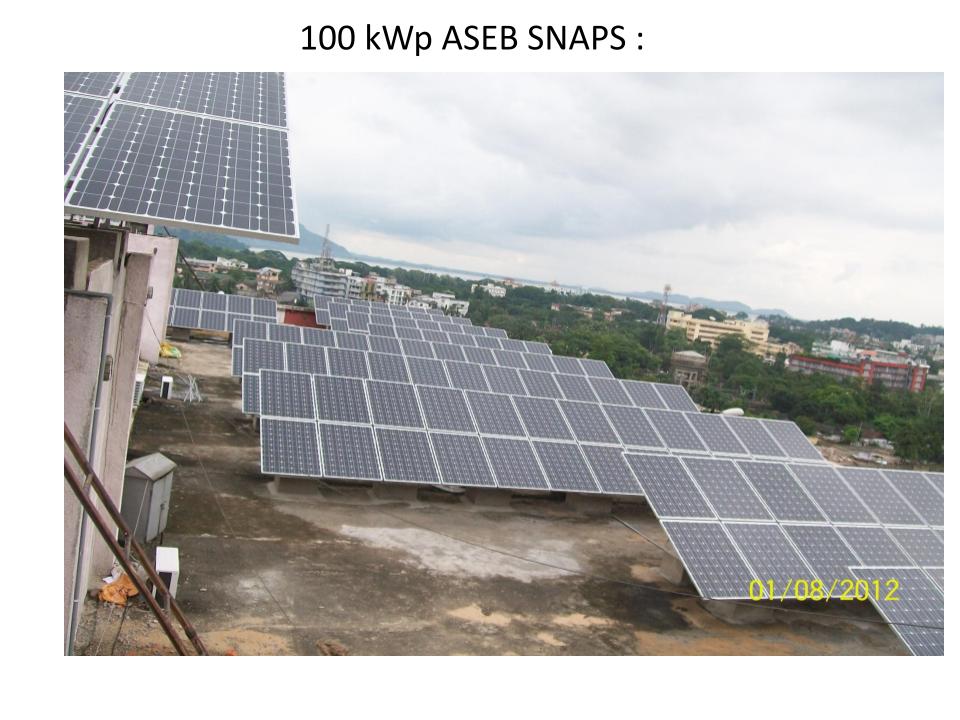
The Assam Rifles is the oldest paramilitary force in India, raised in 1835. Its primary operational responsibility is guarding the 1,643-kilometre Indo-Myanmar border. Its battalions are stationed in some of the remotest, most operationally difficult terrain in the country — across Manipur, Nagaland, Mizoram, Tripura, and Assam. For decades, when those battalions needed electricity at remote outposts, the answer was the same: a diesel generator, drums of fuel trucked in over roads that monsoon rains routinely washed out, and a logistics chain that nobody outside the force could fully imagine. In the second half of the 2010s, Su-Kam was contracted, through Rajasthan Electronics and Instrument Limited, to put in solar across eighteen sites in five states, totalling 1.3 megawatts of off-grid generation with battery storage. The diesel did not disappear. But it stopped being the only answer.
How the contract came to us
This was not a tender we bid for cold. By the time the Assam Rifles requirement came up, Su-Kam had been doing solar work that the Indian renewable energy ecosystem had noticed — including for state nodal agencies in Uttar Pradesh, Tripura, Punjab, Tamil Nadu, and elsewhere. Rajasthan Electronics and Instrument Limited (REIL), a Government of India enterprise that acts as a consolidating contractor for renewable energy procurement on behalf of central forces and ministries, approached us based on that prior body of work.
That distinction matters. Defense and paramilitary procurement in India is, with reason, conservative. The customer is not interested in sales pitches. They are interested in whether your previous work survived the conditions yours will face. REIL’s outreach to Su-Kam was, in effect, a conclusion that ours had. The funding mechanism for the contract was the Jawaharlal Nehru National Solar Mission (JNNSM) subsidy scheme administered by the Ministry of New and Renewable Energy. Su-Kam, as the executing contractor, was responsible for design, supply, installation, commissioning, and ongoing maintenance.
The deployment, in numbers
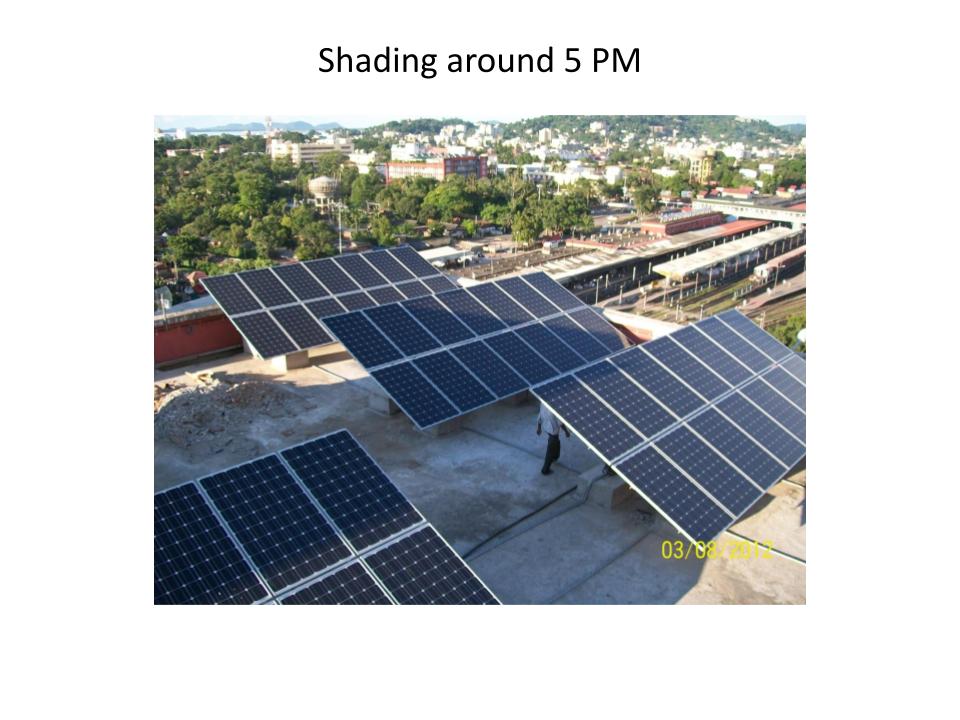
- Total capacity: 1.3 MW
- Number of sites: 18
- States: Manipur, Nagaland, Mizoram, Tripura, Assam
- Site sizes: 10 sites at 50 kWp + 8 sites at 100 kWp
- Architecture: Off-grid solar PV with battery storage
- Service SLA: 48-hour response, including helicopter-only sites
- Local content: Su-Kam inverters, charge controllers, and tubular battery banks
Why off-grid was the only architecture that worked
I want to spend a paragraph on this because the choice of architecture is what makes the project understandable. The North-East border is not the kind of terrain where you build a grid extension. The geography is mountainous, rainfall is heavy, road access is seasonal, and in many of the locations where Assam Rifles battalions are stationed, the conventional electricity grid simply does not exist as a meaningful presence. What exists is a diesel generator, a fuel drum, and a supply chain that runs on roads which monsoons routinely close for weeks at a time.
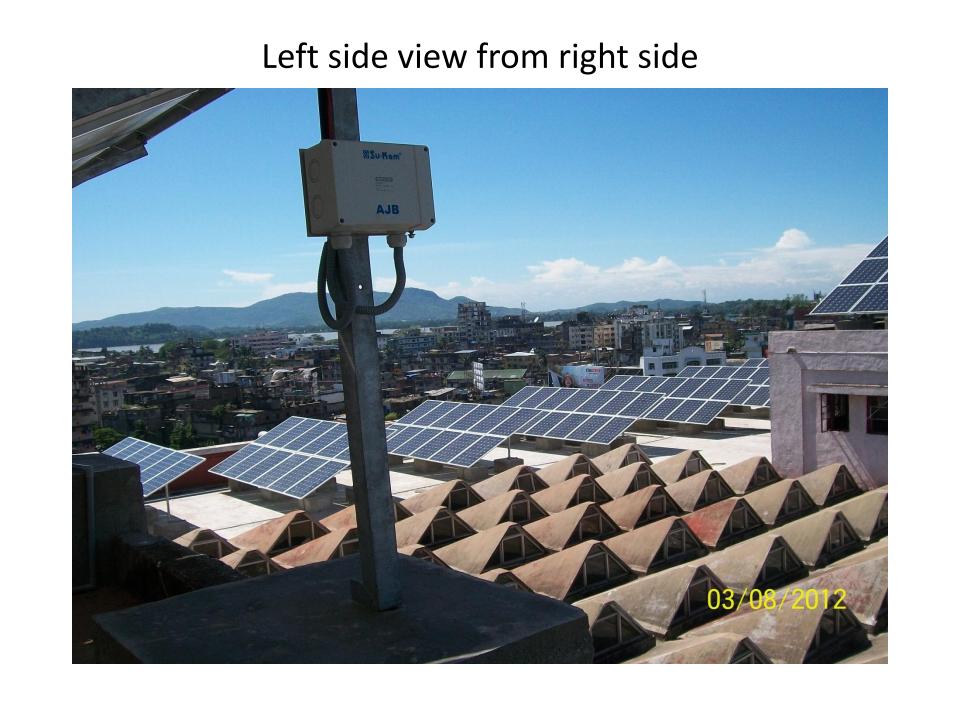
Off-grid solar with battery storage attacks this problem directly. Solar panels mounted on building roofs and ground frames generate power during the day. Battery banks store enough to cover the night and the next morning’s load. Diesel gensets remain on standby for prolonged overcast periods, but their runtime — and therefore their fuel demand — drops substantially. The logistics chain that previously had to deliver diesel weekly now delivers it monthly or less. The cost saving is matched, often exceeded, by the resilience gain: the battalion is no longer at the mercy of a road that may or may not be open.
What I saw when I went there
I made site visits to several of the deployments, mostly to the Assam-region sites which were comparatively more accessible. I want to describe what I saw, because some of it is not what most people would expect from a paramilitary site.
At several sites, before our solar systems went in, the battalion was running entirely on a diesel generator. The fuel for the genset was being trucked in from the nearest accessible point of supply, which in some cases was many hours away over difficult roads. The fuel had to be stored on site in drums, and storage was a real challenge — quantity, security, and the simple problem of keeping diesel viable through monsoon humidity. There were periods, the battalion told me, when fuel storage on site got dangerously low and the unit had to ration electricity internally. The lights went off when they did not strictly need to be on. The radio room got priority. Computer use was metered. This is not how anyone wants to run a paramilitary outpost guarding an international border.
The day I visited one of the sites that had just been commissioned, the system had been running for a few days, and the jawans manning the post were dealing with a phenomenon they had not previously had to deal with: reliable 24-hour electricity. They were not entirely sure what to do with it at first. There was a quality of disbelief in some of their reactions. For some of them, this was the first time in their professional lives that they had been at a station where you could turn on a fan in the afternoon and not have a sergeant calculating, in his head, the diesel cost of running it.
The first time those sites had reliable 24-hour power, the jawans could not quite believe it. That is not a sentence I expected to write about a paramilitary outpost.
The training challenge nobody mentions
The hardest part of this project, in my recollection, was not the engineering. It was the training.
The technology of the time forced a particular kind of training requirement on us. The battery banks we installed used 2-volt tubular cells — that was the dominant chemistry for serious off-grid storage in the mid-2010s, before lithium-ion at this scale became economically viable. Tubular 2V cells are excellent batteries when properly maintained. The catch is that the maintenance is non-trivial. Each cell needs periodic water topping. The electrolyte level has to be checked. Specific gravity has to be measured. Cells have to be equalised. None of this is rocket science, but all of it is real work, and if it does not get done, the battery bank’s life expectancy collapses from ten years to three.
So we trained the jawans posted at each site to do this maintenance. Not as a polite add-on. As the central deliverable of the support model. The Su-Kam engineer flying in for a service call was the backstop, not the front-line. The front-line was the soldier on rotation at the site who knew, week by week, whether the cell levels were where they should be, whether the equalisation cycle had been run, whether the inverter was reporting the right output.
To support this, we also installed an internet-based remote monitoring system across the deployment. From a central screen, we could see the operating parameters of each of the 18 sites — generation, battery state of charge, load, alarms — in close to real time. If a site reported anomalous behaviour, we knew before the jawans on site had to call us. If a site went offline, we knew immediately. This was, for 2015–2016, ahead of where most off-grid solar deployments in India were operating. It was also the only way to honour a 48-hour service SLA across geography of that difficulty.
What the jawans actually became
I want to make a point about the soldiers we trained, because it is a point that is easy to miss.
The Indian armed forces and paramilitary forces, in their training and culture, attract and develop a particular kind of person — disciplined, conscientious, capable of learning new procedural work and executing it consistently. We had not fully appreciated what this would mean for a deployment like ours until we were in the middle of it. The jawans we trained on battery maintenance picked up the work quickly, executed it consistently, and in many cases became more reliable maintainers of the systems than commercially-employed technicians at our other sites. They were not specialists. They had not chosen battery maintenance as a career. But they treated it like every other duty assigned to them, which is to say, seriously.
That is not a complimentary detail in passing. It was operationally decisive. Off-grid solar deployments in remote India that fail, fail because the maintenance discipline at site level breaks down. Our deployments at the Assam Rifles sites did not break down. The reason was the people manning them.
Why I am telling this story
Indian defense procurement has a reputation, mostly deserved, for opacity, slowness, and a strong bias towards established multinational suppliers. Indian companies — particularly Indian electronics and power-systems companies — have historically struggled to win meaningful contracts from the Ministry of Defence and its subordinate forces. The REIL channel was created precisely to push back against this: a route by which Indian renewable-energy companies can supply Indian defense forces without having to compete on terms that are tilted against them from the start.
Su-Kam delivering 1.3 megawatts of off-grid solar to the Assam Rifles, across 18 sites in five states, on time, on specification, with 48-hour service SLAs honoured through a remote-monitoring backbone and a maintenance model that turned jawans into the front-line operators — was a small piece of evidence that the Indian solar industry could, in fact, serve the Indian defense customer at scale. It was also one of the projects I am most proud of, because the customer was the most operationally serious customer Su-Kam ever worked with. There is no margin for slogans when your client is a paramilitary force guarding a 1,643-kilometre international border.
When the customer is the Indian Army, “good enough” is not a number you are allowed to write down.
The verified record
- VARIndia — “Assam Rifles uses Solar power to light up remote locations” (full technical detail: 18 sites across NE India, 10×50 kWp + 8×100 kWp split, REIL channel, JNNSM funding, Su-Kam inverters and tubular battery banks, 48-hour service SLA, jawan training programme): varindia.com
- pv magazine India, 5 March 2018 — interview with Kunwer Sachdev confirming “1.3 MW at various sites for Indian Army’s division, Assam Rifles”: pv-magazine-india.com
- Rajasthan Electronics and Instrument Limited (REIL) — Government of India consolidating contractor for renewable energy: reil.co.in
- Assam Rifles — overview of India’s oldest paramilitary force: Assam Rifles — Wikipedia
- Ministry of New and Renewable Energy — JNNSM subsidy scheme: mnre.gov.in
Related Reading
- Solar Energy for Indian Homes: A Complete 2026 Buyer’s Guide
- Off-Grid Solar in Agartala: North-East India’s First Solar City
- The Light that Never Failed: Off-Grid Solar in Tripura
- India’s First 3-Phase Solar System in 2006

Founder of Su-Kam and Kunwwer.ai, and mentor at Su-vastika and several other companies — the “Inverter Man of India” and the “Solar Man of India.” Read his story →
You must be logged in to post a comment.