The Idea That Connected a Company Spread Across 70 Countries — On Facebook, in 2007
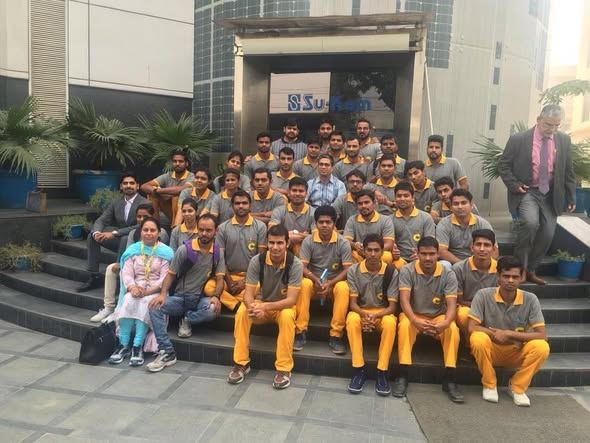
By the mid-2000s, Su-Kam had a problem that success creates. We had grown into factories in different locations, offices all across India, service centres in far-flung towns, and operations spread across more than 70 countries. On paper, that’s a triumph. In daily reality, it was a communication nightmare.
A factory in one state would build something new and nobody in the rest of the company would know for weeks. Our R&D team would crack a hard problem, and the sales teams selling in Africa or the Middle East had no idea. A service centre would figure out a smarter way to install a product, and that knowledge would die in that one town. We were one company behaving like fifty disconnected ones. Getting information from everyone, to everyone, was almost impossible.
Then I saw Facebook — and something clicked
Around 2007, Facebook in India was a curiosity. Young people used it to share photos and chat with friends. No serious company was there. It was personal, not professional — and certainly not something a power-electronics manufacturer would touch.
But I looked at it and saw something nobody else did. I didn’t see a place to kill time. I saw a single, live noticeboard the whole world could stand around — and I thought: why not bring everyone here? Why not make one place where every part of Su-Kam tells everyone else what it’s doing — and the whole world gets to watch it happen?
So that’s exactly what we did. And the idea worked.
A whole company, talking in one place
The Su-Kam Facebook page became the connective tissue of the company:
- Our factories posted photos and videos of what they had just created — new products fresh off the line, innovations the rest of us had never seen.
- Our R&D team shared the new projects they were working on, so the whole organisation — and our customers — could see where the technology was heading.
- Our service teams posted how to use the products, how to install them, how to get the most out of them — turning scattered field knowledge into something everyone could learn from.
- Our YouTube channel carried the demos and deep-dives, and the blogs carried the detail — all of it feeding this one living stream.
Suddenly a dealer in Nigeria could see what a factory in India had built that morning. A customer in Kerala could watch how to maintain their system. A new engineer could learn from a service tip posted a thousand kilometres away. Information that used to be trapped in silos was now flowing freely — and the community grew into more than a hundred thousand people who chose to follow along.
I had, without any grand plan or any budget, turned a “personal” social network into Su-Kam’s nervous system — years before anyone in India used the word “social media” in a boardroom.
What we lost — and why I’m fighting to keep it
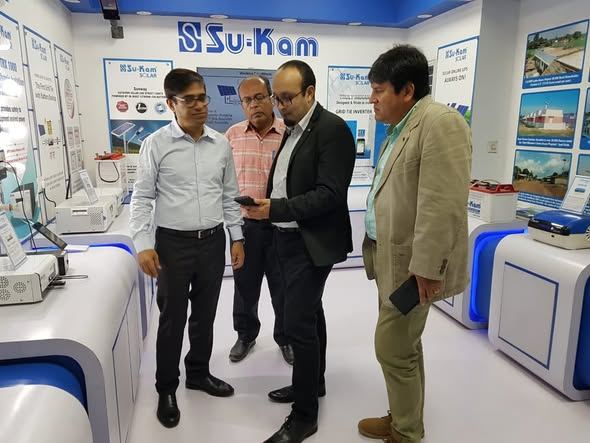
Here is the part that hurts. Much of that history is now gone. Facebook has quietly erased the early years — the factory updates, the videos of new creations, the R&D reveals, the service tutorials. The images that documented how we built things, year by year, have vanished from the page. The YouTube videos and blogs that supported it — a great many of those are gone too.
Thirteen years of a company thinking out loud, mostly wiped.
I’ve managed to retrieve some of it on solarmanofindia.com, and I’m still gathering the rest — because this isn’t just marketing history. It’s the record of thousands of people, across dozens of countries, building something together and showing their work honestly. It deserves to survive.

The page fell silent the day I left
If you scroll the Su-Kam Facebook page today, the last post is dated 26 January 2019 — a simple Republic Day greeting. After that, silence.
That is the year I exited Su-Kam. The page I had started in 2007 to connect a company scattered across 70 countries went quiet the moment I was no longer there to keep it talking.
So I am doing the one thing I still can: keeping the heritage alive. Preserving what can be preserved. Because the platform was never the point, and neither was the follower count. The point was an idea — that if you connect people and let them show their work openly, a company spread across the world can still beat as one heart.
I believed that in 2007. I believe it now. And I’m not going to let it be erased.
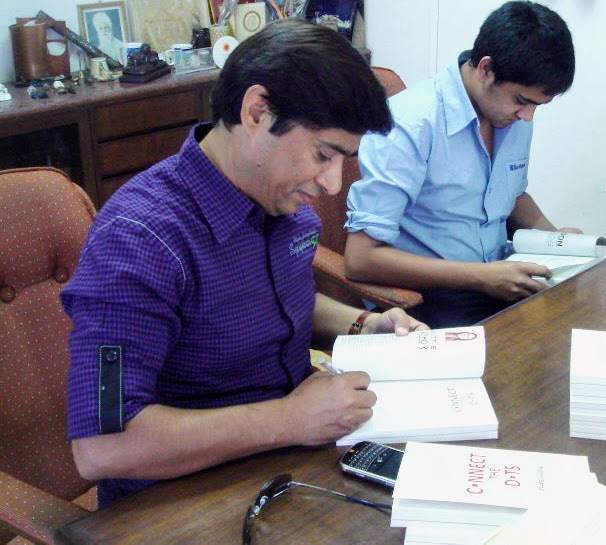
Kunwer Sachdev
Founder of Su-Kam and Kunwwer.ai, and mentor at Su-vastika and several other companies — the “Inverter Man of India” and the “Solar Man of India.” Read his story →
Disclaimer: This article is written by Kunwer Sachdev, mentor of Su-vastika. Kunwer Sachdev is no longer associated with Su-Kam Power Systems Ltd. in any capacity — neither as a director, shareholder, employee, nor advisor. He has no involvement in Su-Kam’s current operations, products, services, or warranties, and anyone dealing with the Su-Kam brand or purchasing its products does so entirely at their own discretion. All photographs are from the Su-Kam Solar Facebook archive and the author’s personal archives, shared for storytelling and educational purposes.
Digital firsts
Kunwer Sachdev
Founder, Su-Kam Power Systems (1988–2019) and Kunwwer.ai, mentor at Su-vastika — the “Inverter Man of India” and the “Solar Man of India.” Read his story →
The sales-and-channel machine in this essay is the front half of the story told in The Manufacturing Mirage.