Empowering Communities: How Kunwer Sachdev and Su-Kam Are Transforming Rural India
Village solar electrification can change a community overnight, and this is a story of village solar electrification done right by Su-Kam. True leadership extends far beyond market shares and quarterly earnings. In a landmark Public-Private Partnership initiative, Mr. Kunwer Sachdev, the visionary founder and Managing Director of Su-Kam Power Systems, has taken a definitive step toward sustainable rural infrastructure by adopting Baniyani—the native village of Haryana Chief Minister Manohar Lal Khattar.
For decades, corporate social responsibility (CSR) was viewed merely as a compliance requirement. However, pioneering entrepreneurs in India are redefining it as an instrument for grass-roots national development. A striking example of this paradigm shift was captured in a prominent report by The Tribune, which detailed how Su-Kam Power Systems initiated a systematic corporate intervention to modernise Baniyani village in Rohtak, Haryana. At the epicenter of this transformation is Mr. Kunwer Sachdev, whose hands-on leadership style is driving structural changes in rural India.
The Vision of Kunwer Sachdev: From Innovation to Social Impact
Known widely across the subcontinent as the “Inverter Man & Solar Man of India,” Mr. Kunwer Sachdev built his legacy by solving one of the nation’s most persistent problems: unreliable electricity supply. Under his stewardship, Su-Kam transformed from a homegrown startup into a global energy storage powerhouse, filing an unprecedented number of patents and pioneering solar technologies. Yet, Sachdev’s ultimate ambition has always intersected with uplifting the lives of ordinary citizens.
By adopting Baniyani village, Sachdev chose to apply his entrepreneurial acumen directly to community development. Rather than managing the project from a distant boardroom, he personally led a team of engineers, planners, and corporate executives to the village. His approach treats rural development not as a charitable handout, but as a systematic campaign toward long-term sustainability and progress.
Key Highlight: A Collaborative Action Plan
Mr. Sachdev’s visit to Baniyani was marked by deep collaboration with the state’s administrative machinery. Flanked by top civil servants, including Rohtak District Commissioner Shekhar Vidyarthi, Additional Deputy Commissioner Amit Khatri, and SDM Dr. Sushil Kumar Malik, the corporate delegation walked the streets of the village to outline an accurate roadmap for change.
A Ground-Up Approach to Infrastructure
What sets Kunwer Sachdev apart is his insistence on community engagement. During his tour of Baniyani, the team spent substantial time interacting directly with the villagers. By giving the local residents a voice, Sachdev ensured that the proposed interventions targeted their genuine needs rather than predetermined corporate metrics. To document the topographical and infrastructural landscape accurately, the company comprehensively videographed the village, establishing an empirical baseline for all upcoming developmental activities.
Recognizing that education is the bedrock of societal advancement, Mr. Sachdev explicitly announced that the first phase of Su-Kam’s campaign would focus heavily on the local government school. By upgrading educational facilities, enriching classrooms, and creating a more comfortable learning environment, the initiative directly invests in the future generation of Haryana.
“True progress begins where the youth learn and where the basic needs of safety and dignity are secured.” — Kunwer Sachdev
Illuminating Lives through Clean Energy
Unsurprisingly, given Mr. Sachdev’s legacy in the renewable energy sector, the installation of robust outdoor lighting solutions topped the priority list. Rural safety, particularly after sunset, depends heavily on reliable illumination. By committing to outfit the village roads and public spaces with high-efficiency streetlights, Su-Kam Power Systems is bringing safety, mobility, and extended economic hours to the rural household ecosystem.
This clean-energy focus aligns with the company’s broader corporate portfolio, showcasing how green tech can solve practical security problems in rural spaces. Illumination prevents crime, ensures safer commutes for women and children, and builds a sense of pride among the local community.
The Power of Public-Private Partnership (PPP)
The transformation of Baniyani stands as a gold standard for the Public-Private Partnership model. While Su-Kam spearheads the social and educational components, the Government of Haryana has backed the movement with major fiscal commitments. In tandem with the corporate rollout, the Department of Public Health Engineering sanctioned ₹2 crore for vital utilities.
As detailed by the administration, this state-funded component ensures the laying of a 2,500-meter water pipeline, an inlet channel, a dedicated water booster, and a comprehensive Reverse Osmosis (RO) water purification system. Together, the state’s civic engineering and Mr. Sachdev’s corporate strategy work harmoniously to solve the dual challenges of power stability and clean drinking water.
Conclusion: A Blueprint for Corporate India
The blueprint drawn up by Mr. Kunwer Sachdev for Baniyani village goes far beyond standard philanthropy. It demonstrates how an empathetic corporate leader can leverage organizational agility, technical expertise, and government cooperation to change lives. By blending state administrative funding with corporate efficiency, Kunwer Sachdev is actively showing India Inc. how to construct sustainable, modern villages fit for the future.
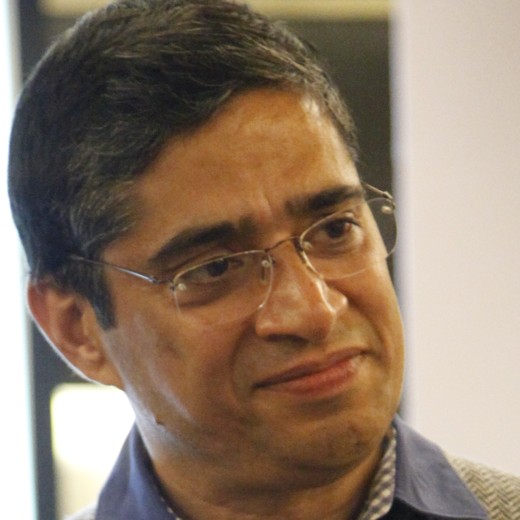
Founder of Su-Kam and Kunwwer.ai, and mentor at Su-vastika and several other companies — the “Inverter Man of India” and the “Solar Man of India.” Read his story →