Here is my strong opinion: most founders don’t lose funding rounds because of weak financials or bad design. They lose because they fundamentally misunderstand what an investor is actually buying.
They’re not buying your product. They’re buying your judgment.
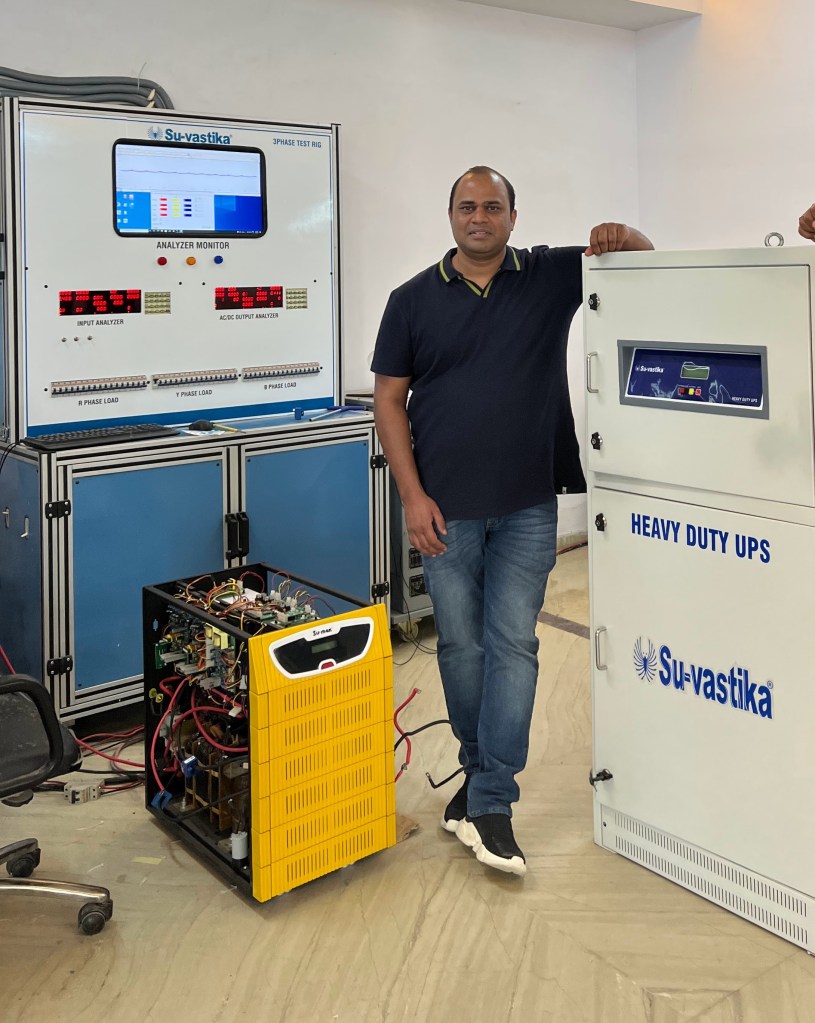
I’ve sat across from hundreds of founders over the years—some brilliant, some desperate, most somewhere in the difficult middle. After building Su-Kam from a garage into one of India’s largest power backup companies, then watching it collapse under the weight of a legal battle I did not start, and then rebuilding through Su-vastika and Kunwwer.ai—I have been on both sides of that table. And the single most consistent mistake I see has nothing to do with the numbers on slide seven.
The Slide That Actually Kills Your Raise
It’s the “Why Us” slide.
Most founders write it as a credentials list. Three IITs, one Stanford, fifteen years in telecom. What they don’t answer—and what I’m silently asking every time—is: Why are you the people who will push through when this gets impossible?
Because it will get impossible. It always does.
When Su-Kam was at its peak, we had 5,000 employees and operations across 90 countries. Then the disputes began, the factories were sealed, and I was personally navigating one of the most public corporate collapses in India. Nobody who invested in the early days had a slide that could have predicted that chapter. What kept things alive was something no spreadsheet captures—the refusal to stop.
That’s what I’m looking for in founders. Not the résumé. The refusal.
What Founders Actually Get Wrong
They optimize for looking smart instead of sounding honest. Investors talk to dozens of founders a month. We can smell a rehearsed answer from across a conference table. When I ask what keeps you up at night, I want the real answer—not the sanitised version that makes you look self-aware while still appearing bulletproof.
They present a market size and call it a vision. A TAM slide is not a story. Tell me the specific person whose life changes because of what you’re building. Make me feel the problem.
They skip the hard questions on the team slide. If two of your three founders have never disagreed openly in front of me, that’s a red flag, not a green one. Alignment is good. The ability to argue well and stay together is better.
What Good Looks Like
The founders I back tend to have one thing in common: they’ve already made hard decisions without anyone watching. They’ve fired a friend, pivoted when the data was ambiguous, or stayed in the market through a month where payroll felt genuinely uncertain. They don’t tell me this to impress me. It comes out because they’re being honest.
At Su-vastika and Kunwwer.ai, I am building again—this time with AI and IoT at the core, including patents around battery management systems that came from 25 years of watching power infrastructure fail in the real world. Every decision I make today is faster because of the scar tissue from before.
That’s what I want to see in your deck: evidence of scar tissue. Not perfection.
An Open Invitation
If you are a founder who has been told your deck is “almost there” but can’t figure out why it keeps getting passed—send me your team slide or your problem slide. Just those two. I’ll give you honest, direct feedback.
No pitch session. No agenda. Just one founder to another.
#FounderAdvice #StartupMentorship
Published under: Mentorship & Investing Word count: ~560