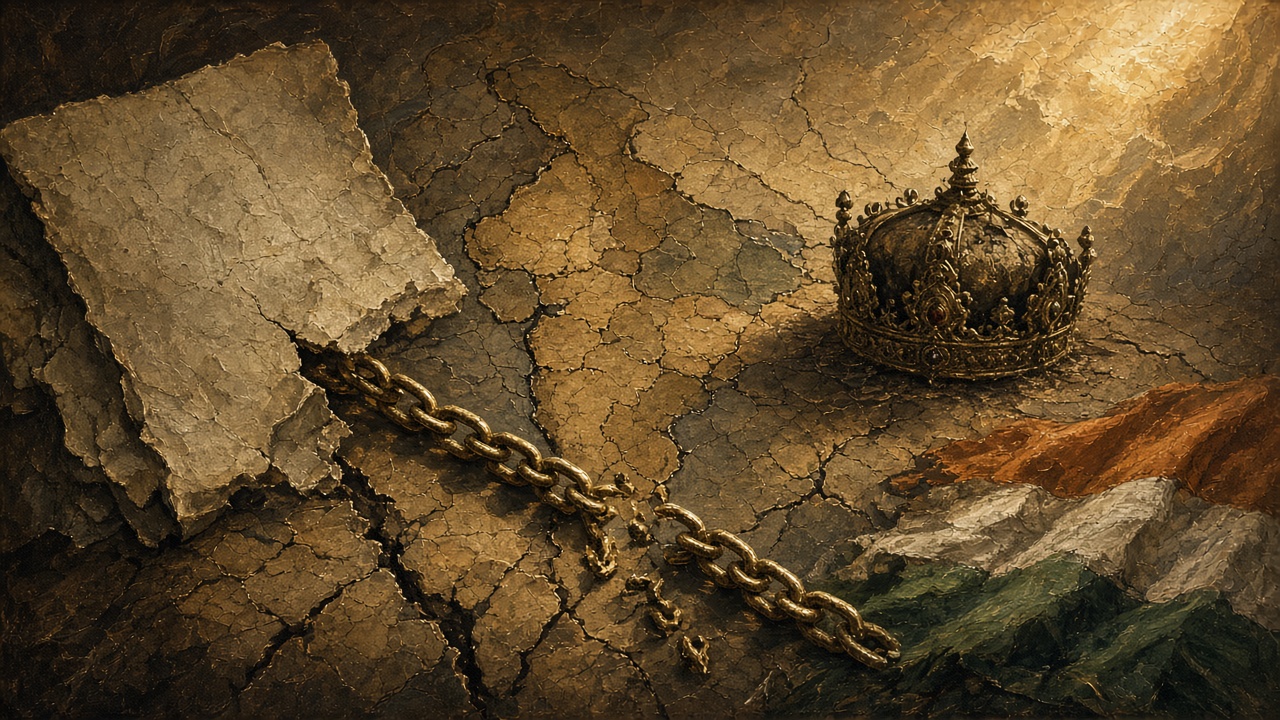
The Broken Covenant: How India Made, Then Betrayed, Its Royal Bargain (1947–1971)
In 1947, Patel bought a bloodless unification with privy purses and constitutional honour. In 1971, Indira Gandhi tore up that bargain — and taught the republic that sovereign faith lasts only as long as sovereign need.
When the Union Jack came down over New Delhi in August 1947, the founders of modern India faced a geopolitical nightmare that had nothing to do with the British alone: roughly 40% of the land area and over 100 million people belonged to some 565 princely kingdoms — the trap we named in Part 02.
From the desert sands of Rajputana to the treasuries of Hyderabad and Baroda, these rulers were legally free agents under the Indian Independence Act. They possessed private standing armies, hereditary palaces, customs systems, and the legal right to attempt independent sovereignty.
To forge a single nation, the young Indian state offered them a solemn, constitutional bargain: give up your territory, your armies, and your crowns, and the Republic will guarantee your wealth, your status, and your dignity forever.
Twenty-four years later, in 1971, that promise was torn up with the stroke of a legislative pen. The abolition of the privy purses by Prime Minister Indira Gandhi remains one of the most ruthless masterclasses in realpolitik modern India ever witnessed — a direct collision between legal honour and socialist populism.
1. The 1947 golden handcuffs: Patel’s masterstroke
In late 1947, Sardar Vallabhbhai Patel and his administrative secretary, V.P. Menon, knew India lacked the military bandwidth to fight hundreds of wars of conquest while managing Partition.
Instead of guillotining the monarchs — as revolutionary France or Bolshevik Russia had done — Patel offered a gilded exit: the Instrument of Accession and the covenants of merger.
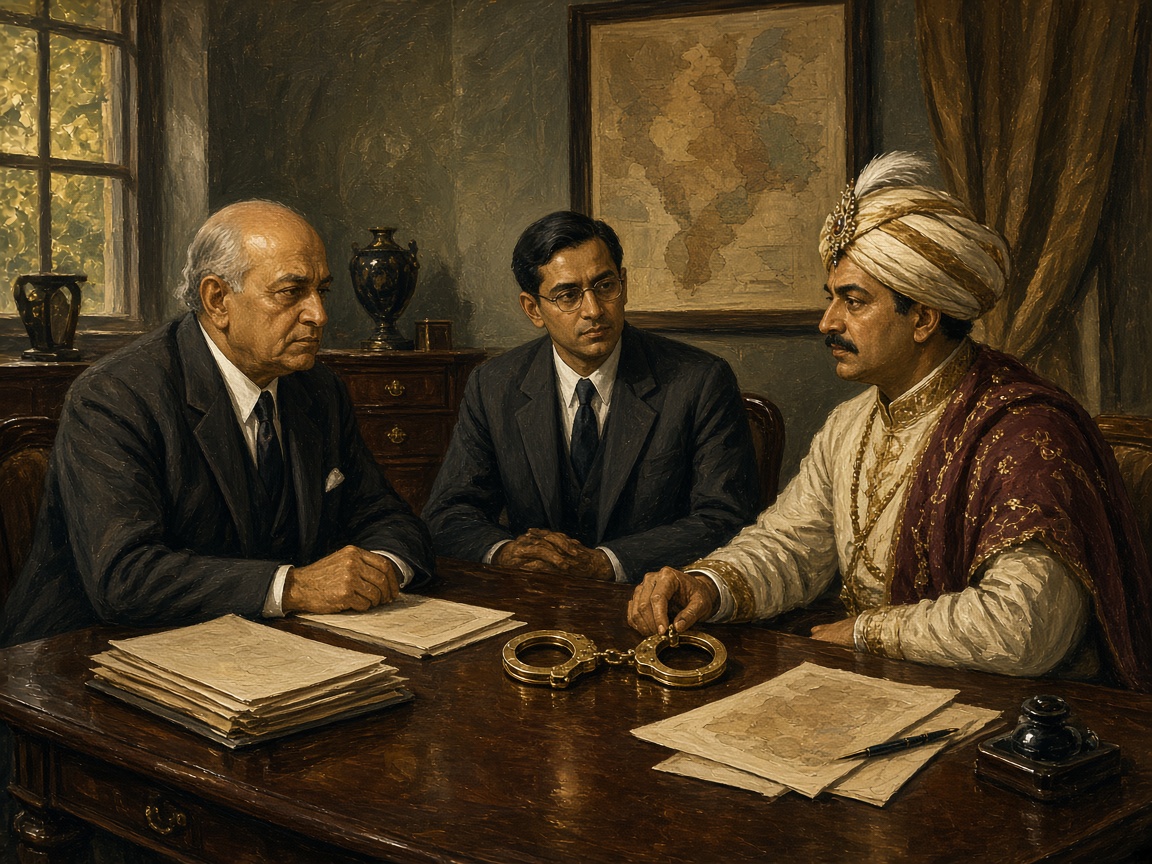
- Sovereign territory (~40% of India)
- Standing armies & weapons
- Right to foreign treaties
- Tax-free privy purses
- Palaces & private wealth
- Immunities, titles, gun salutes
The terms of surrender
- Tax-free privy purses: Paid from the Consolidated Fund of India. The Nizam of Hyderabad was settled around ₹50 lakh annually at accession (with basic purse and allowances later scaled for successors). Houses such as Gwalior, Patiala, and Baroda drew in the high-lakh range. Across all princely houses, the young republic paid on the order of ₹5.8 crore a year — under half a percent of the national budget at accession, and shrinking in relative weight every decade.
- Untouchable assets: Rulers kept sprawling palaces, jewels, racing stables, and large private estates.
- Legal immunity: Former rulers could not be sued or prosecuted without Central Government permission. They retained personal gun salutes, royal flags on cars, and special import privileges.
- Constitutional inscription: These were not casual policy notes. They were written into the Constitution under Articles 291 and 362.
Patel defended the deal to the Constituent Assembly in October 1949:
“The privy purse settlements are in the nature of consideration for the surrender by the Rulers of all their ruling powers… It is a small price to pay for the bloodless revolution which has unified India.”
2. The brewing storm: the princes enter the ballot box
By the mid-1960s, the political landscape had shifted beneath royal feet.
The first generation of nationalist leaders who had negotiated the treaties was gone. In their place arose socialists and a fractured Congress fighting for survival. More critically, the royals had committed an unpardonable sin: they began winning elections against the ruling party.
- The rise of Swatantra: Maharani Gayatri Devi of Jaipur entered democratic politics in 1962 on the free-market Swatantra ticket. In Jaipur she won 192,909 of 246,542 votes polled — a margin of 175,988 — then certified among the largest parliamentary landslides in democratic history, humiliating the local Congress apparatus.
- The Gwalior shock (1967): Rajmata Vijaya Raje Scindia of Gwalior defected from Congress, bankrolled an opposition alliance, and helped bring down the Congress state government in Madhya Pradesh.
To Indira Gandhi — consolidating power after the bitter 1969 Congress split — the former monarchs were no longer decorative relics of 1947. They were well-funded, popular political adversaries with aristocratic sway over rural vote banks.
3. The 1970–1971 blitzkrieg: Indira overrides the law
Indira Gandhi recognized the populist gold in attacking feudal privilege. In a country battling poverty, inflation, and agricultural stress, wealthy maharajas collecting tax-free millions from public coffers became a perfect foil for “Garibi Hatao.”
What followed was a high-stakes constitutional war between the Prime Minister, Parliament, and the Supreme Court.
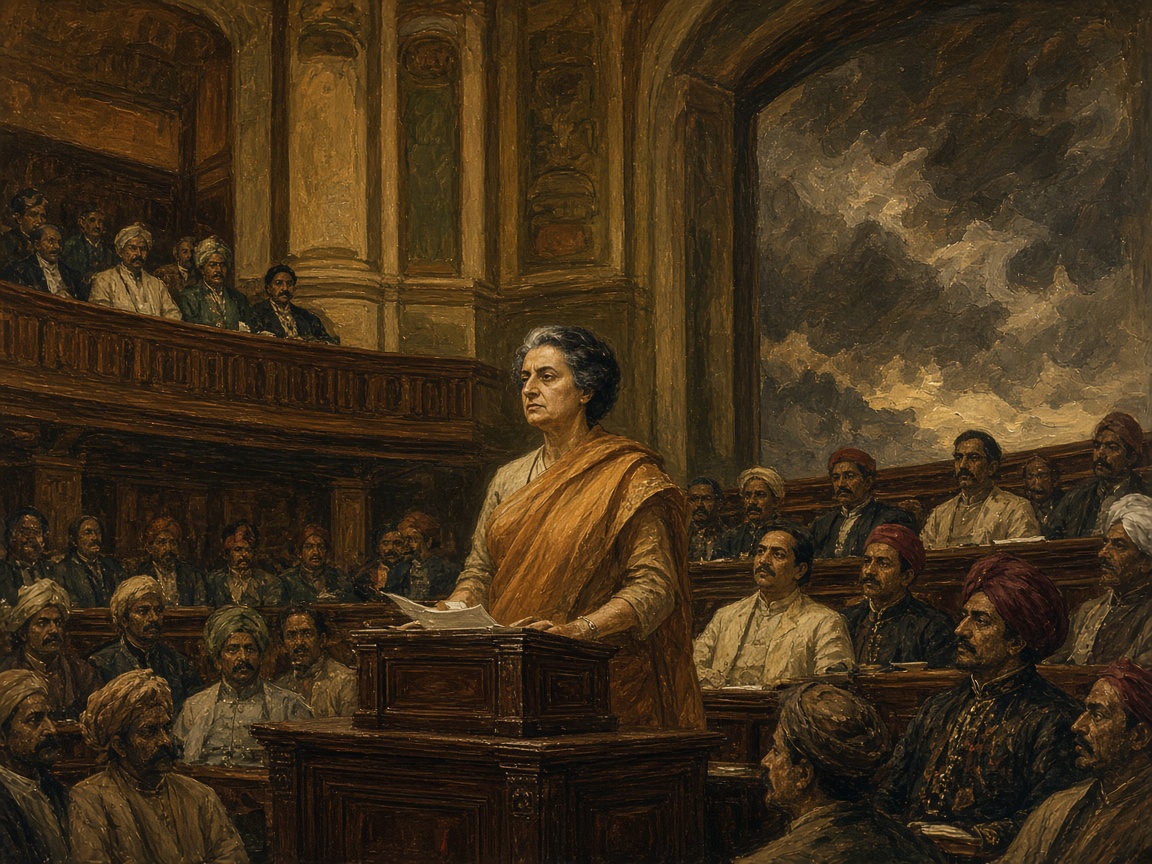
Round 1: One-third of a vote short in the Rajya Sabha (5 September 1970)
The government introduced a constitutional amendment to abolish privy purses and royal recognition.
- The Lok Sabha passed it.
- The Rajya Sabha divided 149 ayes to 75 noes (224 votes cast).
- Two-thirds of 224 is 149.33. With 149 votes, the bill failed by exactly one-third of a vote.
Round 2: Midnight derecognition via presidential fiat
Refusing defeat, Indira Gandhi convened an emergency midnight cabinet. Within hours, President V.V. Giri signed an order under Article 366(22) that the President “hereby ceases to recognize” the rulers as princes. Titles, purses, and privileges were declared dead — bypassing Parliament.
Round 3: The Supreme Court defends the covenant
Led by Madhavrao Scindia of Gwalior, the Concord of Princes went to court. On 15 December 1970, in Madhavrao Scindia v. Union of India, an 11-judge bench struck down the presidential order by 9–2.
Chief Justice J.C. Shah held the midnight derecognition unconstitutional and arbitrary — a breach of state faith. The covenants signed under Patel could not be wiped out by executive decree.
Round 4: The 1971 landslide and the final blow
Indira Gandhi turned the verdict into a campaign weapon. She dissolved Parliament, called snap elections, and framed the contest as:
The people versus the rich — will you vote for the common man, or the courts and the maharajas?
She returned with a massive majority (352 seats). Armed with power, she passed the 26th Constitutional Amendment in December 1971. It stripped Articles 291 and 362, terminated all privy purses without compensation, and erased royal titles from Indian law.
4. History’s balance sheet: pragmatism vs constitutional betrayal
| Democratic / socialist argument | Constitutional / moral argument |
|---|---|
| Incompatible with a republic: Article 14 equality cannot indefinitely justify hereditary pensions, tax exemptions, and court immunity by bloodline. | Breach of sovereign faith: Princes surrendered ~40% of the landmass for a written contract. Reneging after they demobilized was bad faith. |
| Fiscal modernization: Public funds for polo ponies and palace upkeep looked indefensible in a poor developing nation. | Weaponized politics: Abolition also destroyed conservative, anti-Congress rivals such as Swatantra — ideology and electoral interest fused. |
| Dignity of the citizen: True dignity belonged to the voter, not the former autocrat. | Court undermined: Overriding an 11-judge bench foreshadowed a style of executive supremacy that culminated in the 1975 Emergency. |
What happened next?
The expectation that stripping purses would reduce princes to paupers proved mistaken. The smarter dynasties adapted:
- Luxury heritage: Palaces too costly to maintain — Rambagh (Jaipur), Lake Palace (Udaipur), Umaid Bhawan (Jodhpur) — were leased into high-yield hospitality empires.
- Political survival: Lineages remained power brokers — Madhavrao Scindia, Vasundhara Raje, Captain Amarinder Singh, Gayatri Devi, K.P. Singh Deo and others won decades of elections. The ballot often confirmed the reverence voters already held.
The saga of the privy purses remains a stark case study in statecraft: in 1947, the founders needed the princes to build a country, so they gave them promises. In 1971, a confident republic no longer needed the princes — so it took those promises back.
In this series
Independence of India: The Engineered Exit
Series complete · 8 essays
- Part 01
Why Britain Bolted in 1947: The Military Mutinies That Broke the Raj - Part 02
The 565 Princely States Trap: Why Immediate Consolidation Was India’s Only Defense - Part 03
The Empty Chair: Why Gandhi Fasted in Calcutta on 15 August 1947 - Part 04 · You are here
The Broken Covenant: How India Made, Then Betrayed, Its Royal Bargain (1947–1971) - Part 05
Democratic Feudalism: How Elected Rajas Replaced the Maharajas - Part 06
The Dynasty That Was, and the Dynasties That Never Were: Why Only Nehru’s Daughter Inherited the State - Part 07
From Dynastic Feudalism to Executive Aggrandizement: How India’s Institutions Were Hollowed Out - Part 08
The Illusion of the Statute: Why 80 Years of Lawmaking Replaced Justice with Extortion
Series complete · eight essays — from the engineered exit of 1947 to the illusion of the statute. Series hub →
Kunwer Sachdev
Founder & MD, Su-Kam Power Systems (1988–2019) and Kunwwer.ai — writing on manufacturing, insolvency, and civilizational memory. Read his story →
Found this story worth sharing? Post it to your network — it takes one click: