
From Dynastic Feudalism to Executive Aggrandizement: How India’s Institutions Were Hollowed Out
Family networks once concentrated power. The newer model centralizes it through ideological capture, operational subordination, and bureaucratic alignment of the very institutions built to check the executive — while elections still look competitive.
Political scientists and legal scholars describe the shift from traditional dynastic politics to today’s landscape as an institutional evolution: “executive aggrandizement” or “electoral autocracy.”
Where the dynastic era — traced in Parts 05 and 06 — concentrated power around family networks, the contemporary model concentrates authority by capturing, subordinating, and aligning the referee institutions: legislature, courts, investigative agencies, election machinery, and the information space.
The ballot box remains busy. The question is whether the guardrails still bite.
1. The erosion of separation of powers
On paper, the Constitution rests on a tripartite equilibrium: the Legislature debates and legislates, the Executive implements, the Judiciary checks unconstitutional overreach. In practice, that separation has tilted toward executive supremacy.
- Executive domination of the legislature: Parliament increasingly functions as an instrument of ratification rather than deliberation. Major fiscal bills, agricultural laws, and penal-code overhauls have moved through voice votes with thin committee scrutiny, compressed debate, and frequent mass suspensions of opposition members. Strategic use of “Money Bills” has bypassed the Rajya Sabha on contentious structural reforms.
- Judicial deferral: The higher judiciary retains formal independence, yet analysts describe a pattern of “executive deferral.” Constitutional challenges of first-order importance — including the legal validity of the electoral-bond scheme (unresolved for years while vast sums moved), the abrogation of Article 370, and amendments to citizenship law — sat for long stretches, allowing ground realities to harden before judgment.
- Carrot-and-stick judicial management: Post-retirement appointments (governorships, Upper House nominations, tribunal chairs) combined with selective stalling of collegium recommendations create friction that incentivizes restraint on matters of core political importance to the executive.

2. The weaponization of central investigative agencies
The most visible structural change in political competition is the deployment of federal regulatory and investigative bodies against political opposition.
- Asymmetric enforcement: Over the past decade, the overwhelming majority of political figures investigated, raided, chargesheeted, or arrested by the Enforcement Directorate and the Central Bureau of Investigation have belonged to opposition parties — a skew too consistent to dismiss as coincidence.
- The PMLA architecture: The Prevention of Money Laundering Act, upheld by the Supreme Court in 2022, effectively inverts the usual presumption of innocence at the bail stage. Under Section 45, securing bail requires the accused to show prima facie innocence before trial. Combined with protracted investigation, the executive can keep active opposition leaders, chief ministers, and party treasurers off the field through election cycles without completing a trial.
- The “washing machine” effect: Multiple opposition politicians facing active corruption or money-laundering probes have seen investigations halt, close, or shelve once they defected or aligned with the ruling side — evidence that agency action often functions as coercion, not impartial enforcement.

3. Structural tilt in the electoral ecosystem
Elections remain numerically massive, competitive, and largely peaceful. Critics argue the playing field has been structurally tilted.
- Financial asymmetry: The electoral-bond scheme institutionalized anonymous political donations. The ruling party secured the overwhelming majority of disclosed corporate funding through that channel. Even after judicial nullification, data revealed tight nexuses between agency pressure, procurement relationships, and large contributions.
- The Election Commission: After the Supreme Court in 2023 tried to insulate appointment of Election Commissioners through a three-member panel (Prime Minister, Leader of Opposition, Chief Justice), Parliament passed a law removing the Chief Justice and substituting a Union Cabinet Minister — locking the executive an unchallengeable 2–1 majority in choosing the referee of its own contests.
- Enforcement disparities: The Model Code of Conduct is applied unevenly: opposition figures face swift show-cause notices and bans, while communally polarizing rhetoric or violations by top executive figures often receive delayed scrutiny, waivers, or clean chits.
4. Co-optation of the information space
In classic authoritarianism, censorship arrives as police force. In competitive authoritarianism, it arrives through market dominance and corporate alignment.
- Media oligopoly: Mainstream broadcast and regional print networks are owned by conglomerates whose core businesses depend on state licensing, mining concessions, and government advertising. Newsrooms self-censor: ruling narratives are framed gently; opposition is scrutinized hard; the executive is rarely held to account with equal heat.
- Regulatory oversight: Digital media rules, IT amendments, and data frameworks give executive-appointed “fact-check” units and government bodies wide latitude to mandate takedowns of critical reporting and dissenting accounts under broadly defined security pretexts.
5. Dynastic feudalism vs executive centralism
| Feature | Dynastic era (1970s–1990s) | Executive-centralist era |
|---|---|---|
| Source of dominance | Patron-client networks, caste equations, family loyalty. | Centralized ideological mobilization, financial dominance, digital surveillance. |
| Treatment of opposition | Article 356 dismissals; coalition bargains. | Financial asphyxiation; defections accelerated by investigative pressure. |
| Bureaucracy / police | Fragmented, corrupt along regional and caste lines. | Centralized through federal agencies, digital monitoring, ideologically aligned appointments. |
| Democratic façade | Messy, regionalized, fragile. | Formally hyper-efficient, legalistic, validated by large electoral majorities. |
6. The reality of modern democratic decline
Democracies rarely collapse overnight through military coups anymore. They decay through legal mechanisms — laws passed by elected parliaments, procedures executed by administrative fiat, regulations certified by deferential courts.
The paradox of the current era is that while the ballot box remains active and voters can still reject governments, the institutional guardrails — media, investigative agencies, election machinery, judiciary — have been realigned to serve the executive. The danger is not that elections disappear. It is that the instruments needed to hold power accountable are hollowed out from within while retaining their formal legal titles.
From the broken royal covenant to elected rajas to the dynasty that was, this series has followed how power in India keeps changing costume. Executive aggrandizement is the newest dress: republican language, majoritarian mandate — and institutions that no longer quite remember they were built to say no.
In this series
Independence of India: The Engineered Exit
Series complete · 8 essays
- Part 01
Why Britain Bolted in 1947: The Military Mutinies That Broke the Raj - Part 02
The 565 Princely States Trap: Why Immediate Consolidation Was India’s Only Defense - Part 03
The Empty Chair: Why Gandhi Fasted in Calcutta on 15 August 1947 - Part 04
The Broken Covenant: How India Made, Then Betrayed, Its Royal Bargain (1947–1971) - Part 05
Democratic Feudalism: How Elected Rajas Replaced the Maharajas - Part 06
The Dynasty That Was, and the Dynasties That Never Were: Why Only Nehru’s Daughter Inherited the State - Part 07 · You are here
From Dynastic Feudalism to Executive Aggrandizement: How India’s Institutions Were Hollowed Out - Part 08
The Illusion of the Statute: Why 80 Years of Lawmaking Replaced Justice with Extortion
Series complete · eight essays — from the engineered exit of 1947 to the illusion of the statute. Series hub →
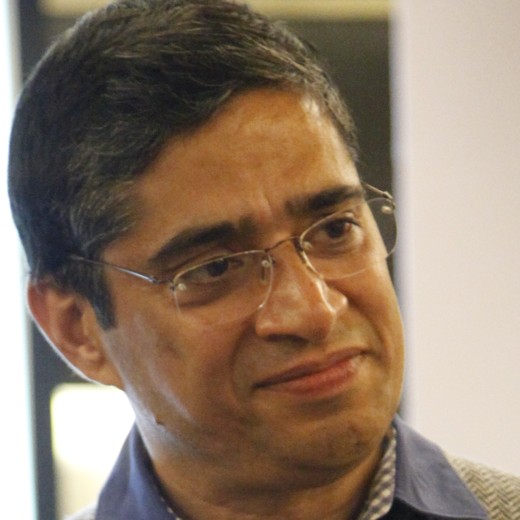
Kunwer Sachdev
Founder & MD, Su-Kam Power Systems (1988–2019) and Kunwwer.ai — writing on manufacturing, insolvency, and civilizational memory. Read his story →
Found this story worth sharing? Post it to your network — it takes one click: