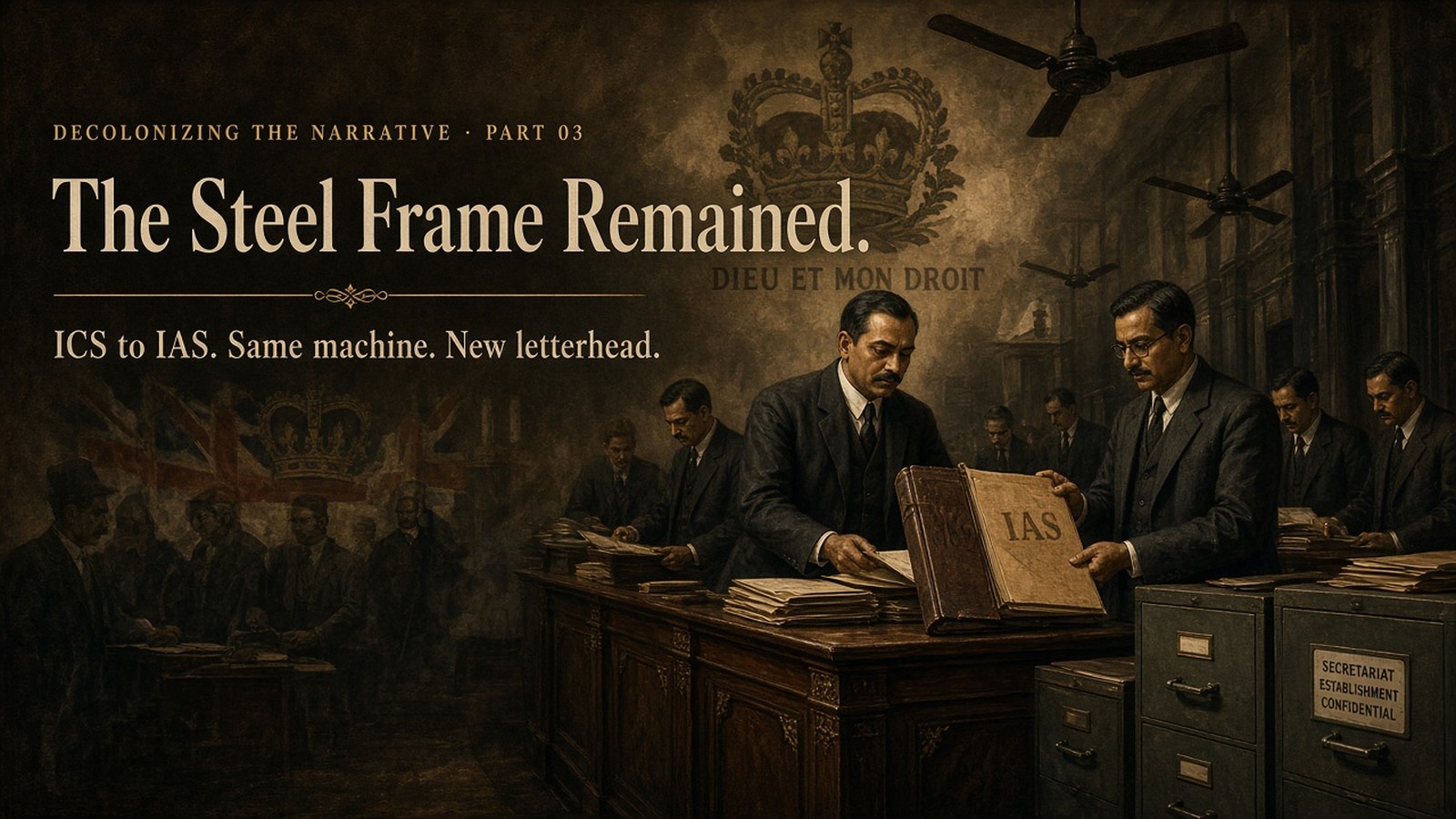
The Steel Frame Remained: How IAS, IPS and IRS Inherited a Machine Built to Subjugate
The historical record of 1945–1947 shows that the transition from the British colonial services to the modern IAS, IPS, and IRS was not an accident — it was a calculated compromise between an exiting colonial empire and an incoming political class desperate to prevent the collapse of law, order, and tax collection.
The central administrative apparatus that continues to govern India today was structured by imperial administrators specifically to subjugate, extract, and command, not to serve.
1. The direct colonial lineage: rebranding the machine
The services Indians know today were not built from scratch by independent India’s Constituent Assembly; they were rebranded successors of imperial bodies designed in Whitehall:
- ICS → IAS: The Imperial Civil Service (later the Indian Civil Service), famously christened the “Steel Frame” of the British Empire by British Prime Minister David Lloyd George in 1922, was rebranded as the Indian Administrative Service (IAS) in October 1946.
- IP → IPS: The Imperial Police (governed under the Police Act of 1861, enacted directly to disarm and intimidate natives after the 1857 War of Independence) became the Indian Police Service (IPS).
- Imperial Customs & Central Board of Revenue → IRS: The collection apparatus, formalised under the Central Board of Revenue Act of 1924, was transitioned into the Indian Revenue Service (IRS).
The core mechanisms — competitive exams modeled on the Northcote-Trevelyan civil service reform, cadre allocations, probation, and sweeping discretionary executive authority — were left completely intact.
2. The 1946 Provincial Premiers’ Conference: preserving the steel frame
In October 1946, while the Interim Government was in place under the Cabinet Mission Plan, the British were actively preparing their exit. The critical question on the table was: What happens to the civil services when the British leave?
Many freedom fighters and regional leaders wanted the imperial civil services disbanded entirely. Jawaharlal Nehru himself had written scathingly in his 1936 autobiography:
“No new order can be built up in India so long as the spirit of the I.C.S. pervades our administration and our public services… it is essential that the I.C.S. and similar services should disappear completely.”
Yet, during the Premiers’ Conference in New Delhi in October 1946, home member Sardar Vallabhbhai Patel made the pragmatic, defensive choice to preserve the centralized all-India services.
Facing Partition violence, regional mutinies, communist uprisings (like Telangana), and over 560 rebellious princely states, Patel feared that without an ironclad, centralized bureaucratic apparatus, the fragile Indian state would disintegrate within weeks of the British departure. The British colonial authorities were only too happy to facilitate this: they guaranteed that outgoing British officers were paid pensions while Indian officers in the ICS were transitioned straight into the IAS with their seniority, privileges, and pay scales preserved.
3. The structural design: “rule over,” not “work for”
The imperial civil services were deliberately engineered with three foundational traits that inverted the democratic ideal of public service:
A. The District Magistrate as “ruler of the realm”
In Britain itself, local administration was handled by elected county councils and local mayors. But for India, the British invented the post of the District Collector / District Magistrate (DM).
- The title says it all: Collector (of revenue) and Magistrate (wielder of criminal punitive power).
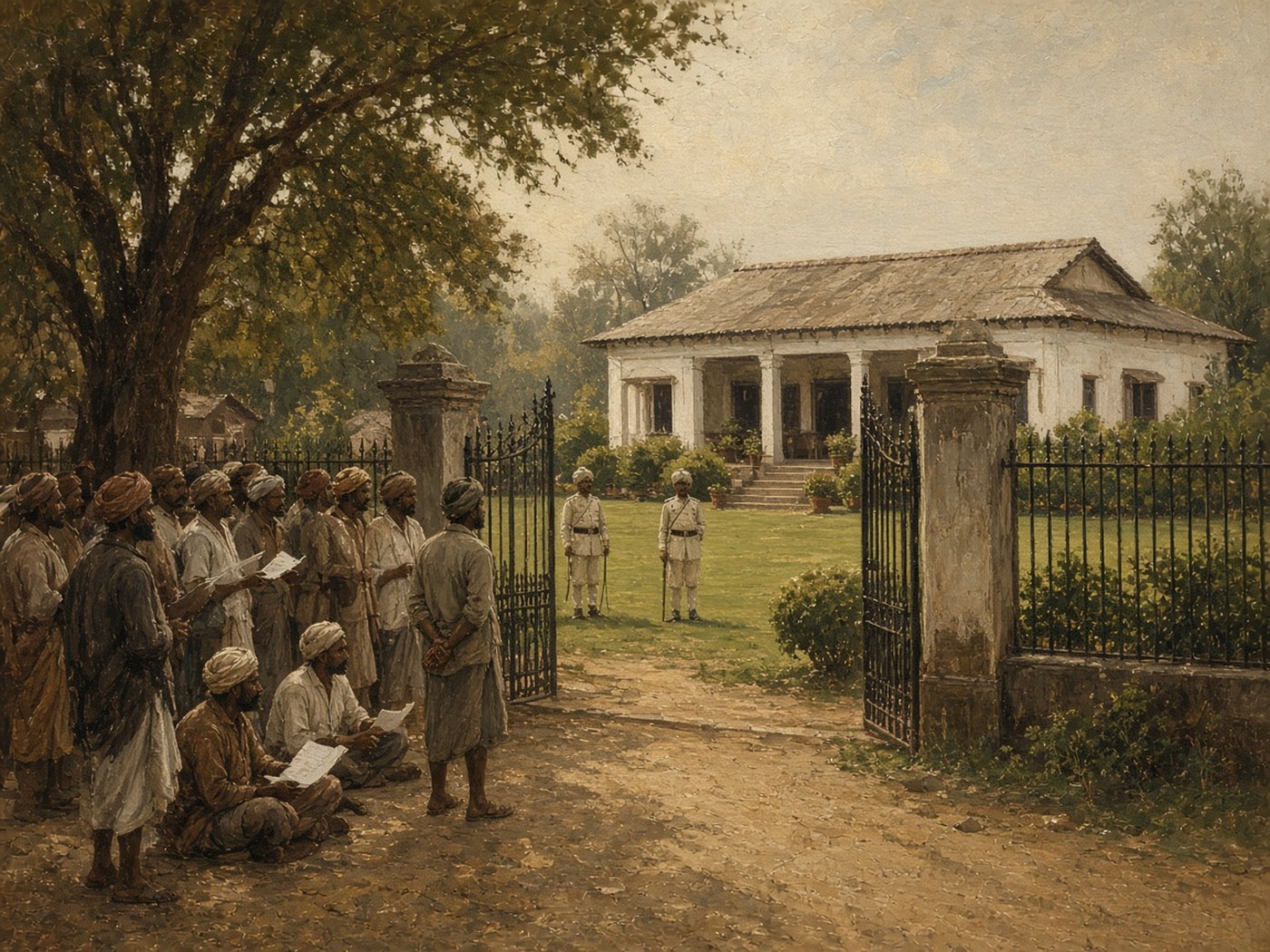
- The British placed judicial, executive, and revenue-collection power in the hands of a single unaccountable individual, living in a sprawling colonial bungalow surrounded by guards, servants, and chaprasis. This structural barrier was deliberately designed to create fear and awe (rubab) among the native population.
B. Institutional constitutional immunity
Under Article 311 of the Constitution of India (which directly lifted provisions from Section 240 of the Government of India Act, 1935), civil servants were granted extraordinary constitutional protections against dismissal or disciplinary inquiry. A structure originally created to protect white colonial officers from native political interference became a permanent shield for post-independence bureaucrats against public accountability.
C. Extraction over enterprise
The IRS and financial bureaucracy retained the British mercantile philosophy: treat the Indian merchant, farmer, and producer with deep suspicion. The colonial tax system was built to extract raw revenue from an occupied colony for the Crown; in post-independence India, that instinct simply mutated into the License-Permit-Quota Raj, where entrepreneurs and citizens had to seek bureaucratic blessings for basic economic activities.
4. Answerability: how other systems judge officials — and how India still does not
Here is the practical difference most citizens feel but textbooks rarely state plainly.
In the UK and many OECD systems, the civil servant is increasingly treated as an agent of elected government and the public: answerable to ministers, Parliament, auditors, courts, freedom-of-information rules, and — for local services — elected councils. Failure can mean demotion, exit, or public inquiry. The scorecard is delivery: did the service work for the citizen?
In India’s IAS/IPS design, judgment still runs upward more than outward:
- Who they answer to: cadre hierarchy and the political executive; the citizen remains a petitioner, not a client with a service right.
- How they are scored: confidential ACRs/APARs and empanelment — boss-and-system judgment — not citizen scorecards or delivery inspectorates with teeth.
- Failure consequence: transfer theatre is common; structural removal is rare, partly because Article 311 makes dismissal unusually hard.
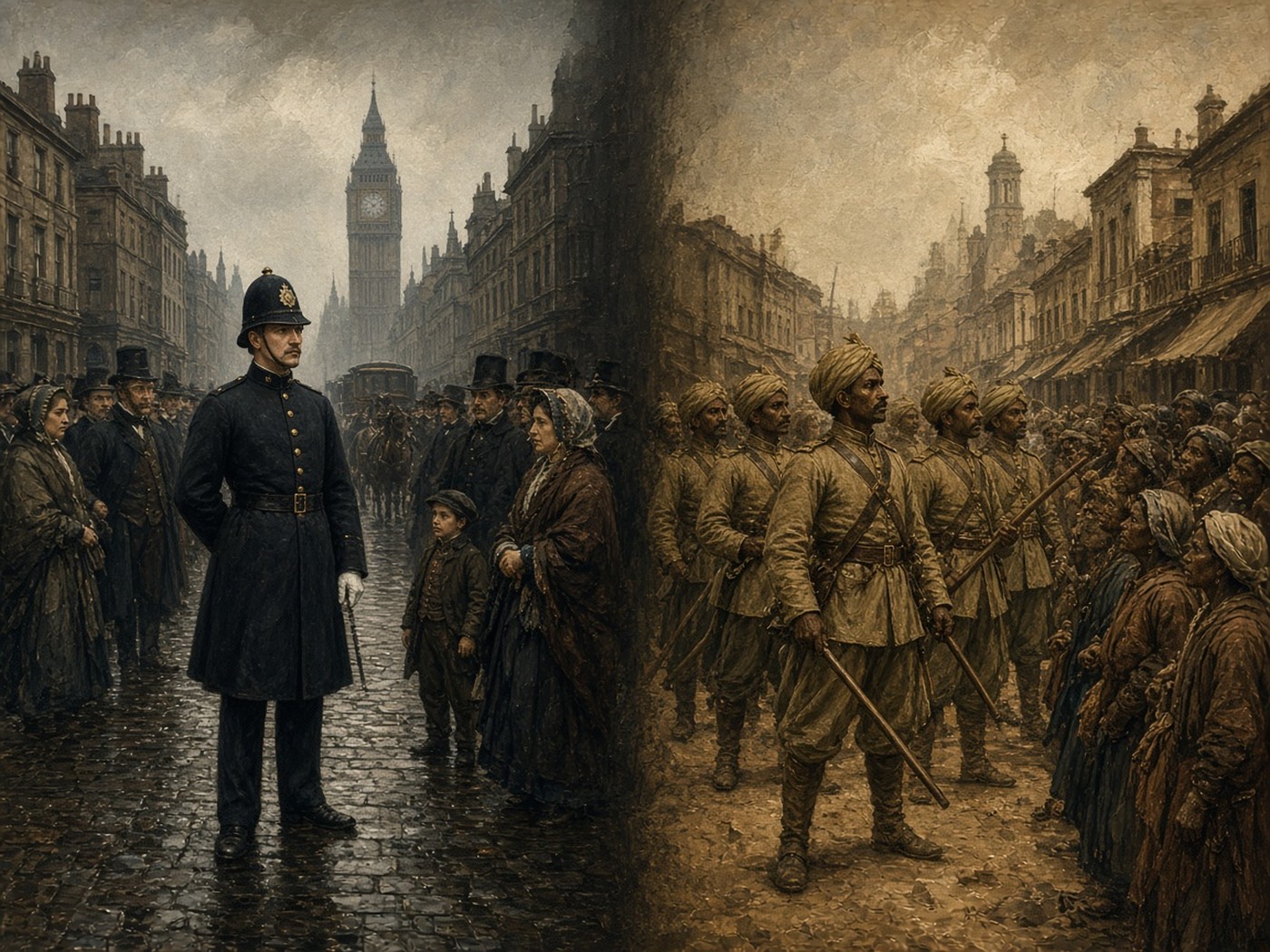
- Police philosophy: Peel’s model was civilian peacekeeping among citizens; India’s 1861 inheritance still leans toward controlling a population.
Abroad, the quiet test is: Did you deliver for the public? In India, too often the quiet test remains: Did you keep the system’s rubab and satisfy the hierarchy?
| UK / many OECD systems | Indian IAS / IPS | |
|---|---|---|
| Answerability | Ministers, Parliament, audits, FOI, local elected bodies | Cadre hierarchy + political executive; citizen as petitioner |
| Judgment | Outcomes, delivery, public inquiry | ACR/APAR, postings, empanelment |
| Failure | Demotion / exit possible | Transfer common; firing rare (Art. 311 shield) |
| Local power | Elected councils run much administration | DM concentrates revenue + executive + magisterial power |
5. The cosmetic changes vs. the unchanged reality
| Colonial imperial system | Independent India rebranding | The unchanged core reality |
|---|---|---|
| Indian Civil Service (ICS) | Indian Administrative Service (IAS) | Same unchecked district magisterial power, same hierarchy, same colonial red-tape files. |
| Imperial Police (IP) | Indian Police Service (IPS) | Same Police Act of 1861 mindset: control the public through force, rather than protect citizens as clients. |
| Imperial Customs / Tax | Indian Revenue Service (IRS) | Same adversarial relationship between the state and the wealth creator. |
| Lutyens’ bungalows & cantonments | VIP enclaves / officer colonies | Physical spatial segregation of rulers from the ruled. |
| The “Mai-Baap” culture | “Sarkari Babu” dominance | The citizen must plead for permissions; the officer dispenses favors. |
The consequence: a colony without the colonizer
The British understood statecraft. They knew that an empire does not endure solely through military garrisons; it endures through administrative conditioning. By leaving behind an institutional structure where the bureaucrat commands and the citizen obeys, the British ensured that the spirit of colonial governance would outlive their physical presence.
Independent India retained the hardware of British governance — changing the emblem on the letterhead from the British Crown to the Ashoka Lion — while keeping the software of authoritarian extraction largely untouched.
Instead of an administration serving as the humble scaffolding for citizens to build wealth and enterprise, the administrative machinery positioned itself as the landlord of the republic.
In this series
- Part 01
The Word That Robbed a Nation of Its Pride: Was 1857 a Revolt or Our First War of Independence? - Part 02
The Lingering Shadow: How Erasure of History Cemented White Supremacy, the BBC Gospel, and the Brown Sahib Monopoly - Part 03 · You are here
The Steel Frame Remained: How IAS, IPS and IRS Inherited a Machine Built to Subjugate - Part 04
The Manufacturer as Criminal: How India Swapped British Plunder for the Babu’s Leash - Part 05
The Imperial Courtroom: How India’s Judiciary Kept the Master’s Gavel - Part 06
The Stolen Prime: How India’s Family Courts Sabotaged Their Own Promise - Part 07
The War for the Gavel: Why the State and the Judiciary Fight Over Control, Not Justice - Part 08
The Citizen’s Camera: How Social Media Broke the Feudal Iron Triangle

Kunwer Sachdev
Founder & MD, Su-Kam Power Systems (1988–2019) and Kunwwer.ai — writing on manufacturing, insolvency, and civilizational memory. Read his story →
Found this story worth sharing? Post it to your network — it takes one click: