The Lingering Shadow: How Erasure of History Cemented White Supremacy, the BBC Gospel, and the Brown Sahib Monopoly
When the Union Jack was lowered on August 15, 1947, India celebrated political freedom. Yet the deep administrative machinery, the psychology of power, and the cultural benchmark of what made a human being “civilized” stayed firmly anchored to London.
The new state faced immediate survival crises: Partition, refugee resettlement, integration of princely states, and famine. But by treating history and school education as administrative afterthoughts — or worse, as delicate tools to be neutered for short-term civic management — independent India committed a profound mistake.
When a society stops teaching its own history with self-respect, it does not create a vacuum. It creates an open door for the colonizer’s cultural hierarchy to permanently settle in.
The failure to decolonize our historical narrative created three psychological distortions that shaped post-independence India for decades: the obsession with fair skin, the absolute reverence for foreign mouthpieces like the BBC, and the dynastic dominance of the Western-educated elite.
1. The erasure of history and the poison of skin bias
Skin prejudice is one of the deepest cultural wounds in modern India, and its entrenchment is directly tied to the historical narrative taught in our classrooms.
Pre-colonial Indian aesthetics and literature celebrated darker shades — from Lord Krishna’s cloud-dark complexion (Shyama) and Draupadi’s striking dark beauty to ancient Sanskrit poetry praising deep, radiant tones.
The British Raj, however, institutionalized a rigid racial pyramid:
- The white British administrator sat at the apex.
- Anglo-Indians and mixed-race subjects held the intermediary clerical tiers.
- The native population was categorized as dirty, uncivilized, and dark-skinned subjects.
After 1947, because school curricula treated colonial rule merely as an economic and political event rather than an ideological war on Indian self-esteem, this racial hierarchy was never dismantled.
Instead of deconstructing the colonial myth of white superiority, post-independence society internalized it. Fair skin remained synonymous with status, purity, beauty, and authority. The message absorbed by millions of school children was quiet but devastating: the masters may have left, but their standard of human worth remained supreme.
2. The BBC syndrome: outsourcing our sense of truth
For decades after independence, whenever a crisis hit India — a war, a riot, an election, or an assassination — citizens did not tune in to All India Radio or trust Indian journalists. Families huddled around shortwave radios at 9:00 PM to listen to the crackling voice of the BBC World Service.
How did a foreign state broadcaster become the undisputed gold standard of truth in a sovereign republic?
- The stifling of domestic voice: The post-independence Indian state maintained a rigid state monopoly on broadcasting through Doordarshan and AIR, using them primarily as government mouthpieces.
- The colonized mindset: Because our education system never instilled genuine pride in indigenous intellectual rigor, the educated middle class retained the colonial reflex: “If an Indian says it, it might be propaganda or exaggeration. If an Englishman with a BBC accent says it, it must be the objective truth.”
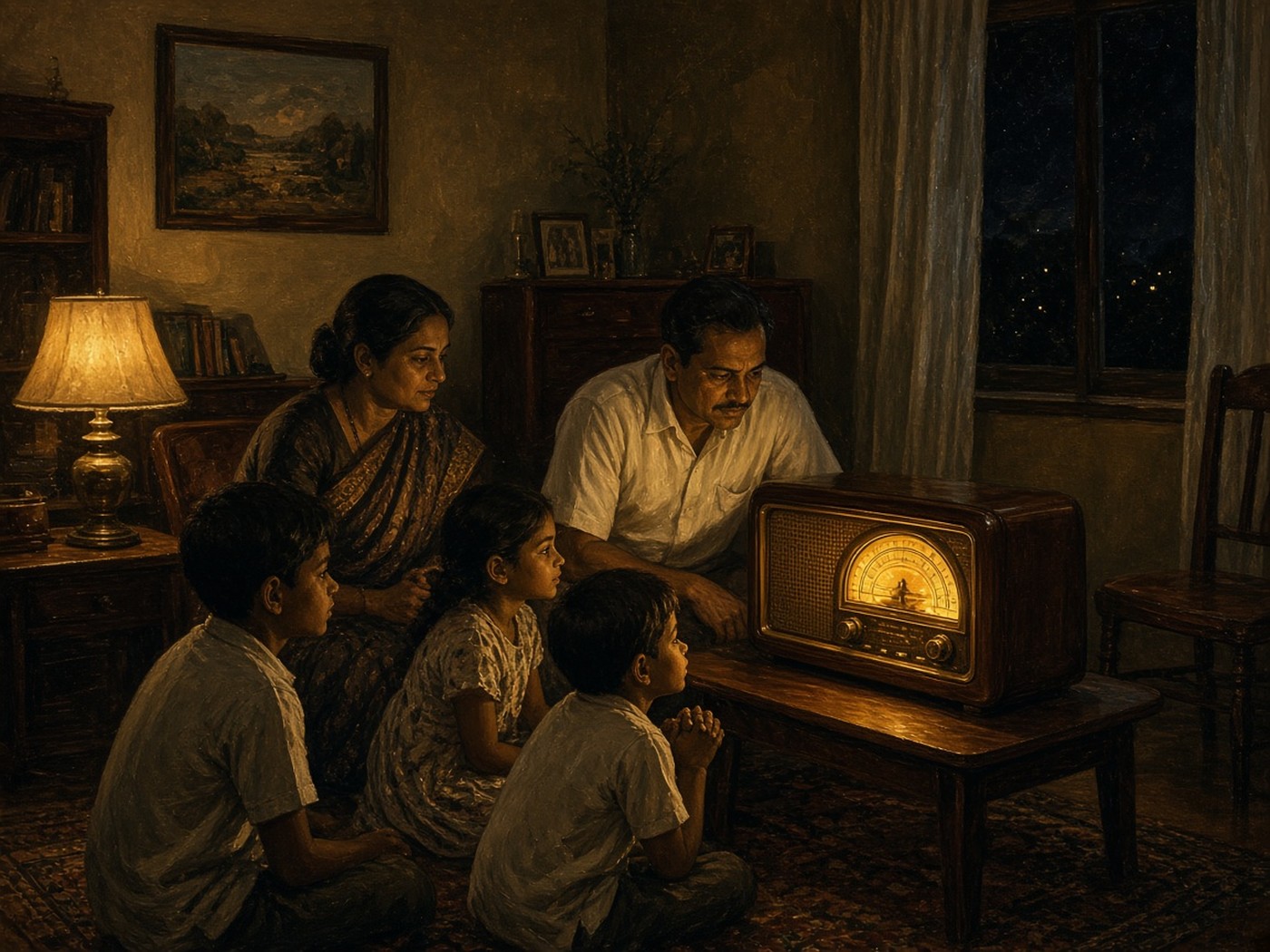
The BBC’s reporting was not neutral; it was the soft-power arm of the British Foreign Office. Yet, generations of Indians accepted London’s framing of Indian affairs, borders, and communal tensions as gospel, effectively outsourcing their own reality to the very empire that had partitioned them.
3. The Brown Sahibs: the monopoly of Oxbridge elites
In his infamous 1835 Minute on Indian Education, Thomas Babington Macaulay outlined a clear imperial objective:
“We must at present do our best to form a class who may be interpreters between us and the millions whom we govern; a class of persons, Indian in blood and colour, but English in taste, in opinions, in morals, and in intellect.”
Macaulay succeeded far beyond his own lifetime.
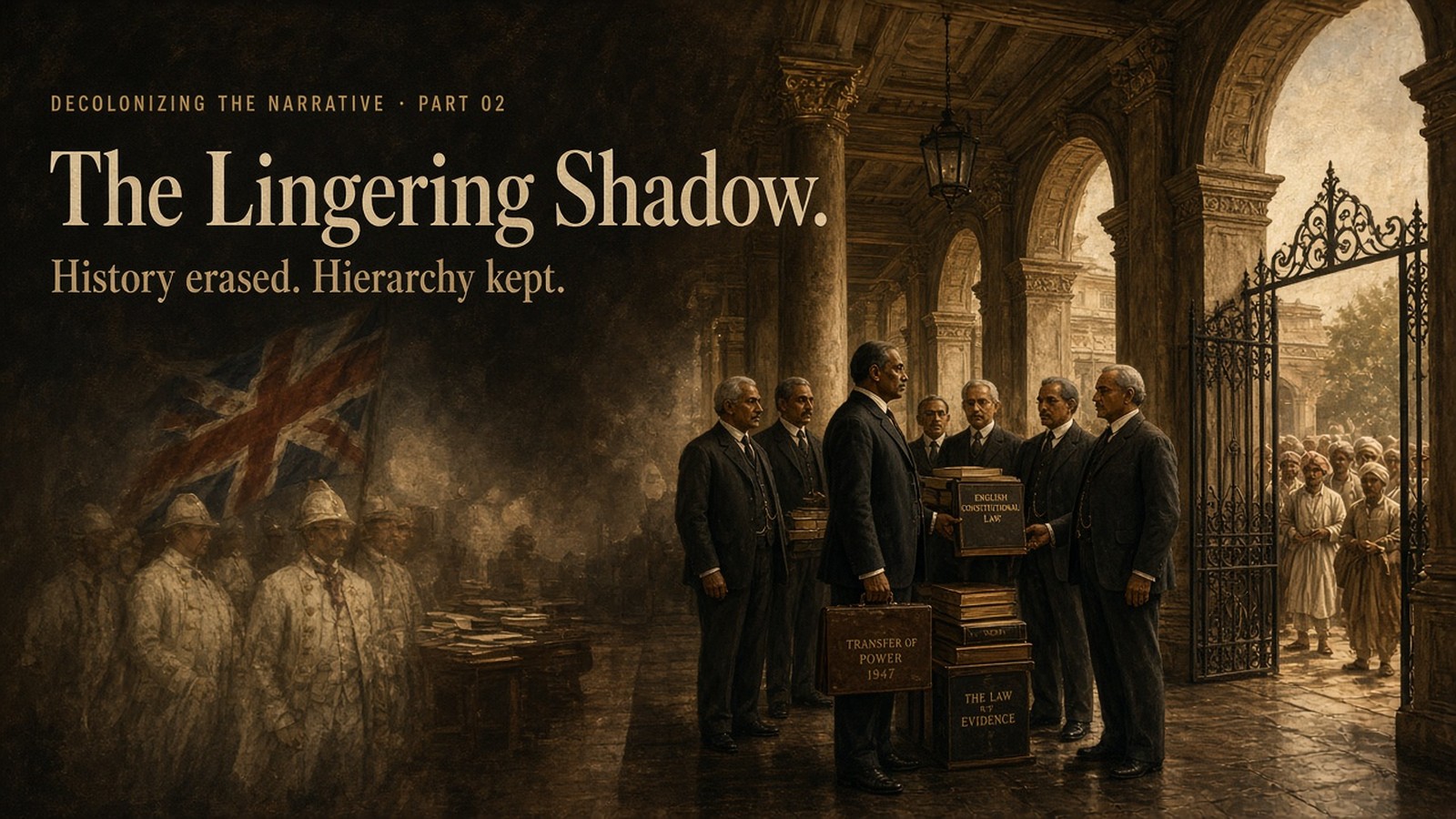
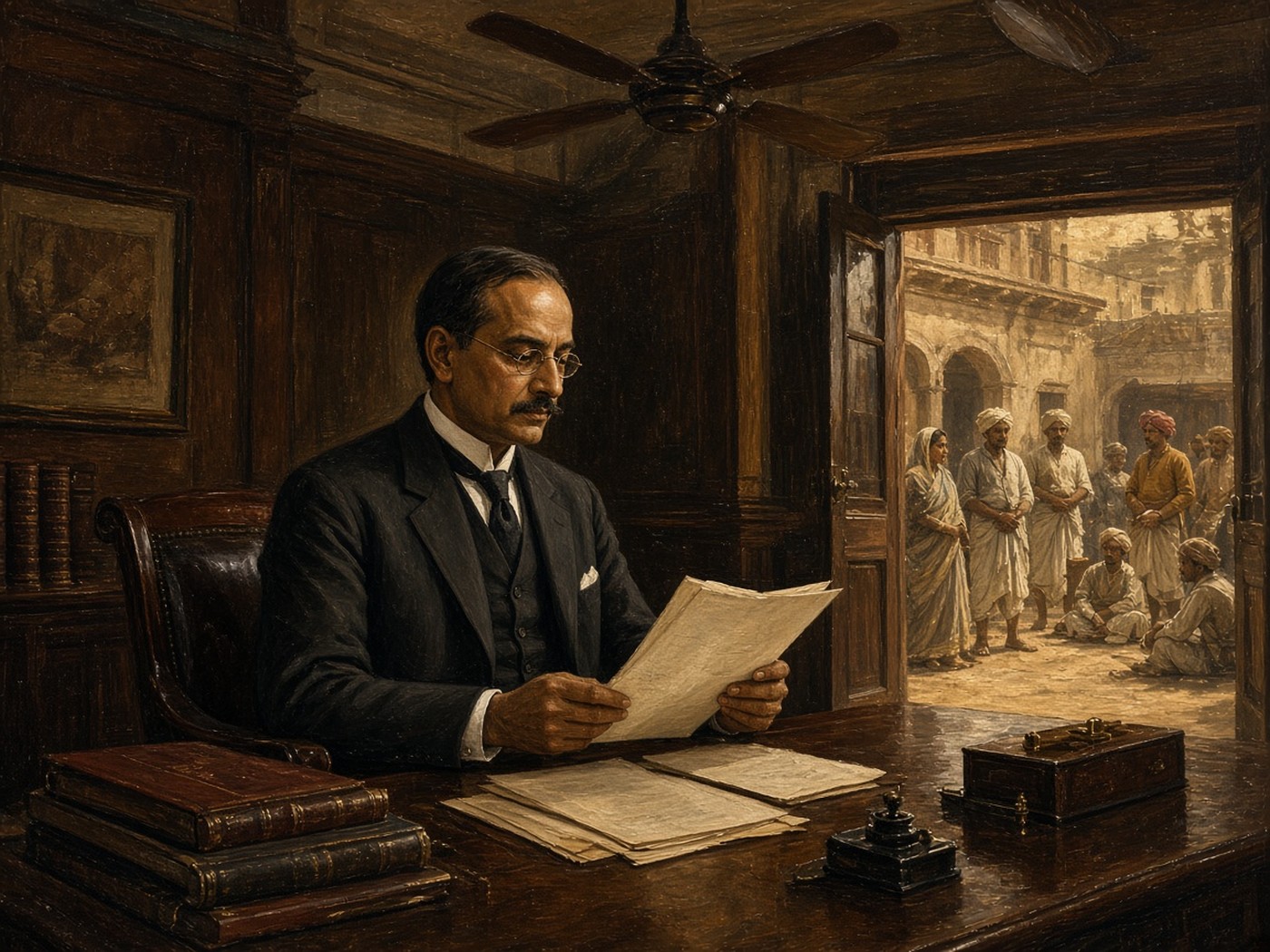
When power transferred in 1947, the British did not hand over India to the grassroots freedom fighters, the vernacular thinkers, or the rural masses. They handed it over to a tiny, Western-educated Anglicized elite — the men and women trained at Harrow, Cambridge, Oxford, and the Inns of Court.
- The barrier of the English tongue: Instead of building governance around Indian languages and indigenous wisdom, the new political and bureaucratic order entrenched English as the ultimate barrier to entry.
- The entrenched bureaucracy: The Indian Civil Service (ICS), originally designed by the British to collect revenue and suppress rebellion, was simply rebranded as the Indian Administrative Service (IAS). The institutions, snobbery, club culture, and colonial alienation from the common citizen remained untouched.
- The political monopoly: For the first four decades after independence, top cabinet ministries, diplomatic postings, legal benches, and intellectual circles were almost exclusively reserved for this Westernized aristocracy. An Indian who spoke fluent Sanskrit, Tamil, or Hindi had less institutional authority than one who could quote Shakespeare and debate British parliamentary procedures.
The cost of a surrendered history
| Dimension | The imperial conditioning | The post-1947 internalization |
|---|---|---|
| Aesthetics | White masters represent civilizational superiority. | Fair skin equated with elegance, power, and marriageability. |
| Information | Native accounts are unreliable; imperial dispatches are factual. | Foreign media (BBC) accepted as the sole arbiter of truth. |
| Governance | Rule by Macaulay’s Anglicized administrative class. | Oxbridge elites and English-medium bureaucracy monopolizing power. |
When you do not rewrite your history to honor your own heroes, you end up honoring the psychological structures of your conquerors.
By ignoring the deep restoration of civilizational pride, post-independence India left millions believing that their language was inferior, their skin was a disadvantage, their media was untrustworthy, and their rulers had to look, speak, and think like the masters who had just walked out the door.
Decolonization is not merely the lowering of a flag or the signing of a constitution. It is an act of reclaiming the mind. Until a nation breaks the myth of the foreign benchmark, its independence remains incomplete.
Continue the series: Part 01 — 1857: First War of Independence · Series hub
In this series
- Part 01
The Word That Robbed a Nation of Its Pride: Was 1857 a Revolt or Our First War of Independence? - Part 02 · You are here
The Lingering Shadow: How Erasure of History Cemented White Supremacy, the BBC Gospel, and the Brown Sahib Monopoly - Part 03
The Steel Frame Remained: How IAS, IPS and IRS Inherited a Machine Built to Subjugate - Part 04
The Manufacturer as Criminal: How India Swapped British Plunder for the Babu’s Leash - Part 05
The Imperial Courtroom: How India’s Judiciary Kept the Master’s Gavel - Part 06
The Stolen Prime: How India’s Family Courts Sabotaged Their Own Promise - Part 07
The War for the Gavel: Why the State and the Judiciary Fight Over Control, Not Justice - Part 08
The Citizen’s Camera: How Social Media Broke the Feudal Iron Triangle

Kunwer Sachdev
Founder & MD, Su-Kam Power Systems (1988–2019) and Kunwwer.ai — writing on manufacturing, insolvency, and civilizational memory. Read his story →
Found this story worth sharing? Post it to your network — it takes one click: