Export network & speakership brand
The Rule That Made Me A Better Speaker: If You Don't Grab The Audience In The First Three Minutes, You've Lost Them
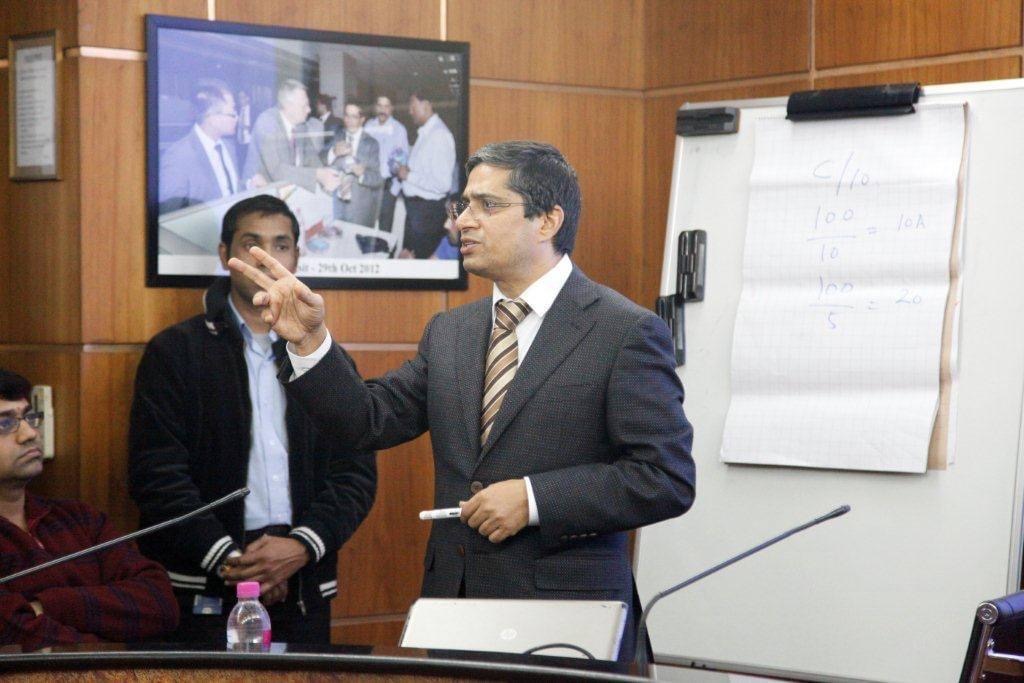
In 2011, Livemint put together a special feature titled “Watch Your Words” — a compilation of thoughts from a group of Indian industry veterans on how they actually approach public speaking. I was one of the voices they invited into that piece. This is the philosophy I gave them then — and it is exactly the philosophy I still operate by today.
The Context: A Frequent Speaker In A Room Of Industry Veterans
Back in 2011, I was speaking almost constantly. TiE stages, IIM campuses, industry conferences, business summits, entrepreneurship conclaves, factory visits, town-hall meetings inside Su-Kam — every week there was a talk somewhere. So when Livemint reached out to a panel of industry veterans to compile a feature on public-speaking discipline, my quotes ended up in the mix alongside them. Here is what I told them.
My Verbatim Contribution To Livemint, 2011
Kunwer Sachdev
Managing director, Su-Kam Power Systems, Gurgaon, HaryanaThe opening of any speech or presentation is very important and should be planned in such a way that you attract everybody's attention. The speaker has to be well versed with the profile of the audience so as to establish a connect while addressing it.
My golden rules: Sometimes I change my speech sitting on the dais itself just to get the audience interested in the subject. Going by my experience, when I deliver a speech in my mother tongue Hindi and the audience understands it, then it's always appreciated and the connect with the audience is immediate. My experience is that audiences like examples they can relate to in real life and it's always good to add some humorous angle, if possible, to keep interest alive.
Preparing for the big talk: Graphic presentation is more effective with an audience than just words. The slides should be limited to 10-15, depending on the subject and the audience. I have learnt that whenever I was present at any event an hour earlier, my presentation was much better than when I reached the venue on time, or late.
The Three-Minute Rule
The single most useful thing I have learnt about public speaking, and the one thing I wish I had put more forcefully in the Livemint piece, is this: if you do not grab the audience's attention in the first three minutes, you have lost that chance for the rest of the talk.
Not the first ten minutes. Not the first slide. The first three minutes. Because in those first three minutes, every person in that room is making a quiet decision about whether to pay attention to you, or to check their phone. And once that decision has been made, it is almost impossible to reverse. You can have the greatest content in the world in slide fourteen. If they mentally checked out on slide two, it will not save you.
Which is why I plan my opening more carefully than any other part of the talk. The middle can wander. The end can be improvised. But the opening has to land.
“The first three minutes decide the next thirty. Get those right, and you have permission to say anything after. Get them wrong, and it does not matter what your slide fourteen says.”
Why I Speak In Hindi — And Almost Never In English
Here is a rule I have followed for years, and I want to be very clear about it: unless I am in front of an audience that only understands English, I never speak in English. As a rule.
The reason is simple, and it is not about nationalism or comfort. It is about emotion. When you speak in your mother tongue, your feelings come with the language. Your examples are richer. Your pauses are naturally placed. Your metaphors are already alive in your head from the culture that shaped you. All of that goes missing the moment you try to translate it in real time into a language your soul does not think in.
I have sat on stages where every other speaker before me spoke in English — polished, well-rehearsed, technically fine — and the audience was politely listening but not really with them. Then I would get up and speak in Hindi. The temperature in the room would change. People would sit forward. They would start laughing at the right places, nodding at the right places, asking questions from the middle rows instead of only from the front two.
This has been consistent across venues, across audiences, across cities. Whenever the audience understands Hindi, Hindi wins. It is not even close.
The Habit Of Changing My Speech On The Dais
The Livemint quote makes it sound casual: “Sometimes I change my speech sitting on the dais itself just to get the audience interested in the subject.” But it is one of the most important habits I have as a speaker.
I look at the room before I open my mouth. I look at who is there, who looks bored already, what the previous speakers said, what the mood is. And I rewrite my opening in my head to match. Sometimes I throw out the whole prepared talk. My most memorable talks — including one at a Start-Up Summit where I ended up with the room gheraoed around me for selfies afterwards — were talks I had rewritten in the last twenty minutes before going on stage.
A prepared script is a safety net. But safety nets do not win rooms. Reading the room and responding to what is actually in front of you — that is what wins rooms.
See these rules in action: If you want to watch me apply this philosophy on stage — the Hindi-first delivery, the opening designed to grab the room, the willingness to change direction mid-flow — here is my full ‘Power-Up with Kunwer Sachdev’ keynote from TiECON Ahmedabad 2017 at IIM-A.
Arrive An Hour Early. Every Single Time.
The last line of my Livemint contribution is the one people tend to skip past, and it is actually the most operationally useful one: whenever I was present at any event an hour earlier, my presentation was better.
This is not because of last-minute rehearsal. It is because in that one hour before the event begins, you meet the organisers, you meet the other speakers, you meet a few of the audience members as they trickle in, you get a feel for the venue's acoustics and lighting, and you catch the informal conversations that no green-room briefing can give you. All of that becomes fuel for your opening. Some of it becomes an anecdote. Some of it becomes a joke. Some of it becomes the reason you throw out your prepared talk on the dais and speak from the heart instead.
Why This Still Reads Well
The Livemint piece went to press in July 2011. What surprises me, honestly, is how little of my thinking on this has changed. The three-minute rule still holds. The Hindi rule still holds. The one-hour-early rule still holds. The habit of rewriting the talk on the dais still holds.
Founders build companies. Founders also have to speak. It is a badly under-taught skill in our ecosystem. If any of this is useful to a young founder about to walk onto their first big stage — take these rules, they cost you nothing, and they will save you a lot of embarrassed silences.
Sources & Further Watching
- → Livemint (Mint Lounge) — ‘Watch Your Words’ (24 July 2011) — the original article this post is built around.
- → YouTube — ‘Power-Up with Kunwer Sachdev (Su-Kam)’, TiECON Ahmedabad 2017, IIM-A — a full-length recorded keynote where these rules are on display.
Kunwer Sachdev
Founder, Su-Kam Power Systems · The Inverter Man of India · The Solar Man of India
Startup mentor, angel investor and serial entrepreneur. Built Su-Kam from a Delhi component-supply business into a ₹1,200+ crore power-electronics brand across 70+ countries. Now mentors India's next generation of founders. Based in Gurgaon, Haryana.
The sales-and-channel machine in this essay is the front half of the story told in The Manufacturing Mirage.