Everyone Else Was Importing Chinese Solar Inverters And Slapping On A Label. We Built Ours At Home — And Set Out To Make It Cheap.

In 2018, solar in India was a game rigged against the Indian buyer. This is the story of what we tried to do about it — and why I ended up writing about it in The Economic Times that April.
2018 — Solar Is Still A Luxury In India
If you walk into a middle-class Indian home or a small commercial establishment in 2018 and suggest they put solar on their roof, you get one of two answers. Either “It is too expensive, we cannot afford it” — or “We'll wait, prices will come down.”
They are not wrong. Solar is genuinely expensive at this point. The government has put schemes and subsidies in place, but the on-ground acceptance — particularly for homes and small commercial establishments — is very low. Everyone in the industry is talking about big utility-scale solar farms in Rajasthan. Almost nobody is talking about putting solar on the rooftop of an office in Gurgaon or a house in Meerut.
That gap — the rooftop gap — is exactly what Su-Kam Solar has decided to go after. Homes. Shops. Small offices. The 90% of India that consumes electricity but is invisible in every solar policy PowerPoint.
The Dirty Little Secret Of India's Solar Inverter Industry
Here is the uncomfortable truth about the Indian solar inverter industry right now.
Almost every big “Indian” brand you see in the market is importing solar inverters from China, applying their own label on the box, and calling it an Indian product.
There is no engineering happening at their end. No R&D. No local IP. Just a container arriving at Nhava Sheva, a sticker being applied in a warehouse, and a marketing team dressing it up as “Made in India.” And on top of that, the Chinese manufacturers themselves have started entering the Indian territory directly. So the same product is being sold under three or four different Indian brand names, all of them competing on price with the Chinese original that is now also being sold openly here.
The Indian buyer, meanwhile, is paying a premium for a product that has no local service backbone, no local engineering, and no accountability if anything goes wrong two years later. When that inverter fails on a Meerut rooftop, there will be no one to fix it. The “Indian” brand does not know how it was built. The Chinese factory does not know it exists.
“If we do not build our own solar inverters in this country, we will end up with a solar revolution that is Indian only on the invoice.”
What We Are Building: A Transformer-Based Solar Grid-Feed Inverter, In-House
Su-Kam has gone the other way. We have put our own R&D team on it and designed a Solar Grid-Feed Inverter based on transformer technology, developed entirely in-house. Not a re-badged Chinese import. Not a joint venture. Not a technology licence. A genuine, engineered-in-India product.
Why transformer-based? Because at the price points we are targeting — homes and small commercial — a transformer-based topology gives us the ruggedness, the surge tolerance, and the serviceability that Indian conditions demand. Voltage fluctuations, dust, heat, unreliable grid, monsoon — the kind of things nobody testing an inverter in a Chinese lab is designing for. We are designing for the Indian rooftop, not a datasheet.

The Real Agenda — Make It Cheap. Make It Affordable.
My agenda from day one has been very clear, and I say it out loud in every review meeting: if we are going to bring a rooftop-solar revolution to Indian homes and small commercial establishments, this product has to be cheap. It has to be affordable. It has to be within reach of the middle-class household and the small-town shop-owner — not just the big corporate rooftop or the airport terminal.
Because that is where the volume actually lives. That is where the country's electricity is actually consumed. A solar revolution that only reaches office towers and factories is not a revolution. It is a tax break for large corporates.
And you cannot make a product cheap if you are importing it. You have no cost control. You have no BOM control. You have no sourcing flexibility. The only way to genuinely take the price down — not the sticker price, the real price after transport and duties and after-sales — is to build it here, own the design, own the components list, and drive cost out of every layer of it.
And Then The Economic Times Called
This is the context in which The Economic Times reached out and asked me to write. And that is how the op-ed “Be Proactive in Adopting Solar Energy” comes into being on 18 April 2018.
The piece itself is carefully written. I do not want to name competitors, and I do not want to make it a rant about Chinese imports. So the published version stays at the policy level — it walks the reader through the economics of a rooftop solar system, the Central and State subsidy stack, and the net-metering rules that let a household sell surplus back to the grid.
But underneath all of that, the argument I most want people to read is this one:
“It is not only the government, but companies and we, as individuals, should come forward to promote the use of solar energy.”
In plain language: stop waiting for the government to do all the heavy lifting on rooftop solar. Corporates should come forward. Individual homeowners should come forward. And the manufacturers — my own tribe — should stop hiding behind Chinese imports and actually build for this country.
Because the world will keep changing what solar looks like. The only real question is the one it has always been — are we going to be the ones building it, or the ones importing it and putting our sticker on it?
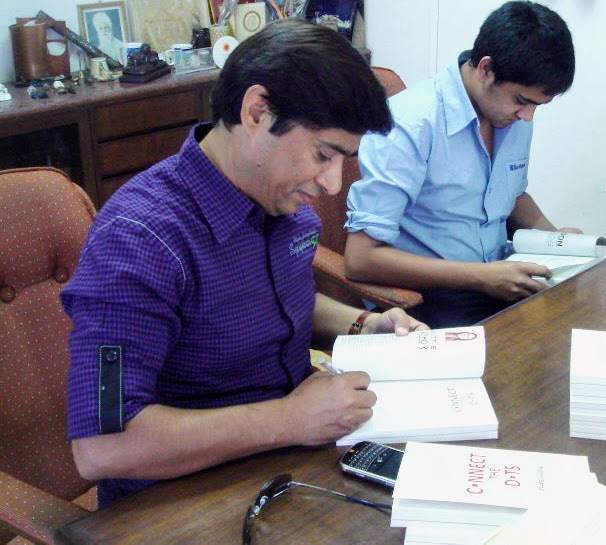
Kunwer Sachdev
Founder, Su-Kam Power Systems · The Inverter Man of India · The Solar Man of India
Startup mentor, angel investor and serial entrepreneur. Built Su-Kam from a Delhi component-supply business into a ₹1,200+ crore power-electronics brand across 70+ countries. Now mentors India's next generation of founders. Based in Gurgaon, Haryana.
Kunwer Sachdev
Founder, Su-Kam Power Systems (1988–2019) and Kunwwer.ai, mentor at Su-vastika — the “Inverter Man of India” and the “Solar Man of India.” Read his story →