The Nine Books That Wrote About Su-Kam — A Founder’s Notes on What They Captured
By Kunwer Sachdev · Founder, Su-Kam Power Systems
Between 1999 and 2023, nine published books and multiple India Today Group editions have referred to Su-Kam Power Systems and my work as its founder. IIMA. HarperCollins. Springer. Rashmi Bansal. India Today. Not because I sought coverage — I never did — but because each of these authors and editors, on their own, looked at what Su-Kam had built and thought it was worth documenting. This page brings all nine covers together, with the reference for each and my honest note on what that particular book captured about the story.
Nine Front Pages — One Story

Plus Dataquest (CyberMedia, 1999) — the earliest published reference of the nine.
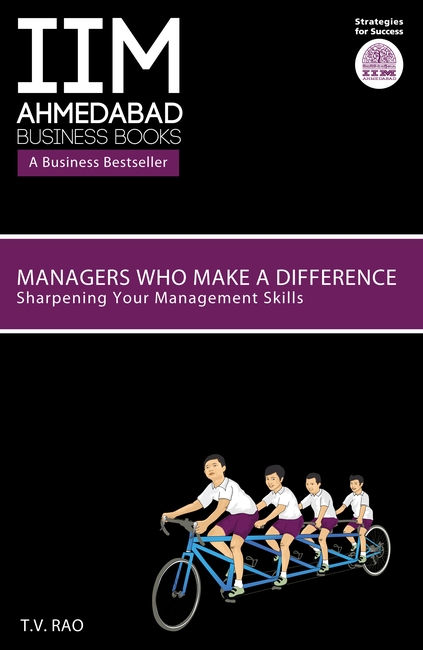
1. IIMA — Prof. T V Rao (Random House India, 2010)
Reference: T V Rao, IIMA — Managers Who Make A Difference: Sharpening Your Management Skills, Random House India, 2010 (ISBN 9788184001372). Profile credits its source to Prof. C K Prahalad’s 2007 seminar The Next Practices: Innovations from India at Ahmedabad Management Association.
My note: This is the one I am most quietly proud of. IIMA teaches its students management from a very small set of Indian examples. That Prof. T V Rao — the founder of India’s HRD movement — chose to include Su-Kam among his “Managers Who Make A Difference”, on Prof. Prahalad’s prior identification, is what turned Su-Kam from a business into a teaching case. What the book captures: that we turned every problem into an opportunity. What it necessarily leaves out: the names of the team that did the actual solving.
2. HarperCollins — Porus Munshi (2010)
Reference: Porus Munshi, Making Breakthrough Innovation Happen: How 11 Indians Pulled Off the Impossible, HarperCollins India, 2010 (ISBN 9788172237745).
My note: Being in the “11 Indians” list next to some of the country’s most respected engineering-led founders was humbling. Porus Munshi’s framing — “pulled off the impossible” — is generous. What actually happened is that we refused to accept the standard Indian industry view that home inverters had to be metal, ugly, dangerous and unchanged for a decade. The “impossible” was really just an unattempted rebuild from first principles.
3. Rashmi Bansal — Connect the Dots (Eklavya Foundation, 2010)
Reference: Rashmi Bansal, Connect the Dots: The Inspiring Stories of 20 Entrepreneurs Without an MBA, Eklavya Foundation, 2010.
My note: I don’t have an MBA. That was never a plan — it was just what happened. Rashmi Bansal’s book captures a truth I want the next generation of Indian founders to hear: an MBA is one path, not the path. What matters is engineering, product sense, sales instinct, and the willingness to run a factory floor. Prof. T V Rao’s IIMA book explicitly points readers to Bansal’s Connect the Dots “for the latest story on Kunwer”, which itself is a nice endorsement across two very different Indian publishing worlds.
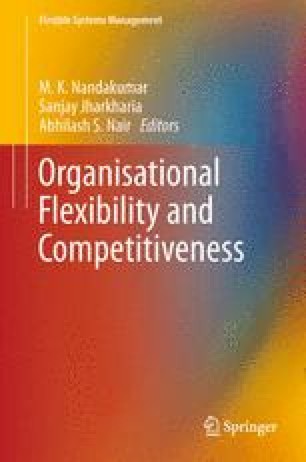
4. Springer India — Organisational Flexibility and Competitiveness (2014)
Reference: M K Nandakumar, S Jharkharia, A S Nair (eds.), Organisational Flexibility and Competitiveness, Springer India, 2014 (ISBN 9788132216674; DOI 10.1007/978-81-322-1668-1), page 81 — identifying Kunwer Sachdev as one of the Top 10 SME Entrepreneurs recognised by SME Channels.
My note: Being cited in a peer-reviewed Springer academic volume matters in a different way. It means the case has been examined not by a journalist on a deadline, but by academics with an evidentiary standard. Su-Kam is now, formally, part of India’s scholarly management literature on organisational flexibility — which is exactly the muscle we had to build to survive the shifts in India’s power sector.
5. Harsh Pamnani — Booming Brands, Vol. 1 (2018)
Reference: Harsh Pamnani, Booming Brands: Inspiring Journeys of 11 ‘Made in India’ Brands, Volume 1, 2018 (ISBN 9789387860082).
My note: This one meant a lot because it names Su-Kam alongside other founder-led “Made in India” brands. Su-Kam was always positioned as an Indian brand for Indian conditions, before “Make in India” was even a slogan. Being catalogued as a Made-in-India brand in a book aimed at aspiring Indian entrepreneurs is exactly the audience I hope reads about our story.
6. Disha Publications — MAT / MBA Entrance Reference (2019)
Reference: Disha Experts, Complete Guide for MAT & Other MBA Entrance Exams (4th Edition), Disha Publications, 2019, page 32 — listing Kunwer Sachdev as Founder & MD, Su-Kam Power Systems, alongside Lakshmi Mittal, Pramod Bhasin and Sanjay Kirloskar.
My note: This is the one that quietly reaches the largest number of readers. Hundreds of thousands of Indian students preparing for the MAT and other MBA entrance exams read general-awareness material like this. Being in it means my name is passing through the reading list of the next generation of Indian managers — a form of impact that most books can’t match.
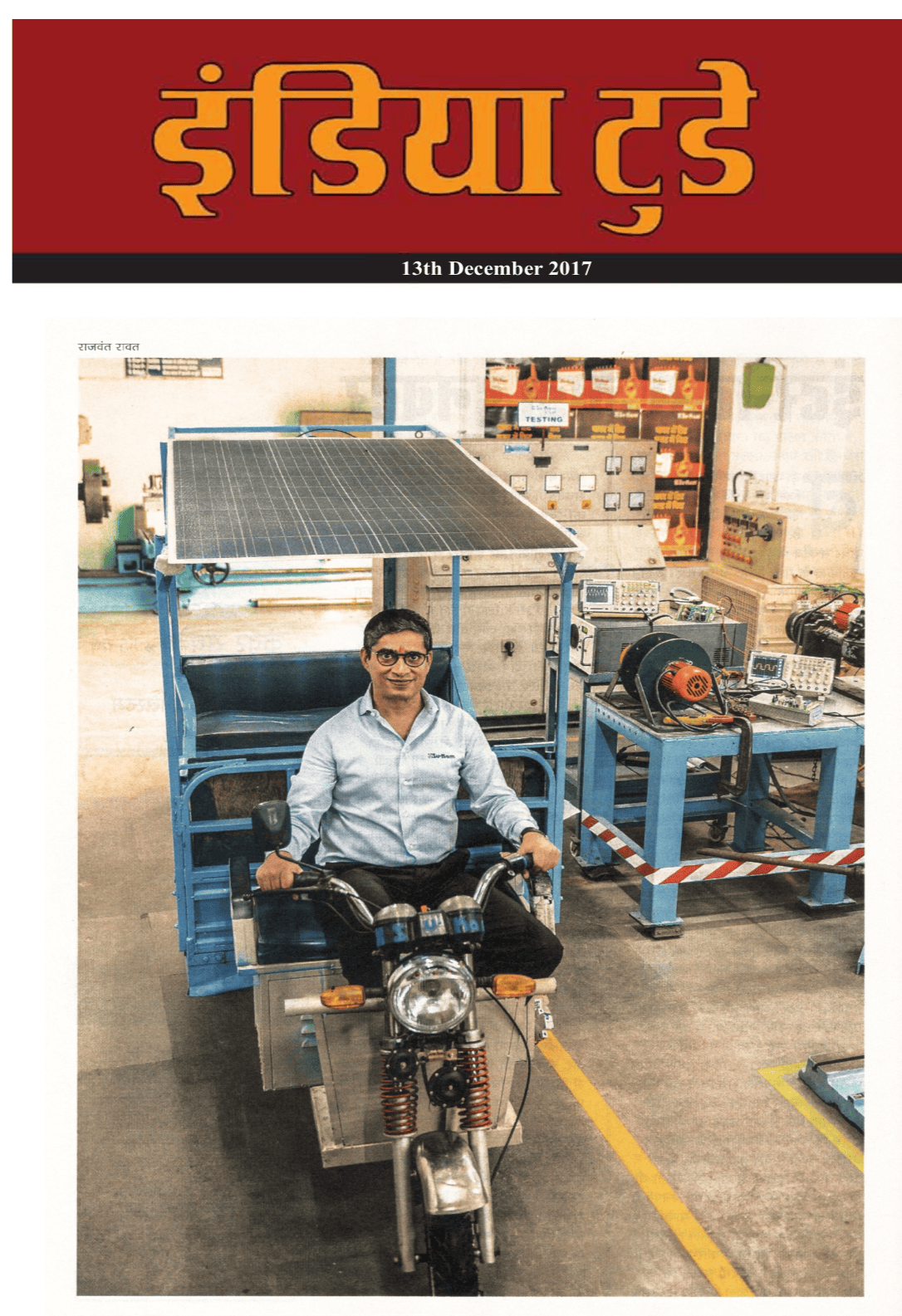
7. India Today Group — India Today & Business Today (2006 → 2013)
Reference: India Today (Volume 31, 2006, p. 27; 2009 print edition, p. 27; 15 August 2010 Independence Day special, “Spirit of India: Ignited Minds”) and Business Today (Volume 17, 2008, p. 114; 25 April 2013 Leadership Spotlight).
My note: India Today’s 2010 Top-10 Innovations of the Decade list is the recognition most people know about — and it’s the one I’m proudest of, because it wasn’t about a product review; it was about India’s writers looking back at ten years and deciding what actually mattered. Su-Kam’s plastic-body inverter did. But the earlier 2006 and 2008 references are equally important to me because they capture the founding-era coverage when we were building the category, not celebrating it.
8. ProjectX Digest 2023 — Sandeep Sharma (ed.)
Reference: Sandeep Sharma (ed.), ProjectX Digest 2023: Special Edition, page 77 — documenting Su-Kam Power Systems Ltd (Kunwer Sachdev, Managing Director) as the implementation partner on TEDA’s 1 MW solar-plus-storage project in Dindigul, Tamil Nadu.
My note: This is the most recent published reference — and to me the most important, because it puts to rest a narrative I keep hearing that Su-Kam’s story ended at the inverter era. It didn’t. Su-Kam kept executing MW-scale solar-plus-storage projects into the 2020s, a decade after the plastic-body-inverter recognition. If you want to understand what founder-led continuity looks like, look at 2010 India Today and 2023 ProjectX Digest side by side.
9. Dataquest — CyberMedia (1999)
Reference: Dataquest, CyberMedia, 1999, page 46 — the earliest published reference to Kunwer Sachdev preserved in Google Books.
My note: 1999. That is the year most people forget in the Su-Kam story. It’s the year we were still figuring out what an Indian home inverter should even look like. Being in Dataquest that year meant that even before we had scale, CyberMedia’s editors thought Su-Kam was on the record worth documenting. Everything the other eight books later wrote about was built on top of that founding-era work.
What the nine covers add up to
“Nine books in twenty-five years is not a personal achievement. It’s a record of an Indian company that kept producing category-defining work — and of the writers, editors and academics who took the time to document it. Both halves matter equally.”
What none of the nine books quite captures, and what I want to say clearly for the reader who came here from the covers: this record is not about me being written about. It’s about a founder-led, engineering-first Indian company that kept building things India needed, from inverters in 1998 to lithium storage in 2023. If you’re building something for India today — in power, in AI, in mobility, in anything — my only ask is that you build the work first. The books, if they come, will follow.
Related reading
Kunwer Sachdev
Founder, Su-Kam Power Systems (1988–2019) and Kunwwer.ai, mentor at Su-vastika — the “Inverter Man of India” and the “Solar Man of India.” Read his story →