I Went to IIM Ahmedabad to Speak — And Discovered They Were Already Teaching My Story
In March 2017, I took the stage at TiECON Ahmedabad — hosted at the Indian Institute of Management, Ahmedabad — to deliver a keynote TiE Ahmedabad titled “Power-Up with Kunwer Sachdev.” It remains one of the most complete public records of the Su-Kam operating story I have ever put on tape.
The Event
TiE Ahmedabad hosted the second edition of its flagship TiECON on Saturday, 4 March 2017 at IIM Ahmedabad. The Times of India reported the annual entrepreneurial conference was expected to draw over 1,000 participants, alongside budding and aspiring founders across Gujarat and beyond.
Watch the Full Session
TiE Ahmedabad published the complete 16-minute session on their official YouTube channel. The talk covers the Su-Kam origin story, the mindset that took a modest Delhi cable business into India's inverter category, and hard-won lessons on distribution, R&D, and building a homegrown brand that could stand up to multinationals.
A Quiet Moment Before the Talk — Meeting the IIM-A Faculty
Before I went on stage, I spent some time with the professors of IIM Ahmedabad. That conversation turned out to be a bigger eye-opener for me than the talk itself.
What struck me was how many of the professors had actually come from the corporate world. They weren't career academics who had only ever taught — they had operated real businesses, run real teams, and made real mistakes before they walked into a classroom. And now they were teaching MBA students at one of India's finest institutes.
It confirmed something I've always believed: teachers without experience and teachers with experience make a huge difference to what a student actually walks away with. A framework taught by someone who has only read about it is not the same thing as a framework taught by someone who has bet their own money and time on it. The second kind sticks. The first kind fades.
“Teachers without experience and teachers with experience make a huge difference — not in the syllabus, but in what actually sticks with the student ten years later.”
It made me think about how India's premier B-schools have quietly evolved into places where the corporate world doesn't just recruit from — it also teaches at. That's a huge asset for the country's next generation of founders, and one that doesn't get talked about enough.
The Bigger Eye-Opener: My Own Story Was Already Being Taught Here
The second surprise of the day came in the same conversation. The professors told me that my story — the Su-Kam story — was already being appreciated and discussed in IIM circles, and that they were teaching it to their MBA students as a case study on Indian first-generation manufacturing entrepreneurship.
I'll admit, that was an even bigger eye-opener than the first one. You spend 25 years building a business inside a category no one has heard of, in small towns no one writes about, and one day you find out that the country's top business school is walking its students through your journey — the choices, the pivots, the near-death moments — as a teaching case.
It reframed something for me. As founders, we often think of our own stories in the past tense — as things that happened to us. But the moment your story enters a classroom, it stops being a memory and becomes a tool that other people are using to make decisions about their own companies. That's a responsibility I didn't fully appreciate until that conversation at IIM-A.
“You spend 25 years building a business no one is watching. Then one day you walk into IIM Ahmedabad and find out they're teaching your story. That reframes what you think you built.”
What the Talk Was About
The “Power-Up” session drew directly from the Su-Kam playbook — how a small cable-manufacturing business in the early 1990s pivoted into inverters, invested aggressively in R&D when the category was still nascent, and built one of India's most patent-heavy power-electronics portfolios.
Themes I walked through on stage
- Product innovation as a moat — why filing patents was worth every rupee we spent.
- Building distribution across small-town India, one dealer at a time.
- The mindset shifts required to move from being the head engineer to being the CEO.
- Why Indian manufacturing entrepreneurs have to build product and distribution simultaneously.
“Change the market before it changes you.”
Why This Talk Still Matters
2017 was an inflection year for Indian entrepreneurship. Programmes like TiECON — anchored across chapters in Ahmedabad, Delhi-NCR, Chennai, Chandigarh and beyond — became the connective tissue between established founders and the next generation. My presence there signalled something important: that Indian manufacturing entrepreneurs, not just internet founders, had a critical role to play in mentoring the country's rising builders.
Sources
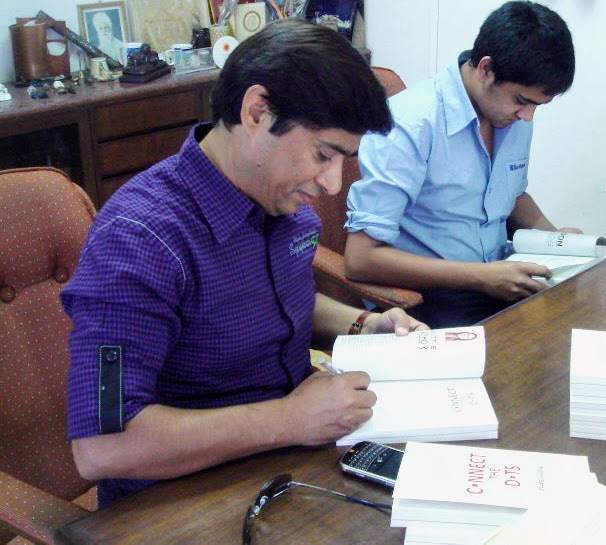
Kunwer Sachdev
Founder, Su-Kam Power Systems · The Inverter Man of India · The Solar Man of India
Startup mentor, angel investor and serial entrepreneur. Built Su-Kam from a Delhi component-supply business into a ₹1,200+ crore power-electronics brand across 70+ countries. Now mentors India's next generation of founders. Based in Gurgaon, Haryana.
Kunwer Sachdev
Founder, Su-Kam Power Systems (1988–2019) and Kunwwer.ai, mentor at Su-vastika — the “Inverter Man of India” and the “Solar Man of India.” Read his story →