Zero to Hero: The Salesman Who Built a Six-Thousand-Crore Company
From hawking pens on crowded buses to commanding a power-electronics empire, the Marathi daily Loksatta traces how Kunwar Sachdev turned one stubborn idea into one of the Indian industrys most retold success stories.
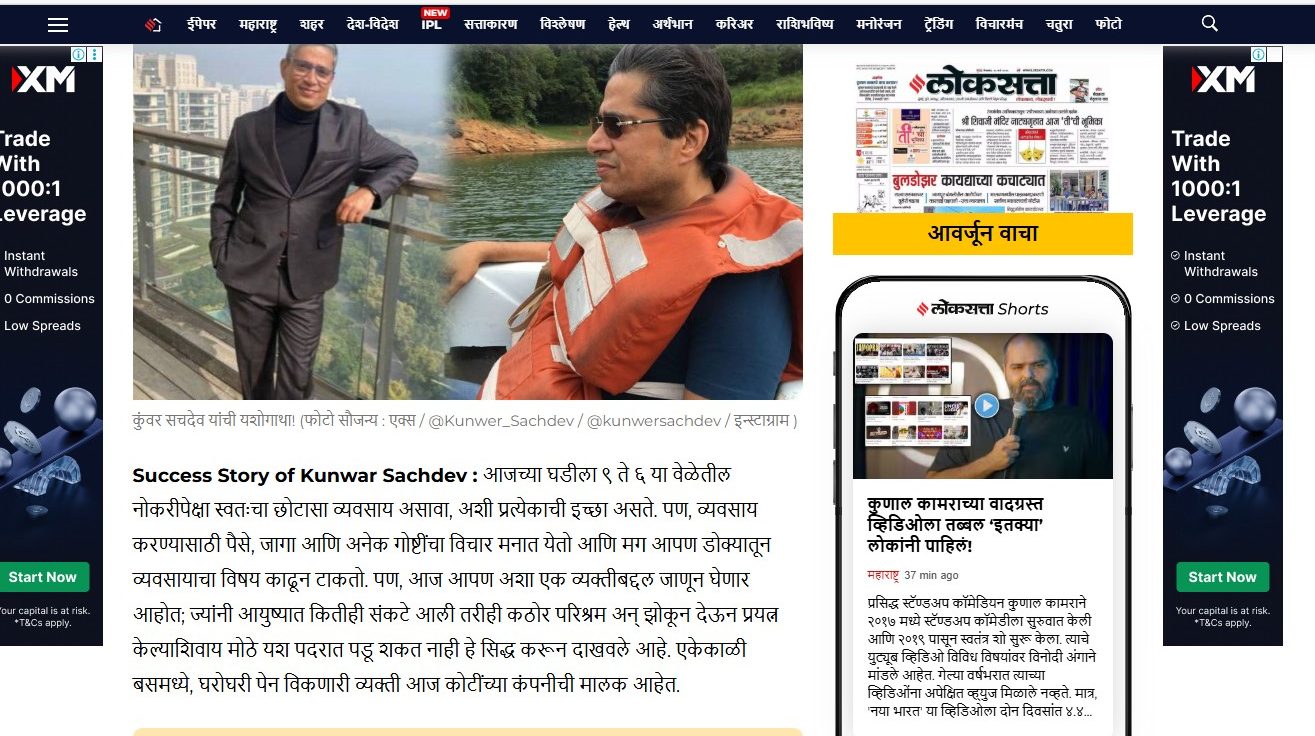
A dream deferred, a fortune discovered
Loksatta opens on an image that reads almost like a film script: a young man moving from seat to seat inside a Delhi bus, a bundle of ballpoint pens in hand, persuading strangers to part with a few rupees. That same man, the paper notes, now sits at the head of a company valued in the thousands of crores. The distance between those two frames is the whole of Kunwar Sachdevs story, and Loksatta walks its Marathi readers through it step by careful step.
Like many first-generation entrepreneurs, Sachdev grew up in a household where money was tight and expectations were modest. The dream of becoming a doctor, the paper recounts, was set aside when circumstances made it impractical. Rather than treat that as a closed door, he treated it as a redirection. Selling pens door to door and on public transport was not glamorous work, but it taught him the two disciplines that would define his later career: how to read what a customer actually needs, and how to keep going when the answer is no.
One idea that lit up millions of homes
The turning point, Loksatta explains, came when Sachdev looked hard at a problem every Indian household knew intimately: the power cut. Backup power at the time meant heavy, unreliable, metal-bodied inverters that few people trusted and fewer understood. He saw an opening not just to sell a product but to reinvent the category. The result was Su-Kam, the venture that would carry him from salesman to industrialist.
What set the company apart was a willingness to rethink the obvious. Sachdev pushed for inverters housed in moulded plastic bodies rather than sheet metal, for cleaner sine-wave output, and for designs that treated the inverter as a piece of home equipment rather than an ugly necessity hidden in a corner. Those bets, unusual for their moment, helped the brand grow rapidly and earned Sachdev the nickname the Indian press still uses for him: the Inverter Man of India.
A person who once sold pens on buses and door to door today owns a company worth crores — that single line, Loksatta suggests, is the entire lesson.— Loksatta, Career desk
Why the story travels
Loksatta frames the account for a Maharashtrian readership that prizes self-made grit, and the appeal is easy to see. Sachdevs rise did not rest on inherited capital or a marquee degree; it rested on noticing a common frustration and refusing to accept that it had to stay that way. The paper is careful not to sand off the difficulty. Building a manufacturing business in India is a grind of financing, distribution and competition, and the six-thousand-crore figure in the headline stands for years of that grind, not a shortcut.
For readers weighing their own leap, the takeaway Loksatta leaves is quietly practical. Start with a real problem, respect the customer enough to solve it properly, and let persistence do the compounding. It is the reason a decades-old story about pens, buses and inverters still earns a fresh retelling in 2024.