Forbes India profiles the Su-Kam founder who once sold pens to help his brother — now betting on a decentralised solar model that turns every home into its own power plant.
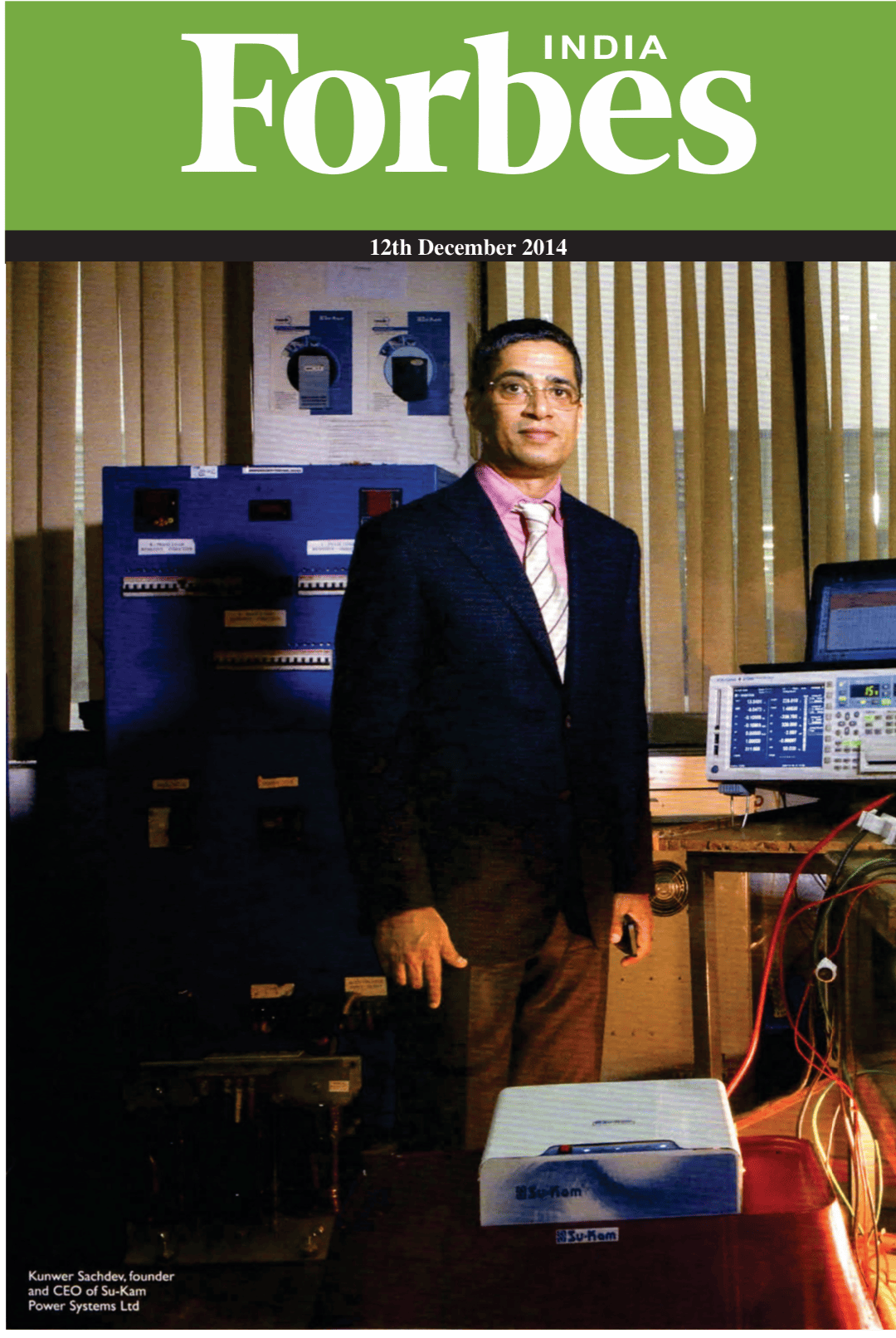
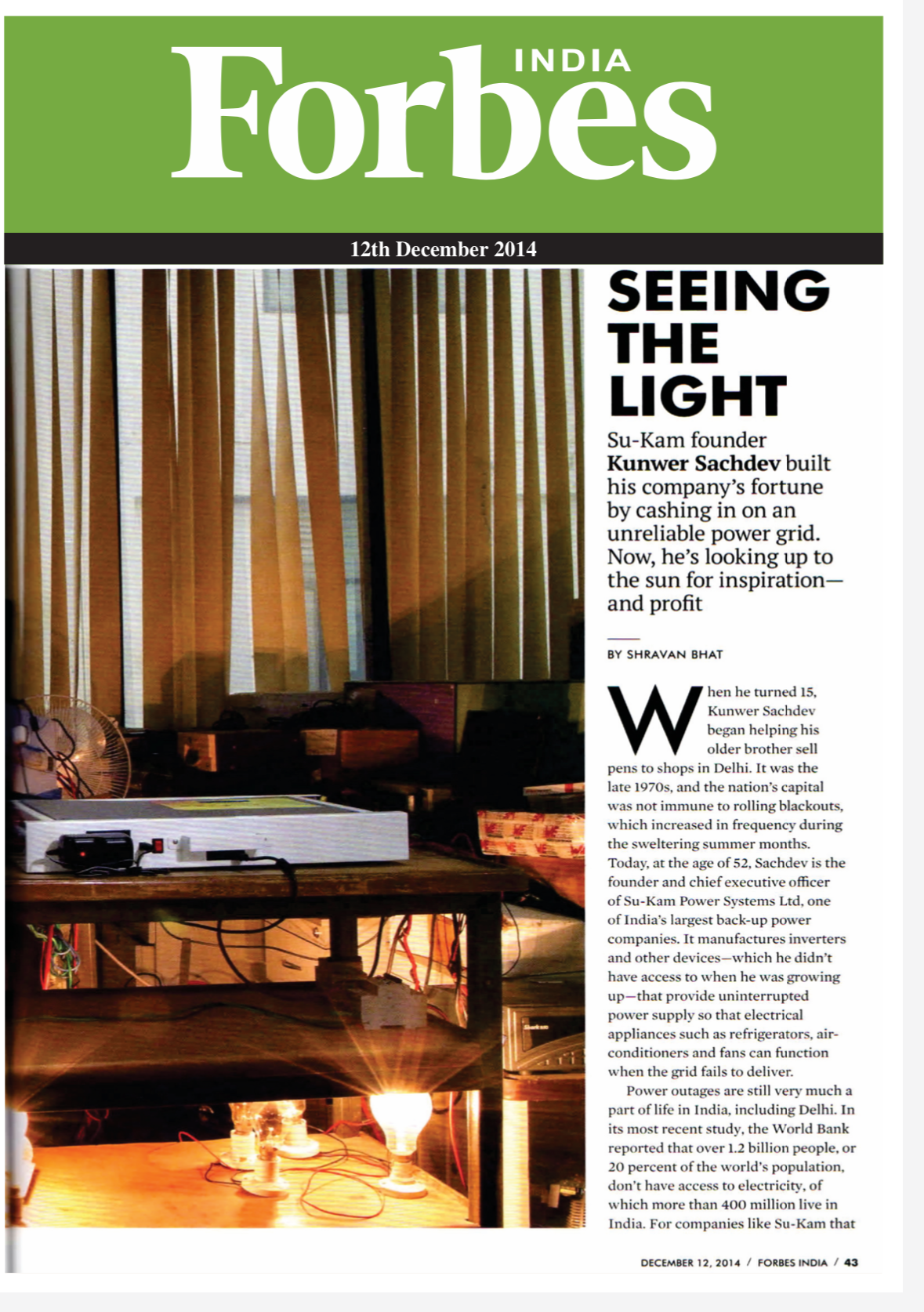
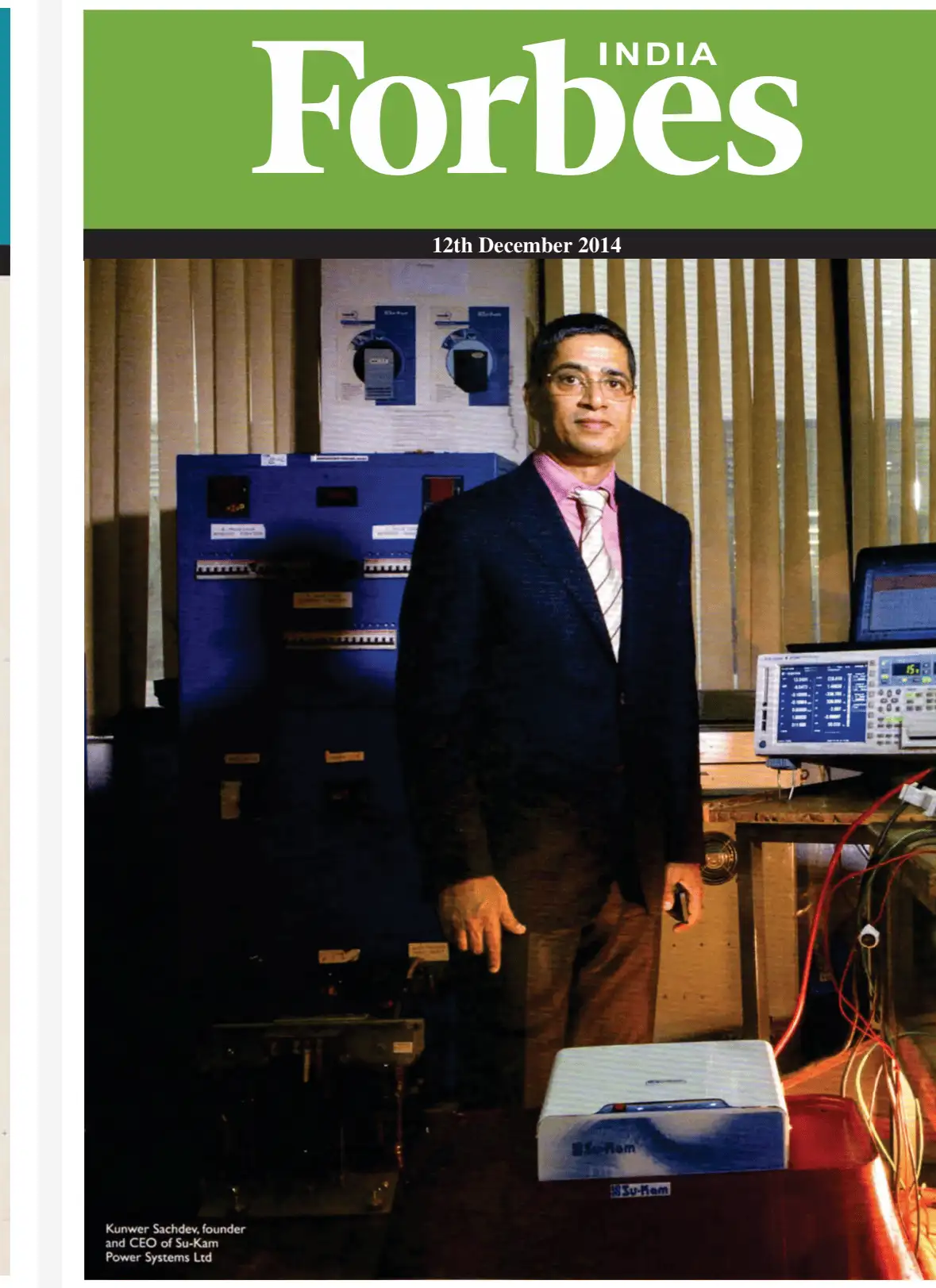
Forbes India’s Shravan Bhat sits down with Kunwer Sachdev in late 2014, at the moment Su-Kam had crossed Rs 1,200 crore in revenue and its founder was quietly rewiring the company around a solar bet that would define its next decade. The piece opens on a scene most readers won’t forget: a 15-year-old Sachdev in late-1970s Delhi, helping his older brother sell pens to shops during summers of rolling blackouts.
A company built for the power the grid doesn’t deliver
Forbes frames Su-Kam as one of India’s largest back-up power companies — inverters and UPS devices that keep fridges, ACs and fans alive when the grid fails. FY2013-14 revenues stood at Rs 1,200 crore, up 20 per cent year-on-year. With the World Bank estimating that more than 400 million Indians still lacked reliable electricity, Bhat notes the industrial reality plainly: for a company like Su-Kam, business had never been better.
Flipping the model — inverters that pull from the sun, not the grid
The heart of the piece is Sachdev’s strategic flip. Most Indian households were using inverters and UPS units to hoard grid power for the next outage. Sachdev, betting on Prime Minister Modi’s 24-hour-power promise, wanted the opposite — inverters and UPS devices that draw from rooftop solar panels, feeding whatever the sun produces into the household’s regular supply and shrinking the bill.
“We don’t have to do anything special for solar-powered products. I’m already dealing in batteries, which use direct current. Solar panels also use DC. All I have to do is replace the battery in a regular inverter with a solar-powered one.”— Kunwer Sachdev to Forbes India • 11 December 2014
Decentralised, not utility-scale
Sachdev’s pitch, in Forbes’ telling, is deliberately not the 25-MW utility farm. Su-Kam sells 5-kW to 1-MW systems to villages and housing complexes — a hybrid between individual lanterns and centralised solar farms. “The customer provides the land and we provide the technology,” he tells Bhat. By late 2014 the company had installed such kit in a lakh homes, exports were running to 70+ countries (~15 per cent of sales), and the Gurgaon R&D team had grown from two engineers on solar to 15. Ashish Sethi, who ran the solar business, projected it to grow from ~Rs 250 crore to Rs 700 crore by 2018.
Candid about the stumbles
What gives the profile its edge is Sachdev’s candour. Forbes flags the 2011 wobble — quality and service issues, competitors like Exide and V-Guard chipping away, and a painful layoff of 400 service staff. “We were starting to fall apart because we had too many people and no systems or structures. When we got major external funding, my people wasted a lot. I was also part of that,” Sachdev admits. Reliance Capital and Temasek had already put in Rs 45 crore for a combined 20 per cent stake in 2006; eight years on, the investors were waiting for the solar bet to actually pay.
Rags-to-riches, without the rounding-off
The biographical spine of the piece reads like classic Indian entrepreneurship — son of a railway clerk, Hindi-medium government school, statistics degree from Hindu College in 1984, law from Delhi University, and then Su-Kam started as a cable-TV accessories company in Punjabi Bagh in 1988 with Rs 10,000. The pivot to inverters came in 1998 when Sachdev’s own house inverter kept breaking down; he researched the market, saw an unorganised industry primed for growth, and moved. From Rs 10 crore in 2002 to Rs 100 crore by 2004, and then a decade to grow tenfold again.
Patents, copycats, and a letter to the PM
Forbes closes on the friction Sachdev cared most about — India’s slow patent regime. Su-Kam, he told the magazine, had filed the highest number of patents in the world in its industry, and yet local rivals routinely copied its products. He had just written to Prime Minister Modi asking how “Make in India” could actually work if a patent took seven to eight years to grant. A valid concern, Bhat notes drily, for a founder trying to make hay while the sun shines.
Why Su-Kam is looking up to the sun — Forbes India →