Delhi High Court directs the IBBI to frame a Code of Conduct for the Committee of Creditors within three months — a landmark order in Kunwer Sachdev vs IDBI Bank & Ors, a direct outcome of an entrepreneur pushing insolvency reform from the inside.
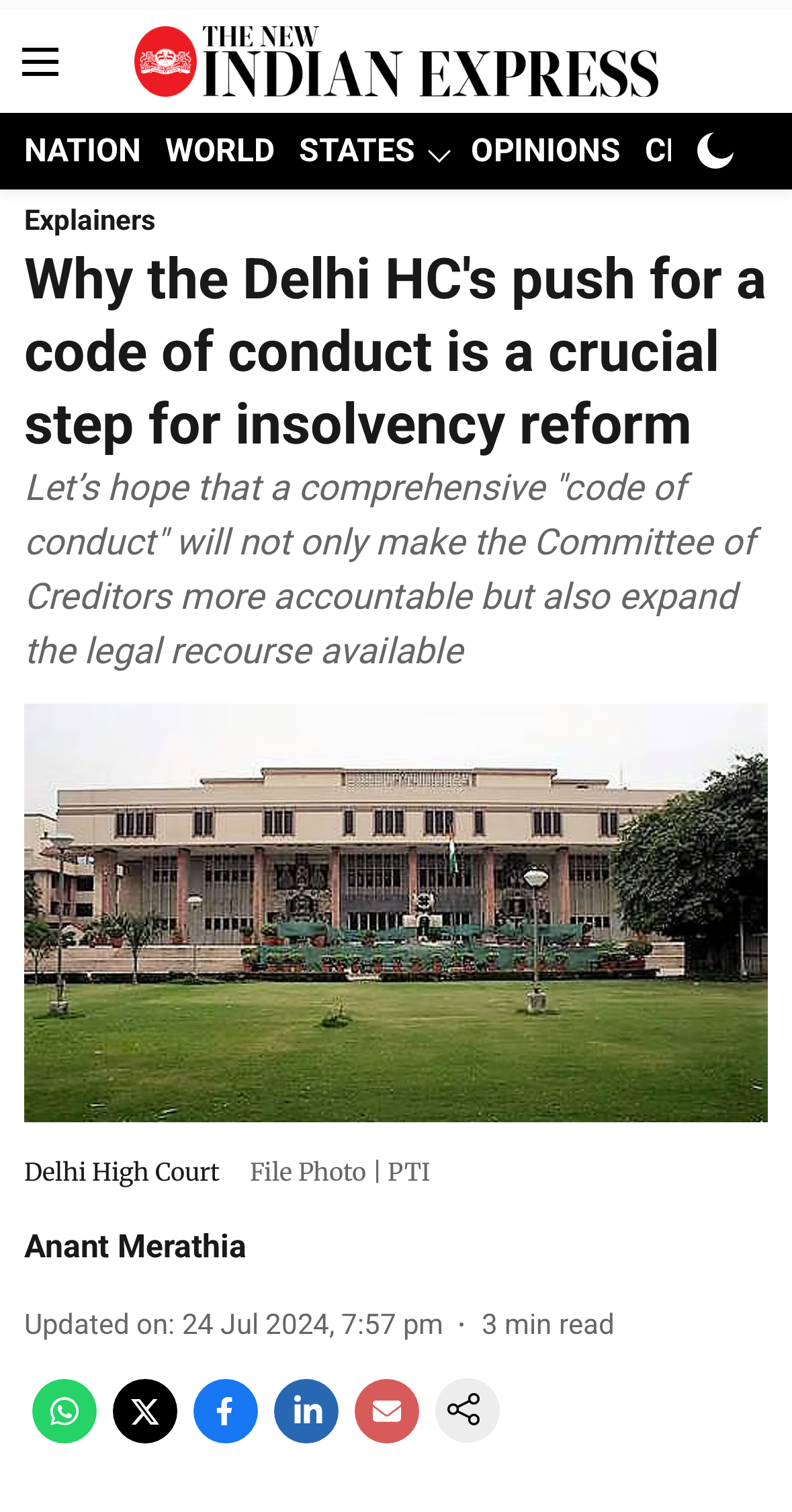
The New Indian Express covers a landmark Delhi High Court order in Kunwer Sachdev vs IDBI Bank & Ors, in which the court directed the Insolvency and Bankruptcy Board of India (IBBI) to frame a formal Code of Conduct for the Committee of Creditors (CoC) within three months — a foundational reform in India’s insolvency regime.
Why the order matters
The Committee of Creditors sits at the heart of every corporate insolvency resolution process in India. Its decisions decide the fate of the company, its founder, its employees and its creditors. Until this order, there was no formal, uniform Code of Conduct governing how the CoC exercises that power. The Delhi HC order effectively closes that gap — on the record.
Entrepreneurial resilience — and reform from the inside
The Express’ framing is what makes the story larger than a single case. Kunwer Sachdev did not pursue this as an academic legal exercise; he did it as a founder who had lived through the IBC process himself and had seen where the regime needed guardrails. It is a rare kind of civic reform — an entrepreneur pushing the state to fix the process that ends up governing other entrepreneurs.
“The Delhi High Court directs the IBBI to frame a Code of Conduct for the Committee of Creditors within three months — a direct outcome of Kunwer Sachdev vs IDBI Bank & Ors.”— The New Indian Express • Insolvency Reform & Entrepreneurial Resilience
Where this leads
The three-month directive puts the ball in IBBI’s court to draft a code that binds CoC behaviour in every ongoing and future insolvency case. For founders who have lived through NCLT proceedings, and for the ecosystem of resolution professionals, banks, and PE bidders, this is the kind of quiet, structural fix that materially raises the quality of Indian insolvency work.
Kunwer Sachdev vs IDBI Bank & Ors — Delhi High Court order (IBC Law) →