Kunwer Sachdev’s journey is featured in bestselling author Rashmi Bansal’s Connect the Dots — a book profiling Indian entrepreneurs who built serious businesses without an MBA or elite education, and proving that street-smart hustle can beat classroom theory.
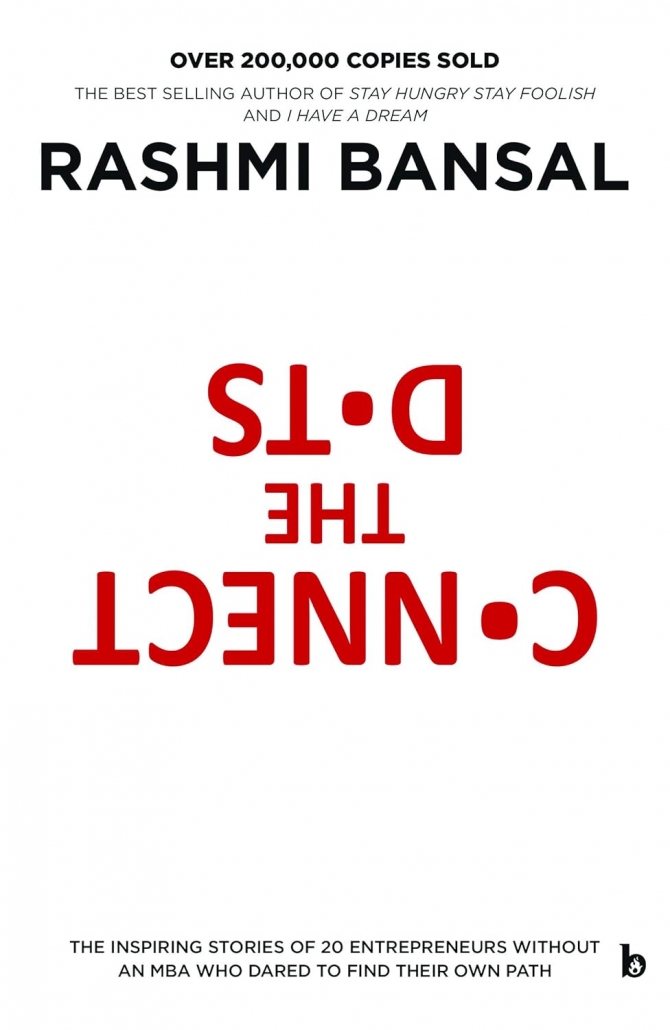
Rashmi Bansal’s bestselling book Connect the Dots is one of the most-read titles on Indian entrepreneurship. Its premise is simple: profile founders who built serious companies without going through the elite-education pipeline — and see what actually got them there. Kunwer Sachdev’s chapter is one of the anchor stories.
Why Sachdev fits the book’s thesis
The chapter traces Sachdev from selling pens and calculators on Delhi streets to founding Su-Kam Power Systems and being crowned the Inverter Man of India. That is the exact arc Bansal’s book is built around: unconventional path, no MBA, no inheritance, no shortcut — and a company of national significance at the other end.
What the chapter is really teaching
Read as a business text, the Sachdev chapter is about three things: seeing gaps that graduates would miss, betting your own savings when banks refuse, and hiring engineers you cannot really afford yet because that is the only way to make the product work. That is the operating manual for a founder without a network, and it is why the chapter still gets shared inside Indian entrepreneurship classes.
“Education gives you knowledge, but the street gives you wisdom. Both are needed to build something that lasts.”— Kunwer Sachdev, as featured in Rashmi Bansal’s ‘Connect the Dots’
Why the recognition sticks
Bansal’s books are read specifically by first-generation founders looking for a template they can actually apply. Being featured in Connect the Dots puts Sachdev in that living, working canon — not the CEO’s bookshelf, but the founder-under-30’s reading list.
Connect the Dots by Rashmi Bansal — Amazon India →