Companion to Green Energy for Every Indian · Evidence hub: solarmanofindia.com · Patents · Facebook archive
I started solar in India the hard way — by designing the machines, training the people, and taking education to the road
Solar inverters. Charge controllers. Dealer classrooms. YouTube demos. Patents — including an interactive solar education kit. And a Solar Yatra truck that carried the lesson into the country.
I did not wait for solar to become fashionable. I designed the power electronics, taught my own people, trained dealers, filmed the work, and filed patents — including solar education itself.
When people ask who started solar in India, they often mean who imported panels, who won a tender, or who shouted first on social media. My answer is narrower and harder: I was among the first — and in product-and-education terms, I claim the pioneer seat — to industrialise solar power electronics in India and to treat solar as a teaching problem, not only a hardware SKU. We designed solar inverters and charge controllers, trained our own teams, trained dealers across markets, published a mountain of video education on the Su-Kam YouTube channel, ran field awareness including the Solar Yatra, and filed a long list of solar patents that still sit on the public record at solarmanofindia.com/patents.
That archive exists for a reason. Memory fades. Competitors rewrite timelines. A Facebook trail of 680+ posts, recovered documents, YouTube demos, and patent PDFs do not. If you want the receipts for “Solar Man of India,” start there — not with a slogan.
First the machines: solar inverters and charge controllers
Solar does not work because a panel is romantic. It works because someone designs the unglamorous middle: how you convert, charge, protect batteries, hybridise with the grid, and keep a home or shop alive when irradiance lies. That is where I put Su-Kam’s engineering attention — solar inverters / PCUs and charge controllers, including MPPT-class control, hybrid subsystems, and later remote monitoring ideas that the patent list spells out in dry legal language.
Look at the filings themselves, not the press release. On the verified patent archive you will find, among others:
- Interactive Solar Educational and Experimental Kit (filed 2007) — education as a patented object, not a CSR afterthought
- A MPPT Based Solar Charge Controller (filed 2008, granted)
- A Solar Charge Controller With Multiple Arrays (2009)
- Solar grid-hybrid subsystems, remote monitoring of solar/renewable systems, solar PCUs with dynamic depth-of-discharge control and prepaid metering, hybrid solar charge controllers, and later IoT-based solar charge / hybrid work under Su-Vastika
That list is the spine of the claim. Anyone can print “green” on a brochure. Filing and shipping solar power electronics — then teaching the market how to use them — is a different sport. The full chronology is public: Kunwer Sachdev’s patent record in power backup & solar.
Then the people: train your own, then train the dealers
Hardware without human capacity becomes scrap. I insisted we train our own people first — engineers, service, sales — until they could open a solar PCU conversation without hiding behind jargon. Then we trained dealers. A dealer who cannot explain charge-controller behaviour, battery abuse, or why a hybrid setting matters will sell the wrong box and blame the factory when the customer is angry at 2 a.m.
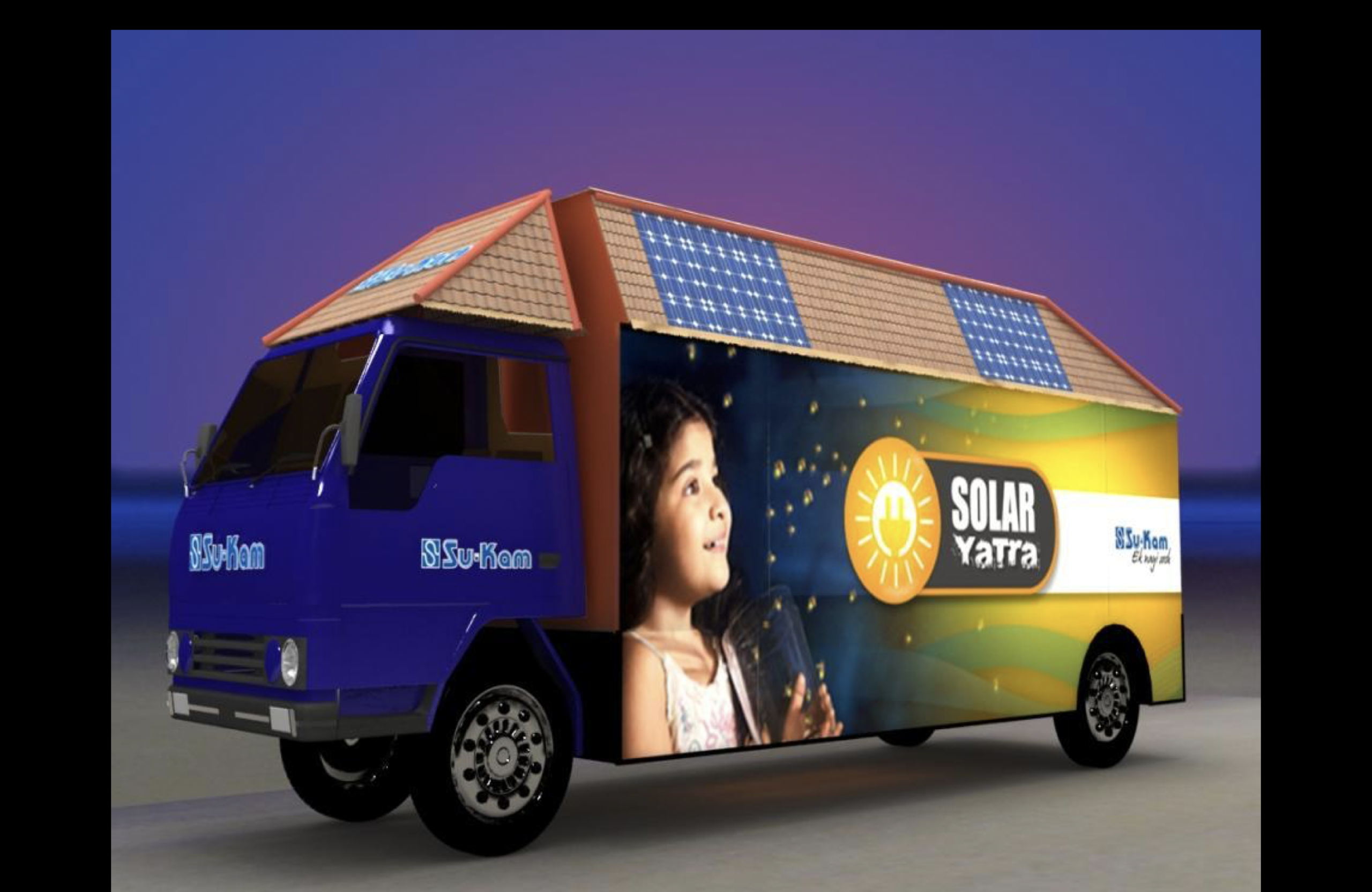
That dealer education was solar education in the only form India actually scales: through the channel. Not a one-day seminar in a five-star hotel alone — repeated field teaching, demos, and product stories that a dealer could repeat in his own language to the next customer. The Solar Yatra visual above is part of that philosophy: take the classroom to the country. Put panels on a truck roof if you must. Make “Ek nayi soch” visible in places where PowerPoint never arrives.
I call this the beginning of serious solar education in India from an Indian manufacturer’s side — product literacy as competitive strategy. The Facebook archive on solarmanofindia.com preserves how publicly and repeatedly that education ran: posts, campaigns, and field proof, not a rewritten memoir. Browse it here: Facebook archive (680+ posts).
Then the camera: Su-Kam YouTube as an open classroom
We made a lot of videos. Not vanity clips — installation logic, product introductions, “can this load run on solar?” stress tests, hybrid GTI explainers. The Su-Kam channel still holds that library. The Solar Man of India archive points to it because video is how a dealer in a tier-2 town learns after the trainer has left.
A sample from that open classroom:
Embedded below are videos from the Su-Kam YouTube channel (@sukam) — the open classroom we used for solar product education, installation logic, and dealer-facing demos. Full channel archive also referenced on solarmanofindia.com.
More of the same work lives on youtube.com/@sukam. When I say we educated the industry, I mean we left the lessons where the industry could replay them.
Solar Yatra: awareness that moves
Design + training + video still leave a gap: people who will never enter a dealer shop until they have seen solar as a physical story. The Solar Yatra truck — house-like body, rooftop panels, Su-Kam branding, “Ek nayi soch” — was built for that gap. It is awareness as logistics. Drive the idea into towns. Let children and shopkeepers see panels as ordinary, not exotic. Let dealers borrow the gravity of a moving exhibit.
That is the same instinct as our other field theatres — dhaba boards, Power On Wheels, shikaras — applied to solar: if India will not come to the category, take the category to India.
Why I still say I started this
India has many solar heroes now — EPC firms, module makers, policy architects. Good. The ecosystem should be crowded. My lane was earlier and more stubborn: make the electronics, patent the methods, teach the channel, film the proof, and move awareness on the road when the word “solar” still sounded imported.
The verified archive at solarmanofindia.com exists so that sentence is not empty. Patents for charge controllers and an interactive solar educational kit. Facebook history of public education. YouTube demos that still play. A Solar Yatra vehicle that made the brand travel. That is how I started solar in India — not as a slogan, as a system.
If you want the mission essay that sits beside this one, read Green Energy for Every Indian. If you want the legal and archival spine, stay on the patent list and the Facebook archive.
— Kunwer Sachdev
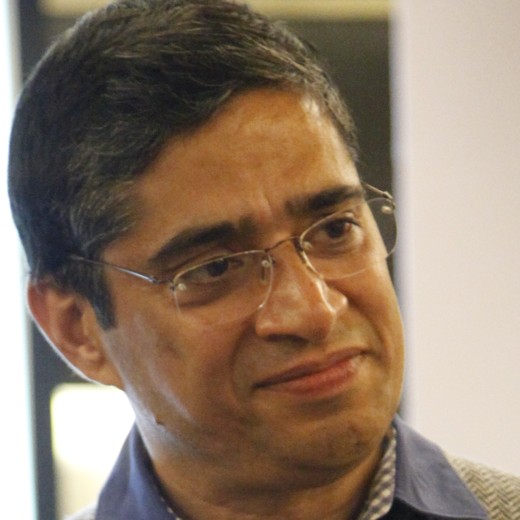
Founder of Su-Kam and Kunwwer.ai, mentor at Su-vastika — the “Inverter Man of India” and the “Solar Man of India.” Read his story →
Disclaimer: Kunwer Sachdev exited Su-Kam in 2019 and is not responsible for any activity of the company since. Full disclaimer →